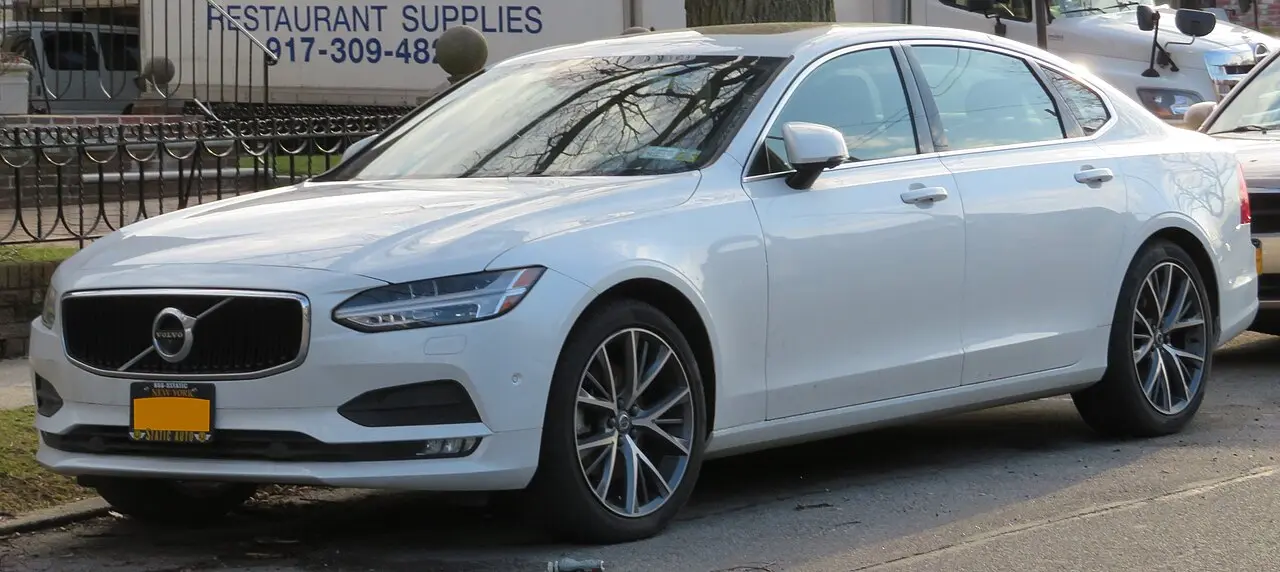
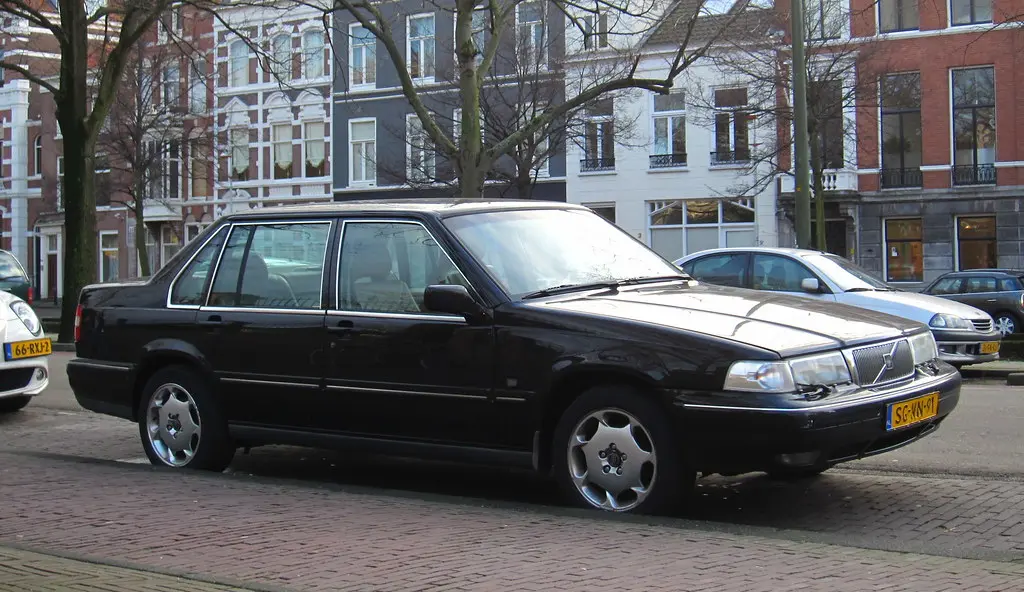
The official data lists 184 versions of the Volvo S90 (1997–2026), in the European Union, the United Kingdom, the United States, and Canada. Each market publishes its own figures, measured on its own test procedure.
At a glance
Years in the data
1997–2026
Markets
European Union, United Kingdom, United States, Canada
Engines
2.0 L to 2.9 L
Power
110 kW (150 PS) to 335 kW (455 PS)
Fuels
Hybrid, Plug-in hybrid, Petrol, Diesel
Lowest consumption (United Kingdom)
4.4 L/100 km (NEDC)
Lowest consumption (European Union)
5.2 L/100 km (WLTP)
Lowest consumption (United States)
8.4 L/100 km (EPA)
Plug-in hybrid, weighted (European Union)
0.8 L/100 km (WLTP)
Plug-in hybrid, weighted (United Kingdom)
2.0 L/100 km (NEDC)
New registrations in the EU
74,789
What is the Volvo S90?
The S90 is Volvo’s large, four-door saloon, sitting near the top of the Swedish maker’s passenger-car range. Its spacious cabin and separate boot give it a more formal feel than an estate, while its long-distance comfort makes it well suited to business and family travel.
The modern S90 belongs to Volvo’s 90-series family. Its clean styling and distinctive T-shaped headlights carry the design direction introduced with the second-generation XC90.
S90 generations
The first-generation S90, code P90, was sold in North America in 1997–1998. Volvo revived the name for a second generation on its Scalable Product Architecture (SPA). That modern saloon brought a new platform and a technology-focused cabin; it was introduced in 2016.
Engines and power
In EU registration figures, the modern S90 spans 2.0-litre petrol, diesel, hybrid and plug-in hybrid versions, with power from 110 kW (150 PS) to 235 kW (320 PS). The UK range covers 2.0-litre engines from 140 kW (190 PS) to 335 kW (455 PS). US and Canadian listings include engines from 2.0 to 2.9 litres. Engine and power choices vary by market and year.
Fuel consumption and CO₂
The lowest listed EU consumption for petrol, diesel and hybrid S90 versions is 5.2 L/100 km on the WLTP test. The lowest plug-in hybrid figure is 0.8 L/100 km WLTP, a weighted result that assumes some driving is electric. In the UK, the lowest figures are 4.4 L/100 km for petrol, diesel and hybrid versions and 2 L/100 km for plug-in hybrids, both on NEDC figures.
The US EPA rates the best combined result at 28 MPG. Canada’s lowest listed figure is 8.7 L/100 km on its 5-cycle test. These results are not directly comparable: Europe uses WLTP or, for some older ratings, NEDC; the US uses EPA testing and Canada uses a 5-cycle test.
Where was the S90 sold?
EU registration figures cover the modern S90 from 2016 to 2025, while UK figures run from 2016 to 2026. US and Canadian listings also include the earlier S90 nameplate, extending their year spans to 1997–2026 and 1998–2025. In the EU, the 2.0-litre diesel rated at 140 kW (190 PS) was among the most registered versions in the listed years.
Questions and answers
When did the modern Volvo S90 arrive?
Volvo introduced the second-generation S90, built on its SPA platform, in 2016.
What engines does the S90 have?
The European and UK listings cover 2.0-litre petrol, diesel, hybrid and plug-in hybrid versions, depending on market and year.
What is the S90’s lowest listed plug-in hybrid consumption?
It is 0.8 L/100 km on the EU WLTP test. This weighted figure assumes some driving is electric.
Why do the S90’s US and Canadian year spans start earlier?
They include the first-generation S90 nameplate sold in North America in 1997–1998, as well as the modern generation.
New cars registered in the EU (plus Norway and Iceland), from the European Environment Agency. Figures on the NEDC procedure until 2020 and on WLTP from 2021; versions are grouped by engine and power, with their number of registrations.
Years and version
Engine
Power
Fuel
Consumption (combined)
CO₂
Electric range
EU registrations
2023–2025
2.0 L
173 kW (235 PS)
Hybrid
5.9 L/100 km WLTP
154 g/km
–
725
2025
2.0 L
228 kW (310 PS)
Plug-in hybrid
0.8 L/100 km WLTP17.0 kWh/100 km WLTP
18 g/km
92 km
74
2025
2.0 L
145 kW (197 PS)
Hybrid
7.1 L/100 km WLTP
160 g/km
–
64
2023–2024
2.0 L
228 kW (310 PS)
Plug-in hybrid
0.8 L/100 km WLTP17.5 kWh/100 km WLTP
18 g/km
87 km
1,417
2023–2024
2.0 L
145 kW (197 PS)
Hybrid
7.0 L/100 km WLTP
158 g/km
–
266
2024
2.0 L
184 kW (250 PS)
Hybrid
7.0 L/100 km WLTP
160 g/km
–
81
2024
2.0 L
180 kW (245 PS)
Hybrid
6.0 L/100 km WLTP
157 g/km
–
12
2023
2.0 L
184 kW (250 PS)
Hybrid
7.0 L/100 km WLTP
159 g/km
–
138
2023
2.0 L
220 kW (299 PS)
Hybrid
8.0 L/100 km WLTP
181 g/km
–
14
2023
2.0 L
180 kW (245 PS)
Hybrid
6.0 L/100 km WLTP
156 g/km
–
11
2023
2.0 L
223 kW (303 PS)
Plug-in hybrid
2.0 L/100 km WLTP14.7 kWh/100 km WLTP
45 g/km
58 km
10
2022
2.0 L
173 kW (235 PS)
Hybrid
5.9 L/100 km WLTP
151 g/km
–
485
2022
2.0 L
145 kW (197 PS)
Hybrid
6.5 L/100 km WLTP
153 g/km
–
293
2022
2.0 L
228 kW (310 PS)
Plug-in hybrid
1.1 L/100 km WLTP18.0 kWh/100 km WLTP
24 g/km
84 km
219
2022
2.0 L
223 kW (303 PS)
Plug-in hybrid
2.3 L/100 km WLTP14.9 kWh/100 km WLTP
48 g/km
56 km
164
2022
2.0 L
184 kW (250 PS)
Hybrid
6.4 L/100 km WLTP
155 g/km
–
122
2022
2.0 L
220 kW (299 PS)
Hybrid
7.7 L/100 km WLTP
179 g/km
–
33
2022
2.0 L
183 kW (249 PS)
Hybrid
7.1 L/100 km WLTP
161 g/km
–
24
2022
2.0 L
228 kW (310 PS)
Hybrid
5.9 L/100 km WLTP
139 g/km
–
22
2022
2.0 L
223 kW (303 PS)
Hybrid
5.3 L/100 km WLTP
151 g/km
–
16
2022
2.0 L
145 kW (197 PS)
Petrol
6.6 L/100 km WLTP
156 g/km
–
13
2021
2.0 L
223 kW (303 PS)
Plug-in hybrid
2.5 L/100 km WLTP15.0 kWh/100 km WLTP
46 g/km
56 km
925
2021
2.0 L
173 kW (235 PS)
Hybrid
5.7 L/100 km WLTP
150 g/km
–
708
2021
2.0 L
145 kW (197 PS)
Hybrid
6.2 L/100 km WLTP
154 g/km
–
432
2021
2.0 L
140 kW (190 PS)
Diesel
5.2 L/100 km WLTP
148 g/km
–
268
2021
2.0 L
173 kW (235 PS)
Diesel
5.9 L/100 km WLTP
155 g/km
–
236
2021
2.0 L
184 kW (250 PS)
Hybrid
6.1 L/100 km WLTP
154 g/km
–
164
2021
2.0 L
145 kW (197 PS)
Petrol
6.0 L/100 km WLTP
149 g/km
–
134
2021
2.0 L
110 kW (150 PS)
Diesel
5.2 L/100 km WLTP
150 g/km
–
130
2021
2.0 L
220 kW (299 PS)
Hybrid
7.0 L/100 km WLTP
176 g/km
–
62
2021
2.0 L
184 kW (250 PS)
Petrol
6.3 L/100 km WLTP
154 g/km
–
48
2021
2.0 L
233 kW (317 PS)
Plug-in hybrid
1.8 L/100 km WLTP15.1 kWh/100 km WLTP
44 g/km
57 km
32
2021
2.0 L
140 kW (190 PS)
Petrol
7.2 L/100 km WLTP
169 g/km
–
26
2021
2.0 L
220 kW (299 PS)
Petrol
6.9 L/100 km WLTP
167 g/km
–
18
2020
2.0 L
140 kW (190 PS)
Petrol
–
155 g/km
–
2,134
2020
2.0 L
140 kW (190 PS)
Diesel
–
121 g/km
–
2,087
2020
2.0 L
223 kW (303 PS)
Plug-in hybrid
15.8 kWh/100 km NEDC
40 g/km
54 km
1,165
2020
2.0 L
173 kW (235 PS)
Diesel
–
143 g/km
–
947
2020
2.0 L
110 kW (150 PS)
Diesel
–
127 g/km
–
543
2020
2.0 L
184 kW (250 PS)
Petrol
–
154 g/km
–
273
2020
2.0 L
145 kW (197 PS)
Hybrid
–
136 g/km
–
182
2020
2.0 L
228 kW (310 PS)
Petrol
–
178 g/km
–
144
2020
2.0 L
184 kW (250 PS)
Hybrid
–
137 g/km
–
72
2020
2.0 L
173 kW (235 PS)
Hybrid
–
128 g/km
–
65
2019–2020
2.0 L
120 kW (163 PS)
Diesel
–
121 g/km
–
50
2020
2.0 L
220 kW (299 PS)
Hybrid
–
152 g/km
–
48
2020
2.0 L
233 kW (317 PS)
Plug-in hybrid
16.0 kWh/100 km NEDC
42 g/km
53 km
46
2020
2.0 L
177 kW (241 PS)
Diesel
–
142 g/km
–
32
2020
2.0 L
147 kW (200 PS)
Diesel
–
121 g/km
–
15
2020
2.0 L
145 kW (197 PS)
Petrol
–
136 g/km
–
14
2020
2.0 L
240 kW (326 PS)
Petrol
–
177 g/km
–
12
2020
2.0 L
28 kW (38 PS)
Plug-in hybrid
15.5 kWh/100 km NEDC
40 g/km
54 km
10
2019
2.0 L
140 kW (190 PS)
Diesel
–
119 g/km
–
5,122
2019
2.0 L
140 kW (190 PS)
Petrol
–
155 g/km
–
2,440
2019
2.0 L
223 kW (303 PS)
Plug-in hybrid
16.4 kWh/100 km NEDC
46 g/km
–
1,704
2019
2.0 L
173 kW (235 PS)
Diesel
–
143 g/km
–
1,188
2019
2.0 L
110 kW (150 PS)
Diesel
–
124 g/km
–
1,164
2019
2.0 L
184 kW (250 PS)
Petrol
–
155 g/km
–
434
2019
2.0 L
228 kW (310 PS)
Petrol
–
178 g/km
–
206
2019
2.0 L
235 kW (320 PS)
Plug-in hybrid
17.0 kWh/100 km NEDC
46 g/km
–
130
2019
2.0 L
28 kW (38 PS)
Plug-in hybrid
16.5 kWh/100 km NEDC
47 g/km
–
56
2019
2.0 L
187 kW (254 PS)
Petrol
–
149 g/km
–
26
2019
2.0 L
147 kW (200 PS)
Diesel
–
122 g/km
–
22
2019
2.0 L
233 kW (317 PS)
Plug-in hybrid
16.8 kWh/100 km NEDC
45 g/km
–
22
2019
2.0 L
177 kW (241 PS)
Diesel
–
146 g/km
–
18
2019
2.0 L
240 kW (326 PS)
Petrol
–
178 g/km
–
10
2018
2.0 L
140 kW (190 PS)
Diesel
–
117 g/km
–
12,252
2018
2.0 L
110 kW (150 PS)
Diesel
–
116 g/km
–
2,806
2018
2.0 L
140 kW (190 PS)
Petrol
–
154 g/km
–
1,456
2018
2.0 L
173 kW (235 PS)
Diesel
–
130 g/km
–
1,368
2018
2.0 L
235 kW (320 PS)
Hybrid
17.0 kWh/100 km NEDC
46 g/km
–
1,206
2018
2.0 L
184 kW (250 PS)
Petrol
–
152 g/km
–
776
2018
2.0 L
187 kW (254 PS)
Petrol
–
149 g/km
–
366
2018
2.0 L
228 kW (310 PS)
Petrol
–
168 g/km
–
288
2018
2.0 L
223 kW (303 PS)
Hybrid
16.1 kWh/100 km NEDC
51 g/km
–
258
2018
2.0 L
235 kW (320 PS)
Petrol
–
165 g/km
–
72
2018
–
235 kW (320 PS)
Hybrid
–
–
–
66
2018
2.0 L
28 kW (38 PS)
Hybrid
16.9 kWh/100 km NEDC
47 g/km
–
38
2018
2.0 L
223 kW (303 PS)
Petrol
17.0 kWh/100 km NEDC
168 g/km
–
30
2018
2.0 L
147 kW (200 PS)
Diesel
–
124 g/km
–
22
2018
2.0 L
192 kW (261 PS)
Petrol
–
149 g/km
–
12
2017
2.0 L
140 kW (190 PS)
Diesel
–
117 g/km
–
11,130
2017
2.0 L
173 kW (235 PS)
Diesel
–
127 g/km
–
2,876
2017
2.0 L
110 kW (150 PS)
Other fuel
–
115 g/km
–
2,470
2017
2.0 L
187 kW (254 PS)
Petrol
–
149 g/km
–
1,956
2017
2.0 L
235 kW (320 PS)
Hybrid
17.0 kWh/100 km NEDC
46 g/km
–
528
2017
2.0 L
235 kW (320 PS)
Petrol
–
165 g/km
–
440
2017
2.0 L
147 kW (200 PS)
Diesel
–
116 g/km
–
46
2017
2.0 L
110 kW (150 PS)
Diesel
–
115 g/km
–
36
2017
2.0 L
246 kW (334 PS)
Petrol
–
165 g/km
–
16
2017
2.0 L
28 kW (38 PS)
Hybrid
–
46 g/km
–
12
United Kingdom 45 versions
New cars on sale in the UK, from the Vehicle Certification Agency. NEDC figures until 2018 and WLTP figures after; years are the editions a version appeared in.
Years and version
Engine
Power
Fuel
Gearbox
Consumption (combined)
CO₂
Electric range
2026Recharge plug-in hybrid T8 Plus AWD - Bright Theme · Recharge plug-in hybrid T8 Plus AWD - Dark Theme · Recharge plug-in hybrid T8 Ultimate AWD - Dark Theme
2.0 L
335 kW (455 PS)
Plug-in hybrid
8-speed automatic
17.1 kWh/100 km WLTP
143 g/km
88 km
2026Recharge Plug-in Hybrid T8 AWD Plus
2.0 L
335 kW (455 PS)
Plug-in hybrid
8-speed automatic
17.3 kWh/100 km WLTP
–
89 km
2026Recharge Plug-in Hybrid T8 AWD Ultimate
2.0 L
335 kW (455 PS)
Plug-in hybrid
8-speed automatic
17.4 kWh/100 km WLTP
–
88 km
2025Recharge plug-in hybrid T8 Plus AWD - Bright Theme · Recharge plug-in hybrid T8 Plus AWD - Dark Theme · Recharge plug-in hybrid T8 Ultimate AWD - Dark Theme
2.0 L
335 kW (455 PS)
Plug-in hybrid
–
17.1 kWh/100 km WLTP
143 g/km
88 km
2025Recharge Plug-in Hybrid T8 AWD Plus
2.0 L
335 kW (455 PS)
Plug-in hybrid
–
17.3 kWh/100 km WLTP
–
89 km
2025Recharge Plug-in Hybrid T8 AWD Ultimate
2.0 L
335 kW (455 PS)
Plug-in hybrid
–
17.4 kWh/100 km WLTP
–
88 km
2024Recharge Plug-in Hybrid T8 AWD Plus
2.0 L
455 kW (619 PS)
Plug-in hybrid
–
17.3 kWh/100 km WLTP
–
89 km
2024Recharge Plug-in Hybrid T8 AWD Ultimate
2.0 L
455 kW (619 PS)
Plug-in hybrid
–
17.4 kWh/100 km WLTP
–
88 km
2024Recharge plug-in hybrid T8 Plus AWD - Bright Theme · Recharge plug-in hybrid T8 Plus AWD - Dark Theme · Recharge plug-in hybrid T8 Ultimate AWD - Dark Theme
2.0 L
455 kW (619 PS)
Plug-in hybrid
–
17.1 kWh/100 km WLTP
143 g/km
88 km
2022–2023Recharge plug-in hybrid T8 Plus AWD - Bright Theme · Recharge plug-in hybrid T8 Plus AWD - Dark Theme · Recharge plug-in hybrid T8 Ultimate AWD - Dark Theme
2018T4 Momentum 18'' Alloys · T4 Momentum Pro 18'' Alloys · T4 Inscription 18'' Alloys and 5 more trims
2.0 L
–
Petrol
8-speed automatic
6.7 L/100 km NEDC
155 g/km
–
2018T4 Inscription 19'' Alloys · T4 R-Design Pro 21'' Alloys
2.0 L
–
Petrol
8-speed automatic
6.8 L/100 km NEDC
157 g/km
–
2018T5 Inscription 18'' Alloys · T5 Inscription 20'' Alloys · T5 Inscription Pro 20'' Alloys and 3 more trims
2.0 L
–
Petrol
8-speed automatic
6.6 L/100 km NEDC
154 g/km
–
2018T5 Inscription 19'' Alloys · T5 R-Design Pro 21'' Alloys
2.0 L
–
Petrol
8-speed automatic
6.7 L/100 km NEDC
156 g/km
–
2018T8 Twin Engine AWD Inscription Pro 19'' Alloys · T8 Twin Engine AWD R-Design Pro 19'' Alloys
2.0 L
–
Plug-in hybrid
8-speed automatic
2.2 L/100 km NEDC23.5 kWh/100 km NEDC
49 g/km
44 km
United States 22 versions
Model years sold in the USA, from the EPA and the Department of Energy (fueleconomy.gov). MPG on the EPA test; litres per 100 km = 235.215 ÷ MPG.
Years and version
Engine
Fuel
Gearbox
Drive
Consumption (combined)
CO₂
2026SIDI; Mild Hybrid
2.0 L
Hybrid
8-speed automatic
Front-wheel drive
28 MPG (8.4 L/100 km) EPA
198 g/km
2025SIDI; Mild Hybrid
2.0 L
Hybrid
8-speed automatic
All-wheel drive
26 MPG (9.0 L/100 km) EPA
212 g/km
2025SIDI; PHEV
2.0 L
Plug-in hybrid
8-speed automatic
All-wheel drive
29 MPG (8.1 L/100 km) EPA
188 g/km
2024SIDI; Mild Hybrid
2.0 L
Hybrid
8-speed automatic
All-wheel drive
25 MPG (9.4 L/100 km) EPA
216 g/km
2023SIDI; Mild Hybrid
2.0 L
Hybrid
8-speed automatic
All-wheel drive
26 MPG (9.0 L/100 km) EPA
209 g/km
2023
2.0 L
Plug-in hybrid
8-speed automatic
All-wheel drive
30 MPG (7.8 L/100 km) EPA
68 g/km
2022SIDI
2.0 L
Petrol
8-speed automatic
All-wheel drive
26 MPG (9.0 L/100 km) EPA
212 g/km
2022SIDI; PHEV
2.0 L
Plug-in hybrid
8-speed automatic
All-wheel drive
30 MPG (7.8 L/100 km) EPA
102 g/km
2022SIDI; PHEV
2.0 L
Plug-in hybrid
8-speed automatic
All-wheel drive
29 MPG (8.1 L/100 km) EPA
68 g/km
2020–2021SIDI; PHEV
2.0 L
Plug-in hybrid
8-speed automatic
All-wheel drive
30 MPG (7.8 L/100 km) EPA
101 g/km
2021SIDI
2.0 L
Petrol
8-speed automatic
All-wheel drive
25 MPG (9.4 L/100 km) EPA
221 g/km
2020SIDI
2.0 L
Petrol
8-speed automatic
All-wheel drive
25 MPG (9.4 L/100 km) EPA
222 g/km
2019SIDI
2.0 L
Petrol
8-speed automatic
All-wheel drive
26 MPG (9.0 L/100 km) EPA
214 g/km
2019SIDI
2.0 L
Petrol
8-speed automatic
Front-wheel drive
27 MPG (8.7 L/100 km) EPA
204 g/km
2019SIDI
2.0 L
Petrol
8-speed automatic
All-wheel drive
25 MPG (9.4 L/100 km) EPA
223 g/km
2019SIDI; PHEV
2.0 L
Plug-in hybrid
8-speed automatic
All-wheel drive
29 MPG (8.1 L/100 km) EPA
103 g/km
2018SIDI
2.0 L
Petrol
8-speed automatic
Front-wheel drive
27 MPG (8.7 L/100 km) EPA
200 g/km
2018SIDI
2.0 L
Petrol
8-speed automatic
All-wheel drive
25 MPG (9.4 L/100 km) EPA
220 g/km
2018SIDI
2.0 L
Petrol
8-speed automatic
All-wheel drive
26 MPG (9.0 L/100 km) EPA
211 g/km
2018SIDI; PHEV
2.0 L
Plug-in hybrid
8-speed automatic
All-wheel drive
29 MPG (8.1 L/100 km) EPA
100 g/km
2017SIDI
2.0 L
Petrol
8-speed automatic
Front-wheel drive
27 MPG (8.7 L/100 km) EPA
204 g/km
2017SIDI
2.0 L
Petrol
8-speed automatic
All-wheel drive
25 MPG (9.4 L/100 km) EPA
219 g/km
Canada 15 versions
Model years sold in Canada, from Natural Resources Canada fuel consumption ratings (5-cycle test).
Years and version
Engine
Fuel
Gearbox
Consumption (combined)
CO₂
Electric range
2022–2025Mid-size
2.0 L
Plug-in hybrid
8-speed automatic
8.1 L/100 km 5-cycle
65 g/km
61 km
2024–2025Mid-size
2.0 L
Petrol
8-speed automatic
9.2 L/100 km 5-cycle
216 g/km
–
2023Mid-size
2.0 L
Petrol
8-speed automatic
9.0 L/100 km 5-cycle
211 g/km
–
2022Mid-size
2.0 L
Plug-in hybrid
8-speed automatic
7.9 L/100 km 5-cycle
100 g/km
34 km
2022Mid-size
2.0 L
Petrol
8-speed automatic
9.1 L/100 km 5-cycle
212 g/km
–
2020–2021Mid-size
2.0 L
Plug-in hybrid
8-speed automatic
7.9 L/100 km 5-cycle
99 g/km
34 km
2021Mid-size
2.0 L
Petrol
8-speed automatic
9.6 L/100 km 5-cycle
224 g/km
–
2020Mid-size
2.0 L
Petrol
8-speed automatic
9.6 L/100 km 5-cycle
223 g/km
–
2018–2019Mid-size
2.0 L
Plug-in hybrid
8-speed automatic
8.1 L/100 km 5-cycle
100 g/km
34 km
2019Mid-size
2.0 L
Petrol
8-speed automatic
9.2 L/100 km 5-cycle
215 g/km
–
2019Mid-size
2.0 L
Petrol
8-speed automatic
9.4 L/100 km 5-cycle
219 g/km
–
2018Mid-size
2.0 L
Petrol
8-speed automatic
8.8 L/100 km 5-cycle
206 g/km
–
2018Mid-size
2.0 L
Petrol
8-speed automatic
9.3 L/100 km 5-cycle
216 g/km
–
2017Mid-size
2.0 L
Petrol
8-speed automatic
8.7 L/100 km 5-cycle
204 g/km
–
2017Mid-size
2.0 L
Petrol
8-speed automatic
9.4 L/100 km 5-cycle
219 g/km
–
Versions outside these generations
European Union 6 versions
New cars registered in the EU (plus Norway and Iceland), from the European Environment Agency. Figures on the NEDC procedure until 2020 and on WLTP from 2021; versions are grouped by engine and power, with their number of registrations.
Years and version
Engine
Power
Fuel
CO₂
EU registrations
2016
2.0 L
140 kW (190 PS)
Diesel
117 g/km
3,082
2016
2.0 L
173 kW (235 PS)
Diesel
127 g/km
2,196
2016
2.0 L
187 kW (254 PS)
Petrol
150 g/km
618
2016
2.0 L
235 kW (320 PS)
Petrol
166 g/km
470
2016
2.0 L
110 kW (150 PS)
Diesel
115 g/km
120
2016
2.0 L
177 kW (241 PS)
Diesel
127 g/km
10
United Kingdom 2 versions
New cars on sale in the UK, from the Vehicle Certification Agency. NEDC figures until 2018 and WLTP figures after; years are the editions a version appeared in.
Years and version
Engine
Fuel
Gearbox
Consumption (combined)
CO₂
2016D4
2.0 L
Diesel
6-speed automatic
4.4 L/100 km NEDC
116 g/km
2016D5 AWD
2.0 L
Diesel
6-speed automatic
4.8 L/100 km NEDC
127 g/km
Official figures are measured on standard test procedures and differ between markets. Your consumption depends on how, where and in what conditions you drive.