Volvo

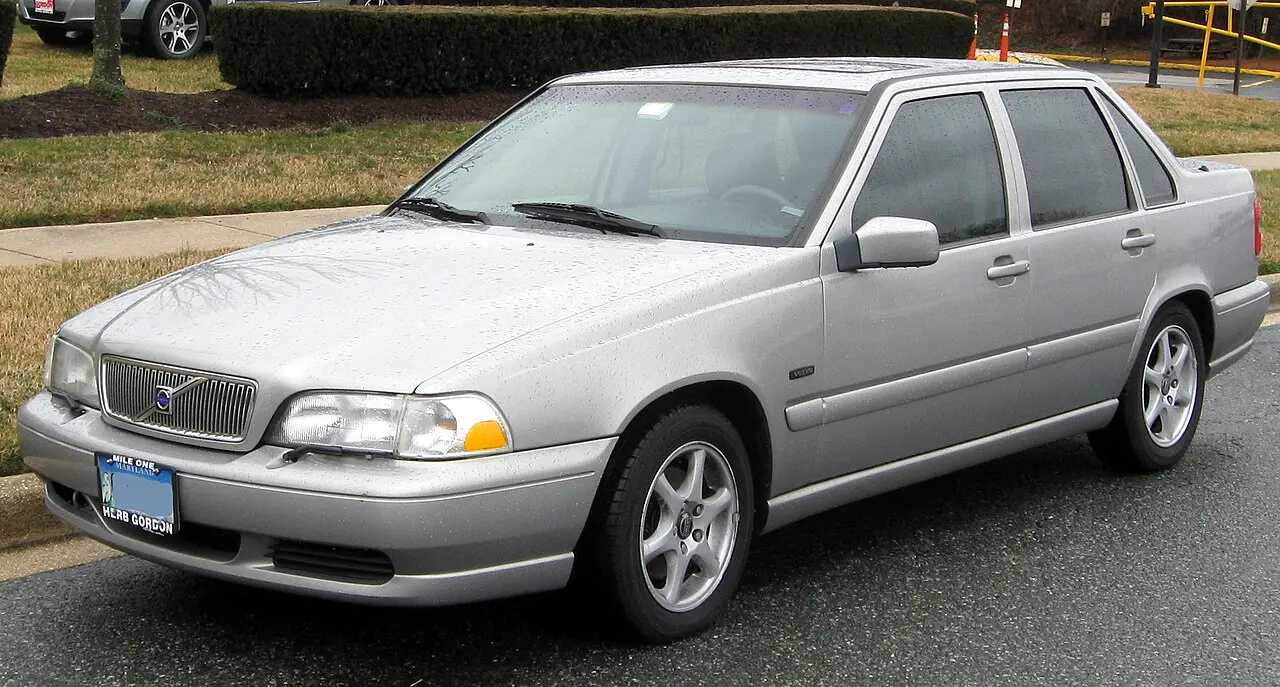
Volvo S70

Volvo S70
Photo: IFCAR / Wikimedia Commons · Public domain

The official data lists 34 versions of the Volvo S70 (1998–2000), in the United States and Canada. Each market publishes its own figures, measured on its own test procedure.

At a glance

Years in the data
1998–2000
Markets
United States, Canada
Engines
2.3 L to 2.4 L
Fuels
Petrol
Lowest consumption (United States)
10.7 L/100 km (EPA)
Lowest consumption (Canada)
10.9 L/100 km (5-cycle)

What is the Volvo S70?

The Volvo S70 is a four-door family sedan developed from the 850. It brought softer styling and updated details to the earlier car, while the estate in the range became the V70.

Volvo’s updated 850 sedan took the S70 name, and the first generation uses the P80 platform code. The S70 was part of a broader family that also included the V70 estate and V70 Cross Country.

Engines and power

The US and Canadian versions covered here use petrol engines from 2.3 L to 2.4 L. The S70 range used five-cylinder engines, with different versions available across the model line.

How economical is the Volvo S70?

For the United States, the best combined EPA rating is 22 MPG, and the lowest listed consumption is 10.7 L/100 km. In Canada, the lowest listed figure is 10.9 L/100 km on the NRCan 5-cycle test.

The EPA, NRCan 5-cycle and European WLTP or NEDC procedures differ, so results from these markets are not directly comparable.

Where was the Volvo S70 sold?

The US and Canadian versions covered here run from 1998 to 2000, with petrol engines from 2.3 L to 2.4 L. The S70 developed from the 850 sedan as part of Volvo’s updated 70-series naming.

Questions and answers

What years was the first-generation Volvo S70 produced?

The S70 ran from 1998 to 2000 in the markets covered here, and its first generation uses the P80 code.

What fuel economy does the S70 achieve in EPA figures?

Its best combined US EPA rating is 22 MPG.

What is the Canadian low-consumption figure?

The lowest listed Canadian figure is 10.9 L/100 km on the NRCan 5-cycle test.

S70 first generation (1998–2000)

Volvo S70 first generation
Photo: IFCAR / Wikimedia Commons · Public domain

Model codes: P80 · References: volvocars.com, cars.com

United States 16 versions

Model years sold in the USA, from the EPA and the Department of Energy (fueleconomy.gov). MPG on the EPA test; litres per 100 km = 235.215 ÷ MPG.

Years and versionEngineFuelGearboxDriveConsumption (combined)CO₂
2000CLKUP2.3 LPetrol4-speed automaticFront-wheel drive20 MPG (11.8 L/100 km) EPA276 g/km
20002.3 LPetrol5-speed manualFront-wheel drive21 MPG (11.2 L/100 km) EPA263 g/km
2000CLKUP2.4 LPetrol4-speed automaticFront-wheel drive20 MPG (11.8 L/100 km) EPA276 g/km
1999–2000CLKUP2.4 LPetrol4-speed automaticFour- or all-wheel drive19 MPG (12.4 L/100 km) EPA291 g/km
2000CLKUP2.4 LPetrol5-speed automaticFront-wheel drive21 MPG (11.2 L/100 km) EPA263 g/km
20002.4 LPetrol5-speed manualFront-wheel drive22 MPG (10.7 L/100 km) EPA251 g/km
1999CLKUP2.3 LPetrol4-speed automaticFront-wheel drive20 MPG (11.8 L/100 km) EPA276 g/km
19992.3 LPetrol5-speed manualFront-wheel drive20 MPG (11.8 L/100 km) EPA276 g/km
1999CLKUP2.3 LPetrol4-speed automaticFour- or all-wheel drive19 MPG (12.4 L/100 km) EPA291 g/km
1998–19992MODE CLKUP · CLKUP2.4 LPetrol4-speed automaticFront-wheel drive21 MPG (11.2 L/100 km) EPA263 g/km
1999CLKUP2.4 LPetrol4-speed automaticFront-wheel drive20 MPG (11.8 L/100 km) EPA276 g/km
19992.4 LPetrol5-speed manualFront-wheel drive21 MPG (11.2 L/100 km) EPA263 g/km
19982MODE CLKUP2.3 LPetrol4-speed automaticFront-wheel drive19 MPG (12.4 L/100 km) EPA291 g/km
19982.3 LPetrol5-speed manualFront-wheel drive19 MPG (12.4 L/100 km) EPA291 g/km
19982MODE CLKUP2.4 LPetrol4-speed automaticFront-wheel drive20 MPG (11.8 L/100 km) EPA276 g/km
19982.4 LPetrol5-speed manualFront-wheel drive21 MPG (11.2 L/100 km) EPA263 g/km

Canada 18 versions

Model years sold in Canada, from Natural Resources Canada fuel consumption ratings (5-cycle test).

Years and versionEngineFuelGearboxConsumption (combined)CO₂
2000Mid-size2.3 LPetrol4-speed automatic11.9 L/100 km 5-cycle274 g/km
2000Mid-size2.3 LPetrol5-speed manual11.3 L/100 km 5-cycle260 g/km
2000Mid-size2.4 LPetrol5-speed automatic11.4 L/100 km 5-cycle262 g/km
2000Mid-size2.4 LPetrol5-speed manual10.9 L/100 km 5-cycle251 g/km
2000Mid-size2.4 LPetrol4-speed automatic11.9 L/100 km 5-cycle274 g/km
2000Mid-size2.4 LPetrol4-speed automatic12.5 L/100 km 5-cycle288 g/km
1999Mid-size2.3 LPetrol4-speed automatic11.6 L/100 km 5-cycle267 g/km
1999Mid-size2.3 LPetrol5-speed manual11.6 L/100 km 5-cycle267 g/km
1999Mid-size2.3 LPetrol4-speed automatic12.6 L/100 km 5-cycle290 g/km
1999Mid-size2.4 LPetrol4-speed automatic11.3 L/100 km 5-cycle260 g/km
1999Mid-size2.4 LPetrol5-speed manual11.0 L/100 km 5-cycle253 g/km
1999Mid-size2.4 LPetrol4-speed automatic11.8 L/100 km 5-cycle271 g/km
1999Mid-size2.4 LPetrol4-speed automatic12.5 L/100 km 5-cycle288 g/km
1998Mid-size2.3 LPetrol4-speed automatic12.5 L/100 km 5-cycle288 g/km
1998Mid-size2.3 LPetrol5-speed manual12.4 L/100 km 5-cycle285 g/km
1998Mid-size2.4 LPetrol4-speed automatic11.6 L/100 km 5-cycle267 g/km
1998Mid-size2.4 LPetrol5-speed manual11.4 L/100 km 5-cycle262 g/km
1998Mid-size2.4 LPetrol4-speed automatic11.9 L/100 km 5-cycle274 g/km

Official figures are measured on standard test procedures and differ between markets. Your consumption depends on how, where and in what conditions you drive.