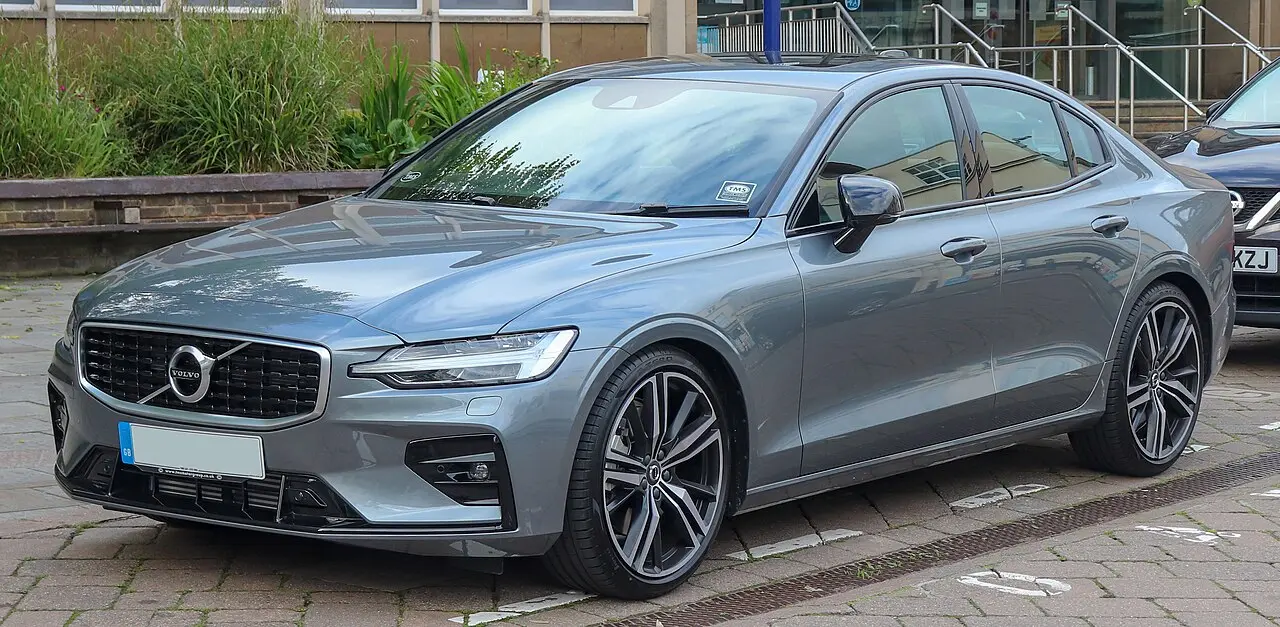
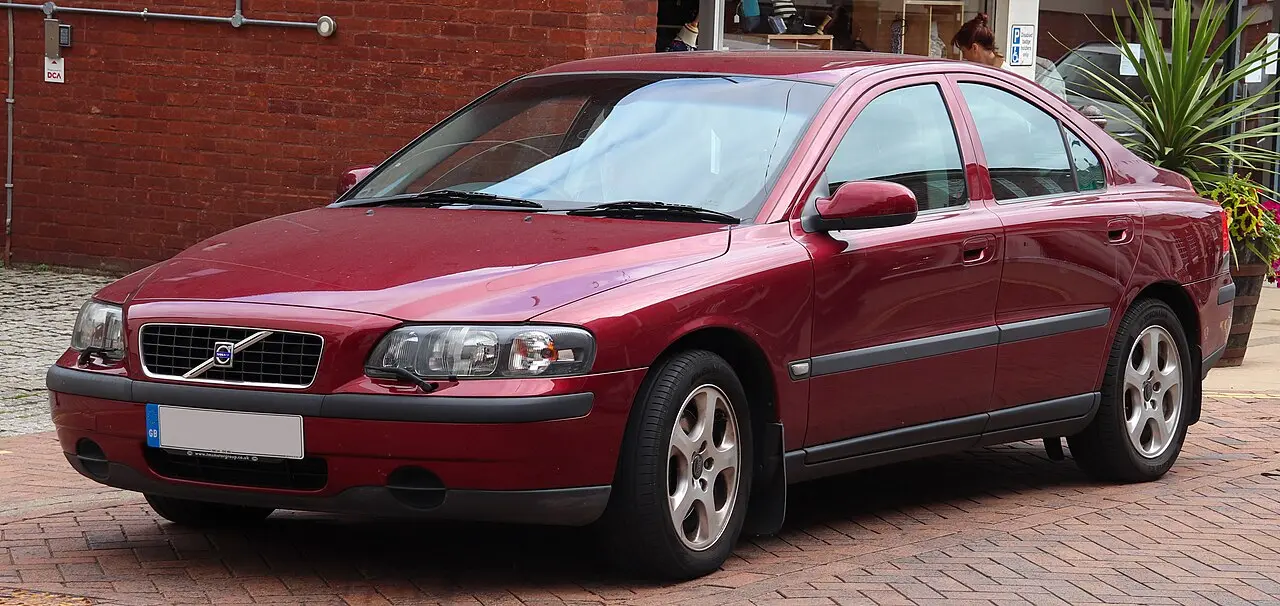
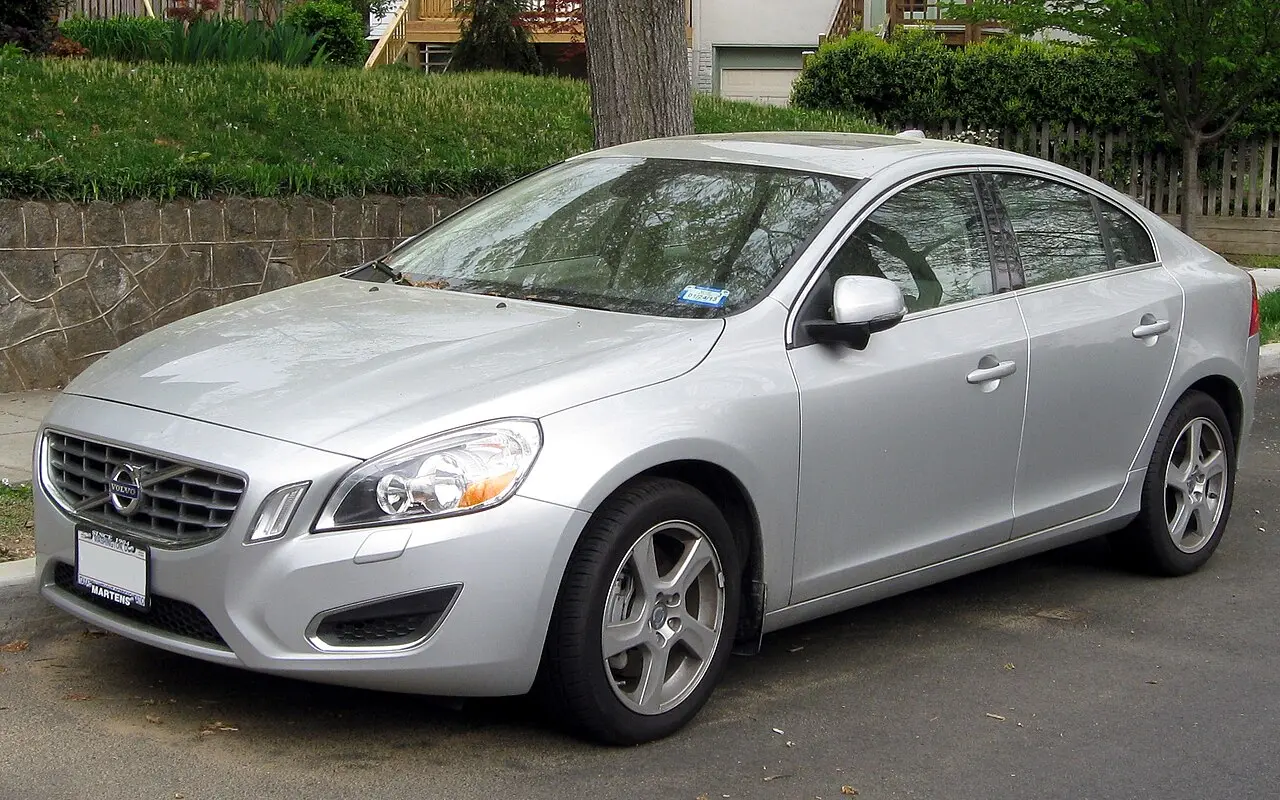
The official data lists 582 versions of the Volvo S60 (2001–2026), in the European Union, the United Kingdom, France, the United States, and Canada. Each market publishes its own figures, measured on its own test procedure.
At a glance
Years in the data
2001–2026
Markets
European Union, United Kingdom, France, United States, Canada
The S60 is Volvo’s four-door saloon, with a sweeping roofline that gives it a more coupe-like look than a traditional family sedan. It belongs to the 60-series, between Volvo’s smaller cars and its larger 90-series models. The shape and saloon layout suit drivers who want a comfortable everyday car without an estate’s longer roof or an SUV’s taller body.
When the S60 arrived, its flowing design brought a fresh look to Volvo’s saloons, while keeping the practicality of a four-door car. The model has carried that idea through three generations, with changes to its design, platform and engine choices.
Generations and engines
The first generation (2001–2009, P2) established the S60 as a compact executive saloon with a coupe-inspired profile. The second generation (2011–2018, P3) brought a new design. The third generation (2019–today, SPA) moved to Volvo’s Scalable Product Architecture and added hybrid and plug-in hybrid options.
In the EU, engines range from 1.5 L to 3.0 L, with power from 84 kW (114 PS) to 270 kW (367 PS). UK versions span 1.6 L to 2.5 L and 122 kW (165 PS) to 335 kW (455 PS). Across markets, the S60 has been offered with petrol, diesel, hybrid and plug-in hybrid power, as well as fuels such as E85, natural gas and LPG in some markets.
Fuel consumption and markets
In the EU, the lowest listed figure for petrol, diesel and hybrid versions is 6 L/100 km on the WLTP test. The lowest plug-in hybrid figure is 0.7 L/100 km WLTP. This official weighted figure assumes that part of the driving is electric. In the UK, the lowest figure for petrol, diesel and hybrid versions is 3.8 L/100 km on NEDC; the lowest plug-in hybrid figure is 6.2 L/100 km on WLTP. Test procedures vary, so figures from different markets are not directly comparable.
Official EU registration figures cover 2010–2025, while UK figures cover 2001–2026 and French figures cover 2012–2015. US and Canadian figures cover 2001–2025. The lowest listed US figure is 7.8 L/100 km on the EPA test; in Canada, it is 8 L/100 km on the NRCan 5-cycle test. Europe uses WLTP or, for older figures, NEDC; the USA uses EPA testing and Canada uses the 5-cycle procedure.
Questions and answers
What body style is the Volvo S60?
It is a four-door saloon with a coupe-like roofline.
Which S60 generation uses SPA?
The third generation, listed as 2019–today, uses Volvo’s SPA architecture.
What is the lowest listed EU plug-in hybrid consumption?
It is 0.7 L/100 km on WLTP, an official weighted figure that assumes some driving is electric.
Was the S60 sold in the United States and Canada?
Yes. Official figures cover US and Canadian model years from 2001–2025.
New cars registered in the EU (plus Norway and Iceland), from the European Environment Agency. Figures on the NEDC procedure until 2020 and on WLTP from 2021; versions are grouped by engine and power, with their number of registrations.
Years and version
Engine
Power
Fuel
Consumption (combined)
CO₂
Electric range
EU registrations
2023–2025
2.0 L
145 kW (197 PS)
Hybrid
6.2 L/100 km WLTP
140 g/km
–
2,025
2025
2.0 L
228 kW (310 PS)
Plug-in hybrid
0.7 L/100 km WLTP16.6 kWh/100 km WLTP
19 g/km
91 km
75
2025
2.0 L
184 kW (250 PS)
Hybrid
7.2 L/100 km WLTP
164 g/km
–
15
2024
2.0 L
184 kW (250 PS)
Hybrid
7.2 L/100 km WLTP
163 g/km
–
1,098
2024
2.0 L
228 kW (310 PS)
Plug-in hybrid
0.7 L/100 km WLTP16.5 kWh/100 km WLTP
17 g/km
92 km
986
2024
2.0 L
186 kW (253 PS)
Plug-in hybrid
0.7 L/100 km WLTP16.3 kWh/100 km WLTP
16 g/km
93 km
439
2024
2.0 L
120 kW (163 PS)
Hybrid
6.2 L/100 km WLTP
140 g/km
–
25
2023
2.0 L
184 kW (250 PS)
Hybrid
7.2 L/100 km WLTP
163 g/km
–
1,223
2023
2.0 L
228 kW (310 PS)
Plug-in hybrid
0.8 L/100 km WLTP17.3 kWh/100 km WLTP
17 g/km
89 km
477
2023
2.0 L
120 kW (163 PS)
Hybrid
6.2 L/100 km WLTP
140 g/km
–
175
2023
2.0 L
186 kW (253 PS)
Plug-in hybrid
0.8 L/100 km WLTP17.2 kWh/100 km WLTP
17 g/km
89 km
123
2022
2.0 L
145 kW (197 PS)
Hybrid
6.5 L/100 km WLTP
149 g/km
–
544
2022
2.0 L
228 kW (310 PS)
Plug-in hybrid
1.0 L/100 km WLTP17.9 kWh/100 km WLTP
20 g/km
83 km
354
2022
2.0 L
184 kW (250 PS)
Hybrid
7.0 L/100 km WLTP
156 g/km
–
349
2022
2.0 L
223 kW (303 PS)
Plug-in hybrid
2.0 L/100 km WLTP15.9 kWh/100 km WLTP
44 g/km
54 km
271
2022
2.0 L
120 kW (163 PS)
Hybrid
6.6 L/100 km WLTP
151 g/km
–
243
2022
2.0 L
186 kW (253 PS)
Plug-in hybrid
1.3 L/100 km WLTP16.3 kWh/100 km WLTP
30 g/km
71 km
130
2022
2.0 L
233 kW (317 PS)
Plug-in hybrid
2.2 L/100 km WLTP15.5 kWh/100 km WLTP
49 g/km
59 km
60
2021
2.0 L
145 kW (197 PS)
Hybrid
6.4 L/100 km WLTP
150 g/km
–
2,468
2021
2.0 L
184 kW (250 PS)
Hybrid
6.8 L/100 km WLTP
156 g/km
–
1,578
2021
2.0 L
223 kW (303 PS)
Plug-in hybrid
1.8 L/100 km WLTP16.0 kWh/100 km WLTP
41 g/km
55 km
1,465
2021
2.0 L
120 kW (163 PS)
Hybrid
6.0 L/100 km WLTP
152 g/km
–
930
2021
2.0 L
186 kW (253 PS)
Plug-in hybrid
1.8 L/100 km WLTP15.6 kWh/100 km WLTP
41 g/km
55 km
466
2021
2.0 L
233 kW (317 PS)
Plug-in hybrid
2.3 L/100 km WLTP15.8 kWh/100 km WLTP
47 g/km
56 km
428
2021
2.0 L
145 kW (197 PS)
Petrol
6.0 L/100 km WLTP
145 g/km
–
416
2021
2.0 L
140 kW (190 PS)
Petrol
8.4 L/100 km WLTP
166 g/km
–
241
2021
2.0 L
184 kW (250 PS)
Petrol
6.8 L/100 km WLTP
159 g/km
–
220
2021
2.0 L
120 kW (163 PS)
Petrol
6.6 L/100 km WLTP
149 g/km
–
16
2020
2.0 L
140 kW (190 PS)
Petrol
–
151 g/km
–
4,853
2020
2.0 L
184 kW (250 PS)
Petrol
–
153 g/km
–
3,244
2020
2.0 L
223 kW (303 PS)
Plug-in hybrid
15.2 kWh/100 km NEDC
38 g/km
54 km
2,274
2020
2.0 L
184 kW (250 PS)
Hybrid
–
142 g/km
–
530
2020
2.0 L
233 kW (317 PS)
Plug-in hybrid
16.8 kWh/100 km NEDC
45 g/km
49 km
494
2020
2.0 L
145 kW (197 PS)
Hybrid
–
138 g/km
–
486
2020
2.0 L
186 kW (253 PS)
Plug-in hybrid
15.3 kWh/100 km NEDC
39 g/km
55 km
378
2020
2.0 L
120 kW (163 PS)
Hybrid
–
134 g/km
–
213
2020
2.0 L
28 kW (38 PS)
Plug-in hybrid
14.9 kWh/100 km NEDC
40 g/km
53 km
161
2020
2.0 L
155 kW (211 PS)
Petrol
–
150 g/km
–
142
2020
2.0 L
186 kW (253 PS)
Petrol
–
158 g/km
–
127
2020
2.0 L
228 kW (310 PS)
Petrol
–
168 g/km
–
95
2020
2.0 L
145 kW (197 PS)
Petrol
–
138 g/km
–
62
2020
2.0 L
240 kW (326 PS)
Petrol
–
170 g/km
–
13
2019
2.0 L
184 kW (250 PS)
Petrol
–
155 g/km
–
8,154
2019
2.0 L
140 kW (190 PS)
Petrol
–
153 g/km
–
1,728
2019
2.0 L
223 kW (303 PS)
Plug-in hybrid
15.1 kWh/100 km NEDC
40 g/km
–
1,182
2019
2.0 L
233 kW (317 PS)
Plug-in hybrid
17.2 kWh/100 km NEDC
47 g/km
–
232
2019
2.0 L
186 kW (253 PS)
Petrol
–
157 g/km
–
202
2019
1.5 L
112 kW (152 PS)
Petrol
–
134 g/km
–
146
2019
2.0 L
88 kW (120 PS)
Diesel
–
102 g/km
–
124
2019
2.0 L
155 kW (211 PS)
Petrol
–
150 g/km
–
102
2019
2.0 L
110 kW (150 PS)
Diesel
–
110 g/km
–
92
2019
2.0 L
28 kW (38 PS)
Plug-in hybrid
15.7 kWh/100 km NEDC
43 g/km
–
54
2019
2.0 L
140 kW (190 PS)
Diesel
–
113 g/km
–
36
2019
2.0 L
112 kW (152 PS)
Petrol
–
131 g/km
–
28
2019
2.0 L
228 kW (310 PS)
Petrol
–
168 g/km
–
18
United Kingdom 41 versions
New cars on sale in the UK, from the Vehicle Certification Agency. NEDC figures until 2018 and WLTP figures after; years are the editions a version appeared in.
2019T5 Inscription Plus 18" Alloy · T5 Inscription Plus 19" Alloy · T5 Inscription Plus 20" Alloy and 3 more trims
2.0 L
184 kW (250 PS)
Petrol
8-speed automatic
8.0 L/100 km WLTP
–
–
2019T5 Inscription Plus 18" Alloy · T5 Inscription Plus 19" Alloy · T5 Inscription Plus 20" Alloy and 3 more trims
2.0 L
184 kW (250 PS)
Petrol
8-speed automatic
7.1 L/100 km WLTP
–
–
2019T8 Twin Engine AWD R-Design Plus 18" Alloy · T8 Twin Engine AWD R-Design Plus 19" Alloy
2.0 L
223 kW (303 PS)
Hybrid
–
7.1 L/100 km WLTP
–
49 km
2019T8 Twin Engine AWD R-Design Plus 18" Alloy · T8 Twin Engine AWD R-Design Plus 19" Alloy
2.0 L
223 kW (303 PS)
Hybrid
–
6.2 L/100 km WLTP
–
58 km
United States 15 versions
Model years sold in the USA, from the EPA and the Department of Energy (fueleconomy.gov). MPG on the EPA test; litres per 100 km = 235.215 ÷ MPG.
Years and version
Engine
Fuel
Gearbox
Drive
Consumption (combined)
CO₂
2022–2025SIDI; PHEV
2.0 L
Plug-in hybrid
8-speed automatic
All-wheel drive
31 MPG (7.6 L/100 km) EPA
62 g/km
2025SIDI; Mild Hybrid
2.0 L
Hybrid
8-speed automatic
Front-wheel drive
30 MPG (7.8 L/100 km) EPA
183 g/km
2025SIDI; Mild Hybrid
2.0 L
Hybrid
8-speed automatic
All-wheel drive
28 MPG (8.4 L/100 km) EPA
194 g/km
2023–2024SIDI; Mild Hybrid
2.0 L
Hybrid
8-speed automatic
All-wheel drive
28 MPG (8.4 L/100 km) EPA
196 g/km
2024SIDI; Mild Hybrid
2.0 L
Hybrid
8-speed automatic
Front-wheel drive
30 MPG (7.8 L/100 km) EPA
185 g/km
2023SIDI; Mild Hybrid
2.0 L
Hybrid
8-speed automatic
Front-wheel drive
30 MPG (7.8 L/100 km) EPA
186 g/km
2020–2022SIDI; PHEV
2.0 L
Plug-in hybrid
8-speed automatic
All-wheel drive
30 MPG (7.8 L/100 km) EPA
96 g/km
2022SIDI
2.0 L
Petrol
8-speed automatic
Front-wheel drive
30 MPG (7.8 L/100 km) EPA
186 g/km
2022SIDI
2.0 L
Petrol
8-speed automatic
All-wheel drive
28 MPG (8.4 L/100 km) EPA
196 g/km
2020–2021SIDI
2.0 L
Petrol
8-speed automatic
Front-wheel drive
27 MPG (8.7 L/100 km) EPA
200 g/km
2020–2021SIDI
2.0 L
Petrol
8-speed automatic
All-wheel drive
25 MPG (9.4 L/100 km) EPA
219 g/km
2021SIDI
2.0 L
Petrol
8-speed automatic
All-wheel drive
26 MPG (9.0 L/100 km) EPA
214 g/km
2019SIDI
2.0 L
Petrol
8-speed automatic
Front-wheel drive
28 MPG (8.4 L/100 km) EPA
196 g/km
2019SIDI
2.0 L
Petrol
8-speed automatic
All-wheel drive
25 MPG (9.4 L/100 km) EPA
218 g/km
2019SIDI; PHEV
2.0 L
Plug-in hybrid
8-speed automatic
All-wheel drive
31 MPG (7.6 L/100 km) EPA
93 g/km
Canada 12 versions
Model years sold in Canada, from Natural Resources Canada fuel consumption ratings (5-cycle test).
Years and version
Engine
Fuel
Gearbox
Consumption (combined)
CO₂
Electric range
2022–2025Compact
2.0 L
Plug-in hybrid
8-speed automatic
7.6 L/100 km 5-cycle
58 g/km
64 km
2025Compact
2.0 L
Petrol
8-speed automatic
8.3 L/100 km 5-cycle
194 g/km
–
2024Compact
2.0 L
Petrol
8-speed automatic
8.4 L/100 km 5-cycle
196 g/km
–
2022–2023Compact
2.0 L
Petrol
8-speed automatic
8.0 L/100 km 5-cycle
186 g/km
–
2022–2023Compact
2.0 L
Petrol
8-speed automatic
8.3 L/100 km 5-cycle
193 g/km
–
2020–2022Compact
2.0 L
Plug-in hybrid
8-speed automatic
7.8 L/100 km 5-cycle
94 g/km
35 km
2020–2021Compact
2.0 L
Petrol
8-speed automatic
9.4 L/100 km 5-cycle
219 g/km
–
2021Compact
2.0 L
Petrol
8-speed automatic
8.6 L/100 km 5-cycle
200 g/km
–
2021Compact
2.0 L
Petrol
8-speed automatic
9.2 L/100 km 5-cycle
215 g/km
–
2020Compact
2.0 L
Petrol
8-speed automatic
8.9 L/100 km 5-cycle
208 g/km
–
2019Compact
2.0 L
Petrol
8-speed automatic
8.4 L/100 km 5-cycle
197 g/km
–
2019Compact
2.0 L
Petrol
8-speed automatic
9.4 L/100 km 5-cycle
218 g/km
–
Versions outside these generations
European Union 11 versions
New cars registered in the EU (plus Norway and Iceland), from the European Environment Agency. Figures on the NEDC procedure until 2020 and on WLTP from 2021; versions are grouped by engine and power, with their number of registrations.
Official figures are measured on standard test procedures and differ between markets. Your consumption depends on how, where and in what conditions you drive.