Volvo

Volvo C30

Volvo C30
Photo: Vauxford / Wikimedia Commons · CC BY-SA 4.0

The official data lists 130 versions of the Volvo C30 (2007–2014), in the European Union, the United Kingdom, France, the United States, and Canada. Each market publishes its own figures, measured on its own test procedure.

At a glance

Years in the data
2007–2014
Markets
European Union, United Kingdom, France, United States, Canada
Engines
1.6 L to 2.5 L
Power
74 kW (101 PS) to 169 kW (230 PS)
Fuels
Diesel, Petrol, Electric, Flex fuel (E85)
Lowest consumption (France)
3.6 L/100 km (NEDC)
Lowest consumption (United Kingdom)
3.6 L/100 km (NEDC)
Lowest consumption (United States)
9.8 L/100 km (EPA)
New registrations in the EU
98,256

What is the Volvo C30?

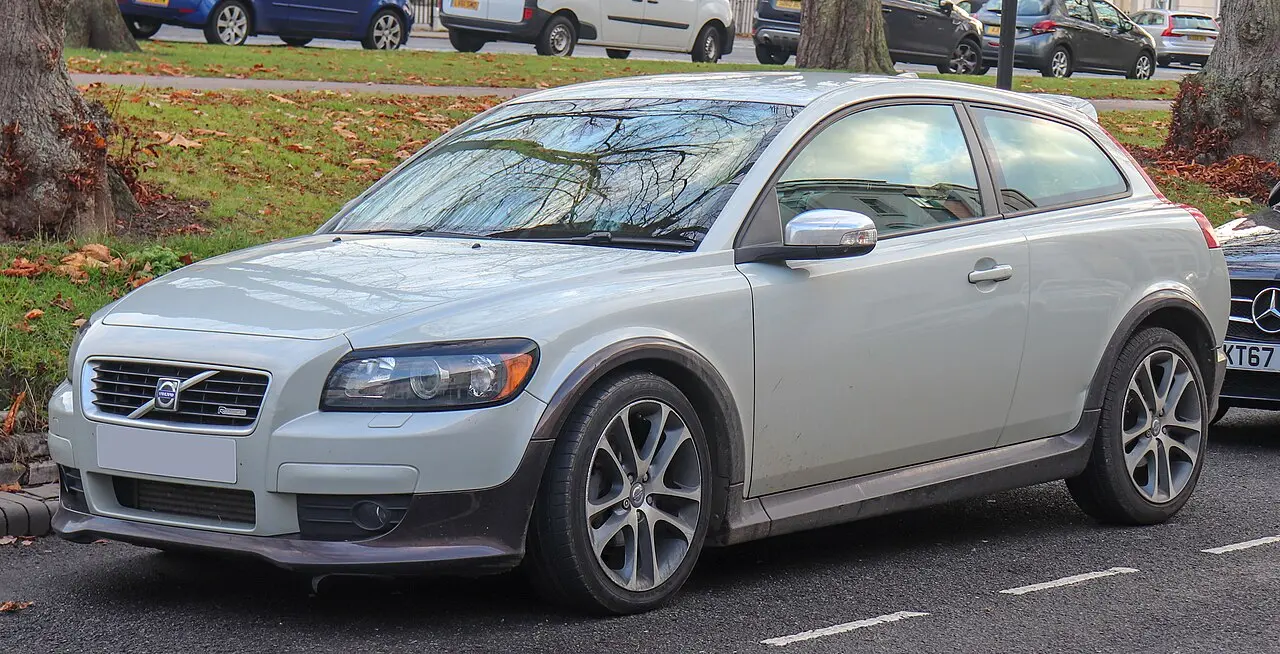
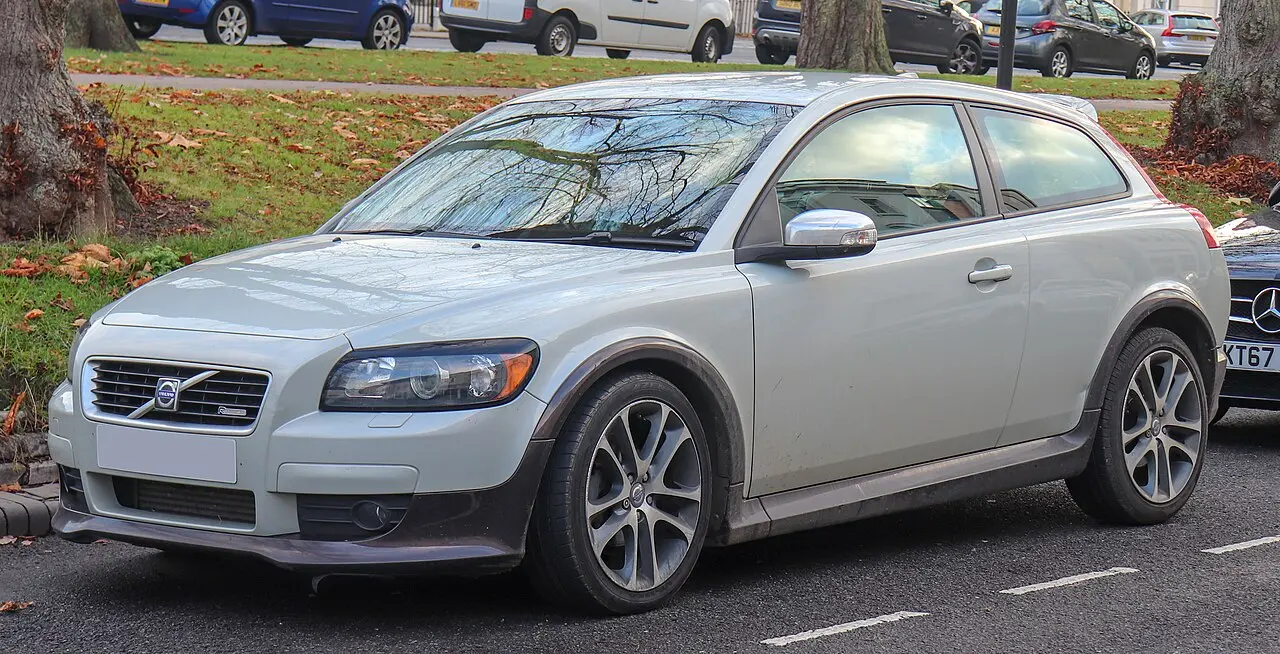
The Volvo C30 is a compact, sporty two-door hatchback with four individual seats. It sat at the smaller end of Volvo’s range, offering a distinctive alternative to the brand’s larger cars. Its broad glass tailgate, framed by tall rear lights, gives the car a distinctive rear and makes the tailgate part of its design.

Volvo sold the C30 in Europe and the UK from 2007 to 2013, and in the United States and Canada from 2008 to 2013. It had one generation, known by the internal codes P1 and 533. The production car’s glass tailgate also recalled the design of Volvo’s P1800 ES estate.

Engines and power

The C30 was offered with petrol and diesel engines, as well as flex-fuel E85 versions in some markets. The European Union range also included electric and other fuel types. European engines ran from 1.6 to 2.5 litres, with power from 74 kW (101 PS) to 169 kW (230 PS). The UK range covered the same engine-size span; its listed power figure is 125 kW (170 PS).

With four separate seats and a compact body, the C30 suited drivers who wanted a smaller car with a distinctive design.

Fuel consumption and emissions

In the UK, the lowest listed consumption is 3.6 L/100 km on the NEDC test. France’s ADEME figures for 2012 also give a lowest value of 3.6 L/100 km on NEDC.

For the United States, the EPA’s best combined rating is 24 MPG, or 9.8 L/100 km. Canada’s lowest listed figure is 9.9 L/100 km on NRCan’s 5-cycle test. These figures use different procedures: NEDC in Europe, EPA testing in the United States and the 5-cycle test in Canada.

Where was the Volvo C30 sold?

The C30 was sold in Europe, the UK, the United States and Canada. European Union registrations span 2010–2014 and total 98,256; the most registered listed configuration was a 1.6-litre diesel in 2010. US and Canadian versions used petrol engines from 2.4 to 2.5 litres, while European markets had a wider mix of fuels.

Questions and answers

How many generations of Volvo C30 were there?

One generation, sold from 2007 to 2013 in Europe and the UK, and from 2008 to 2013 in the United States and Canada.

How powerful was the Volvo C30?

European Union versions ranged from 74 kW (101 PS) to 169 kW (230 PS). The UK listing gives 125 kW (170 PS).

What is the Volvo C30’s lowest listed fuel consumption?

The lowest listed figure is 3.6 L/100 km on the NEDC test in the UK and France.

What body style is the Volvo C30?

It is a compact two-door hatchback with four individual seats and a distinctive glass tailgate.
C30 C30 (2007–2013)

Volvo C30 C30
Photo: Vauxford / Wikimedia Commons · CC BY-SA 4.0

Model codes: P1, 533 · Sold in: European Union and United Kingdom · References: volvocars.com, en.wikipedia.org

Show all 98 versions

C30 C30 (2008–2013)

Volvo C30 C30
Photo: Vauxford / Wikimedia Commons · CC BY-SA 4.0

Model codes: P1, 533 · Sold in: United States and Canada · References: en.wikipedia.org, cars.com

United States 11 versions

Model years sold in the USA, from the EPA and the Department of Energy (fueleconomy.gov). MPG on the EPA test; litres per 100 km = 235.215 ÷ MPG.

Years and versionEngineFuelGearboxDriveConsumption (combined)CO₂
20132.5 LPetrol5-speed automaticFront-wheel drive24 MPG (9.8 L/100 km) EPA225 g/km
20132.5 LPetrol6-speed manualFront-wheel drive24 MPG (9.8 L/100 km) EPA224 g/km
2010–20122.5 LPetrol6-speed manualFront-wheel drive24 MPG (9.8 L/100 km) EPA230 g/km
2010–20122.5 LPetrol5-speed automaticFront-wheel drive24 MPG (9.8 L/100 km) EPA230 g/km
20102.4 LPetrol5-speed manualFront-wheel drive24 MPG (9.8 L/100 km) EPA230 g/km
20102.4 LPetrol5-speed automaticFront-wheel drive24 MPG (9.8 L/100 km) EPA230 g/km
2008–20092.4 LPetrol5-speed manualFront-wheel drive23 MPG (10.2 L/100 km) EPA240 g/km
2008–20092MODE CLKUP2.4 LPetrol5-speed automaticFront-wheel drive23 MPG (10.2 L/100 km) EPA240 g/km
2008–20092.5 LPetrol6-speed manualFront-wheel drive23 MPG (10.2 L/100 km) EPA240 g/km
20092MODE CLKUP2.5 LPetrol5-speed automaticFront-wheel drive23 MPG (10.2 L/100 km) EPA240 g/km
20082MODE CLKUP2.5 LPetrol5-speed automaticFront-wheel drive22 MPG (10.7 L/100 km) EPA251 g/km

Canada 11 versions

Model years sold in Canada, from Natural Resources Canada fuel consumption ratings (5-cycle test).

Years and versionEngineFuelGearboxConsumption (combined)CO₂
2010–2013Compact2.5 LPetrol6-speed manual10.0 L/100 km 5-cycle230 g/km
2011–2013Compact2.5 LPetrol5-speed automatic9.9 L/100 km 5-cycle228 g/km
2010Compact2.4 LPetrol5-speed automatic10.4 L/100 km 5-cycle239 g/km
2010Compact2.4 LPetrol5-speed manual10.2 L/100 km 5-cycle235 g/km
2010Compact2.5 LPetrol5-speed automatic10.0 L/100 km 5-cycle230 g/km
2009Compact2.4 LPetrol5-speed automatic10.4 L/100 km 5-cycle239 g/km
2008–2009Compact2.5 LPetrol6-speed manual10.4 L/100 km 5-cycle239 g/km
2009Compact2.5 LPetrol5-speed automatic10.4 L/100 km 5-cycle239 g/km
2008Compact2.4 LPetrol5-speed automatic10.3 L/100 km 5-cycle237 g/km
2008Compact2.4 LPetrol5-speed manual10.3 L/100 km 5-cycle237 g/km
2008Compact2.5 LPetrol5-speed automatic10.8 L/100 km 5-cycle248 g/km

Versions outside these generations

European Union 1 version

New cars registered in the EU (plus Norway and Iceland), from the European Environment Agency. Figures on the NEDC procedure until 2020 and on WLTP from 2021; versions are grouped by engine and power, with their number of registrations.

Years and versionEnginePowerFuelCO₂EU registrations
20141.6 L84 kW (114 PS)Diesel102 g/km58

France 9 versions

New cars on sale in France, from ADEME Car Labelling. NEDC figures until 2015, WLTP figures in the current catalogue.

Years and versionEnginePowerFuelGearboxConsumption (combined)CO₂
2012C30 D2 (115ch) BVM6–84 kW (114 PS)Diesel6-speed manual4.3 L/100 km NEDC114 g/km
2012C30 D2 (115ch) Stop&Start BVM6–84 kW (114 PS)Diesel6-speed manual3.6 L/100 km NEDC94 g/km
2012C30 2.0 (145ch) BVM5–107 kW (145 PS)Petrol5-speed manual7.6 L/100 km NEDC177 g/km
2012C30 D3 (150ch) Geartronic 6–110 kW (150 PS)Diesel6-speed automatic5.8 L/100 km NEDC154 g/km
2012C30 D3 (150ch) BVM6–110 kW (150 PS)Diesel6-speed manual5.1 L/100 km NEDC134 g/km
2012C30 D4 (177ch) Geartronic 6–130 kW (177 PS)Diesel6-speed automatic5.8 L/100 km NEDC154 g/km
2012C30 D4 (177ch) BVM6–130 kW (177 PS)Diesel6-speed manual5.1 L/100 km NEDC134 g/km
2012C30 T5 (230ch) BVM6–169 kW (230 PS)Petrol6-speed manual8.7 L/100 km NEDC203 g/km
2012C30 T5 (230ch) BVA5–169 kW (230 PS)Petrol5-speed automatic9.0 L/100 km NEDC211 g/km

Official figures are measured on standard test procedures and differ between markets. Your consumption depends on how, where and in what conditions you drive.