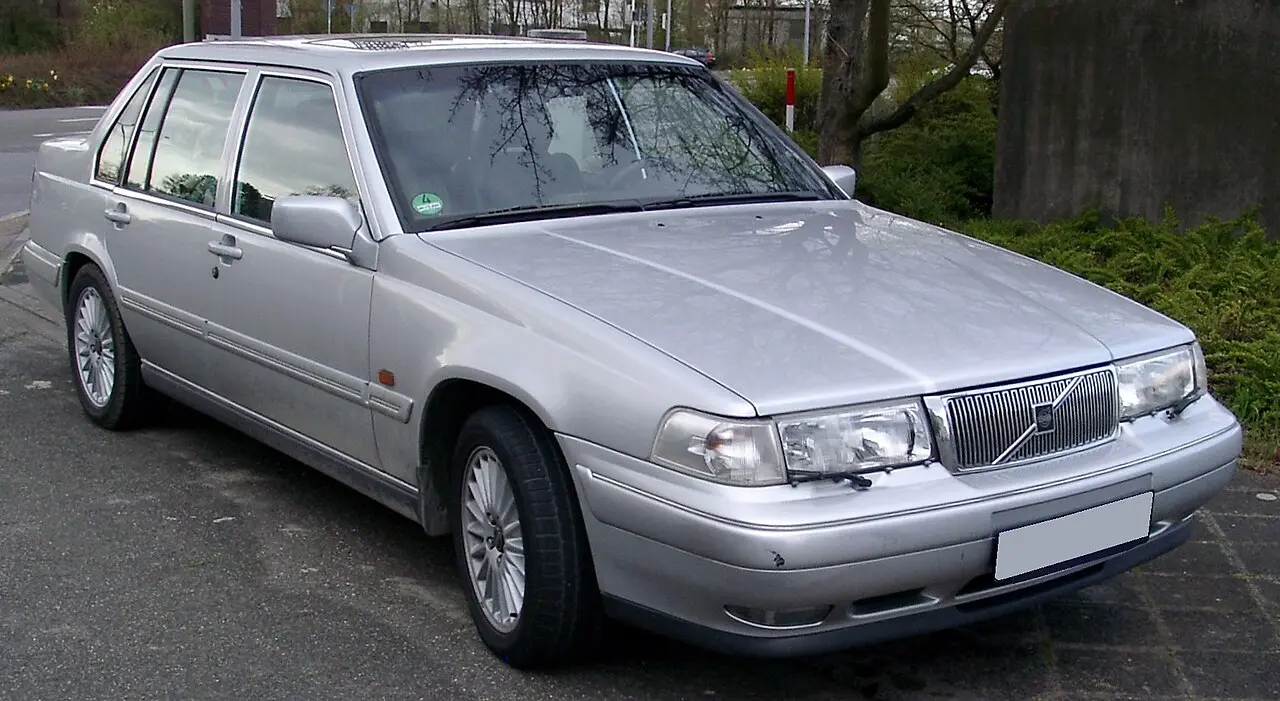
What is the Volvo 960?
The Volvo 960 was a large family car offered as a saloon and an estate. It sat in the upmarket part of Volvo’s range, combining room for passengers and luggage with a comfortable, formal style. The estate added a generous load area; the saloon had a more traditional three-box shape.
Part of Volvo’s 900-series, the 960 brought the marque’s large-car range into a more refined era. In 1996, Volvo replaced the 960 saloon and estate with the S90 and V90, retaining the distinction between the two body styles.
960 generation and engines
The 960 generation ran from 1992 to 1996 in the United States and from 1995 to 1997 in Canada. Its body codes are 964 and 965, for the saloon and estate.
US EPA and Canadian NRCan listings cover petrol engines from 2.5 L to 2.9 L. The US listings include four versions, while the Canadian listings include three.
How economical is the Volvo 960?
In the United States, the best listed combined rating is 19 MPG under the EPA procedure, and the lowest listed consumption is 12.4 L/100 km. Canada’s lowest listed figure is 12.6 L/100 km under NRCan’s 5-cycle test. The procedures differ, so the results are not direct equivalents. European WLTP and NEDC tests use different methods as well.
Where was the Volvo 960 sold?
The listed markets are the United States and Canada. US EPA figures cover 1992–1996 and four versions; Canadian NRCan figures cover 1995–1997 and three versions. Both markets list petrol engines from 2.5 L to 2.9 L.
Questions and answers
Was the Volvo 960 a saloon or an estate?
Both body styles were offered; the generation codes are 964 and 965.
What engines are listed for the 960?
The US and Canadian listings cover petrol engines from 2.5 L to 2.9 L.
What is the best listed US fuel economy?
19 MPG combined under the EPA procedure.
Why do the US and Canadian consumption figures differ?
The EPA and NRCan 5-cycle procedures are different tests, so their results are not directly interchangeable.