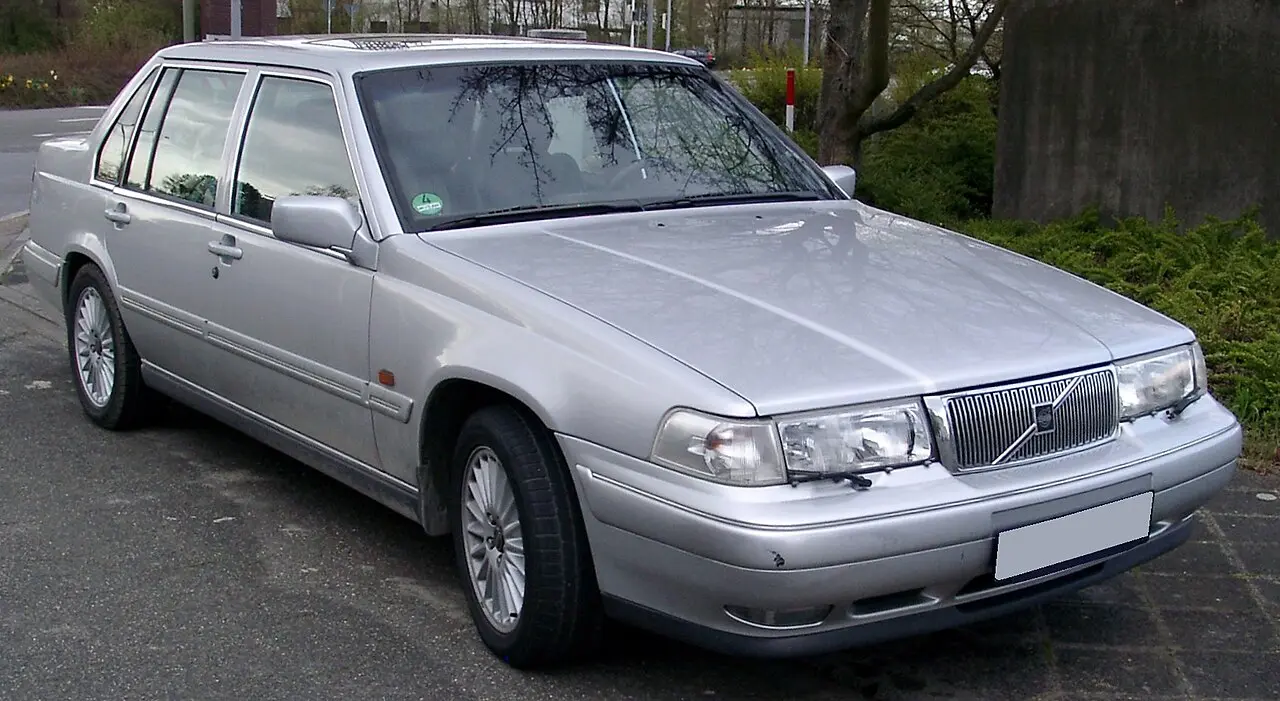
What is the Volvo 940?
The Volvo 940 was a large saloon and estate in the 900 series, positioned alongside the more luxurious 960. Its traditional rear-wheel-drive layout and roomy body made it a familiar choice within Volvo’s larger-car range. The estate offered space for carrying larger loads, while the saloon had a more formal shape.
Generations and design
The 940’s generation ran from 1991 to 1995. Its codes were 944 for the saloon and 945 for the estate. The 900 series followed the 700 series, and the 940 took over from the 740, which remained in the range in a basic form for a time. The 940 shared much of its styling with the 960, but used a live rear axle.
Engines and power
The US and Canadian versions listed a 2.3 L petrol engine. The 940 sat below the more luxurious 960 in Volvo’s large-car range, with saloon and estate body styles sharing the same basic layout.
How economical was the Volvo 940?
In the United States, the EPA ratings give a lowest listed combined consumption of 11.8 L/100 km and a best combined rating of 20 MPG. Canada’s lowest listed consumption is 12.1 L/100 km on NRCan’s 5-cycle test. The EPA and Canadian procedures differ, so the figures are not direct like-for-like comparisons.
Where was it sold?
The 940 was listed in the United States from 1991 to 1995 and in Canada in 1995. Both markets listed a 2.3 L petrol engine. Saloon and estate body styles gave the large 900-series car two distinct forms.
Questions and answers
When was the Volvo 940 sold in the United States?
The listed US market years are 1991 to 1995.
What body styles were available?
The 940 came as a saloon and an estate.
What engine is listed for North America?
The US and Canadian market figures list a 2.3 L petrol engine.
How do the US and Canadian consumption tests differ?
The US uses the EPA procedure; the Canadian figure uses NRCan’s 5-cycle procedure.