Volkswagen

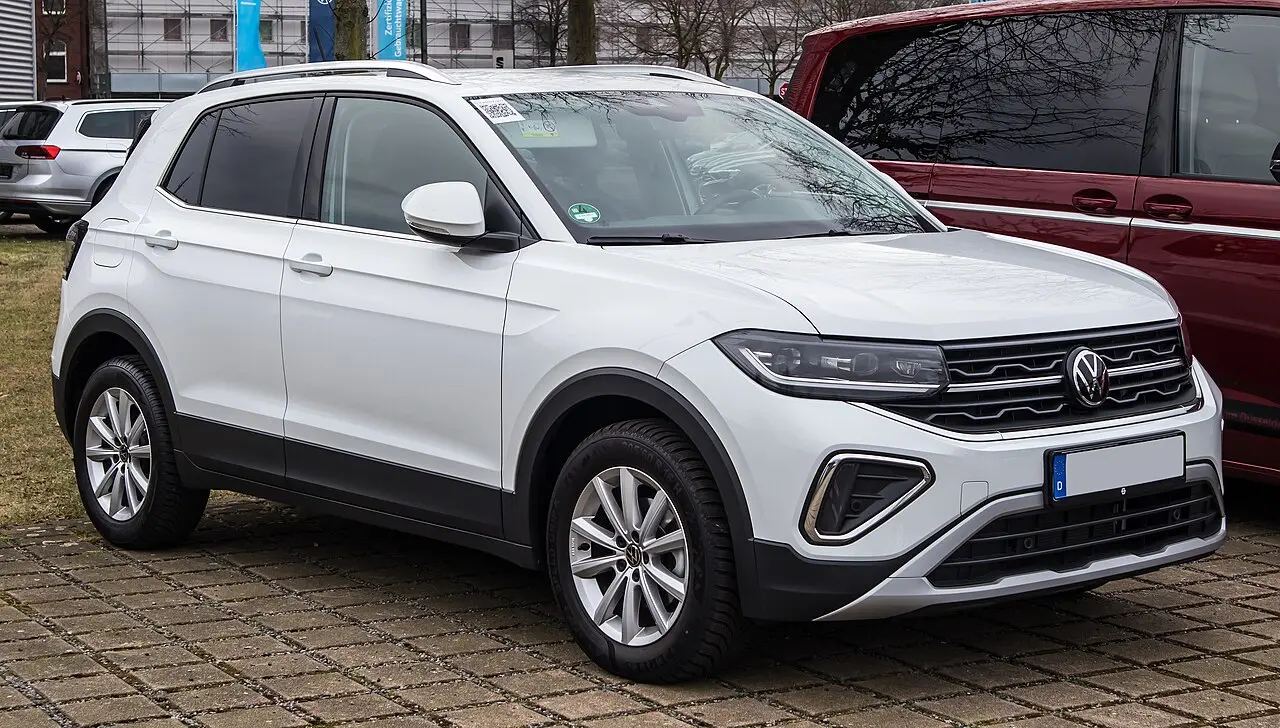
Volkswagen T-Cross

Volkswagen T-Cross
Photo: © M 93 / Wikimedia Commons · CC BY-SA 3.0 de

The official data lists 83 versions of the Volkswagen T-Cross (2019–2026), in the European Union and the United Kingdom. Each market publishes its own figures, measured on its own test procedure.

At a glance

Years in the data
2019–2026
Markets
European Union, United Kingdom
Engines
1.0 L to 1.6 L
Power
70 kW (95 PS) to 206 kW (280 PS)
Fuels
Petrol, Diesel, Hybrid
Lowest consumption (European Union)
4.5 L/100 km (WLTP)
Lowest consumption (United Kingdom)
5.4 L/100 km (WLTP)
New registrations in the EU
1,063,279

What is the Volkswagen T-Cross?

The T-Cross is a compact SUV with a raised driving position and a cabin that can adapt to changing passenger and luggage needs. Its sliding rear bench lets occupants trade rear legroom for luggage space, making it useful for everyday journeys and errands.

Volkswagen introduced the T-Cross in 2018 as a compact addition to its SUV range. It shares the modular transverse-engine platform used by the Polo, and its flexible interior gives the small SUV a practical character.

Generation and engines

The T-Cross has one generation in the listed range: the first generation, introduced in 2018 and continuing today.

EU figures list engine sizes from 1.0 to 1.6 litres and power from 67 kW (91 PS) to 206 kW (280 PS), with petrol, diesel and hybrid fuel classifications. In the UK, listed petrol engines range from 1.0 to 1.5 litres and produce 70 kW (95 PS) to 110 kW (150 PS).

Fuel consumption and markets

The lowest listed EU consumption is 4.5 L/100 km on WLTP. The UK figure is 5.4 L/100 km, also on WLTP. Across Europe, WLTP has replaced the earlier NEDC procedure; the USA uses EPA testing and Canada uses a 5-cycle test, so figures from different markets may not be directly comparable.

The T-Cross appears in EU registration figures from 2019 to 2025 and UK figures from 2025 to 2026. EU registrations total 1,063,279.

Questions and answers

How many generations of T-Cross are there?

One: the first generation, introduced in 2018 and continuing today.

What engine sizes are listed for the T-Cross?

The EU range covers 1.0 to 1.6 litres; the UK range covers 1.0 to 1.5 litres.

What is the T-Cross’s lowest official fuel consumption?

The EU low is 4.5 L/100 km on WLTP. The UK low is 5.4 L/100 km, also on WLTP.

Where was the T-Cross sold?

It appears in market figures for the European Union and the United Kingdom.

T-Cross first generation (since 2018)

Volkswagen T-Cross first generation
Photo: © M 93 / Wikimedia Commons · CC BY-SA 3.0 de

Model codes: C1 · Sold in: European Union and United Kingdom · References: en.wikipedia.org

European Union 61 versions

New cars registered in the EU (plus Norway and Iceland), from the European Environment Agency. Figures on the NEDC procedure until 2020 and on WLTP from 2021; versions are grouped by engine and power, with their number of registrations.

Years and versionEnginePowerFuelConsumption (combined)CO₂Electric rangeEU registrations
20251.0 L85 kW (116 PS)Petrol5.8 L/100 km WLTP131 g/km–69,321
20251.0 L70 kW (95 PS)Petrol5.6 L/100 km WLTP128 g/km–23,184
20251.5 L110 kW (150 PS)Petrol6.1 L/100 km WLTP138 g/km–11,521
20251.0 L81 kW (110 PS)Petrol6.3 L/100 km WLTP142 g/km–32
20241.0 L85 kW (116 PS)Petrol5.8 L/100 km WLTP132 g/km–59,071
20241.0 L70 kW (95 PS)Petrol5.7 L/100 km WLTP129 g/km–25,880
20241.5 L110 kW (150 PS)Petrol6.1 L/100 km WLTP137 g/km–12,426
20241.0 L81 kW (110 PS)Petrol6.1 L/100 km WLTP139 g/km–8,064
20231.0 L81 kW (110 PS)Petrol6.1 L/100 km WLTP138 g/km–59,682
20231.0 L70 kW (95 PS)Petrol5.8 L/100 km WLTP132 g/km–24,531
20231.5 L110 kW (150 PS)Petrol6.0 L/100 km WLTP136 g/km–9,182
20231.0 L67 kW (91 PS)Petrol6.1 L/100 km WLTP139 g/km–205
20231.0 L110 kW (150 PS)Petrol6.1 L/100 km WLTP139 g/km–123
20231.0 L85 kW (116 PS)Petrol5.9 L/100 km WLTP159 g/km–78
20231.0 L96 kW (131 PS)Petrol6.1 L/100 km WLTP140 g/km–35
20231.0 L95 kW (129 PS)Petrol6.1 L/100 km WLTP139 g/km–34
20231.0 L84 kW (114 PS)Petrol6.1 L/100 km WLTP139 g/km–32
20231.5 L67 kW (91 PS)Petrol5.9 L/100 km WLTP135 g/km–29
20231.0 L72 kW (98 PS)Petrol6.1 L/100 km WLTP138 g/km–26
20231.0 L68 kW (92 PS)Petrol6.1 L/100 km WLTP138 g/km–23
20231.0 L120 kW (163 PS)Petrol6.1 L/100 km WLTP140 g/km–19
20231.0 L132 kW (179 PS)Petrol6.1 L/100 km WLTP140 g/km–19
20231.0 L91 kW (124 PS)Petrol6.1 L/100 km WLTP139 g/km–18
20231.0 L112 kW (152 PS)Petrol6.1 L/100 km WLTP138 g/km–18
20231.0 L140 kW (190 PS)Petrol6.1 L/100 km WLTP139 g/km–18
20231.0 L61 kW (83 PS)Petrol6.1 L/100 km WLTP138 g/km–15
20231.5 L118 kW (160 PS)Petrol–192 g/km–15
20231.0 L116 kW (158 PS)Petrol6.1 L/100 km WLTP139 g/km–14
20231.0 L69 kW (94 PS)Petrol6.1 L/100 km WLTP139 g/km–13
20231.0 L117 kW (159 PS)Petrol6.1 L/100 km WLTP139 g/km–13
20231.5 L81 kW (110 PS)Petrol5.9 L/100 km WLTP153 g/km–13
20231.0 L74 kW (101 PS)Petrol6.1 L/100 km WLTP140 g/km–10
20231.0 L90 kW (122 PS)Petrol6.1 L/100 km WLTP138 g/km–10
20231.0 L131 kW (178 PS)Petrol6.1 L/100 km WLTP140 g/km–10
20231.0 L150 kW (204 PS)Petrol6.2 L/100 km WLTP142 g/km–10
20221.0 L81 kW (110 PS)Petrol5.6 L/100 km WLTP138 g/km–65,586
20221.0 L70 kW (95 PS)Petrol5.4 L/100 km WLTP131 g/km–24,953
20221.5 L110 kW (150 PS)Petrol5.7 L/100 km WLTP137 g/km–9,803
20221.0 L206 kW (280 PS)Petrol–140 g/km–78
20221.5 L206 kW (280 PS)Petrol–136 g/km–64
20221.0 L85 kW (116 PS)Petrol6.6 L/100 km WLTP166 g/km–34
20211.0 L81 kW (110 PS)Petrol5.8 L/100 km WLTP142 g/km–142,516
20211.0 L70 kW (95 PS)Petrol5.3 L/100 km WLTP132 g/km–63,772
20211.5 L110 kW (150 PS)Petrol5.9 L/100 km WLTP137 g/km–23,524
20211.0 L85 kW (116 PS)Petrol5.7 L/100 km WLTP143 g/km–5,178
20211.6 L70 kW (95 PS)Diesel4.5 L/100 km WLTP140 g/km–1,072
20211.5 L110 kW (150 PS)Hybrid–139 g/km–22
20201.0 L85 kW (116 PS)Petrol23.1 kWh/100 km NEDC113 g/km231 km130,673
20201.0 L70 kW (95 PS)Petrol–114 g/km–49,064
20201.6 L70 kW (95 PS)Diesel–108 g/km–19,081
20201.0 L81 kW (110 PS)Petrol–112 g/km–13,437
20201.5 L110 kW (150 PS)Petrol–119 g/km–11,754
20201.5 L85 kW (116 PS)Petrol–118 g/km–1,276
20201.6 L85 kW (116 PS)Diesel–107 g/km–828
20191.0 L85 kW (116 PS)Petrol–113 g/km–128,770
20191.0 L70 kW (95 PS)Petrol–113 g/km–51,330
20191.6 L70 kW (95 PS)Diesel–110 g/km–16,668
20191.5 L110 kW (150 PS)Petrol–182 g/km–54
20191.0 L81 kW (110 PS)Petrol–166 g/km–18
20191.4 L110 kW (150 PS)Petrol–184 g/km–16
20191.2 L85 kW (116 PS)Petrol–164 g/km–14

United Kingdom 22 versions

New cars on sale in the UK, from the Vehicle Certification Agency. NEDC figures until 2018 and WLTP figures after; years are the editions a version appeared in.

Years and versionEnginePowerFuelGearboxConsumption (combined)CO₂
2025–2026Life 1.0 TSI 95PS 5-speed Manual 5 Door1.0 L70 kW (95 PS)Petrol5-speed manual5.5 L/100 km WLTP125 g/km
2025–2026Life 1.0 TSI 95PS 5-speed Manual 5 Door1.0 L70 kW (95 PS)Petrol5-speed manual5.7 L/100 km WLTP130 g/km
2025–2026Life 1.0 TSI 115PS 6-speed Manual 5 Door1.0 L85 kW (116 PS)Petrol6-speed manual5.4 L/100 km WLTP124 g/km
2025–2026Life 1.0 TSI 115PS 6-speed Manual 5 Door1.0 L85 kW (116 PS)Petrol6-speed manual5.7 L/100 km WLTP130 g/km
2025–2026Life 1.0 TSI 115PS 7-speed DSG 5 Door1.0 L85 kW (116 PS)Petrol7-speed automatic5.7 L/100 km WLTP129 g/km
2025–2026Life 1.0 TSI 115PS 7-speed DSG 5 Door1.0 L85 kW (116 PS)Petrol7-speed automatic5.9 L/100 km WLTP135 g/km
2025–2026Match 1.0 TSI 95PS 5-speed Manual 5 Door1.5 L70 kW (95 PS)Petrol5-speed manual5.6 L/100 km WLTP127 g/km
2025–2026Match 1.0 TSI 95PS 5-speed Manual 5 Door1.5 L70 kW (95 PS)Petrol5-speed manual5.7 L/100 km WLTP130 g/km
2025–2026Black Edition 1.0 TSI 115PS 6-Speed Manual1.5 L85 kW (116 PS)Petrol6-speed manual5.7 L/100 km WLTP129 g/km
2025–2026Black Edition 1.0 TSI 115PS 6-Speed Manual · Match 1.0 TSI 115PS 6-speed Manual 5 Door · R-Line 1.0 TSI 115PS 6-Speed Manual and 1 more trim1.5 L85 kW (116 PS)Petrol6-speed manual5.7 L/100 km WLTP130 g/km
2025–2026Black Edition 1.0 TSI 115PS 7-Speed DSG1.5 L85 kW (116 PS)Petrol7-speed automatic5.9 L/100 km WLTP133 g/km
2025–2026Black Edition 1.0 TSI 115PS 7-Speed DSG · R-Line 1.0 TSI 115PS 7-Speed DSG1.5 L85 kW (116 PS)Petrol7-speed automatic5.9 L/100 km WLTP134 g/km
2025–2026Match 1.0 TSI 115PS 6-speed Manual 5 Door · R-Line 1.0 TSI 115PS 6-Speed Manual · Style 1.0 TSI 115PS 6-Speed Manual1.5 L85 kW (116 PS)Petrol6-speed manual5.5 L/100 km WLTP126 g/km
2025–2026Match 1.0 TSI 115PS 7-speed DSG 5 Door · Style 1.0 TSI 115PS 7-speed DSG 5 Door1.5 L85 kW (116 PS)Petrol7-speed automatic5.8 L/100 km WLTP131 g/km
2025–2026Match 1.0 TSI 115PS 7-speed DSG 5 Door · Style 1.0 TSI 115PS 7-speed DSG 5 Door1.5 L85 kW (116 PS)Petrol7-speed automatic5.9 L/100 km WLTP135 g/km
2025–2026R-Line 1.0 TSI 115PS 7-Speed DSG1.5 L85 kW (116 PS)Petrol7-speed automatic5.7 L/100 km WLTP131 g/km
2025–2026Black Edition .5 TSI 150PS 7-Speed DSG1.5 L110 kW (150 PS)Petrol7-speed automatic6.1 L/100 km WLTP138 g/km
2025–2026Black Edition .5 TSI 150PS 7-Speed DSG · R-Line 1.5 TSI 150PS 7-Speed DSG1.5 L110 kW (150 PS)Petrol7-speed automatic6.2 L/100 km WLTP139 g/km
2025–2026R-Line 1.5 TSI 150PS 7-Speed DSG1.5 L110 kW (150 PS)Petrol7-speed automatic6.0 L/100 km WLTP135 g/km
2025–2026Style Design 1.5 TSI 150PS 7-speed DSG 5 Door1.5 L110 kW (150 PS)Petrol7-speed automatic6.3 L/100 km WLTP144 g/km
2025–2026Style 1.5 TSI 150PS 7-Speed DSG1.5 L110 kW (150 PS)Petrol7-speed automatic6.0 L/100 km WLTP136 g/km
2025–2026Style 1.5 TSI 150PS 7-Speed DSG1.5 L110 kW (150 PS)Petrol7-speed automatic6.2 L/100 km WLTP140 g/km

Official figures are measured on standard test procedures and differ between markets. Your consumption depends on how, where and in what conditions you drive.