Vauxhall

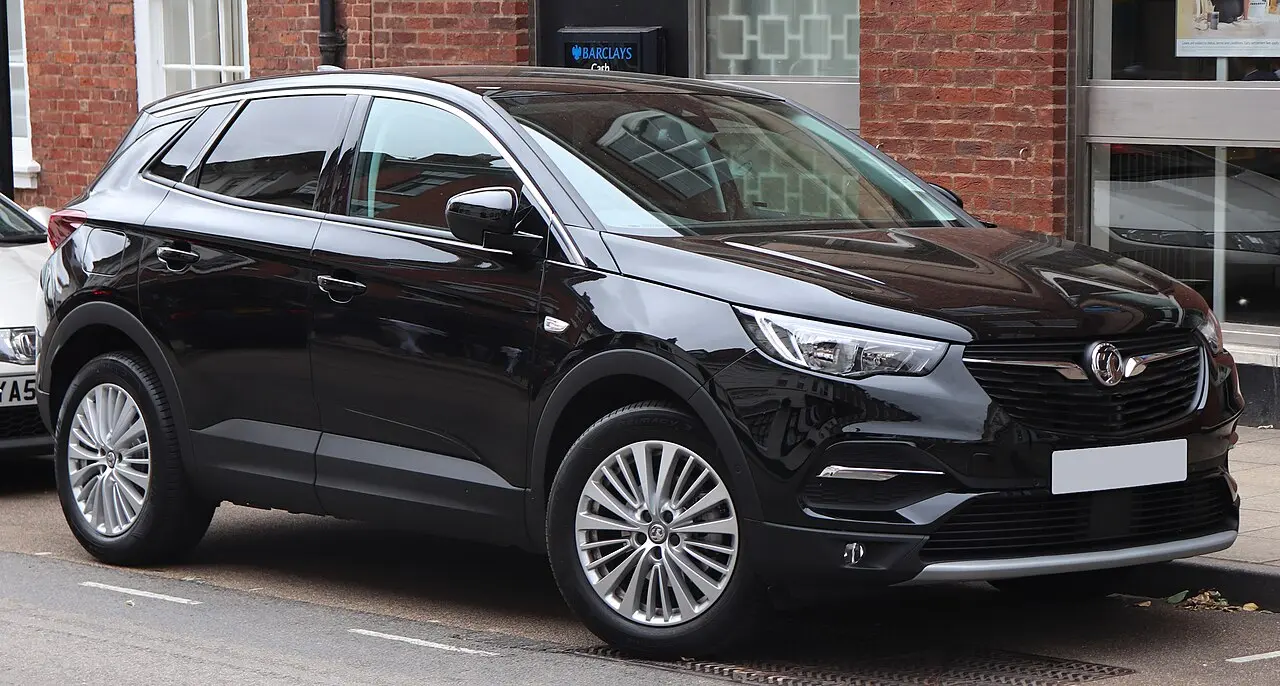
Vauxhall Grandland X

Vauxhall Grandland X
Photo: Vauxford / Wikimedia Commons · CC BY-SA 4.0

The official data lists 25 versions of the Vauxhall Grandland X (2017–2020), in the European Union and the United Kingdom. Each market publishes its own figures, measured on its own test procedure.

At a glance

Years in the data
2017–2020
Markets
European Union, United Kingdom
Engines
1.2 L to 2.0 L
Power
88 kW (120 PS) to 130 kW (177 PS)
Fuels
Petrol, Diesel, Plug-in hybrid
Lowest consumption (United Kingdom)
4.0 L/100 km (NEDC)
New registrations in the EU
115,604

What is the Vauxhall Grandland X?

The Grandland X is a family-sized SUV that joined Vauxhall’s range in 2017. Its raised stance and roomy five-door shape suit everyday family journeys as well as longer drives. The first generation, known as A, ran from 2017 to 2024.

Vauxhall is a British car brand and part of Stellantis. The Grandland X arrived during a major expansion of the Opel and Vauxhall ranges, which added new SUVs and crossovers.

Generations and engines

The first generation was offered with petrol and diesel engines, as well as a plug-in hybrid. Engine sizes ranged from 1.2 to 2.0 litres, giving the range several powertrain options.

In UK VCA figures for 2018, listed outputs ran from 88 kW (120 PS) to 130 kW (177 PS). The plug-in hybrid brought electric driving into the range alongside the petrol and diesel versions.

Fuel consumption

In EU registration figures, the Grandland X appears from 2017 to 2020, with 14 versions across petrol, diesel and plug-in hybrid powertrains. UK VCA figures for 2018 give a lowest stated consumption of 4 L/100 km on the NEDC test. This is a test result for particular versions, not a figure for every model.

European consumption figures may use WLTP or the earlier NEDC procedure. The UK figure here uses NEDC, so comparisons are most useful when they use the same test procedure.

Where was the Grandland X sold?

The Grandland X appears in EU registration figures from 2017 to 2020, with 115,604 registrations. The 1.2-litre petrol version led the listed annual figures in each of those years: 34,656 registrations in 2019, 28,154 in 2020 and 21,704 in 2018.

Questions and answers

What kind of car is the Grandland X?

It is a family-sized SUV from Vauxhall, introduced in 2017.

What engines did the Grandland X have?

The range included 1.2- to 2.0-litre engines, with petrol, diesel and plug-in hybrid versions.

What is its lowest stated UK fuel consumption?

The lowest UK VCA figure listed for 2018 is 4 L/100 km on the NEDC test.

When did the first Grandland X generation run?

The first generation, known as A, ran from 2017 to 2024.

Grandland X A (2017–2024)

Vauxhall Grandland X A
Photo: Vauxford / Wikimedia Commons · CC BY-SA 4.0

Model codes: P1UO · References: en.wikipedia.org, gspglobal.com

European Union 14 versions

New cars registered in the EU (plus Norway and Iceland), from the European Environment Agency. Figures on the NEDC procedure until 2020 and on WLTP from 2021; versions are grouped by engine and power, with their number of registrations.

Years and versionEngineFuelConsumption (combined)CO₂Electric rangeEU registrations
20201.2 LPetrol–114 g/km–28,154
20201.5 LDiesel–101 g/km–6,702
20201.6 LPlug-in hybrid15.4 kWh/100 km NEDC34 g/km63 km2,810
20202.0 LDiesel–122 g/km–70
20191.2 LPetrol–119 g/km–34,656
20191.5 LDiesel–110 g/km–9,480
20192.0 LDiesel–127 g/km–496
20191.6 LDiesel–106 g/km–162
20181.2 LPetrol–119 g/km–21,704
20181.6 LDiesel–107 g/km–7,004
20181.5 LDiesel–109 g/km–4,014
20182.0 LDiesel–128 g/km–244
20171.6 LDiesel–108 g/km–72
20171.2 LPetrol–121 g/km–36

United Kingdom 11 versions

New cars on sale in the UK, from the Vehicle Certification Agency. NEDC figures until 2018 and WLTP figures after; years are the editions a version appeared in.

Years and versionEnginePowerFuelGearboxConsumption (combined)CO₂
20181.2l 130PS Elite Nav1.2 L96 kW (130 PS)Petrol6-speed manual5.4 L/100 km NEDC124 g/km
20181.2l 130PS Elite Nav Automatic1.2 L96 kW (130 PS)Petrol6-speed automatic5.5 L/100 km NEDC127 g/km
20181.2l 130PS SE · 1.2l 130PS Sport Nav · 1.2l 130PS Tech Line Nav1.2 L96 kW (130 PS)Petrol6-speed manual5.1 L/100 km NEDC117 g/km
20181.2l 130PS SE Automatic · 1.2l 130PS Sport Nav Automatic · 1.2l 130PS Tech Line Nav Automatic1.2 L96 kW (130 PS)Petrol6-speed automatic5.2 L/100 km NEDC120 g/km
20181.2I 130PS Sport Nav · 1.2I 130PS Tech Line Nav · 1.2I 130PS Elite Nav1.2 L96 kW (130 PS)Petrol6-speed manual5.3 L/100 km NEDC121 g/km
20181.2I 130PS Sport Nav1.5 L96 kW (130 PS)Petrol6-speed manual5.3 L/100 km NEDC121 g/km
20181.6 CDTi Turbo D 120PS Elite Nav1.6 L88 kW (120 PS)Diesel6-speed manual4.3 L/100 km NEDC111 g/km
20181.6 CDTi Turbo D 120PS Elite Nav Automatic1.6 L88 kW (120 PS)Diesel6-speed automatic4.6 L/100 km NEDC118 g/km
20181.6 CDTi Turbo D 120PS SE · 1.6 CDTi Turbo D 120PS Sport Nav · 1.6 CDTi Turbo D 120PS Tech Line Nav1.6 L88 kW (120 PS)Diesel6-speed manual4.0 L/100 km NEDC104 g/km
20181.6 CDTi Turbo D 120PS SE Automatic · 1.6 CDTi Turbo D 120PS Sport Nav Automatic · 1.6 CDTi Turbo D 120PS Tech Line Nav Automatic1.6 L88 kW (120 PS)Diesel6-speed automatic4.3 L/100 km NEDC112 g/km
20182.0 CDTi Turbo D 177PS Ultimate Automatic2.0 L130 kW (177 PS)Diesel8-speed automatic4.9 L/100 km NEDC128 g/km

Official figures are measured on standard test procedures and differ between markets. Your consumption depends on how, where and in what conditions you drive.