Toyota

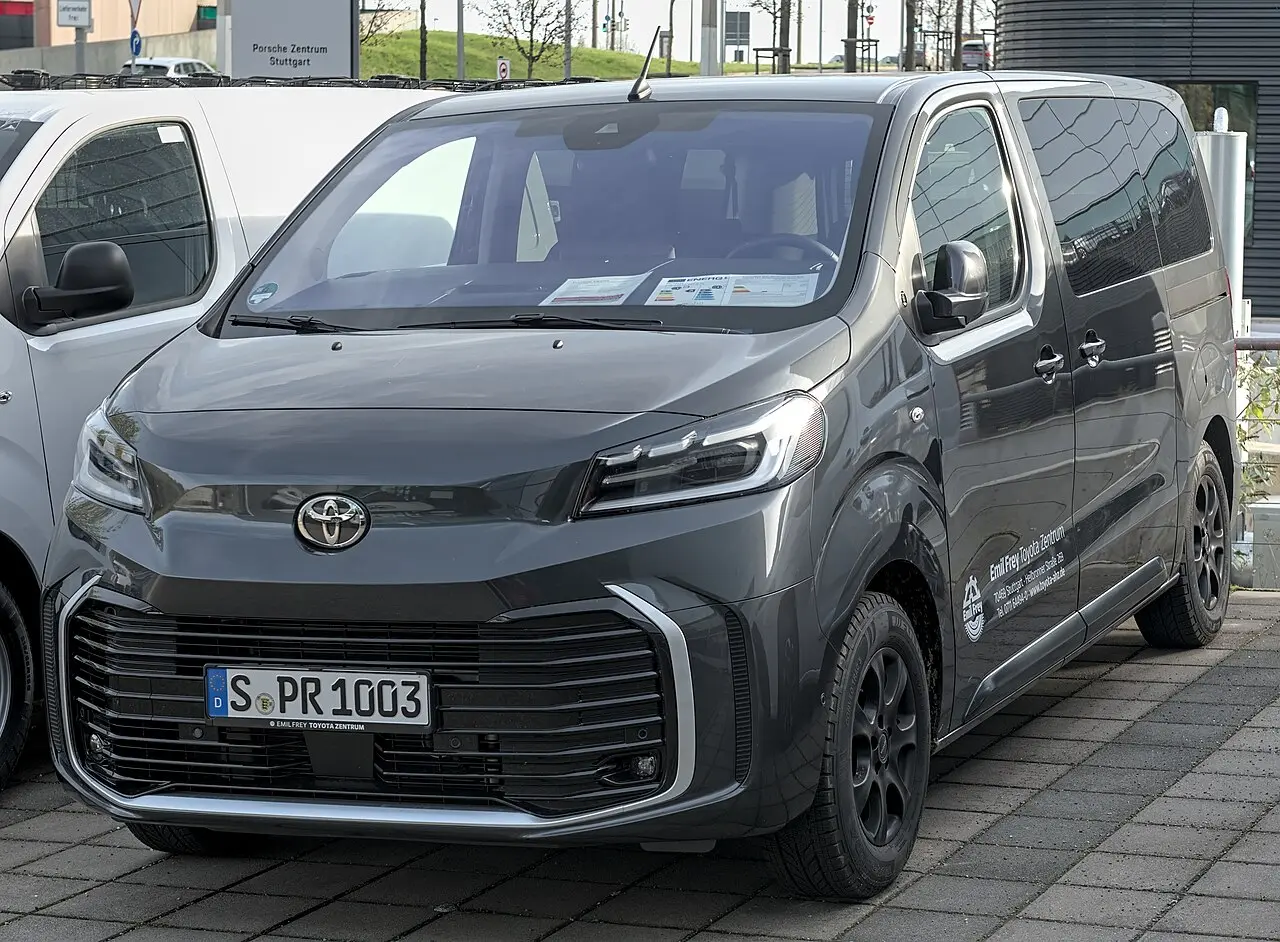
Toyota Proace Verso

Toyota Proace Verso
Photo: Alexander Migl / Wikimedia Commons · CC BY-SA 4.0

The official data lists 66 versions of the Toyota Proace Verso (2016–2026), in the European Union and the United Kingdom. Each market publishes its own figures, measured on its own test procedure.

At a glance

Years in the data
2016–2026
Markets
European Union, United Kingdom
Engines
1.5 L to 2.0 L
Power
85 kW (116 PS) to 177 kW (241 PS)
Fuels
Diesel, Electric
Lowest consumption (United Kingdom)
5.2 L/100 km (NEDC)
Lowest consumption (European Union)
7.2 L/100 km (WLTP)
New registrations in the EU
3,430

What is the Toyota Proace Verso?

The Proace Verso is a spacious passenger van with flexible seating for family travel, group transport or business use. Toyota introduced it in 2016, offering layouts that could carry up to nine people. It brings passenger comfort and a versatile cabin to the practical Proace line. Toyota developed the model through a cooperation programme with PSA, now part of Stellantis.

Generations and engines

The Proace Verso has one generation, introduced in 2016. Its range includes diesel and electric versions, with different body lengths and seating layouts.

In the European Union, engine sizes range from 1.5 to 2.0 litres, with power from 85 kW (116 PS) to 130 kW (177 PS). UK versions span the same engine sizes, with listed power from 85 kW (116 PS) to 177 kW (241 PS).

Fuel consumption and registrations

The lowest stated consumption is 7.2 L/100 km on the EU WLTP test and 5.2 L/100 km on the UK NEDC test. WLTP and NEDC procedures differ, so these market figures are not directly comparable.

In EU registration figures, the 2.0-litre diesel with 110 kW (150 PS) recorded 1,032 registrations in 2019 and 434 in 2020. The 2.0-litre diesel with 130 kW (177 PS) recorded 276 registrations in 2019.

Where was the Proace Verso sold?

The Proace Verso appears in EU registration figures from 2016 to 2025 and UK figures from 2017 to 2026. The EU listings include 20 versions and the UK listings include 46. Both markets have diesel and electric versions.

Questions and answers

When did the Toyota Proace Verso first appear?

Toyota introduced the Proace Verso in 2016 as a spacious passenger van with seating layouts for up to nine people.

Was the Proace Verso available as an electric vehicle?

Yes. Electric versions appear in both the EU and UK listings, alongside diesel models.

What is the lowest official consumption figure for the Proace Verso?

The lowest stated figure is 5.2 L/100 km on the UK NEDC test. The EU figure is 7.2 L/100 km on WLTP; the procedures differ.

Proace Verso first generation (since 2016)

Toyota Proace Verso first generation
Photo: Alexander Migl / Wikimedia Commons · CC BY-SA 4.0

Sold in: European Union and United Kingdom · References: media.toyota.co.uk, newsroom.toyota.eu

European Union 20 versions

New cars registered in the EU (plus Norway and Iceland), from the European Environment Agency. Figures on the NEDC procedure until 2020 and on WLTP from 2021; versions are grouped by engine and power, with their number of registrations.

Years and versionEnginePowerFuelConsumption (combined)CO₂Electric rangeEU registrations
20252.0 L130 kW (177 PS)Diesel7.4 L/100 km WLTP194 g/km–118
2025Electric motor100 kW (136 PS)Electric33.7 kWh/100 km WLTP0 g/km247 km106
20222.0 L106 kW (144 PS)Diesel7.2 L/100 km WLTP189 g/km–87
20222.0 L130 kW (177 PS)Diesel7.4 L/100 km WLTP193 g/km–22
20212.0 L106 kW (144 PS)Diesel–188 g/km–101
20212.0 L110 kW (150 PS)Diesel–189 g/km–48
20212.0 L130 kW (177 PS)Diesel–193 g/km–42
20202.0 L110 kW (150 PS)Diesel–143 g/km–434
20201.5 L88 kW (120 PS)Diesel–128 g/km–139
20202.0 L130 kW (177 PS)Diesel–147 g/km–47
20192.0 L110 kW (150 PS)Diesel–143 g/km–1,032
20192.0 L130 kW (177 PS)Diesel–146 g/km–276
20191.5 L88 kW (120 PS)Diesel–127 g/km–238
20182.0 L110 kW (150 PS)Diesel–141 g/km–138
20182.0 L130 kW (177 PS)Diesel–157 g/km–74
20181.6 L85 kW (116 PS)Diesel–135 g/km–34
20172.0 L110 kW (150 PS)Diesel–140 g/km–260
20171.6 L85 kW (116 PS)Diesel–136 g/km–112
20172.0 L130 kW (177 PS)Diesel–155 g/km–106
20162.0 L110 kW (150 PS)Diesel–139 g/km–16

United Kingdom 46 versions

New cars on sale in the UK, from the Vehicle Certification Agency. NEDC figures until 2018 and WLTP figures after; years are the editions a version appeared in.

Years and versionEnginePowerFuelGearboxConsumption (combined)CO₂Electric range
2025–2026Design L1 75kWhElectric motor100 kW (136 PS)Electric–24.5 kWh/100 km WLTP0 g/km341 km
2025–2026Design Premium L2 75kWhElectric motor100 kW (136 PS)Electric–24.8 kWh/100 km WLTP0 g/km337 km
2025–2026Excel L2 75 kWhElectric motor100 kW (136 PS)Electric–25.1 kWh/100 km WLTP0 g/km332 km
2025–2026Icon L1 75kWhElectric motor100 kW (136 PS)Electric–24.3 kWh/100 km WLTP0 g/km344 km
2025–2026Icon L2 75kWhElectric motor100 kW (136 PS)Electric–24.5 kWh/100 km WLTP0 g/km340 km
2024Icon L2 75kWhElectric motor–ElectricAutomatic24.5 kWh/100 km WLTP0 g/km341 km
2024Design Premium L2 75kWhElectric motor–ElectricAutomatic24.8 kWh/100 km WLTP0 g/km331 km
2024Excel L2 75 kWhElectric motor–ElectricAutomatic25.1 kWh/100 km WLTP0 g/km331 km
2024Icon L1 75kWhElectric motor–ElectricAutomatic24.3 kWh/100 km WLTP0 g/km344 km
2024Design L1 75kWhElectric motor–ElectricAutomatic24.3 kWh/100 km WLTP0 g/km341 km
2024Combi Medium 1.5M 120 + AC1.5 L120 kW (163 PS)Diesel6-speed manual6.4 L/100 km WLTP168 g/km–
2024Shuttle Medium 1.5 Manual 120 · Shuttle Medium 1.5 Manual 120 + Navi1.5 L177 kW (241 PS)Diesel6-speed manual6.5 L/100 km WLTP170 g/km–
2024Shuttle Long 2.0 Manual 150 + Navi + PVC · Shuttle Long 2.0 Manual 150 + Toyota Safety Sense + Navi + PVC · Shuttle Long 2.0 Manual 150 + Toyota Safety Sense + PVC2.0 L120 kW (163 PS)Diesel6-speed manual7.3 L/100 km WLTP192 g/km–
2024Family Medium 2.0 Manual 1502.0 L150 kW (204 PS)Diesel6-speed manual7.2 L/100 km WLTP188 g/km–
2024Shuttle Medium 2.0 Manual 150 · Shuttle Medium 2.0 Manual 150 + Navi2.0 L150 kW (204 PS)Diesel6-speed manual7.2 L/100 km WLTP190 g/km–
2024Shuttle Long 2.0 Manual 150 + Navi · Shuttle Long 2.0 Manual 150 + PVC · Shuttle Long 2.0 Manual 150 + Toyota Safety Sense and 1 more trim2.0 L150 kW (204 PS)Diesel6-speed manual7.3 L/100 km WLTP192 g/km–
2024Family Medium 2.0 Automatic 180 + Premium Pack2.0 L150 kW (204 PS)Diesel8-speed automatic7.3 L/100 km WLTP193 g/km–
2024VIP Long 2.0 Automatic 1802.0 L150 kW (204 PS)Diesel8-speed automatic7.6 L/100 km WLTP199 g/km–
2024Family Medium 2.0l Manual 150 + Premium Pack2.0 L177 kW (241 PS)Diesel6-speed manual7.2 L/100 km WLTP189 g/km–
2024Family Medium 2.0 Automatic 1802.0 L177 kW (241 PS)Diesel8-speed automatic7.3 L/100 km WLTP192 g/km–
2024Shuttle Long 2.0 Manual 1502.0 L177 kW (241 PS)Diesel6-speed manual7.3 L/100 km WLTP192 g/km–
2020–2023Combi Medium 1.5M 120 + AC1.5 L88 kW (120 PS)Diesel6-speed manual6.4 L/100 km WLTP168 g/km–
2020–2023Shuttle Medium 1.5 Manual 120 + Navi · Shuttle Medium 1.5 Manual 1201.5 L130 kW (177 PS)Diesel6-speed manual6.5 L/100 km WLTP170 g/km–
2020–2023Shuttle Long 2.0 Manual 150 + Navi + PVC · Shuttle Long 2.0 Manual 150 + Toyota Safety Sense + Navi + PVC · Shuttle Long 2.0 Manual 150 + Toyota Safety Sense + PVC2.0 L85 kW (116 PS)Diesel6-speed manual7.3 L/100 km WLTP192 g/km–
2020–2023Family Medium 2.0 Automatic 180 + Premium Pack2.0 L110 kW (150 PS)Diesel8-speed automatic7.3 L/100 km WLTP193 g/km–
2020–2023Family Medium 2.0 Manual 1502.0 L110 kW (150 PS)Diesel6-speed manual7.2 L/100 km WLTP188 g/km–
2020–2023Shuttle Long 2.0 Manual 150 + Navi · Shuttle Long 2.0 Manual 150 + Toyota Safety Sense · Shuttle Long 2.0 Manual 150 + Toyota Safety Sense + Navi and 1 more trim2.0 L110 kW (150 PS)Diesel6-speed manual7.3 L/100 km WLTP192 g/km–
2020–2023Shuttle Medium 2.0 Manual 150 + Navi · Shuttle Medium 2.0 Manual 1502.0 L110 kW (150 PS)Diesel6-speed manual7.2 L/100 km WLTP190 g/km–
2020–2023VIP Long 2.0 Automatic 1802.0 L110 kW (150 PS)Diesel8-speed automatic7.6 L/100 km WLTP199 g/km–
2020–2023Family Medium 2.0 Automatic 1802.0 L130 kW (177 PS)Diesel8-speed automatic7.3 L/100 km WLTP192 g/km–
2020–2023Family Medium 2.0l Manual 150 + Premium Pack2.0 L130 kW (177 PS)Diesel6-speed manual7.2 L/100 km WLTP189 g/km–
2020–2023Shuttle Long 2.0 Manual 1502.0 L130 kW (177 PS)Diesel6-speed manual7.3 L/100 km WLTP192 g/km–
2020–2021Family Compact 2.0 Manual 1502.0 L110 kW (150 PS)Diesel6-speed manual7.1 L/100 km WLTP185 g/km–
2020–2021Family Compact 2.0 Manual 150 + Premium Pack2.0 L110 kW (150 PS)Diesel6-speed manual7.1 L/100 km WLTP186 g/km–
2020–2021Family Compact 2.0 Automatic 1802.0 L130 kW (177 PS)Diesel8-speed automatic7.3 L/100 km WLTP190 g/km–
2020–2021Family Compact 2.0 Automatic 180 + Premium Pack2.0 L130 kW (177 PS)Diesel8-speed automatic7.3 L/100 km WLTP191 g/km–
2019Medium 1.5l Manual1.5 L85 kW (116 PS)Diesel6-speed manual7.1 L/100 km WLTP––
2019Medium 1.5l Manual · Medium 1.5l Manual + A/C · Medium 1.5l Manual + A/C + PVC1.5 L85 kW (116 PS)Diesel6-speed manual6.0 L/100 km WLTP––
2019Compact 2.0l Manual · Compact 2.0l Manual Prem · Long 2.0l Manual and 6 more trims2.0 L110 kW (150 PS)Diesel6-speed manual6.7 L/100 km WLTP––
2019Compact 2.0l Manual · Long 2.0l Manual · Medium 2.0l Manual2.0 L110 kW (150 PS)Diesel6-speed manual7.8 L/100 km WLTP––
2019Compact 2.0l Automatic · Long 2.0l Automatic · Medium 2.0l Automatic2.0 L130 kW (177 PS)Diesel8-speed automatic8.0 L/100 km WLTP––
2019Compact 2.0l Automatic · Long 2.0l Automatic · Medium 2.0l Automatic and 1 more trim2.0 L130 kW (177 PS)Diesel8-speed automatic7.0 L/100 km WLTP––
2019Compact 2.0l Automatic Prem2.0 L130 kW (177 PS)Diesel8-speed automatic7.1 L/100 km WLTP––
2017–2018Shuttle 1.6 Diesel Manual1.6 L–Diesel6-speed manual5.2 L/100 km NEDC137 g/km–
2017–2018Family 2.0 Diesel Manual2.0 L–Diesel6-speed manual5.3 L/100 km NEDC139 g/km–
2018Family 2.0 Diesel Automatic2.0 L–DieselAutomatic5.7 L/100 km NEDC151 g/km–

Official figures are measured on standard test procedures and differ between markets. Your consumption depends on how, where and in what conditions you drive.