Toyota

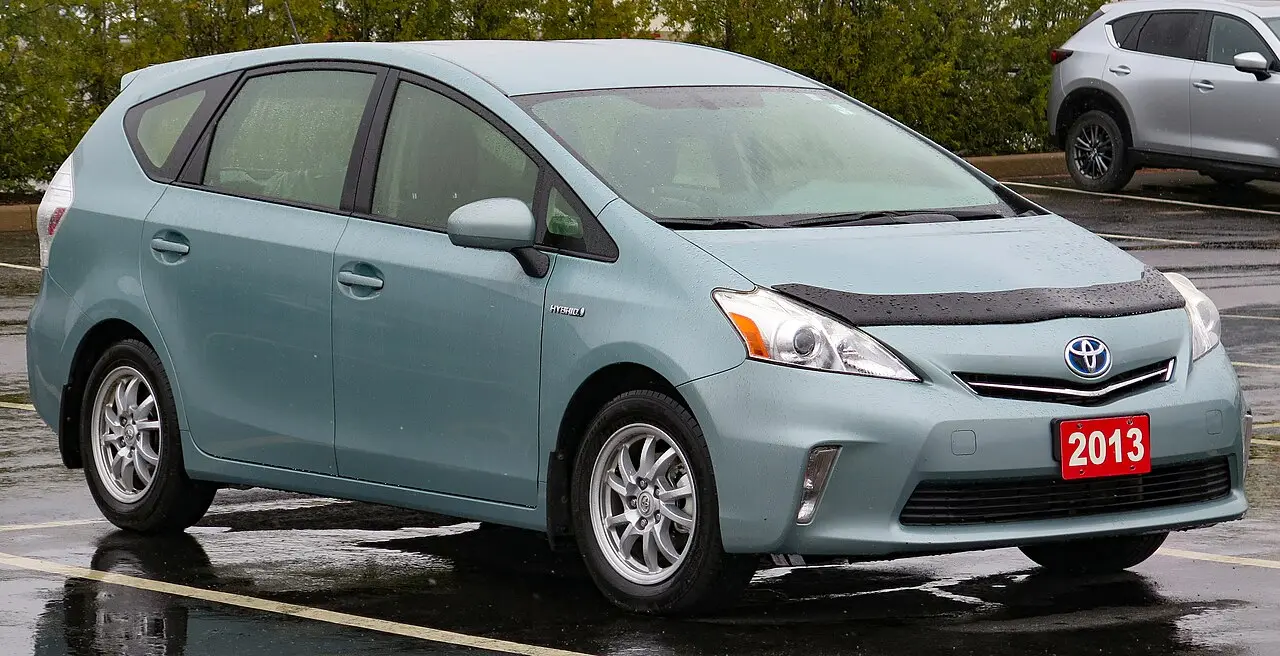
Toyota Prius v

Toyota Prius v
Photo: Elise240SX / Wikimedia Commons · CC BY-SA 4.0

The official data lists 10 versions of the Toyota Prius v (2012–2018), in the United States and Canada. Each market publishes its own figures, measured on its own test procedure.

At a glance

Years in the data
2012–2018
Markets
United States, Canada
Engines
1.8 L
Fuels
Hybrid, Petrol
Lowest consumption (Canada)
5.5 L/100 km (5-cycle)
Lowest consumption (United States)
5.7 L/100 km (EPA)

What is the Toyota Prius v?

The Toyota Prius v was a roomier, wagon-shaped member of the Prius family, with a hybrid powertrain and extra space for passengers and cargo. Its taller body and versatile cabin suited households that needed more room in a Prius.

Engines and power

The Prius v used a 1.8 L hybrid powertrain. US EPA listings cover five versions, as do Canada’s NRCan listings.

How economical is the Toyota Prius v?

The best listed US EPA rating is 41 MPG combined, with the lowest listed combined consumption at 5.7 L/100 km. Canada’s NRCan 5-cycle figure is 5.5 L/100 km. EPA and Canadian 5-cycle procedures differ, so their results should be read within their own markets. European figures use WLTP or NEDC procedures.

Where was the Prius v sold?

The Prius v was sold in the United States from 2012 to 2017 and in Canada from 2012 to 2018.

Questions and answers

What type of car is the Prius v?

It is a roomier, wagon-shaped hybrid in the Prius family.

What years was the Prius v sold?

US model years ran from 2012 to 2017; Canadian model years ran from 2012 to 2018.

What powertrain does the Prius v use?

It used a 1.8 L hybrid powertrain.

What is its best US fuel economy figure?

The best listed EPA rating is 41 MPG combined.

Prius v first generation (2012–2017)

Toyota Prius v first generation
Photo: Elise240SX / Wikimedia Commons · CC BY-SA 4.0

Model codes: XW40 · Sold in: United States and Canada · References: en.wikipedia.org

United States 5 versions

Model years sold in the USA, from the EPA and the Department of Energy (fueleconomy.gov). MPG on the EPA test; litres per 100 km = 235.215 ÷ MPG.

Years and versionEngineFuelGearboxDriveConsumption (combined)CO₂
20171.8 LHybridContinuously variable (CVT)Front-wheel drive41 MPG (5.7 L/100 km) EPA135 g/km
20161.8 LHybridContinuously variable (CVT)Front-wheel drive41 MPG (5.7 L/100 km) EPA134 g/km
2014–20151.8 LHybridContinuously variable (CVT)Front-wheel drive41 MPG (5.7 L/100 km) EPA135 g/km
20131.8 LHybridContinuously variable (CVT)Front-wheel drive41 MPG (5.7 L/100 km) EPA134 g/km
20121.8 LHybridContinuously variable (CVT)Front-wheel drive41 MPG (5.7 L/100 km) EPA135 g/km

Canada 5 versions

Model years sold in Canada, from Natural Resources Canada fuel consumption ratings (5-cycle test).

Years and versionEngineFuelGearboxConsumption (combined)CO₂
2017–2018Station wagon: Mid-size1.8 LPetrolContinuously variable (CVT)5.8 L/100 km 5-cycle135 g/km
2016Station wagon: Mid-size1.8 LPetrolContinuously variable (CVT)5.6 L/100 km 5-cycle131 g/km
2015Station wagon: Mid-size1.8 LPetrolContinuously variable (CVT)5.6 L/100 km 5-cycle129 g/km
2014Station wagon: Mid-size1.8 LPetrolContinuously variable (CVT)5.5 L/100 km 5-cycle126 g/km
2012–2013Station wagon: Mid-size1.8 LPetrolContinuously variable (CVT)5.6 L/100 km 5-cycle129 g/km

Official figures are measured on standard test procedures and differ between markets. Your consumption depends on how, where and in what conditions you drive.