Saturn

Saturn Sky

Saturn Sky
Photo: MercurySable99 / Wikimedia Commons · CC BY-SA 4.0

The official data lists 16 versions of the Saturn Sky (2007–2010), in the United States and Canada. Each market publishes its own figures, measured on its own test procedure.

At a glance

Years in the data
2007–2010
Markets
United States, Canada
Engines
2.0 L to 2.4 L
Fuels
Petrol
Lowest consumption (United States)
10.2 L/100 km (EPA)
Lowest consumption (Canada)
10.4 L/100 km (5-cycle)

What is the Saturn Sky?

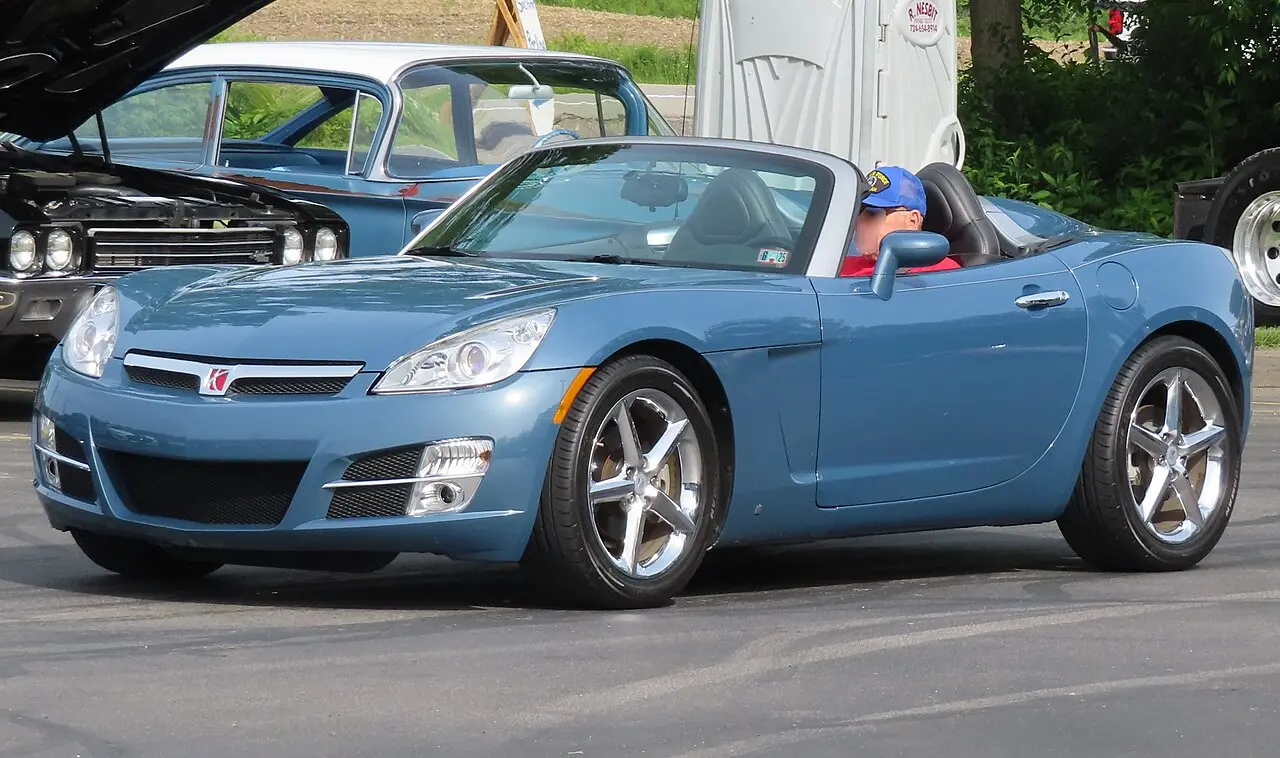
The Sky was Saturn’s two-seat convertible roadster, bringing an open-top sports car into a range otherwise known for more practical models. It was sold in the United States from 2007 to 2010 and in Canada from 2007 to 2009.

The rear-wheel-drive Sky used GM’s Kappa platform and shared its basic architecture with the Pontiac Solstice. A Red Line version added a turbocharged engine; the regular model had a naturally aspirated petrol engine.

Generations, engines and power

The first-generation Sky ran from 2007 to 2010. Its petrol engines ranged from 2.0 L to 2.4 L. The Red Line was the performance-focused version.

How economical is the Saturn Sky?

The best combined EPA rating is 23 MPG. The lowest listed United States consumption is 10.2 L/100 km on the EPA test; Canada’s lowest figure is 10.4 L/100 km on the NRCan 5-cycle test. The procedures differ, so read the ratings within their respective markets.

Where was the Saturn Sky sold?

The Sky was sold in the United States and Canada. Its roadster body gave Saturn a different kind of car within its range, while its shared GM platform reflected how the brand’s later models were developed.

Questions and answers

How many seats does the Saturn Sky have?

The Sky is a two-seat convertible roadster.

What years was the Saturn Sky sold?

Its first generation ran from 2007 to 2010; Canadian figures cover 2007 to 2009.

What engines were offered in the Sky?

Its petrol engines ranged from 2.0 L to 2.4 L.

What is the Sky’s best combined EPA rating?

The best combined EPA rating is 23 MPG, with a lowest listed EPA consumption of 10.2 L/100 km.

Sky first generation (2007–2010)

Saturn Sky first generation
Photo: MercurySable99 / Wikimedia Commons · CC BY-SA 4.0

Model codes: GM Kappa · Sold in: United States and Canada · References: gmauthority.com, gmauthority.com

United States 9 versions

Model years sold in the USA, from the EPA and the Department of Energy (fueleconomy.gov). MPG on the EPA test; litres per 100 km = 235.215 ÷ MPG.

Years and versionEngineFuelGearboxDriveConsumption (combined)CO₂
20102.0 LPetrol5-speed automaticRear-wheel drive22 MPG (10.7 L/100 km) EPA251 g/km
20102.0 LPetrol5-speed manualRear-wheel drive23 MPG (10.2 L/100 km) EPA240 g/km
2007–2010CLKUP2.4 LPetrol5-speed automaticRear-wheel drive21 MPG (11.2 L/100 km) EPA263 g/km
20102.4 LPetrol5-speed manualRear-wheel drive22 MPG (10.7 L/100 km) EPA251 g/km
2007–20092.0 LPetrol5-speed manualRear-wheel drive22 MPG (10.7 L/100 km) EPA251 g/km
2009CLKUP2.0 LPetrol5-speed automaticRear-wheel drive21 MPG (11.2 L/100 km) EPA263 g/km
2008–20092.4 LPetrol5-speed manualRear-wheel drive21 MPG (11.2 L/100 km) EPA263 g/km
2007–2008CLKUP2.0 LPetrol5-speed automaticRear-wheel drive21 MPG (11.2 L/100 km) EPA263 g/km
20072.4 LPetrol5-speed manualRear-wheel drive21 MPG (11.2 L/100 km) EPA263 g/km

Canada 7 versions

Model years sold in Canada, from Natural Resources Canada fuel consumption ratings (5-cycle test).

Years and versionEngineFuelGearboxConsumption (combined)CO₂
2007–2009Two-seater2.0 LPetrol5-speed automatic11.0 L/100 km 5-cycle253 g/km
2009Two-seater2.0 LPetrol5-speed manual10.4 L/100 km 5-cycle239 g/km
2007–2009Two-seater2.4 LPetrol5-speed automatic11.2 L/100 km 5-cycle258 g/km
2009Two-seater2.4 LPetrol5-speed manual11.1 L/100 km 5-cycle255 g/km
2007–2008Two-seater2.0 LPetrol5-speed manual10.5 L/100 km 5-cycle242 g/km
2008Two-seater2.4 LPetrol5-speed manual11.2 L/100 km 5-cycle258 g/km
2007Two-seater2.4 LPetrol5-speed manual11.4 L/100 km 5-cycle262 g/km

Official figures are measured on standard test procedures and differ between markets. Your consumption depends on how, where and in what conditions you drive.