Nissan

Nissan Rogue

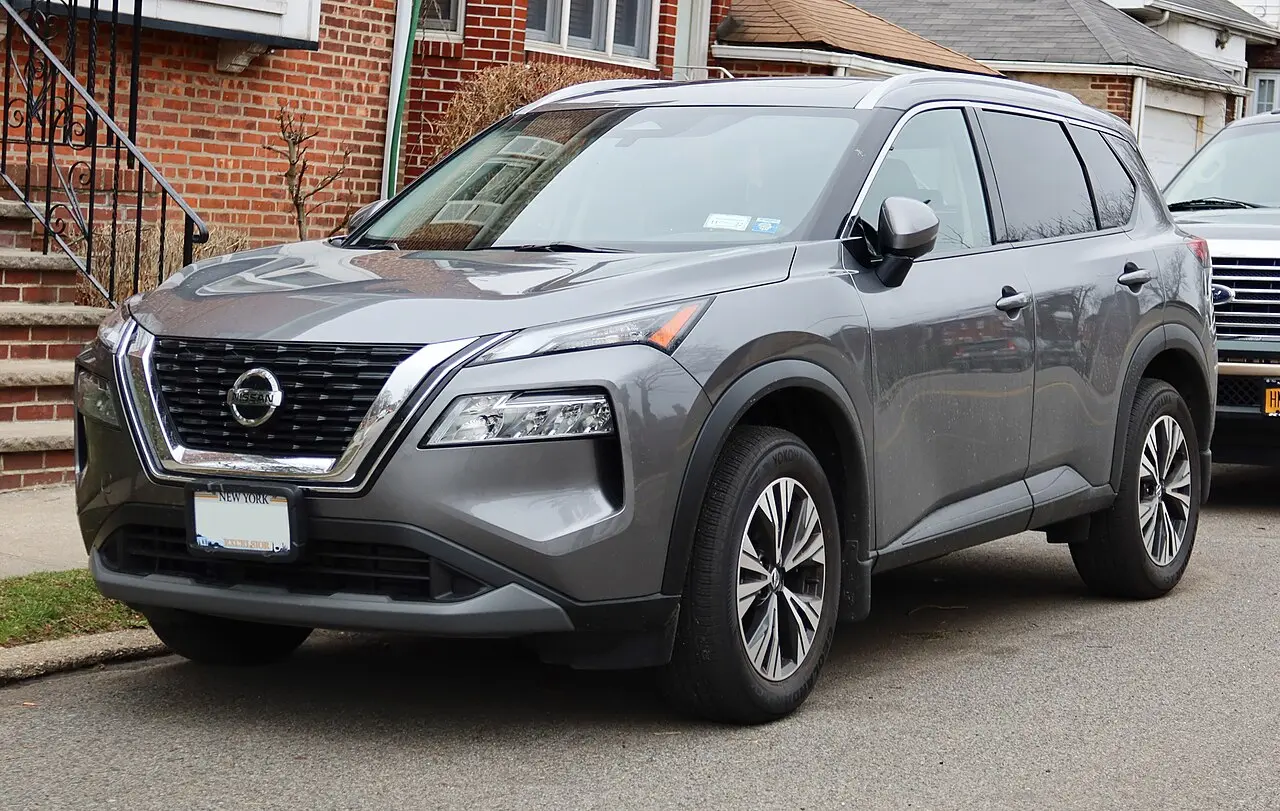
Nissan Rogue
Photo: Kevauto / Wikimedia Commons · CC BY-SA 4.0

The official data lists 67 versions of the Nissan Rogue (2008–2026), in the United States and Canada. Each market publishes its own figures, measured on its own test procedure.

At a glance

Years in the data
2008–2026
Markets
United States, Canada
Engines
1.5 L to 2.5 L
Fuels
Petrol, Hybrid, Plug-in hybrid
Lowest consumption (United States)
6.9 L/100 km (EPA)
Lowest consumption (Canada)
7.2 L/100 km (5-cycle)
Plug-in hybrid, weighted (Canada)
9.1 L/100 km (5-cycle)

What is the Nissan Rogue?

The Rogue is Nissan’s compact crossover SUV for North America, with a raised body and a flexible cabin suited to everyday passenger and family use. It sits within Nissan’s wider crossover and SUV range. The name has covered three generations in the United States and Canada: S35 (2008–2013), T32 (2014–2020) and T33 (2021–2026).

The second-generation Rogue was closely related to the X-Trail sold in other markets. The T33 brought a more upright, technology-focused design, with split headlights among its distinctive details.

Engines and power

The listed engines range from 1.5 L to 2.5 L in both the United States and Canada. US versions include petrol and hybrid powertrains; Canadian versions include petrol and plug-in hybrid powertrains. The exact offerings vary by year and market.

How economical is the Nissan Rogue?

The lowest listed US consumption is 6.9 L/100 km, with a best combined EPA rating of 34 MPG. Canada’s lowest figure is 7.2 L/100 km on the NRCan 5-cycle test. For Canadian plug-in hybrid versions, the lowest listed weighted figure is 9.1 L/100 km; it assumes some driving is electric. WLTP and NEDC in Europe, EPA in the United States and the 5-cycle test in Canada use different procedures, so the market figures are not direct equivalents.

Where was the Rogue sold?

The Rogue has been sold in the United States and Canada. The listed model years span 2008–2026 in both markets, and it has become one of Nissan’s core family crossovers in North America.

Questions and answers

What type of vehicle is the Nissan Rogue?

It is a compact crossover SUV designed for everyday passenger and family use.

What are the Rogue generations?

The three generations are S35 (2008–2013), T32 (2014–2020) and T33 (2021–2026).

What is the best combined EPA rating listed for the Rogue?

The best listed US rating is 34 MPG combined, equivalent to 6.9 L/100 km in the EPA figures.

Why does Canada show a separate plug-in hybrid figure?

The lowest listed Canadian plug-in hybrid figure is a weighted 9.1 L/100 km on the NRCan 5-cycle test, which assumes some driving is electric.
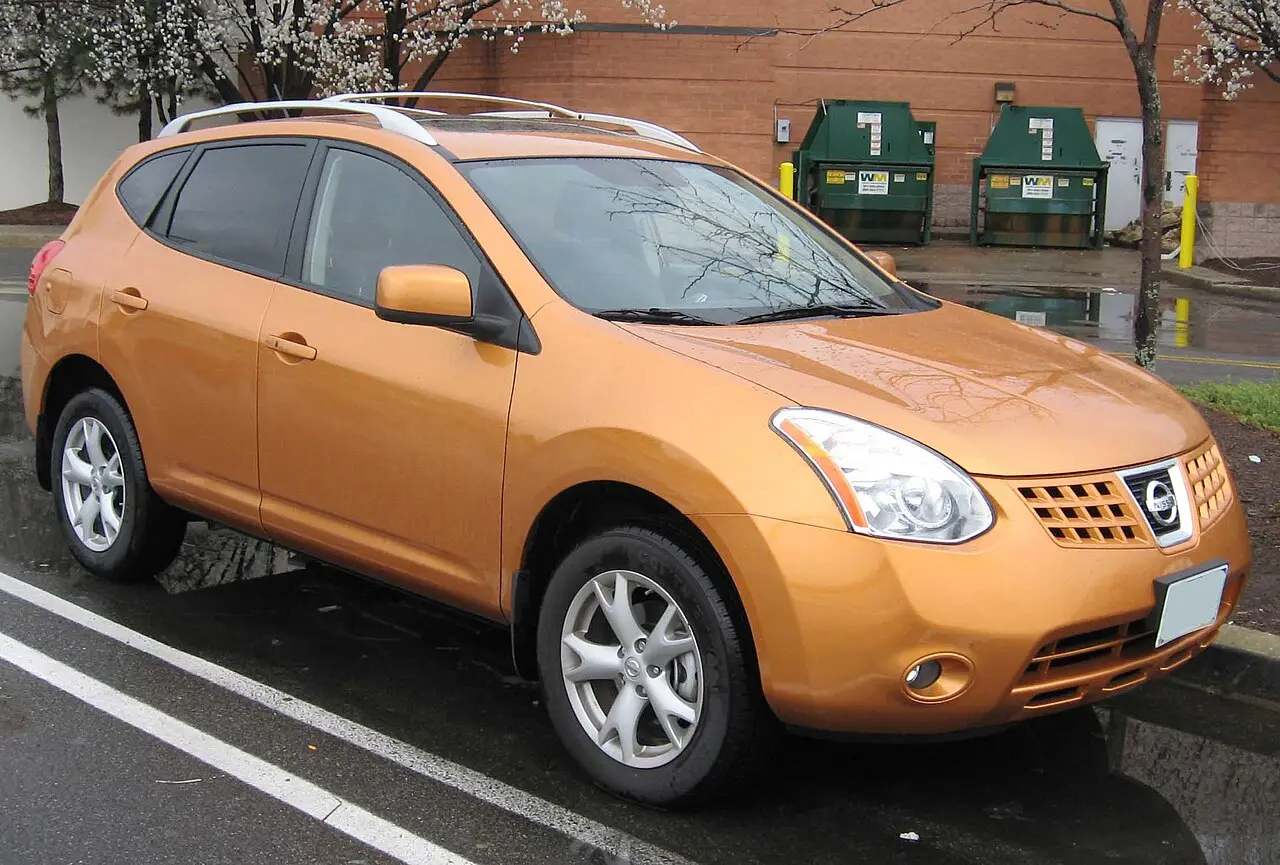
Rogue S35 (2008–2013)

Nissan Rogue S35
Photo: IFCAR / Wikimedia Commons · Public domain

Model codes: S35 · Sold in: United States and Canada · References: en.wikipedia.org, carsdirect.com

Show all 17 versions

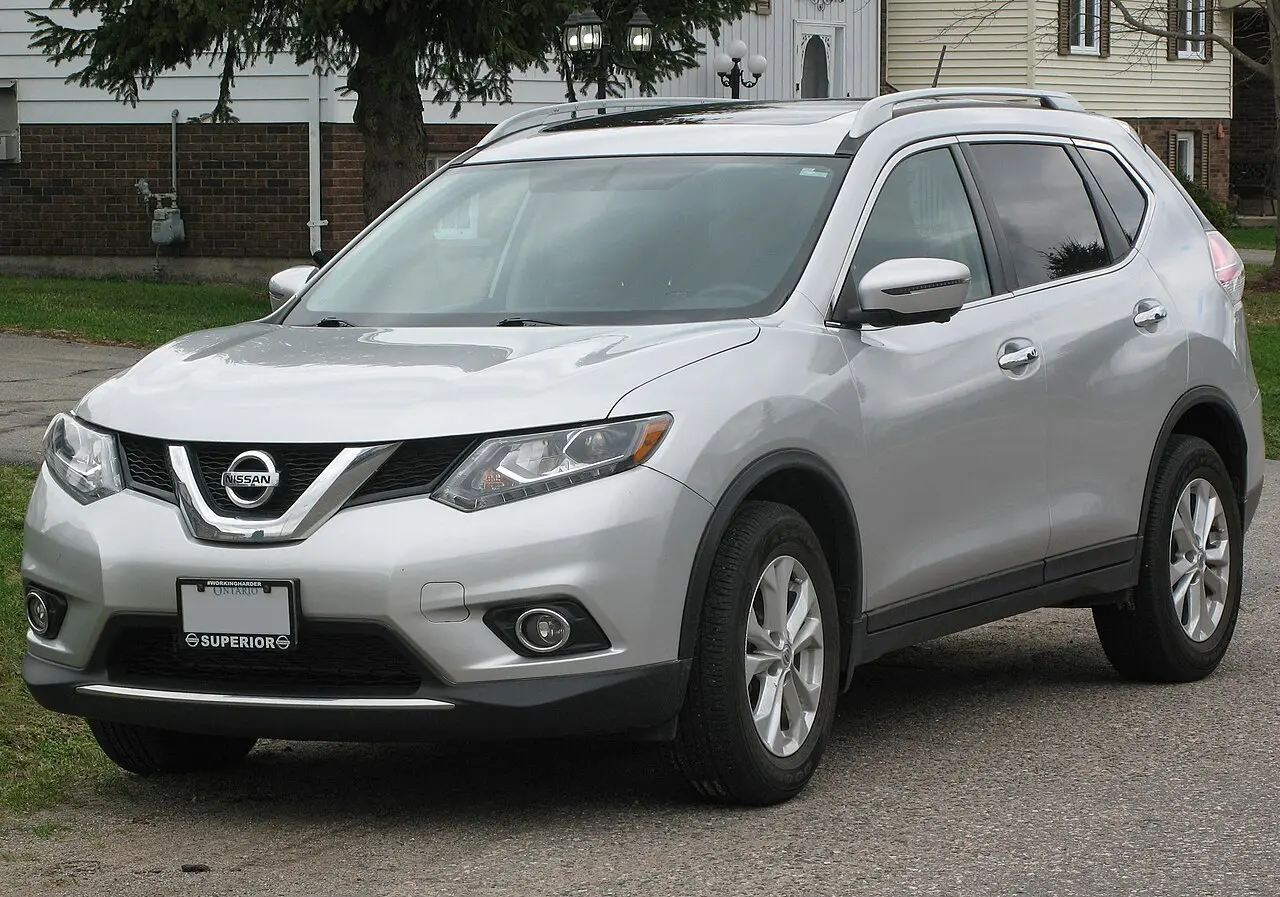
Rogue T32 (2014–2020)

Nissan Rogue T32
Photo: Elise240SX / Wikimedia Commons · CC BY-SA 4.0

Model codes: T32 · Sold in: United States and Canada · References: en.wikipedia.org, carsdirect.com

Show all 23 versions

Rogue T33 (2021–2026)

Nissan Rogue T33
Photo: Kevauto / Wikimedia Commons · CC BY-SA 4.0

Model codes: T33 · Sold in: United States and Canada · References: en.wikipedia.org, carsdirect.com

United States 15 versions

Model years sold in the USA, from the EPA and the Department of Energy (fueleconomy.gov). MPG on the EPA test; litres per 100 km = 235.215 ÷ MPG.

Years and versionEngineFuelGearboxDriveConsumption (combined)CO₂
2022–2026SIDI · SIDI; Stop-Start1.5 LPetrolContinuously variable (CVT)Front-wheel drive32 MPG (7.4 L/100 km) EPA173 g/km
2025–2026SIDI1.5 LPetrolContinuously variable (CVT)All-wheel drive29 MPG (8.1 L/100 km) EPA191 g/km
2026SIDI1.5 LPetrolContinuously variable (CVT)All-wheel drive31 MPG (7.6 L/100 km) EPA181 g/km
2022–2025SIDI · SIDI; Stop-Start1.5 LPetrolContinuously variable (CVT)All-wheel drive31 MPG (7.6 L/100 km) EPA178 g/km
2023–2025SIDI; Stop-Start · SIDI1.5 LPetrolContinuously variable (CVT)Front-wheel drive33 MPG (7.1 L/100 km) EPA167 g/km
2023–2025SIDI; Stop-Start · SIDI1.5 LPetrolContinuously variable (CVT)All-wheel drive31 MPG (7.6 L/100 km) EPA178 g/km
2021–2023SIDI1.5 LPetrolContinuously variable (CVT)Front-wheel drive33 MPG (7.1 L/100 km) EPA168 g/km
2022–2023SIDI1.5 LPetrolContinuously variable (CVT)All-wheel drive31 MPG (7.6 L/100 km) EPA179 g/km
2021SIDI1.5 LPetrolContinuously variable (CVT)Front-wheel drive32 MPG (7.4 L/100 km) EPA173 g/km
2021SIDI1.5 LPetrolContinuously variable (CVT)All-wheel drive33 MPG (7.1 L/100 km) EPA171 g/km
2021SIDI1.5 LPetrolContinuously variable (CVT)All-wheel drive32 MPG (7.4 L/100 km) EPA176 g/km
2021SIDI2.5 LPetrolContinuously variable (CVT)Front-wheel drive30 MPG (7.8 L/100 km) EPA181 g/km
2021SIDI2.5 LPetrolContinuously variable (CVT)Front-wheel drive29 MPG (8.1 L/100 km) EPA189 g/km
2021SIDI2.5 LPetrolContinuously variable (CVT)All-wheel drive29 MPG (8.1 L/100 km) EPA193 g/km
2021SIDI2.5 LPetrolContinuously variable (CVT)All-wheel drive28 MPG (8.4 L/100 km) EPA198 g/km

Canada 12 versions

Model years sold in Canada, from Natural Resources Canada fuel consumption ratings (5-cycle test).

Years and versionEngineFuelGearboxConsumption (combined)CO₂Electric range
2026Sport utility vehicle: Small1.5 LPetrolContinuously variable (CVT)7.4 L/100 km 5-cycle173 g/km–
2026Sport utility vehicle: Small1.5 LPetrolContinuously variable (CVT)7.6 L/100 km 5-cycle179 g/km–
2026Sport utility vehicle: Small1.5 LPetrolContinuously variable (CVT)8.0 L/100 km 5-cycle188 g/km–
2026Sport utility vehicle: Standard2.4 LPlug-in hybridAutomatic9.1 L/100 km 5-cycle72 g/km61 km
2024–2025Sport utility vehicle: Small1.5 LPetrolContinuously variable (CVT)7.2 L/100 km 5-cycle169 g/km–
2022–2025Sport utility vehicle: Small1.5 LPetrolContinuously variable (CVT)7.6 L/100 km 5-cycle179 g/km–
2022–2024Sport utility vehicle: Small1.5 LPetrolContinuously variable (CVT)7.7 L/100 km 5-cycle181 g/km–
2023Sport utility vehicle: Small1.5 LPetrolContinuously variable (CVT)7.2 L/100 km 5-cycle170 g/km–
2021–2023Sport utility vehicle: Small2.5 LPetrolContinuously variable (CVT)8.3 L/100 km 5-cycle195 g/km–
2022–2023Sport utility vehicle: Small2.5 LPetrolContinuously variable (CVT)8.4 L/100 km 5-cycle196 g/km–
2022Sport utility vehicle: Small1.5 LPetrolContinuously variable (CVT)7.2 L/100 km 5-cycle169 g/km–
2021Sport utility vehicle: Small2.5 LPetrolContinuously variable (CVT)8.3 L/100 km 5-cycle194 g/km–

Official figures are measured on standard test procedures and differ between markets. Your consumption depends on how, where and in what conditions you drive.