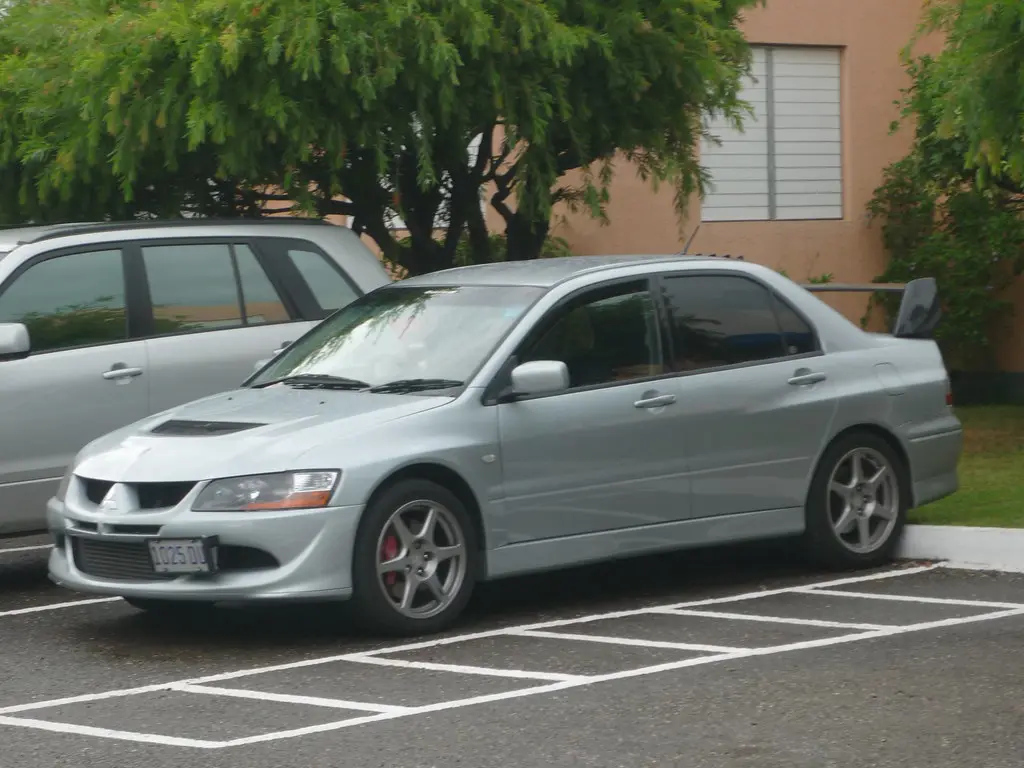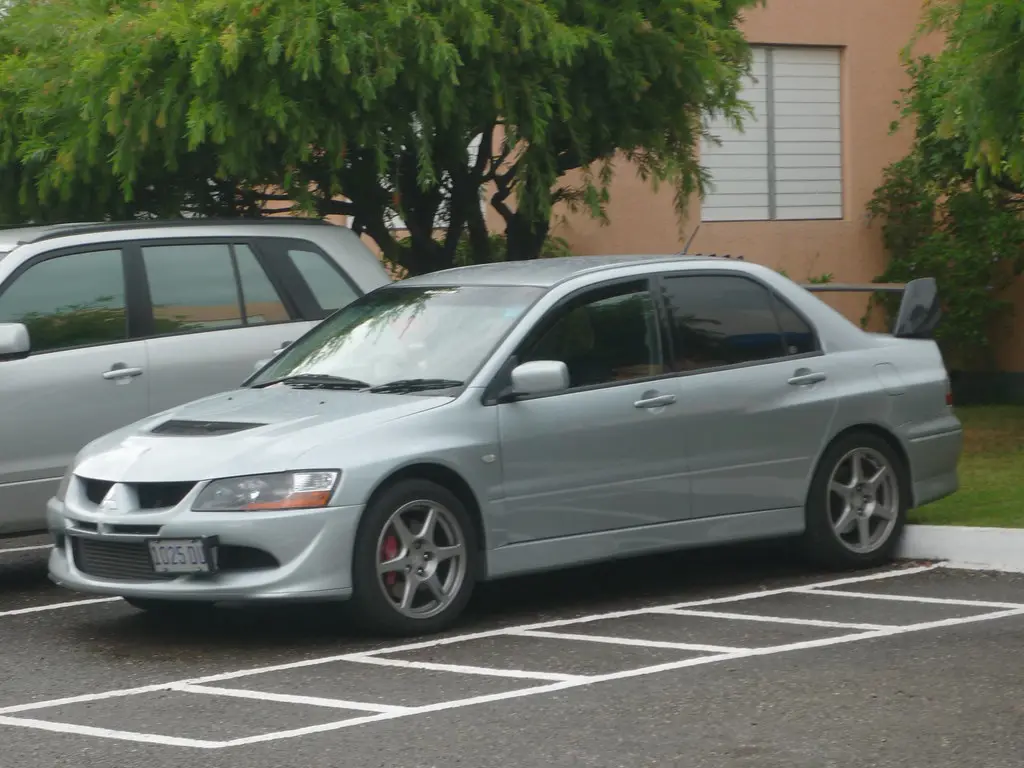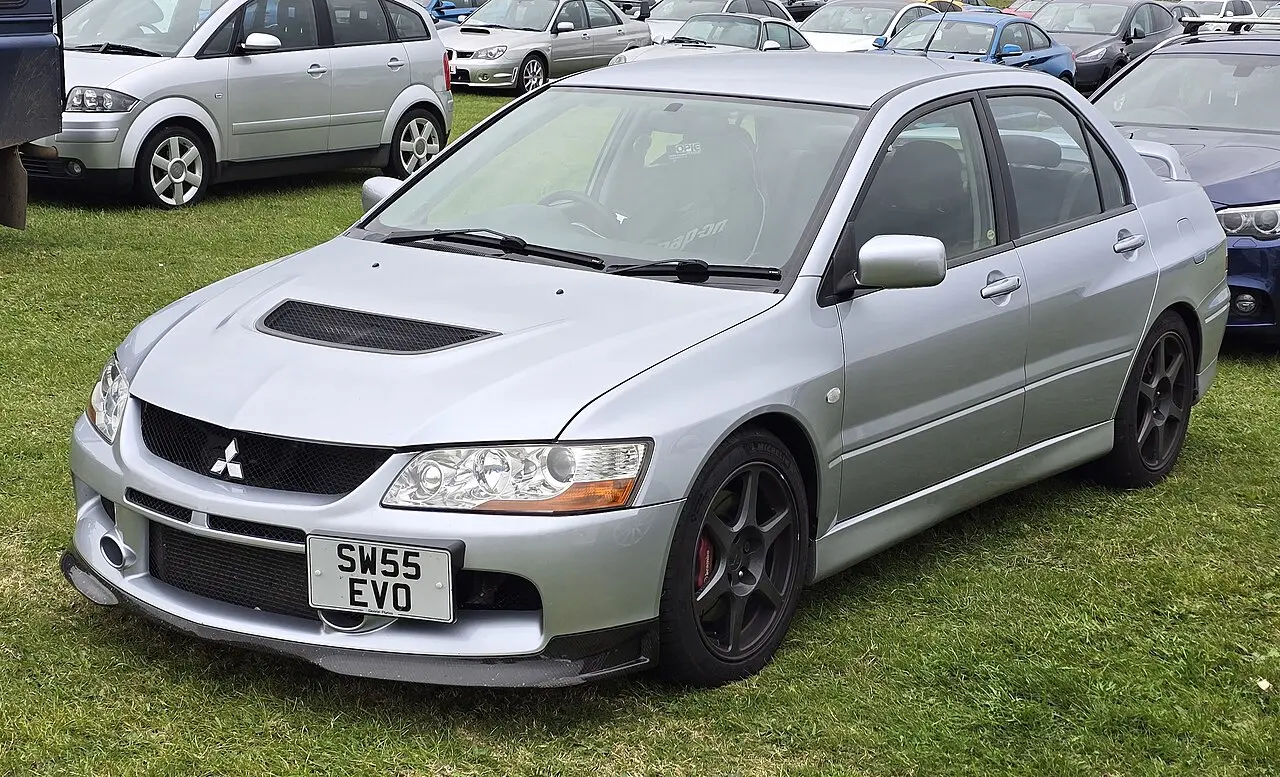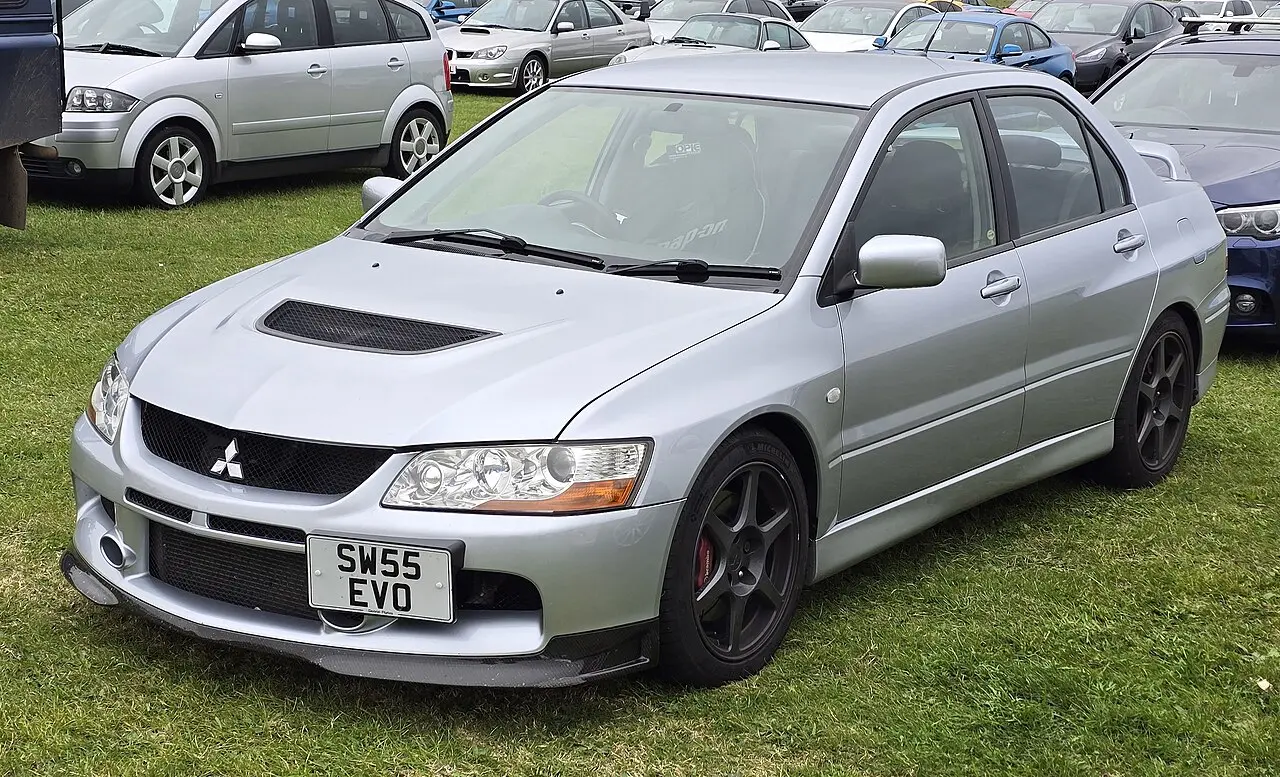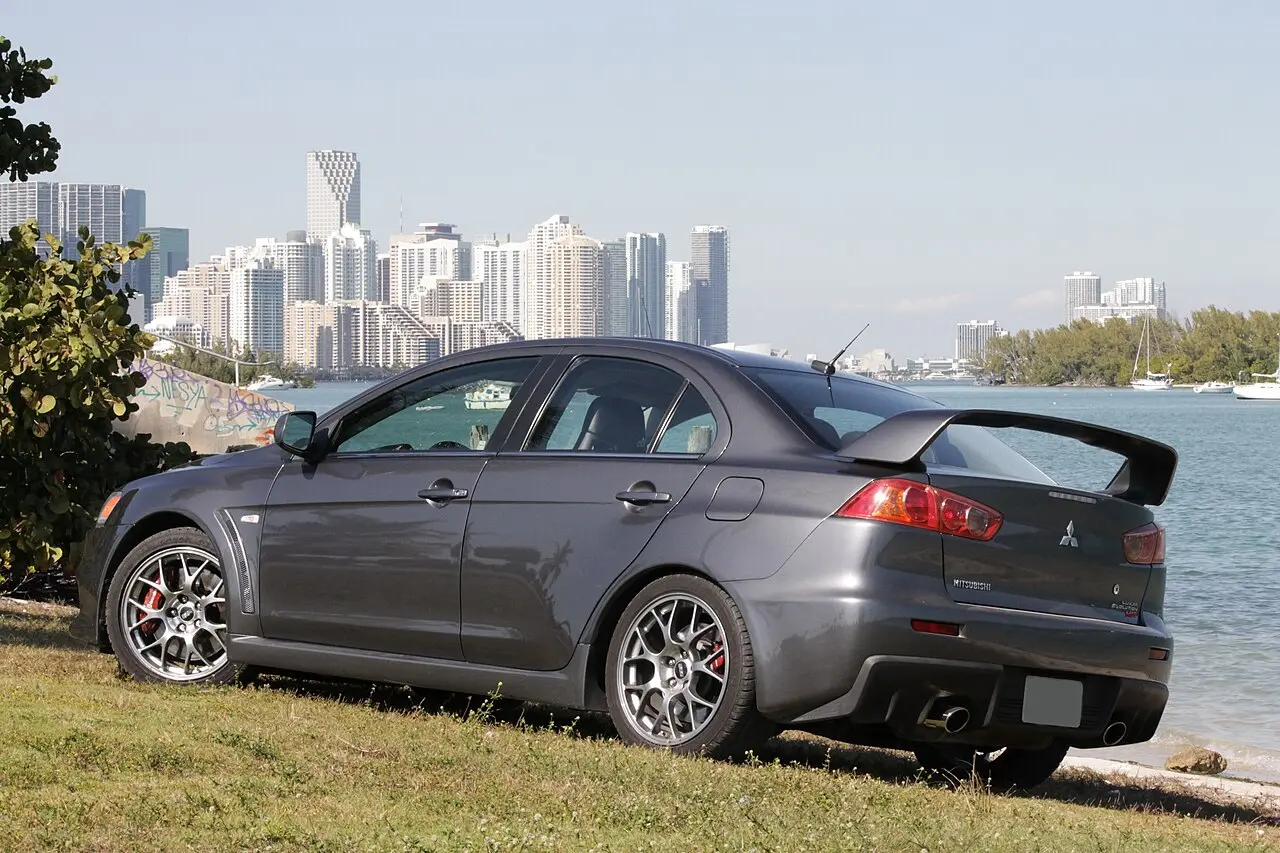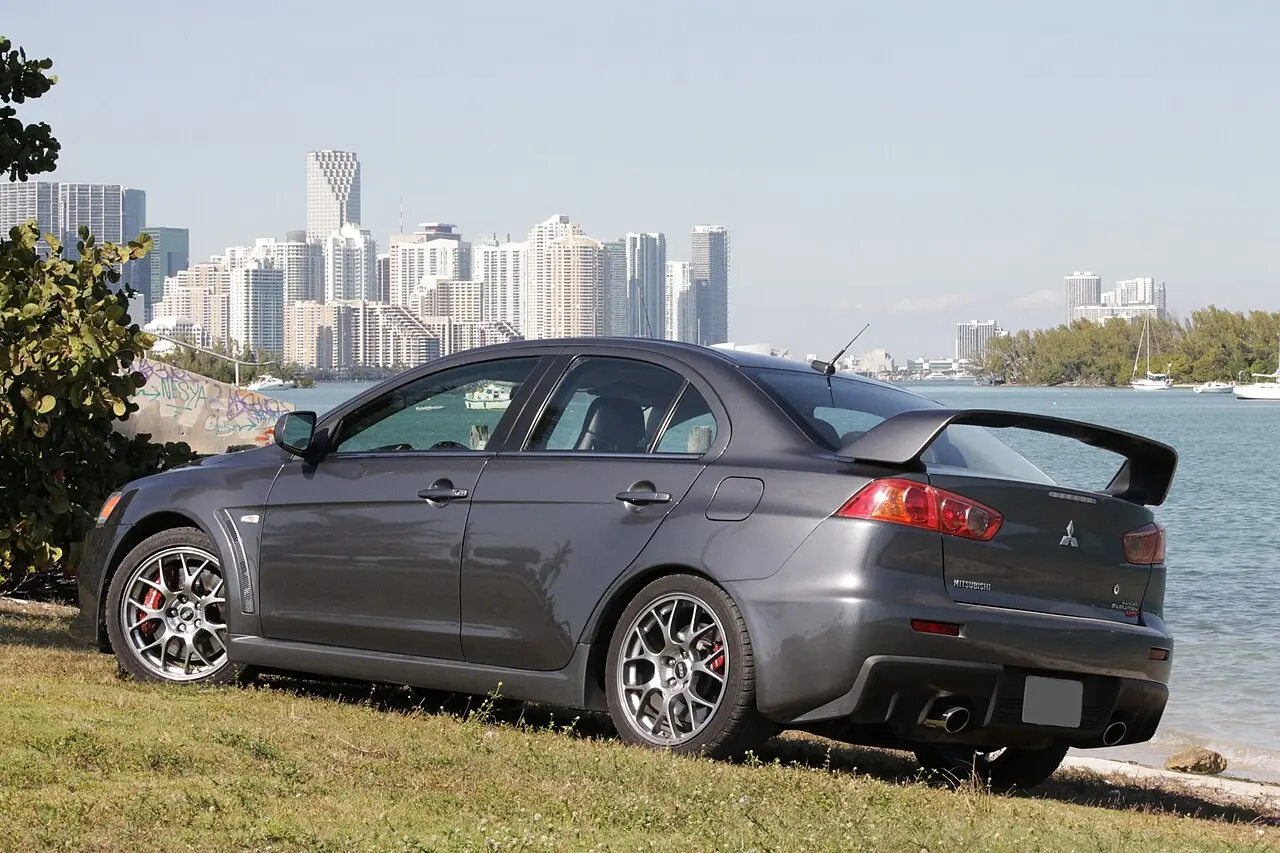
What is the Mitsubishi Lancer Evolution?
The Lancer Evolution is a high-performance sedan developed from Mitsubishi’s Lancer and shaped by the company’s rally programme. Its rally roots informed a road car built around a turbocharged engine and four-wheel drive. The original Evolution combined a light, compact Lancer with an intercooled turbo engine and a full-time four-wheel-drive system. Later models developed Mitsubishi’s approach to controlling power and handling across all four wheels.
Lancer Evolution generations
The generations shown across these markets are VIII (2003–2005), IX (2005–2007) and X (2008–2015). Generations VIII and IX used the CT9A code; the tenth-generation car used CZ4A. The Evolution X brought a new engine family, replacing the earlier 4G63 with the 4B11, and added Mitsubishi’s Super All Wheel Control system.
Engines, power and fuel consumption
The versions listed across the EU, UK, US and Canada all use a 2.0 L petrol engine. EU figures give 217 kW (295 PS). The lowest listed consumption is 15.4 L/100 km in UK NEDC figures, 12.4 L/100 km under the US EPA procedure and 12.3 L/100 km in Canada’s 5-cycle figures. The US listing also gives a best combined rating of 19 MPG. Test procedures differ between markets: NEDC in Europe, EPA in the US and 5-cycle testing in Canada, so the figures are most useful within their own markets.
Where was the Lancer Evolution sold?
The Lancer Evolution was sold in the EU, UK, United States and Canada. EU registration figures span 2010–2015 and total 2,563 cars. The UK figures cover 2004–2006, US figures 2003–2015 and Canadian figures 2008–2015.
Questions and answers
What engine does the Lancer Evolution use in these market figures?
The listed versions use a 2.0 L petrol engine. EU figures specify 217 kW (295 PS).
Which Lancer Evolution generations are covered?
Generations VIII (2003–2005), IX (2005–2007) and X (2008–2015) are represented across the listed markets.
How economical is the Lancer Evolution?
The lowest listed figures are 15.4 L/100 km under UK NEDC, 12.4 L/100 km under US EPA and 12.3 L/100 km under Canada’s 5-cycle procedure. Test methods differ by market.