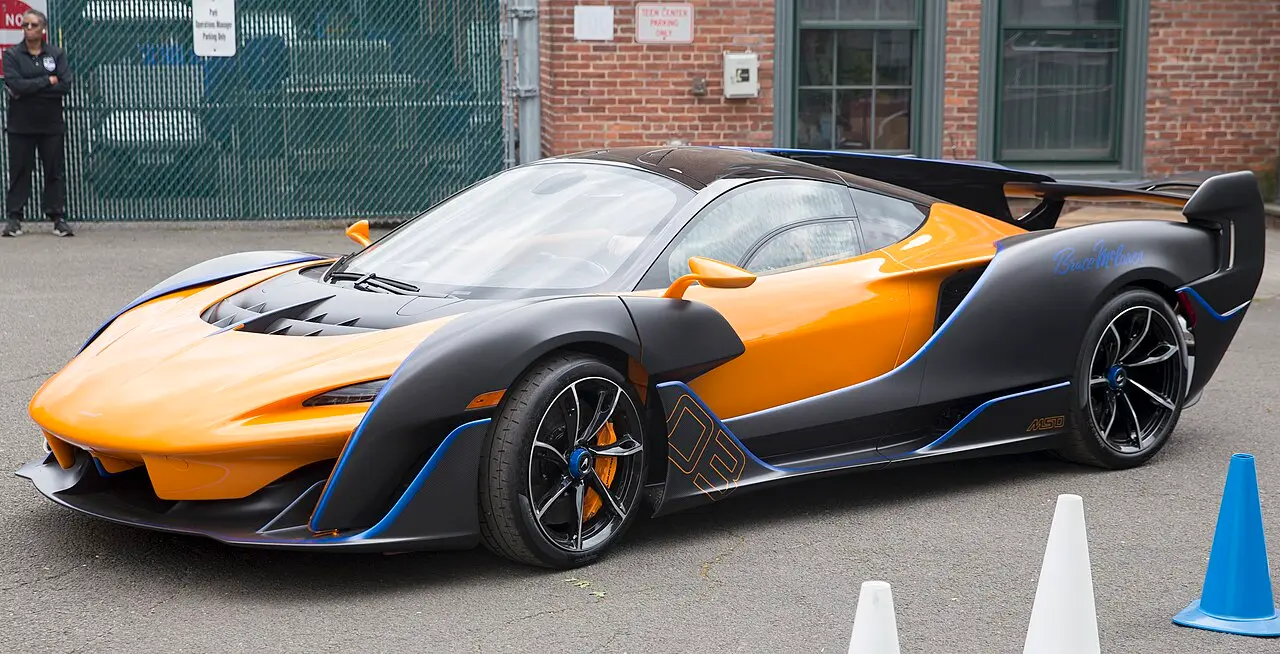
What is the McLaren Sabre?
The Sabre is a bespoke McLaren supercar developed through McLaren Special Operations. It was created for a select group of United States clients. MSO commissions sit at the individual end of McLaren’s range, where cars can be tailored to an owner’s vision. The Sabre’s mid-engined layout and sculpted coupe body give it a purposeful sports-car shape.
Engines and power
The Sabre has a 4.0-litre petrol engine. Its United States EPA listing is for the 2020 model year.
Fuel consumption and CO₂
The EPA combined rating is 18 MPG, with a listed figure of 13.1 L/100 km. Test procedures differ by market: Europe uses WLTP or, for older vehicles, NEDC; the United States uses EPA testing, and Canada uses the 5-cycle test.
Where was the Sabre sold?
The Sabre appears in United States EPA figures for the 2020 model year.
Questions and answers
What kind of car is the McLaren Sabre?
It is a bespoke, mid-engined supercar developed through McLaren Special Operations.
What engine is listed for the Sabre?
It has a 4.0-litre petrol engine.
How economical is the Sabre on the EPA test?
Its combined EPA rating is 18 MPG, with a listed figure of 13.1 L/100 km.
Which market and model year does the Sabre appear in?
It appears in United States EPA figures for the 2020 model year.