McLaren

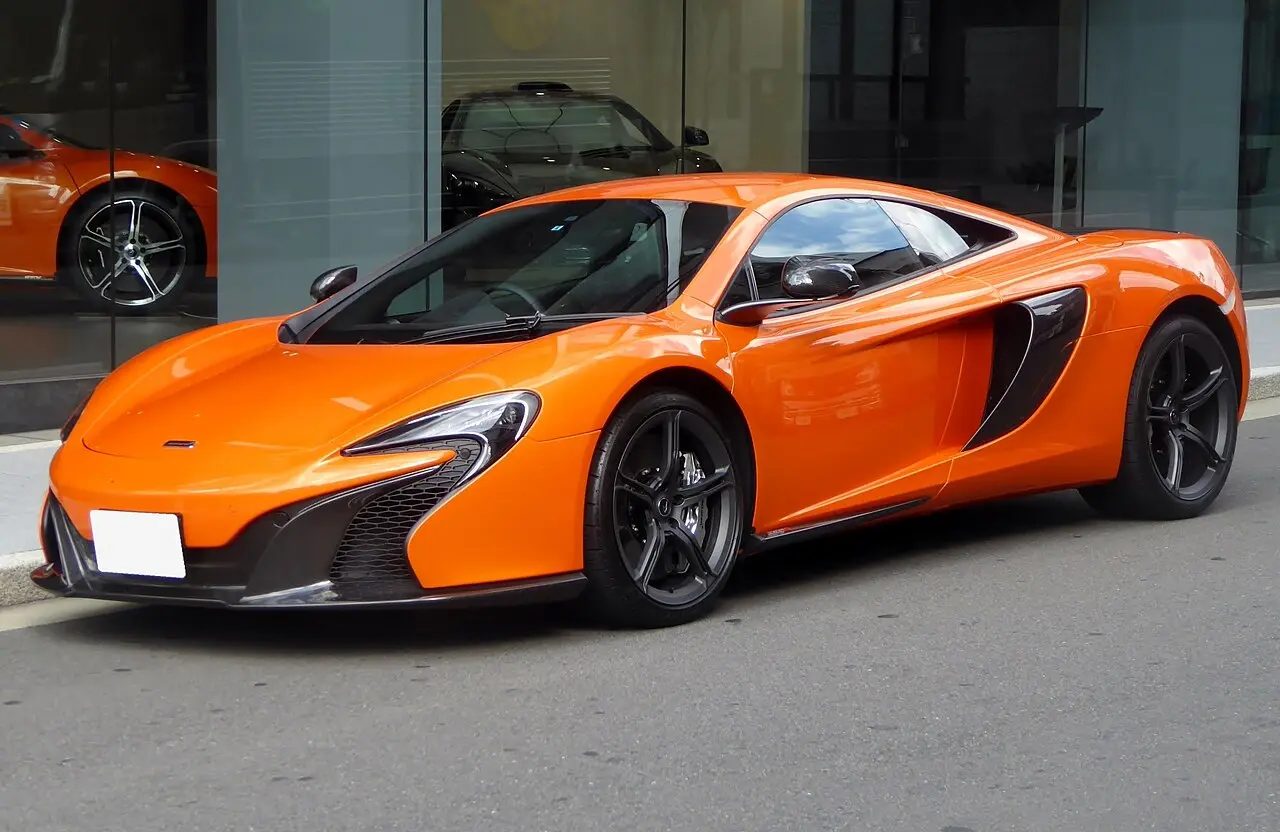
McLaren 675LT

McLaren 675LT
Photo: Tokumeigakarinoaoshima / Wikimedia Commons · CC BY-SA 4.0

The official data lists 6 versions of the McLaren 675LT (2015–2018), in the European Union, the United Kingdom, and the United States. Each market publishes its own figures, measured on its own test procedure.

At a glance

Years in the data
2015–2018
Markets
European Union, United Kingdom, United States
Engines
3.8 L to 3.8 L
Power
496 kW (674 PS) to 497 kW (675 PS)
Fuels
Petrol
Lowest consumption (United Kingdom)
11.7 L/100 km (NEDC)
Lowest consumption (United States)
13.1 L/100 km (EPA)
New registrations in the EU
539

What is the McLaren 675LT?

The 675LT is a mid-engined supercar with a sharper, more track-focused character. Its “LT” name means “Longtail”, recalling the extended-body McLaren F1 GTR race car. The 675LT carried that car’s uncompromising ethos into a road-going model.

McLaren began as a racing team founded by Bruce McLaren in 1963. Its competition experience has shaped the design and engineering of its road cars.

Generations, engines and power

The 675LT is listed as a single generation from 2015 to 2017. It has a 3.8-litre petrol engine. EU figures give its output as 496 kW (674 PS), while the UK listing gives 497 kW (675 PS).

How economical is the McLaren 675LT?

The lowest official UK consumption figure is 11.7 L/100 km on NEDC. In the United States, the EPA combined rating is 18 MPG, or 13.1 L/100 km. NEDC and EPA use different test procedures, so the results are not directly equivalent.

EU registrations span 2015 to 2018 and total 539 cars. The largest listed year is 2016, with 320 registrations.

Where was the 675LT sold?

The 675LT appears in official figures for the European Union, the United Kingdom and the United States. EU registrations span 2015 to 2018, UK figures cover 2015 to 2018, and the US EPA listing covers 2016.

Questions and answers

What does LT mean in McLaren 675LT?

LT stands for Longtail, a name associated with McLaren’s extended-body F1 GTR race car.

How much power does the 675LT have?

The EU figure is 496 kW (674 PS); the UK listing gives 497 kW (675 PS).

What is the 675LT’s official fuel consumption?

The lowest UK figure is 11.7 L/100 km on NEDC. The US EPA combined rating is 18 MPG, or 13.1 L/100 km.

675LT 675LT (2015–2017)

McLaren 675LT 675LT
Photo: Tokumeigakarinoaoshima / Wikimedia Commons · CC BY-SA 4.0

References: theautochannel.com, en.wikipedia.org

European Union 3 versions

New cars registered in the EU (plus Norway and Iceland), from the European Environment Agency. Figures on the NEDC procedure until 2020 and on WLTP from 2021; versions are grouped by engine and power, with their number of registrations.

Years and versionEnginePowerFuelCO₂EU registrations
20173.8 L496 kW (674 PS)Petrol275 g/km126
20163.8 L496 kW (674 PS)Petrol279 g/km320
20153.8 L496 kW (674 PS)Petrol275 g/km67

United Kingdom 1 version

New cars on sale in the UK, from the Vehicle Certification Agency. NEDC figures until 2018 and WLTP figures after; years are the editions a version appeared in.

Years and versionEnginePowerFuelConsumption (combined)CO₂
2015–2018Coupé (675 Ps) standard muffler · Spider (675 Ps) standard muffler3.8 L497 kW (675 PS)Petrol11.7 L/100 km NEDC275 g/km

United States 1 version

Model years sold in the USA, from the EPA and the Department of Energy (fueleconomy.gov). MPG on the EPA test; litres per 100 km = 235.215 ÷ MPG.

Years and versionEngineFuelGearboxDriveConsumption (combined)CO₂
20163.8 LPetrol7-speed automaticRear-wheel drive18 MPG (13.1 L/100 km) EPA310 g/km

Versions outside these generations

European Union 1 version

New cars registered in the EU (plus Norway and Iceland), from the European Environment Agency. Figures on the NEDC procedure until 2020 and on WLTP from 2021; versions are grouped by engine and power, with their number of registrations.

Years and versionEnginePowerFuelCO₂EU registrations
20183.8 L496 kW (674 PS)Petrol275 g/km26

Official figures are measured on standard test procedures and differ between markets. Your consumption depends on how, where and in what conditions you drive.