

Hyundai IONIQ 3 first generation
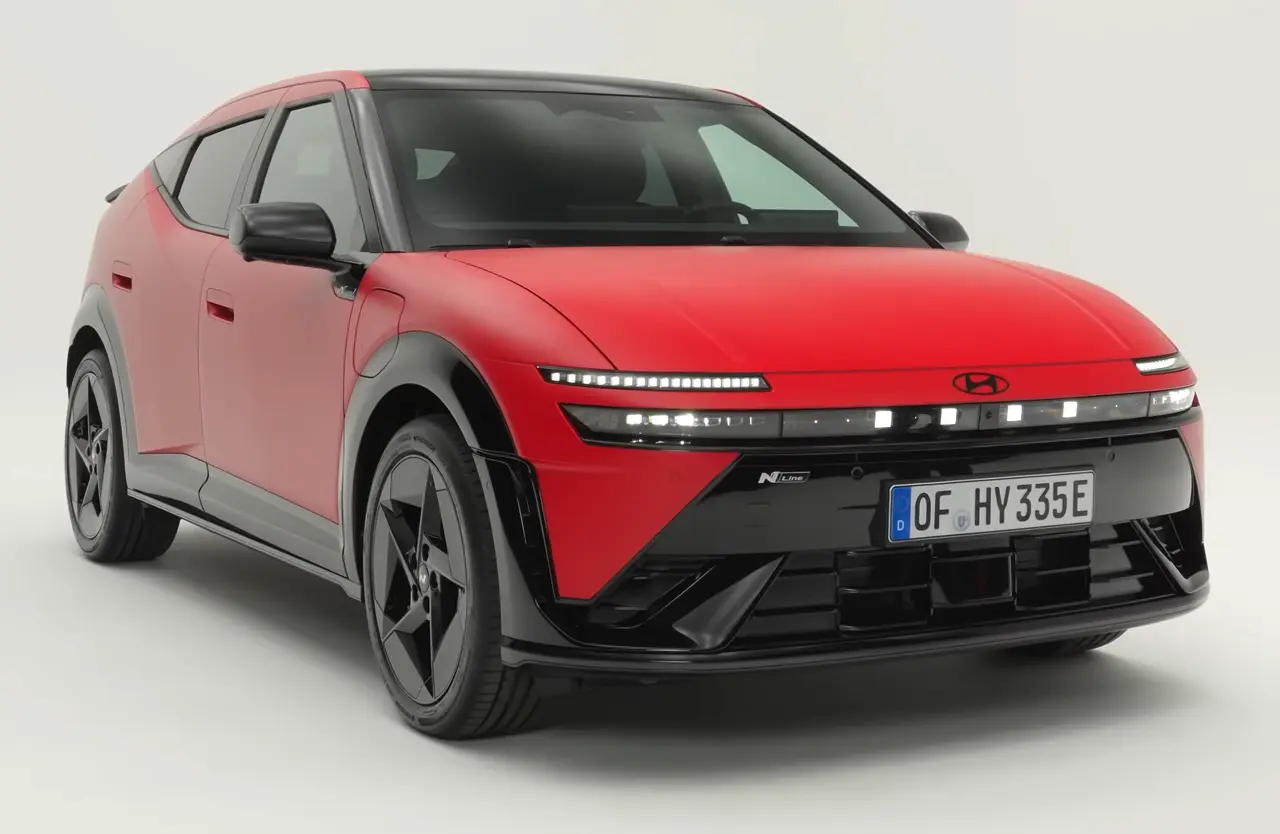
The Hyundai IONIQ 3 first generation (since 2026) is too new for the official fuel economy and emissions data. The dimensions, weights and other figures below come from vehicle registers and type approvals; its versions follow once the authorities publish them.
Sold in: European Union, United Kingdom, and France
Dimensions, weights and capacity
| Specification | Europe |
|---|---|
| Dimensions | |
| Length | 4,160–4,170 mm RDW |
| Width | 1,800 mm RDW |
| Height | 1,510 mm RDW |
| Wheelbase | 2,680 mm RDW |
| Front track | 1,559–1,571 mm ASTRA |
| Rear track | 1,576–1,588 mm ASTRA |
| Weights and towing | |
| Kerb weight | 1,535–1,545 kg RDW |
| Mass in running order | 1,635–1,645 kg RDW |
| Gross vehicle weight | 2,095 kg RDW |
| Towing, braked trailer | 750 kg RDW |
| Towing, unbraked trailer | 750 kg RDW |
| Seats and space | |
| Seats | 5 RDW |
| Doors | 5 RDW |
| Performance | |
| Top speed | 170 km/h RDW |
| Torque | 250 Nm ASTRA |
Tyre sizes (most common first): 215/50R18, 205/65R16, 215/55R17, 225/45R19
Ranges cover the generation’s versions and body styles; European and North American versions can differ. Sources: RDW type approvals (Netherlands), ASTRA type approvals (Switzerland).
Similar models from other brands


Official figures are measured on standard test procedures and differ between markets. Your consumption depends on how, where and in what conditions you drive.