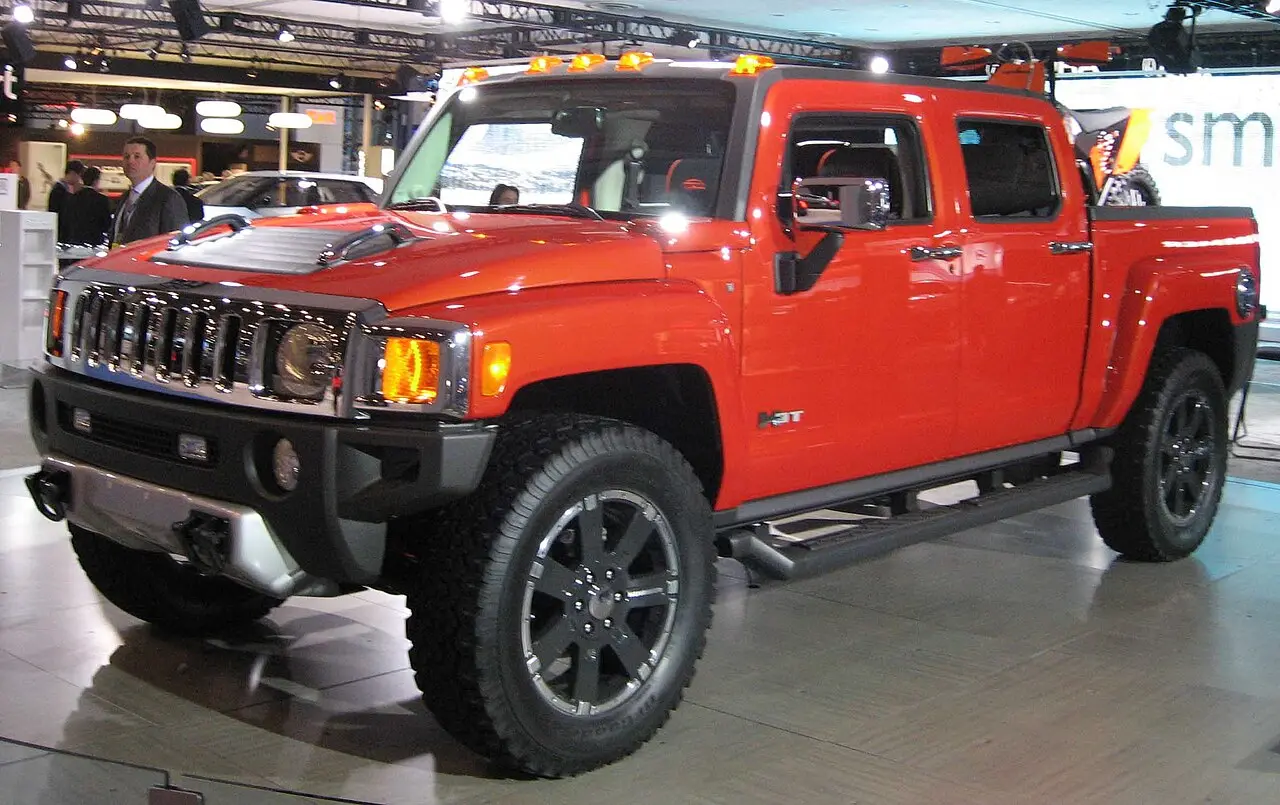
Hummer

Hummer H3T

Hummer H3T
Photo: IFCAR / Wikimedia Commons · Public domain

The official data lists 11 versions of the Hummer H3T (2009–2010), in the United States and Canada. Each market publishes its own figures, measured on its own test procedure.

At a glance

Years in the data
2009–2010
Markets
United States, Canada
Engines
3.7 L to 5.3 L
Fuels
Petrol, Flex fuel (E85)
Lowest consumption (United States)
14.7 L/100 km (EPA)
Lowest consumption (Canada)
14.8 L/100 km (5-cycle)

What is the Hummer H3T?

The H3T is a crew-cab pickup based on the H3 SUV. It kept the upright Hummer look and four-door passenger cabin, with a separate cargo bed behind it. That gives it the character of a practical lifestyle pickup, combining passenger space with an open load area.

The H3T’s first generation ran from 2009 to 2010. Like the H3, it was developed by General Motors as a civilian Hummer model.

Engines and power

The H3T was offered with petrol engines from 3.7 L to 5.3 L in the United States and Canada. Some versions could also run on E85 flex fuel. The range included a five-cylinder engine and a V8.

The crew-cab body and pickup bed gave the H3T a different layout from the H3 SUV while retaining a similar upright design.

How economical is the Hummer H3T?

The lowest listed US figure is 14.7 L/100 km under the EPA procedure, with a combined rating of 16 MPG. Canada’s lowest listed figure is 14.8 L/100 km under NRCan’s 5-cycle test. Both markets list petrol and E85 flex-fuel versions.

Fuel economy tests differ by market: the United States uses EPA procedures and Canada uses a 5-cycle test, so their ratings should be read within each system.

Where was the H3T sold?

The H3T appears in United States and Canadian figures for 2009–2010. Its recorded engine range is 3.7 L to 5.3 L in both markets. The pickup body added an open bed while retaining seating for a crew.

Questions and answers

What years was the Hummer H3T sold?

The H3T’s first generation ran from 2009 to 2010, and US and Canadian figures cover those same years.

What engines were available in the Hummer H3T?

The US and Canadian ranges include 3.7 L to 5.3 L petrol engines. Some versions were also listed as E85 flex-fuel vehicles.

How much fuel does the Hummer H3T use?

The lowest listed figure is 14.7 L/100 km under the US EPA procedure, or 16 MPG combined. Canada’s NRCan 5-cycle figure is 14.8 L/100 km.

Is the Hummer H3T an SUV or a pickup?

It is a crew-cab pickup based on the H3 SUV, with a separate open cargo bed.

H3T first generation (2009–2010)

Model codes: GMT745 · Sold in: United States and Canada · References: en.wikipedia.org, jdpower.com

United States 6 versions

Model years sold in the USA, from the EPA and the Department of Energy (fueleconomy.gov). MPG on the EPA test; litres per 100 km = 235.215 ÷ MPG.

Years and versionEngineFuelGearboxDriveConsumption (combined)CO₂
20103.7 LPetrol4-speed automaticFour-wheel drive16 MPG (14.7 L/100 km) EPA345 g/km
20103.7 LPetrol5-speed manualFour-wheel drive15 MPG (15.7 L/100 km) EPA368 g/km
2010FFV5.3 LFlex fuel (E85)4-speed automaticFour-wheel drive14 MPG (16.8 L/100 km) EPA394 g/km
2009SIL3.7 LPetrol5-speed manualFour- or all-wheel drive16 MPG (14.7 L/100 km) EPA345 g/km
2009CLKUP3.7 LPetrol4-speed automaticFour- or all-wheel drive16 MPG (14.7 L/100 km) EPA345 g/km
2009CLKUP5.3 LPetrol4-speed automaticFour- or all-wheel drive14 MPG (16.8 L/100 km) EPA394 g/km

Canada 5 versions

Model years sold in Canada, from Natural Resources Canada fuel consumption ratings (5-cycle test).

Years and versionEngineFuelGearboxConsumption (combined)CO₂
2009–2010Pickup truck: Standard3.7 LPetrol4-speed automatic14.8 L/100 km 5-cycle340 g/km
2009–2010Pickup truck: Standard3.7 LPetrol5-speed manual14.9 L/100 km 5-cycle343 g/km
2010Pickup truck: Standard5.3 LPetrol4-speed automatic16.6 L/100 km 5-cycle382 g/km
2010Pickup truck: Standard5.3 LFlex fuel (E85)4-speed automatic23.5 L/100 km 5-cycle376 g/km
2009Pickup truck: Standard5.3 LPetrol4-speed automatic16.7 L/100 km 5-cycle384 g/km

Official figures are measured on standard test procedures and differ between markets. Your consumption depends on how, where and in what conditions you drive.