Ford

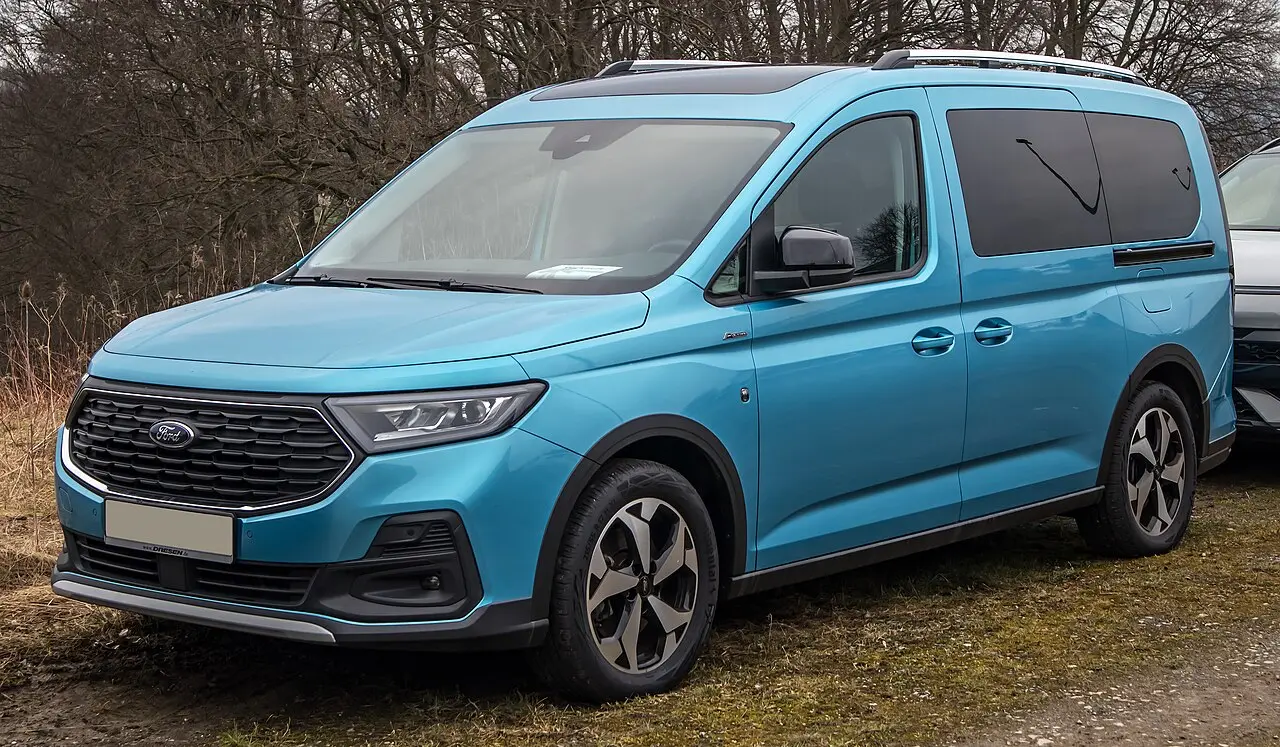
Ford Grand Tourneo Connect

Ford Grand Tourneo Connect
Photo: © M 93 / Wikimedia Commons · CC BY-SA 3.0 de

The official data lists 93 versions of the Ford Grand Tourneo Connect (2014–2025), in the European Union and the United Kingdom. Each market publishes its own figures, measured on its own test procedure.

At a glance

Years in the data
2014–2025
Markets
European Union, United Kingdom
Engines
1.5 L to 2.0 L
Power
74 kW (100 PS) to 122 kW (166 PS)
Fuels
Diesel, Plug-in hybrid, Petrol
Lowest consumption (United Kingdom)
4.4 L/100 km (NEDC)
Lowest consumption (European Union)
5.2 L/100 km (WLTP)
Plug-in hybrid, weighted (European Union)
0.6 L/100 km (WLTP)
New registrations in the EU
4,334

What is the Ford Grand Tourneo Connect?

The Grand Tourneo Connect is the longer, seven-seat people carrier in Ford’s Tourneo Connect range. Its tall body and sliding rear doors make room for passengers and bulky belongings. Ford designed the Tourneo as a passenger-focused counterpart to the Transit Connect van, bringing flexible seating and useful cabin space to family journeys.

The second generation, designated V408, ran from 2013 to 2021. The third generation began in 2022 and continues today. The newer model retained the emphasis on a flexible cabin while updating its design and technology.

Engines and power

European versions span 1.5 to 2.0 litres and 70 kW (95 PS) to 90 kW (122 PS), with diesel, petrol and plug-in hybrid options represented in EU registration figures. The UK range listed spans the same engine-size range, with power from 74 kW (100 PS) to 122 kW (166 PS), and includes petrol and diesel. Availability varied by market and year.

How economical is the Grand Tourneo Connect?

The lowest listed EU consumption is 5.2 L/100 km on the WLTP test. A plug-in hybrid’s official weighted figure is 0.6 L/100 km WLTP; that calculation assumes some driving is electric, so it may not reflect every journey. The UK’s lowest listed figure is 4.4 L/100 km under NEDC. WLTP and NEDC are European test procedures; the USA uses EPA procedures and Canada uses a 5-cycle test, so results can differ between markets.

EU registration figures span 2014–2025 and total 4,334. The most registered listed configuration was the 1.6-litre diesel at 85 kW (116 PS) in 2014, with 512 registrations.

Where was the Grand Tourneo Connect sold?

The model appears in EU registration figures for 2014–2025 and UK figures for 2016–2024. Ford’s Tourneo range is designed for passenger use, and the Grand Connect adds a third row to the Connect’s people-carrier layout.

Questions and answers

How many people can the Grand Tourneo Connect seat?

It is the seven-seat version of the Tourneo Connect.

What engines were available in the EU figures?

The listed range includes 1.5- to 2.0-litre petrol, diesel and plug-in hybrid versions.

What is its lowest listed fuel consumption?

The EU figure is 5.2 L/100 km WLTP; the plug-in hybrid’s weighted figure is 0.6 L/100 km WLTP.

Why does the UK figure differ?

The UK’s lowest listed figure is 4.4 L/100 km under NEDC, a different European test procedure from WLTP.
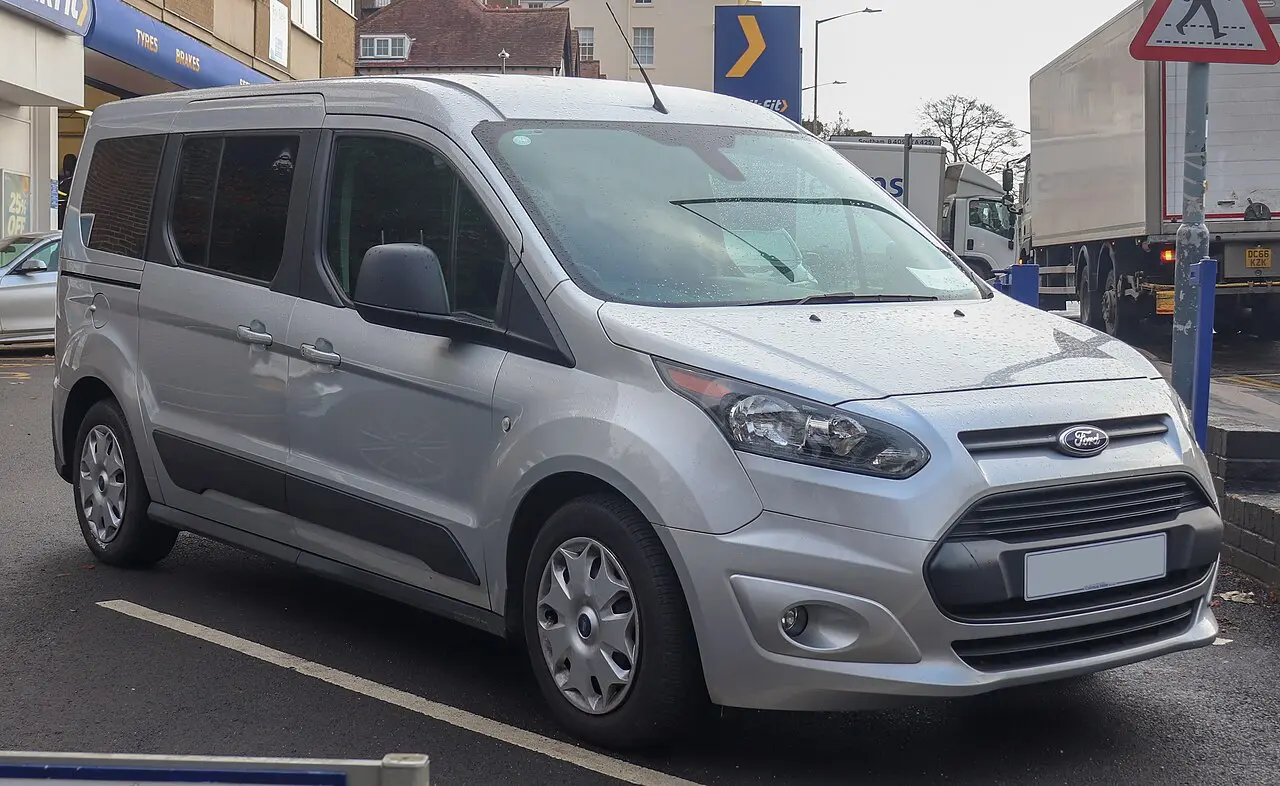
Grand Tourneo Connect II (2013–2021)

Ford Grand Tourneo Connect II
Photo: Vauxford / Wikimedia Commons · CC BY-SA 4.0

Model codes: V408 · Sold in: European Union and United Kingdom · References: fordfan.de, media.ford.com

Show all 59 versions

Grand Tourneo Connect III (since 2022)

Ford Grand Tourneo Connect III
Photo: © M 93 / Wikimedia Commons · CC BY-SA 3.0 de

Sold in: European Union and United Kingdom · References: en.wikipedia.org

European Union 14 versions

New cars registered in the EU (plus Norway and Iceland), from the European Environment Agency. Figures on the NEDC procedure until 2020 and on WLTP from 2021; versions are grouped by engine and power, with their number of registrations.

Years and versionEnginePowerFuelConsumption (combined)CO₂Electric rangeEU registrations
20252.0 L90 kW (122 PS)Diesel6.0 L/100 km WLTP155 g/km–142
20251.5 L85 kW (116 PS)Plug-in hybrid0.6 L/100 km WLTP18.9 kWh/100 km WLTP13 g/km116 km82
20251.5 L85 kW (116 PS)Petrol6.8 L/100 km WLTP156 g/km–41
20252.0 L75 kW (102 PS)Diesel5.5 L/100 km WLTP143 g/km–28
20242.0 L90 kW (122 PS)Diesel5.3 L/100 km WLTP140 g/km–333
20241.5 L84 kW (114 PS)Petrol6.7 L/100 km WLTP152 g/km–115
20242.0 L75 kW (102 PS)Diesel5.2 L/100 km WLTP136 g/km–63
20241.5 L85 kW (116 PS)Petrol6.9 L/100 km WLTP157 g/km–14
20232.0 L90 kW (122 PS)Diesel5.2 L/100 km WLTP137 g/km–246
20232.0 L75 kW (102 PS)Diesel5.0 L/100 km WLTP132 g/km–27
20231.5 L84 kW (114 PS)Petrol6.6 L/100 km WLTP151 g/km–17
20221.5 L88 kW (120 PS)Diesel5.9 L/100 km WLTP153 g/km–87
20222.0 L90 kW (122 PS)Diesel5.5 L/100 km WLTP144 g/km–74
20221.5 L73 kW (99 PS)Diesel5.7 L/100 km WLTP149 g/km–24

United Kingdom 20 versions

New cars on sale in the UK, from the Vehicle Certification Agency. NEDC figures until 2018 and WLTP figures after; years are the editions a version appeared in.

Years and versionEnginePowerFuelGearboxConsumption (combined)CO₂
20241.5 EcoBoost1.5 L114 kW (155 PS)Petrol6-speed manual6.1 L/100 km WLTP138 g/km
20241.5 EcoBoost1.5 L114 kW (155 PS)Petrol7-speed automatic6.3 L/100 km WLTP144 g/km
20241.5 EcoBoost1.5 L114 kW (155 PS)Petrol6-speed manual7.4 L/100 km WLTP167 g/km
20241.5 EcoBoost1.5 L114 kW (155 PS)Petrol7-speed automatic7.5 L/100 km WLTP170 g/km
20242.0 EcoBlue - 3.944 FDR2.0 L122 kW (166 PS)Diesel6-speed manual4.6 L/100 km WLTP121 g/km
20242.0 EcoBlue2.0 L122 kW (166 PS)Diesel7-speed automatic4.9 L/100 km WLTP128 g/km
20242.0 EcoBlue - 4.235/3.273 FDR2.0 L122 kW (166 PS)Diesel6-speed manual5.1 L/100 km WLTP133 g/km
20242.0 EcoBlue - 3.944 FDR2.0 L122 kW (166 PS)Diesel6-speed manual5.5 L/100 km WLTP143 g/km
20242.0 EcoBlue2.0 L122 kW (166 PS)Diesel7-speed automatic5.7 L/100 km WLTP151 g/km
20242.0 EcoBlue - 4.235/3.273 FDR2.0 L122 kW (166 PS)Diesel6-speed manual6.1 L/100 km WLTP159 g/km
2022–20231.5 EcoBoost1.5 L84 kW (114 PS)Petrol6-speed manual6.1 L/100 km WLTP138 g/km
2022–20231.5 EcoBoost1.5 L84 kW (114 PS)Petrol7-speed automatic6.3 L/100 km WLTP144 g/km
2022–20231.5 EcoBoost1.5 L84 kW (114 PS)Petrol6-speed manual7.4 L/100 km WLTP167 g/km
2022–20231.5 EcoBoost1.5 L84 kW (114 PS)Petrol7-speed automatic7.5 L/100 km WLTP170 g/km
2022–20232.0 EcoBlue2.0 L90 kW (122 PS)Diesel7-speed automatic4.9 L/100 km WLTP128 g/km
2022–20232.0 EcoBlue2.0 L90 kW (122 PS)Diesel7-speed automatic5.7 L/100 km WLTP151 g/km
2022–20232.0 EcoBlue - 3.944 FDR2.0 L90 kW (122 PS)Diesel6-speed manual4.6 L/100 km WLTP121 g/km
2022–20232.0 EcoBlue - 3.944 FDR2.0 L90 kW (122 PS)Diesel6-speed manual5.5 L/100 km WLTP143 g/km
2022–20232.0 EcoBlue - 4.235/3.273 FDR2.0 L90 kW (122 PS)Diesel6-speed manual5.1 L/100 km WLTP133 g/km
2022–20232.0 EcoBlue - 4.235/3.273 FDR2.0 L90 kW (122 PS)Diesel6-speed manual6.1 L/100 km WLTP159 g/km

Official figures are measured on standard test procedures and differ between markets. Your consumption depends on how, where and in what conditions you drive.