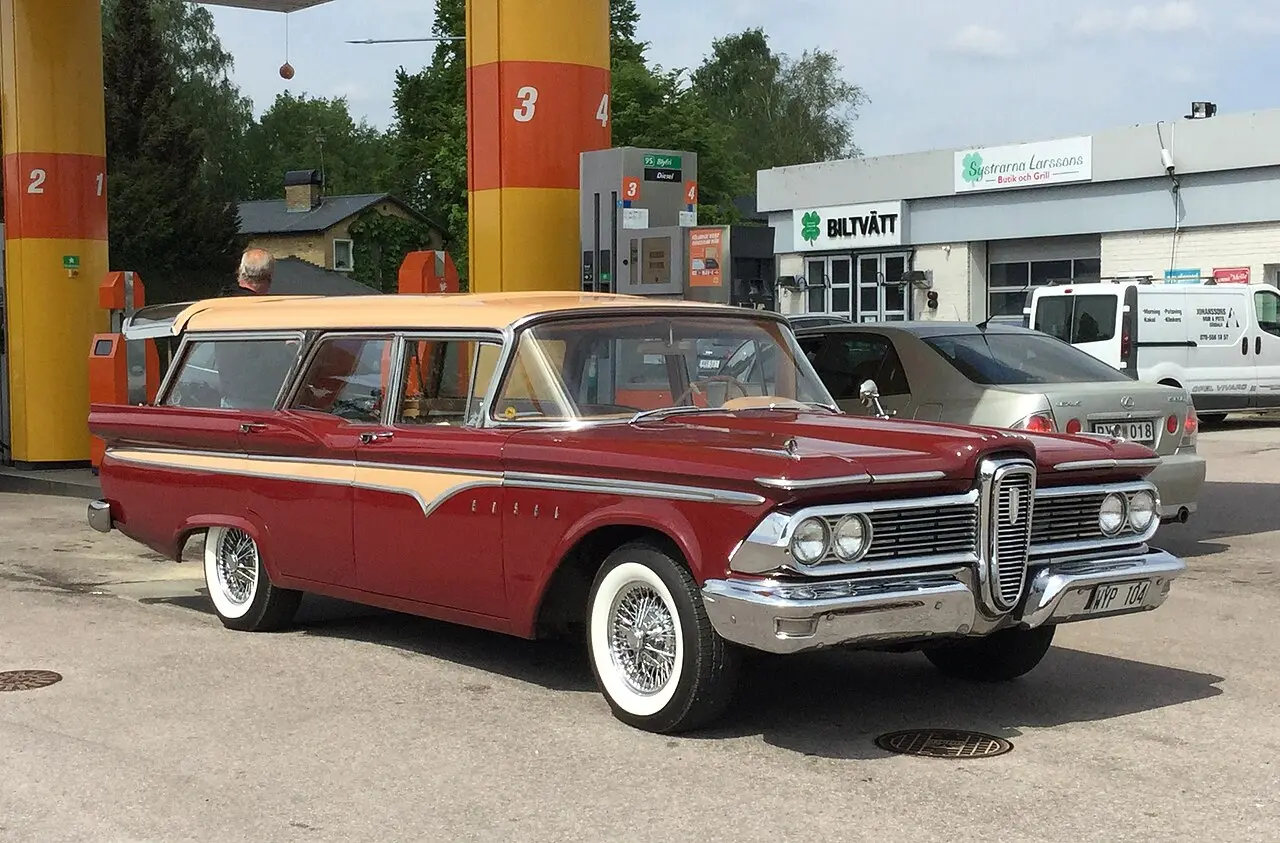
What is the Edsel Villager?
The Villager was Edsel’s station wagon, with a four-door body and a choice of seating layouts. Its long roof and rear load space made it the practical wagon in Edsel’s range. Like the other Edsels, it shared basic underpinnings with Ford Motor Company cars while having its own trim and details.
As Edsel simplified its lineup, the Villager became the marque’s sole station wagon. Its rear lamps and side trim helped distinguish it from related Ford wagons.
Generations, engines and power
Villagers used V8 engines, and the available engine range changed as Edsel revised its lineup. There is no single engine or power figure that describes every version.
Official fuel-consumption and CO₂ figures are not available for the Villager.
Where was it sold?
The Villager was part of Edsel’s North American range. Some Edsels were assembled in Canada, while station wagons sold there were imported from the United States. The Villager’s run ended when Ford discontinued the Edsel marque.
Questions and answers
When was the Edsel Villager sold?
The Villager was part of Edsel’s short-lived range.
What body style and seating did the Villager offer?
It was a four-door station wagon, offered with a choice of seating layouts.
What engine and power did the Villager have?
The Villager used V8 engines, and the available range changed during its run. There is no single power figure for every version.
What are its official fuel-consumption and CO₂ figures?
Official fuel-consumption and CO₂ figures are not available for the Villager.