Dodge

Dodge Magnum

Dodge Magnum
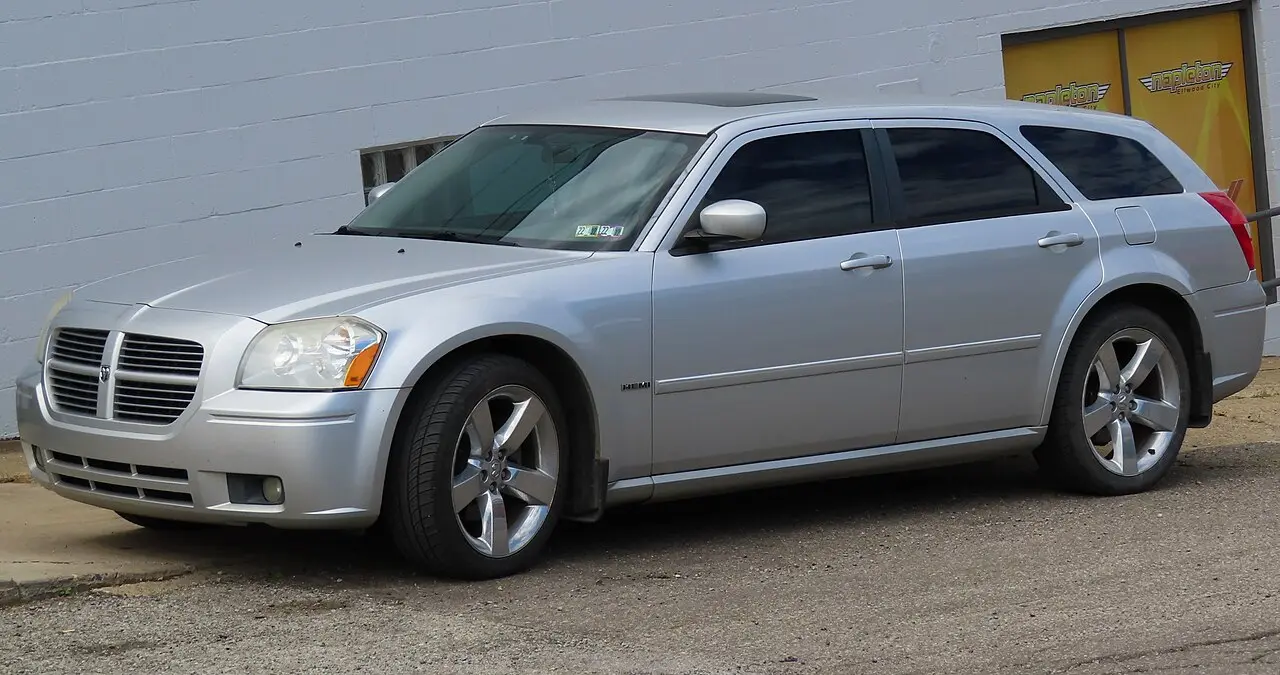
Photo: MercurySable99 / Wikimedia Commons · CC BY-SA 4.0

The official data lists 18 versions of the Dodge Magnum (2005–2008), in the United States and Canada. Each market publishes its own figures, measured on its own test procedure.

At a glance

Years in the data
2005–2008
Markets
United States, Canada
Engines
2.7 L to 6.1 L
Fuels
Petrol
Lowest consumption (Canada)
11.1 L/100 km (5-cycle)
Lowest consumption (United States)
11.2 L/100 km (EPA)

What is the Dodge Magnum?

The Dodge Magnum was a large wagon with a long roof, a broad cabin and a distinctive, muscular shape. It brought passenger and cargo space to Dodge’s LX range of large cars. Its upright rear body and car-like layout gave it the proportions of a traditional wagon.

The Magnum name had appeared on earlier Dodge models. This version was a fresh design for the 2000s, built around a spacious cabin and a long cargo area.

Generation and engines

The Magnum’s LX generation ran from 2005 to 2008. Its petrol engine range stretched from 2.7 L to 6.1 L, spanning different levels of performance and power.

How economical is the Dodge Magnum?

United States EPA figures cover the Magnum from 2005 to 2008. The best combined rating is 21 MPG, and the lowest listed consumption is 11.2 L/100 km. Canadian figures for the same years give a lowest listed consumption of 11.1 L/100 km. The EPA and Canadian five-cycle procedures differ, so results are best considered within each market.

Where was it sold?

The Magnum was sold in the United States and Canada. In both markets, it was listed with petrol engines from 2.7 L to 6.1 L.

Questions and answers

Was the Dodge Magnum a sedan or a wagon?

It was a large wagon with a long roof and a roomy cargo area.

What engines did the Magnum have?

Its listed petrol engine range ran from 2.7 L to 6.1 L.

What is the Magnum’s best combined EPA rating?

Its United States EPA rating reaches 21 MPG combined.

Why do the US and Canadian consumption figures differ?

The United States uses EPA testing, while Canada uses a five-cycle procedure. The results are not directly interchangeable.

Magnum LX (2005–2008)

Dodge Magnum LX
Photo: MercurySable99 / Wikimedia Commons · CC BY-SA 4.0

Model codes: LX · Sold in: United States and Canada · References: en.wikipedia.org, motortrend.com

United States 8 versions

Model years sold in the USA, from the EPA and the Department of Energy (fueleconomy.gov). MPG on the EPA test; litres per 100 km = 235.215 ÷ MPG.

Years and versionEngineFuelGearboxDriveConsumption (combined)CO₂
2005–2008CMODE2.7 LPetrol4-speed automaticRear-wheel drive21 MPG (11.2 L/100 km) EPA263 g/km
2005–2008CMODE · FFS3.5 LPetrol5-speed automaticFour- or all-wheel drive18 MPG (13.1 L/100 km) EPA307 g/km
2006–2008CMODE3.5 LPetrol5-speed automaticRear-wheel drive20 MPG (11.8 L/100 km) EPA276 g/km
2008CMODE3.5 LPetrol4-speed automaticRear-wheel drive20 MPG (11.8 L/100 km) EPA276 g/km
2005–2008CMODE5.7 LPetrol5-speed automaticRear-wheel drive18 MPG (13.1 L/100 km) EPA307 g/km
2005–2008CMODE5.7 LPetrol5-speed automaticFour- or all-wheel drive18 MPG (13.1 L/100 km) EPA307 g/km
2006–2008CMODE6.1 LPetrol5-speed automaticRear-wheel drive15 MPG (15.7 L/100 km) EPA368 g/km
2005–2006CMODE3.5 LPetrol4-speed automaticRear-wheel drive20 MPG (11.8 L/100 km) EPA276 g/km

Canada 10 versions

Model years sold in Canada, from Natural Resources Canada fuel consumption ratings (5-cycle test).

Years and versionEngineFuelGearboxConsumption (combined)CO₂
2008Sport utility vehicle2.7 LPetrol4-speed automatic11.1 L/100 km 5-cycle255 g/km
2008Sport utility vehicle3.5 LPetrol4-speed automatic11.9 L/100 km 5-cycle274 g/km
2005–2008Sport utility vehicle3.5 LPetrol5-speed automatic13.3 L/100 km 5-cycle306 g/km
2006–2008Sport utility vehicle3.5 LPetrol5-speed automatic12.0 L/100 km 5-cycle276 g/km
2005–2008Sport utility vehicle5.7 LPetrol5-speed automatic13.2 L/100 km 5-cycle304 g/km
2008Sport utility vehicle5.7 LPetrol5-speed automatic12.9 L/100 km 5-cycle297 g/km
2006–2008Sport utility vehicle6.1 LPetrol5-speed automatic15.8 L/100 km 5-cycle363 g/km
2005–2007Sport utility vehicle2.7 LPetrol4-speed automatic11.2 L/100 km 5-cycle258 g/km
2005–2007Sport utility vehicle5.7 LPetrol5-speed automatic13.2 L/100 km 5-cycle304 g/km
2005–2006Sport utility vehicle3.5 LPetrol4-speed automatic11.9 L/100 km 5-cycle274 g/km

Official figures are measured on standard test procedures and differ between markets. Your consumption depends on how, where and in what conditions you drive.