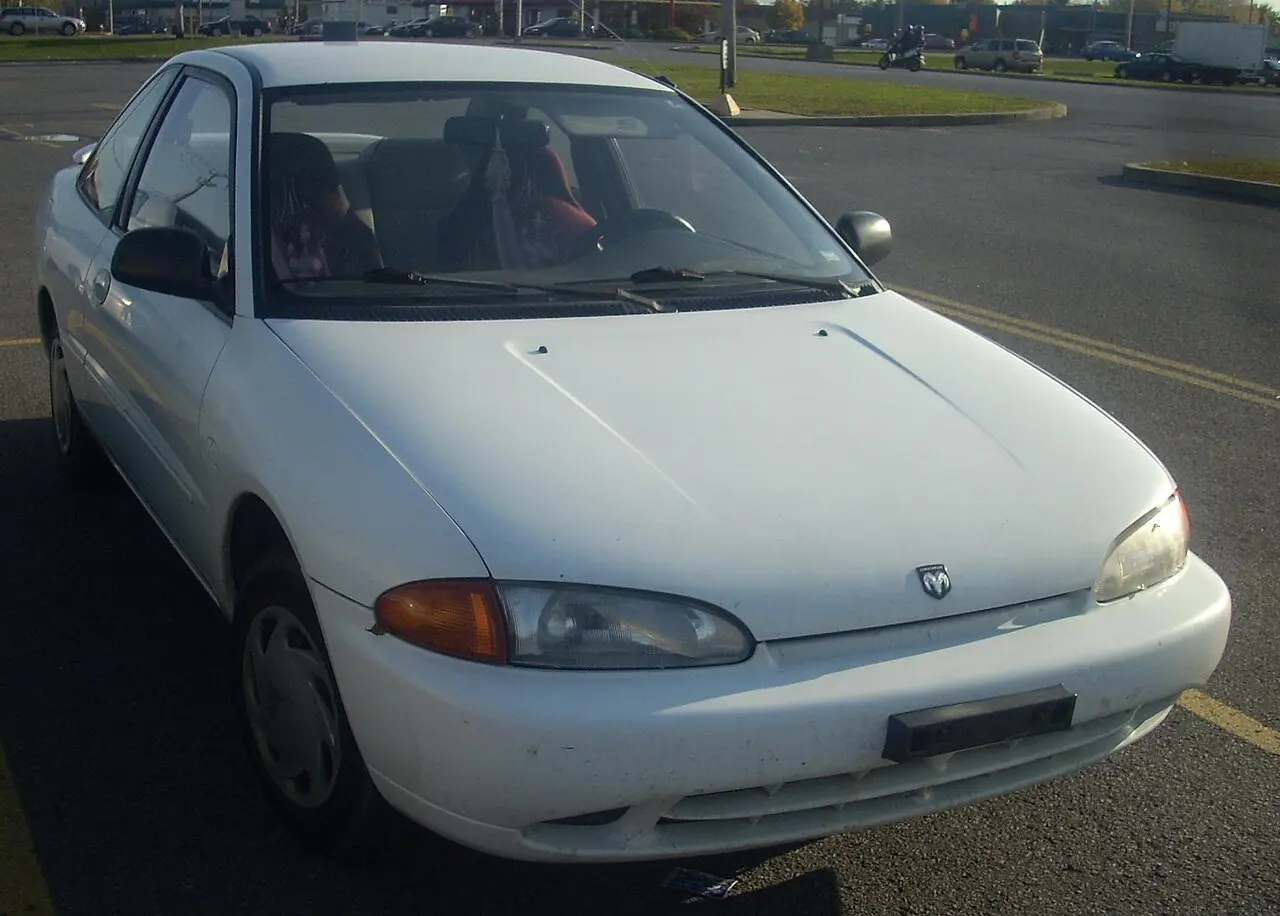
Dodge

Dodge Colt

Dodge Colt
Photo: Bull-Doser / Wikimedia Commons · Public domain

The official data lists 49 versions of the Dodge Colt (1984–1996), in the United States and Canada. Each market publishes its own figures, measured on its own test procedure.

At a glance

Years in the data
1984–1996
Markets
United States, Canada
Engines
1.4 L to 1.8 L
Fuels
Petrol
Lowest consumption (United States)
6.9 L/100 km (EPA)
Lowest consumption (Canada)
7.5 L/100 km (5-cycle)

What is the Dodge Colt?

The Dodge Colt was a small car sold in North America under Dodge’s name and built by Mitsubishi. Its hatchback shape made it a practical choice for everyday driving, while sedans and, in its final generation, a coupe offered different body styles. The Colt was part of Chrysler’s practice of selling Mitsubishi-designed cars under American brand names.

Generations and engines

The fifth generation ran from 1985 to 1988 and included hatchback and sedan versions. The sixth generation followed from 1989 to 1992, with a hatchback in the United States and a sedan also available in Canada. The seventh generation, from 1993 to 1994, brought back the coupe alongside the sedan. The Colt’s changing body styles reflected its role as a small, adaptable passenger car.

US EPA listings cover 1.4 L to 1.8 L petrol engines. Canadian NRCan listings cover 1.5 L to 1.8 L petrol engines.

How economical is the Dodge Colt?

The best combined US EPA rating listed for the Colt is 34 MPG, or 6.9 L/100 km. Canada’s lowest listed figure is 7.5 L/100 km on the NRCan 5-cycle test. These figures come from different market procedures: the United States uses EPA testing, while Canada uses the 5-cycle procedure, so they are not direct like-for-like comparisons.

The Colt appears in US EPA listings from 1984 to 1994 and Canadian NRCan listings from 1995 to 1996.

Questions and answers

What body styles did the Dodge Colt have?

The later generations included hatchback and sedan versions, with a coupe also offered in the seventh generation.

What engines were available?

US listings cover 1.4 L to 1.8 L petrol engines; Canadian listings cover 1.5 L to 1.8 L petrol engines.

What is the Dodge Colt’s best official fuel economy?

The best combined US EPA figure listed is 34 MPG, or 6.9 L/100 km. Canada’s lowest listed NRCan 5-cycle figure is 7.5 L/100 km.
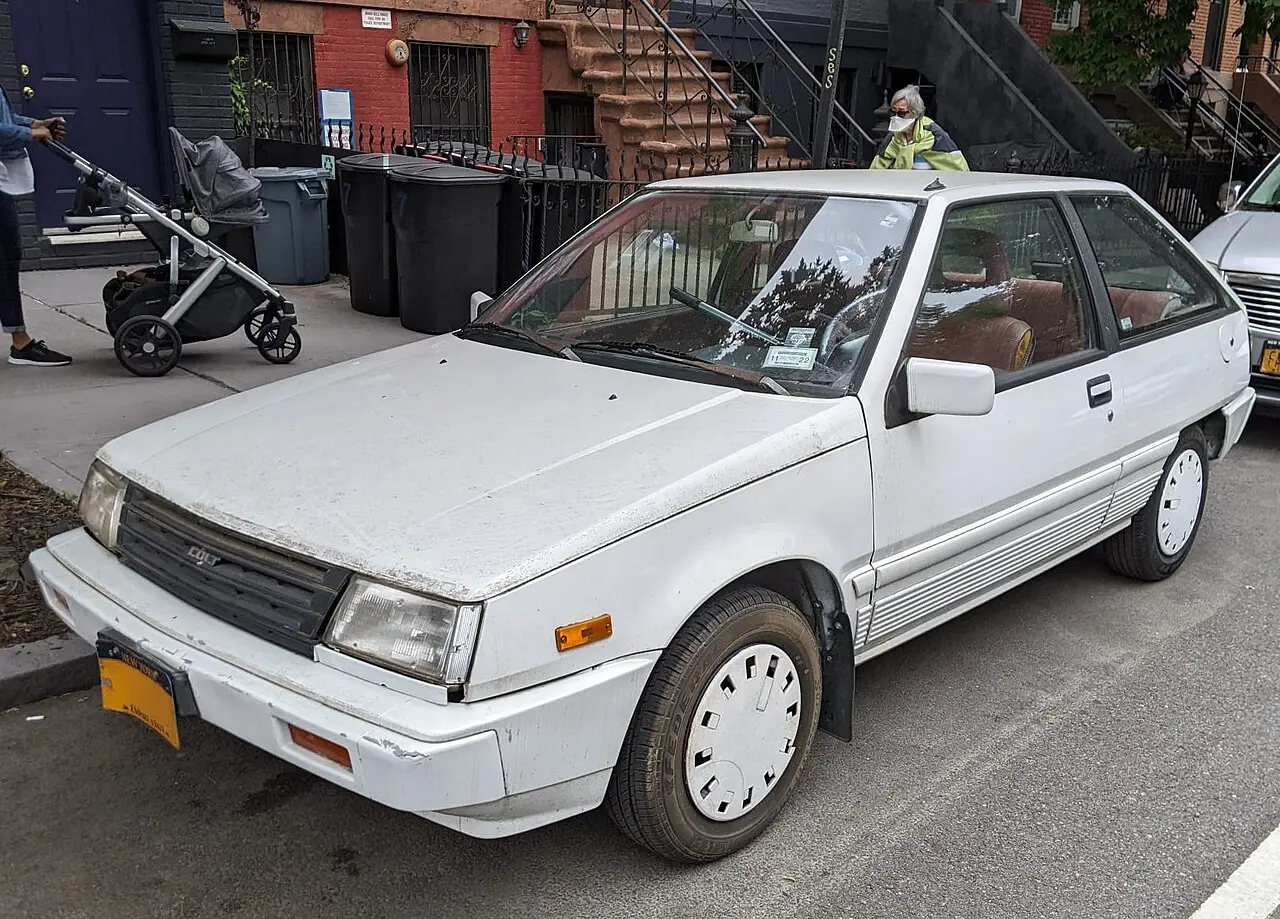
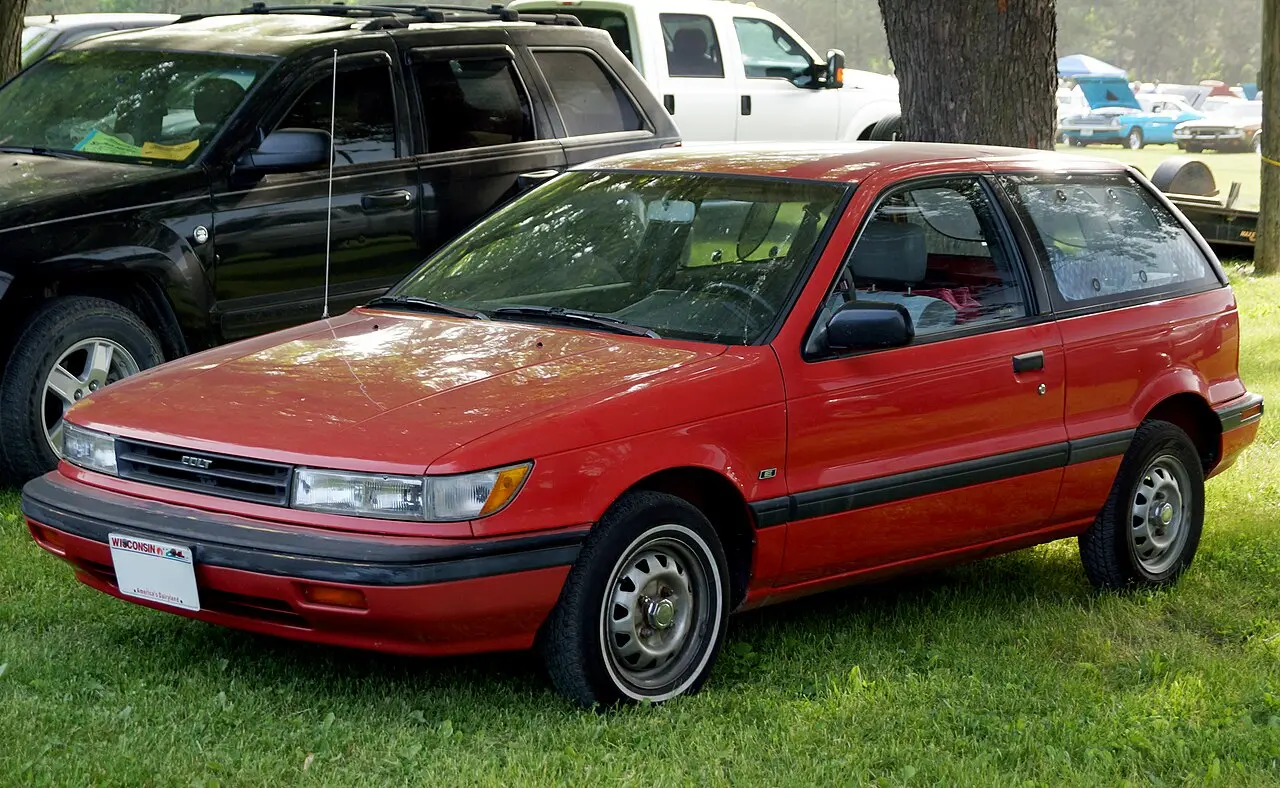
Colt fifth generation (1985–1988)

Dodge Colt fifth generation
Photo: Mr.choppers / Wikimedia Commons · CC BY-SA 3.0

Model codes: C10 · Sold in: United States and Canada · References: en.wikipedia.org

Show all 17 versions

Colt sixth generation (1989–1992)

Dodge Colt sixth generation
Photo: Greg Gjerdingen from Willmar, USA, Mr.choppers / Wikimedia Commons · CC BY 2.0

Model codes: C50 · Sold in: United States and Canada · References: en.wikipedia.org

Show all 12 versions

Colt seventh generation (1993–1994)

Dodge Colt seventh generation
Photo: Bull-Doser / Wikimedia Commons · Public domain

Model codes: C10 · Sold in: United States and Canada · References: en.wikipedia.org, dodge-colt.com

United States 8 versions

Model years sold in the USA, from the EPA and the Department of Energy (fueleconomy.gov). MPG on the EPA test; litres per 100 km = 235.215 ÷ MPG.

Years and versionEngineFuelGearboxDriveConsumption (combined)CO₂
1994SOHC (FFS)1.5 LPetrol3-speed automaticFront-wheel drive26 MPG (9.0 L/100 km) EPA212 g/km
1994SOHC (FFS)1.5 LPetrol5-speed manualFront-wheel drive31 MPG (7.6 L/100 km) EPA178 g/km
1994SOHC-4 (FFS)1.8 LPetrol4-speed automaticFront-wheel drive26 MPG (9.0 L/100 km) EPA212 g/km
1994SOHC-4 (FFS)1.8 LPetrol5-speed manualFront-wheel drive26 MPG (9.0 L/100 km) EPA212 g/km
1993SOHC (FFS)1.5 LPetrol3-speed automaticFront-wheel drive27 MPG (8.7 L/100 km) EPA205 g/km
1993SOHC (FFS)1.5 LPetrol5-speed manualFront-wheel drive31 MPG (7.6 L/100 km) EPA178 g/km
1993SOHC-4 (FFS)1.8 LPetrol4-speed automaticFront-wheel drive26 MPG (9.0 L/100 km) EPA212 g/km
1993SOHC-4 (FFS)1.8 LPetrol5-speed manualFront-wheel drive26 MPG (9.0 L/100 km) EPA212 g/km

Versions outside these generations

United States 6 versions

Model years sold in the USA, from the EPA and the Department of Energy (fueleconomy.gov). MPG on the EPA test; litres per 100 km = 235.215 ÷ MPG.

Years and versionEngineFuelGearboxConsumption (combined)CO₂
1984(FFS)1.4 LPetrol4-speed manual34 MPG (6.9 L/100 km) EPA162 g/km
1984(FFS)1.4 LPetrol4-speed manual31 MPG (7.6 L/100 km) EPA178 g/km
1984(FFS) CA model1.4 LPetrol4-speed manual33 MPG (7.1 L/100 km) EPA167 g/km
1984(FFS) CA model1.4 LPetrol4-speed manual30 MPG (7.8 L/100 km) EPA184 g/km
1984(FFS) · (FFS) CA model1.6 LPetrol3-speed automatic26 MPG (9.0 L/100 km) EPA212 g/km
1984(FFS,TRBO) · (FFS,TRBO) CA model1.6 LPetrol4-speed manual25 MPG (9.4 L/100 km) EPA221 g/km

Canada 6 versions

Model years sold in Canada, from Natural Resources Canada fuel consumption ratings (5-cycle test).

Years and versionEngineFuelGearboxConsumption (combined)CO₂
1996Subcompact1.5 LPetrol3-speed automatic8.9 L/100 km 5-cycle205 g/km
1996Subcompact1.5 LPetrol5-speed manual7.6 L/100 km 5-cycle175 g/km
1995Subcompact1.5 LPetrol3-speed automatic8.7 L/100 km 5-cycle200 g/km
1995Subcompact1.5 LPetrol5-speed manual7.5 L/100 km 5-cycle173 g/km
1995Subcompact1.8 LPetrol4-speed automatic9.2 L/100 km 5-cycle212 g/km
1995Subcompact1.8 LPetrol5-speed manual9.1 L/100 km 5-cycle209 g/km

Official figures are measured on standard test procedures and differ between markets. Your consumption depends on how, where and in what conditions you drive.