Dodge

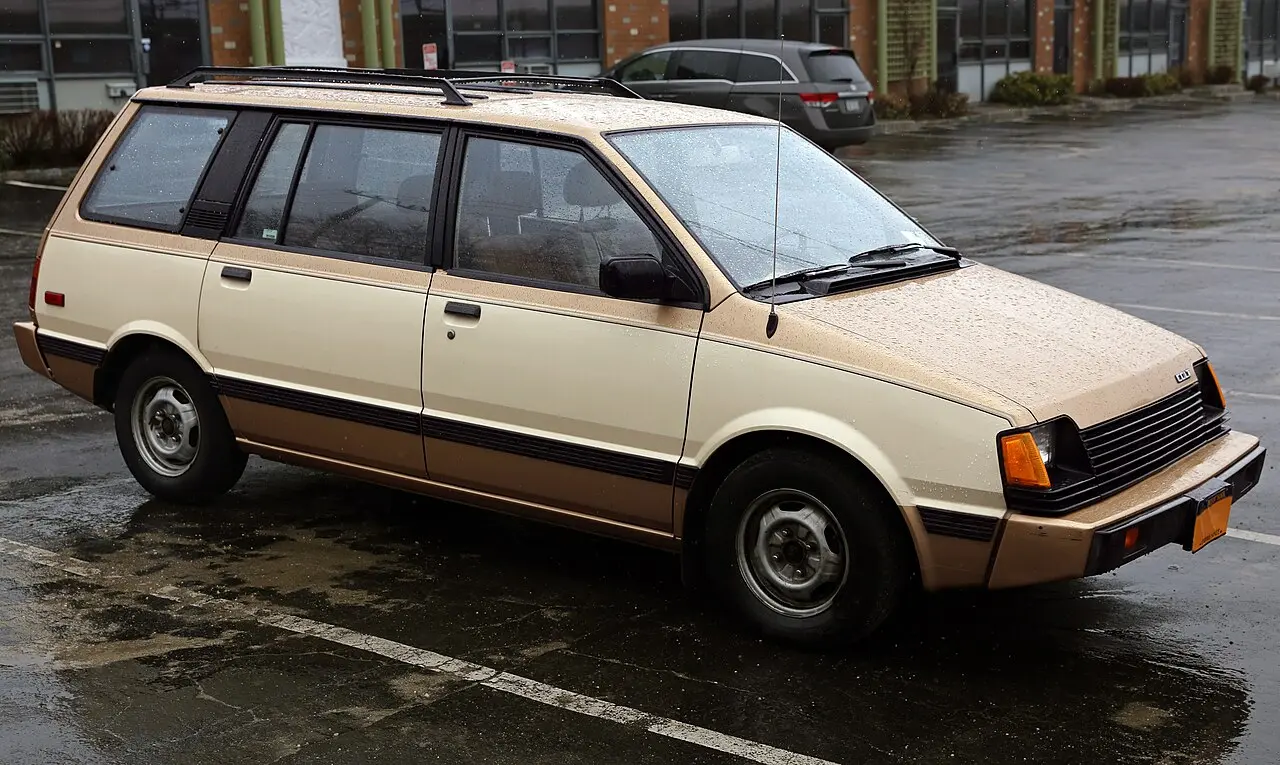
Dodge Colt Vista

Dodge Colt Vista
Photo: Mr.choppers / Wikimedia Commons · CC BY-SA 3.0

The official data lists 19 versions of the Dodge Colt Vista (1984–1991), in the United States. Each market publishes its own figures, measured on its own test procedure.

At a glance

Years in the data
1984–1991
Markets
United States
Engines
2.0 L
Fuels
Petrol
Lowest consumption (United States)
9.4 L/100 km (EPA)

What is the Dodge Colt Vista?

The Colt Vista was a compact wagon with a tall roof and a roomy cabin. It offered the everyday practicality of a small family car with space for passengers and cargo. The name placed it within Dodge’s Colt range of compact cars.

The Vista’s tall, flexible layout made it distinct from a conventional wagon. Its single generation ran from 1984 to 1991.

Generations and engines

The Colt Vista had one generation, identified by the code D00. In the United States, it was listed with petrol power and a 2.0 L engine. Its tall cabin and wagon body were central to its practical character.

How economical is the Dodge Colt Vista?

In United States EPA figures, the Colt Vista’s years are 1984–1991. Its best combined rating is 25 MPG, and its lowest listed consumption is 9.4 L/100 km. EPA results use a different test procedure from European WLTP or NEDC figures.

Where was it sold?

The Colt Vista was sold in the United States.

Questions and answers

What kind of car is the Dodge Colt Vista?

It is a compact wagon with a tall body and a roomy cabin.

When was the Colt Vista sold?

Its single generation ran from 1984 to 1991.

What engine and fuel economy figures are listed?

The United States EPA listing covers petrol 2.0 L versions, with a best combined rating of 25 MPG and lowest listed consumption of 9.4 L/100 km.

Colt Vista first generation (1984–1991)

Dodge Colt Vista first generation
Photo: Mr.choppers / Wikimedia Commons · CC BY-SA 3.0

Model codes: D00 · Sold in: United States · References: dodge-colt.com

United States 19 versions

Model years sold in the USA, from the EPA and the Department of Energy (fueleconomy.gov). MPG on the EPA test; litres per 100 km = 235.215 ÷ MPG.

Years and versionEngineFuelGearboxDriveConsumption (combined)CO₂
1989–1991(FFS)2.0 LPetrol5-speed manualFour- or all-wheel drive19 MPG (12.4 L/100 km) EPA291 g/km
1989–1991(FFS) · (SOHC) (FFS)2.0 LPetrol3-speed automaticFront-wheel drive20 MPG (11.8 L/100 km) EPA276 g/km
1991(SOHC) (FFS)2.0 LPetrol5-speed manualFront-wheel drive22 MPG (10.7 L/100 km) EPA251 g/km
1990(FFS)2.0 LPetrol5-speed manualFront-wheel drive22 MPG (10.7 L/100 km) EPA251 g/km
1989(FFS)2.0 LPetrol5-speed manualFront-wheel drive22 MPG (10.7 L/100 km) EPA251 g/km
1986–1988(FFS), VLKUP · (FFS) 2 barrel carb · (FFS) fuel injection and 1 more trim2.0 LPetrol3-speed automaticFront-wheel drive21 MPG (11.2 L/100 km) EPA263 g/km
1986–1988(FFS) · (FFS) 2 barrel carb · (FFS) fuel injection2.0 LPetrol5-speed manualFront-wheel drive23 MPG (10.2 L/100 km) EPA240 g/km
1987–1988(FFS) fuel injection · (FFS)2.0 LPetrol5-speed manualFour- or all-wheel drive21 MPG (11.2 L/100 km) EPA263 g/km
1985–1987(CAL)(FFS) · (FFS) · (FFS) 2 barrel carb2.0 LPetrol5-speed manualFour- or all-wheel drive19 MPG (12.4 L/100 km) EPA291 g/km
1985(FFS) CA model2.0 LPetrol3-speed automaticFront-wheel drive21 MPG (11.2 L/100 km) EPA263 g/km
1985(FFS) CA model2.0 LPetrol5-speed manualFront-wheel drive23 MPG (10.2 L/100 km) EPA240 g/km
1985(FFS)2.0 LPetrol3-speed automaticFront-wheel drive22 MPG (10.7 L/100 km) EPA251 g/km
1985(FFS)2.0 LPetrol5-speed manualFront-wheel drive24 MPG (9.8 L/100 km) EPA230 g/km
1984(FFS)2.0 LPetrol3-speed automatic–23 MPG (10.2 L/100 km) EPA240 g/km
1984(FFS)2.0 LPetrol4-speed manual–24 MPG (9.8 L/100 km) EPA230 g/km
1984(FFS)2.0 LPetrol5-speed manual–25 MPG (9.4 L/100 km) EPA221 g/km
1984(FFS) CA model2.0 LPetrol3-speed automatic–22 MPG (10.7 L/100 km) EPA251 g/km
1984(FFS) CA model2.0 LPetrol4-speed manual–23 MPG (10.2 L/100 km) EPA240 g/km
1984(FFS) CA model2.0 LPetrol5-speed manual–24 MPG (9.8 L/100 km) EPA230 g/km

Official figures are measured on standard test procedures and differ between markets. Your consumption depends on how, where and in what conditions you drive.