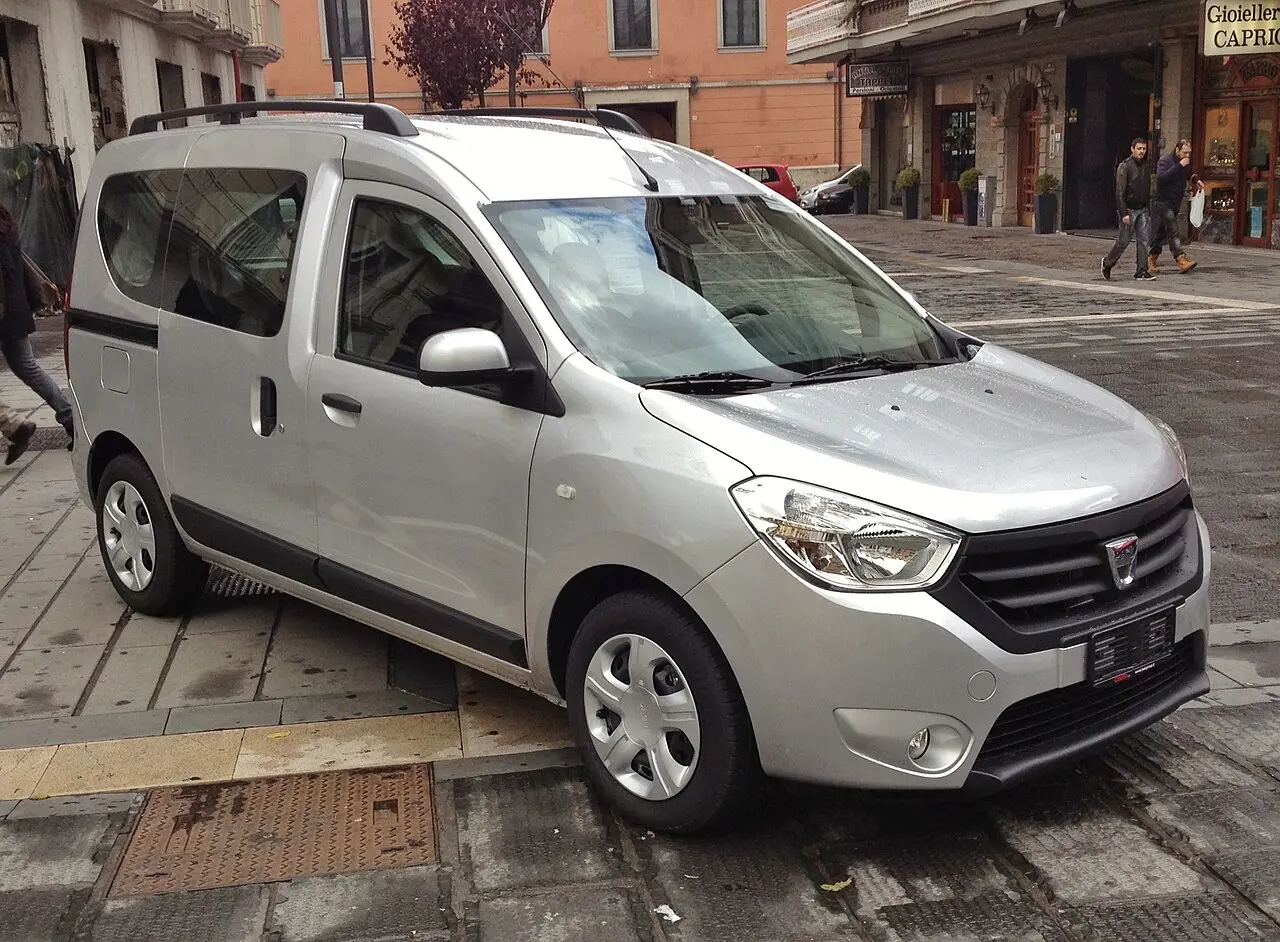
What is the Dacia Dokker?
The Dokker came in two forms: a passenger-carrying MPV and a utility van. Dacia introduced both in 2012. The passenger version offered five seats and a flexible interior, while the van was designed to carry loads. The shared boxy shape suited both roles.
The Dokker’s first generation ran from 2012 to 2021. It gave Dacia a vehicle that could serve families and people needing a practical work van.
Engines and power
In European Union registration figures for 2012–2021, the Dokker used engines from 1.2 L to 1.6 L. Listed power ranges from 55 kW (75 PS) to 113 kW (154 PS). Fuel choices included petrol, diesel, LPG and other classifications.
French ADEME figures for 2013–2015 list power from 55 kW (75 PS) to 85 kW (116 PS), with diesel, petrol and LPG versions.
Fuel consumption and registrations
The lowest listed EU consumption is 4.3 L/100 km on WLTP. France’s lowest listed figure is 4.5 L/100 km on NEDC. WLTP and NEDC are different European test procedures, so the figures are best considered within their own market and test context.
European Union registrations total 484,746 over 2012–2021. Among the most registered configurations were 1.6 L petrol and 1.5 L diesel versions.
Questions and answers
Was the Dokker a van or a family car?
It served both roles, with a passenger-carrying MPV and a utility van.
When was the Dokker sold?
Its first generation ran from 2012 to 2021. EU registration figures cover those years; French ADEME figures cover 2013–2015.
What is the Dokker’s lowest listed fuel consumption?
The EU figure is 4.3 L/100 km on WLTP. The French figure is 4.5 L/100 km on NEDC.