BYD

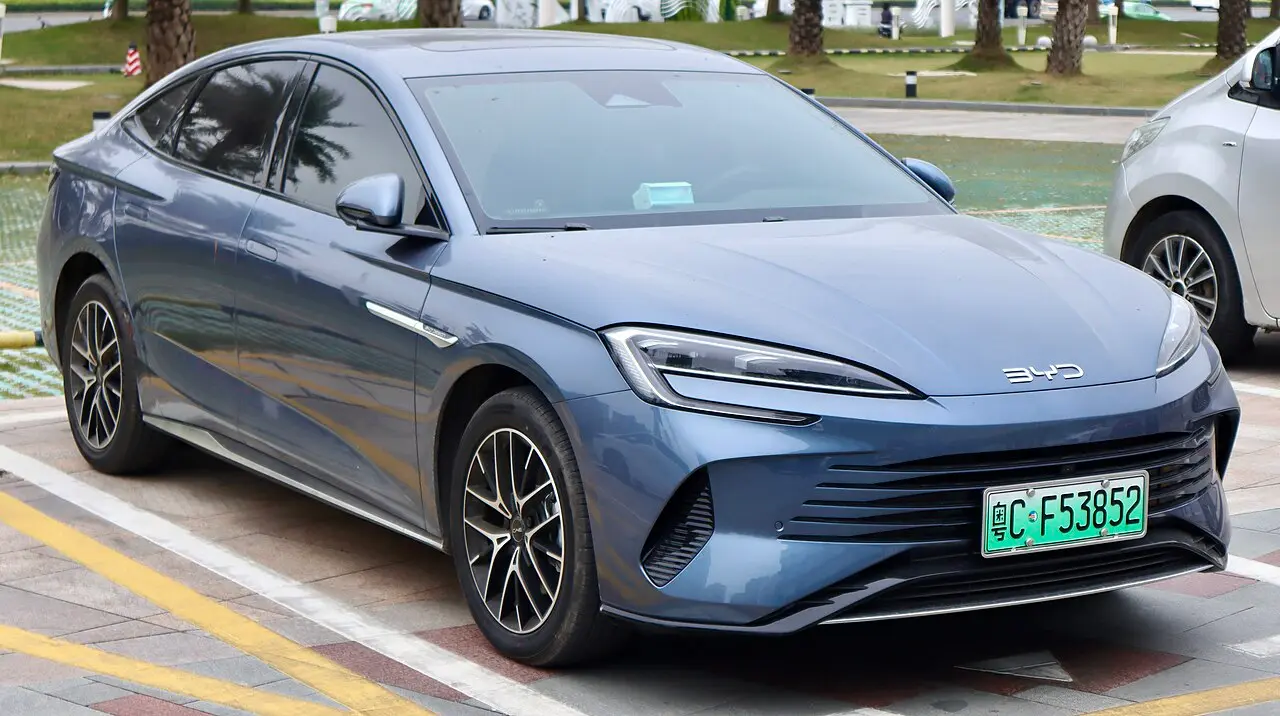
BYD Seal

BYD Seal
Photo: User3204 / Wikimedia Commons · CC BY-SA 4.0

The official data lists 13 versions of the BYD Seal (2023–2025), in the European Union. Each market publishes its own figures, measured on its own test procedure.

At a glance

Years in the data
2023–2025
Markets
European Union
Power
70 kW (95 PS) to 390 kW (530 PS)
Fuels
Electric
New registrations in the EU
19,376

What is the BYD Seal?

The Seal is a fully electric sedan in BYD’s Ocean series. Its low, streamlined shape gives it a different profile from the brand’s SUVs, while its four-door layout suits everyday use. The design follows BYD’s Ocean-inspired style, and the car uses e-Platform 3.0 with Cell-to-Body battery integration. The first generation, code 3H, is listed in Europe from 2023 to today.

Engines and power

The European versions are all electric, with power outputs from 70 kW (95 PS) to 390 kW (530 PS). The range includes rear-wheel-drive and all-wheel-drive configurations. The 230 kW (313 PS) model had the most registrations among the listed versions in 2025 and 2024; the 390 kW (530 PS) version also appears among the leading entries.

How economical is the BYD Seal?

Because the Seal is electric, its consumption is measured as electricity use rather than litres of petrol per 100 kilometres. Official EU figures for 2023–2025 list 13 versions and total 19,376 registrations. The 230 kW (313 PS) version recorded 6,696 registrations in 2025 and 4,124 in 2024; the 390 kW (530 PS) version recorded 2,505 in 2025.

Where was the Seal sold?

The Seal brought BYD’s Ocean-series design and electric platform to the European sedan range. Its Cell-to-Body construction integrates the battery into the vehicle structure, a notable feature of the model’s engineering.

Questions and answers

Is the BYD Seal a hybrid?

No. The European versions listed here are all electric.

What is the Seal’s highest listed power output?

The range reaches 390 kW (530 PS).

How many Seal versions are included in the EU figures?

The figures list 13 versions for 2023–2025.

Seal first generation (since 2023)

BYD Seal first generation
Photo: User3204 / Wikimedia Commons · CC BY-SA 4.0

Model codes: 3H · Sold in: European Union · References: byd.com, en.wikipedia.org

European Union 13 versions

New cars registered in the EU (plus Norway and Iceland), from the European Environment Agency. Figures on the NEDC procedure until 2020 and on WLTP from 2021; versions are grouped by engine and power, with their number of registrations.

Years and versionEnginePowerFuelConsumption (combined)CO₂Electric rangeEU registrations
2025Electric motor230 kW (313 PS)Electric16.7 kWh/100 km WLTP0 g/km567 km6,696
2025Electric motor390 kW (530 PS)Electric18.2 kWh/100 km WLTP0 g/km520 km2,505
2023–2025Electric motor145 kW (197 PS)Electric18.2 kWh/100 km WLTP0 g/km520 km1,434
2025Electric motor170 kW (231 PS)Electric15.4 kWh/100 km WLTP0 g/km460 km444
2025Electric motor160 kW (218 PS)Electric18.1 kWh/100 km WLTP0 g/km524 km228
2025Electric motor70 kW (95 PS)Electric16.6 kWh/100 km WLTP0 g/km560 km136
2024Electric motor230 kW (313 PS)Electric16.9 kWh/100 km WLTP0 g/km561 km4,124
2023–2024Electric motor390 kW (530 PS)Electric18.2 kWh/100 km WLTP0 g/km520 km1,829
2024Electric motor160 kW (218 PS)Electric18.0 kWh/100 km WLTP0 g/km520 km988
2024Electric motor70 kW (95 PS)Electric16.6 kWh/100 km WLTP0 g/km570 km565
2023–2024Electric motor380 kW (517 PS)Electric18.5 kWh/100 km WLTP0 g/km521 km221
2023Electric motor230 kW (313 PS)Electric17.1 kWh/100 km WLTP0 g/km555 km181
2023Electric motor160 kW (218 PS)Electric18.2 kWh/100 km WLTP0 g/km520 km25

Official figures are measured on standard test procedures and differ between markets. Your consumption depends on how, where and in what conditions you drive.