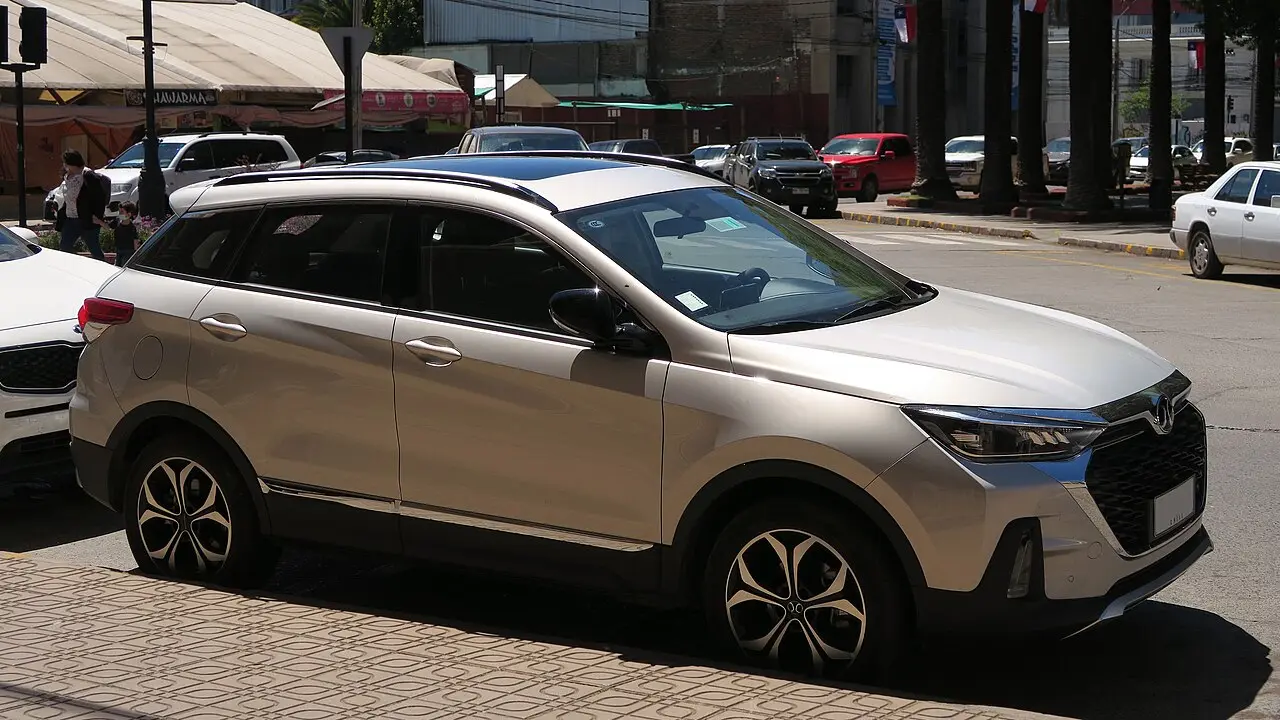
What is the BAIC X55?
The BAIC X55 is a five-door SUV from Beijing Automotive Group, the Chinese manufacturer whose passenger-car range is sold under the Beijing name. It sits in the brand’s SUV line-up as a family-friendly crossover: a raised driving position and a practical cabin in a road-focused package. The model is also known in China as the Beijing X5, while the second-generation version is called the X55 II in some markets.
The X55 II generation began in 2022 and continues today. It brought a new design direction and a more technology-focused cabin, part of Beijing’s effort to build a connected, modern passenger-car range. BAIC’s official descriptions emphasize the model’s styling and driver-assistance systems.
Engines and power
The European Union’s EEA registration record for the X55 covers model years 2020 to 2025. The versions recorded there use a 1.5-litre engine, with power ranging from 100 kW (136 PS) to 130 kW (177 PS). Both petrol and LPG versions appear in the range; the strongest recorded output is 130 kW (177 PS).
How economical is the BAIC X55?
The lowest listed official consumption for the EU range is 7.6 L/100 km on the WLTP test. This is the stated minimum across the listed petrol, diesel and hybrid categories; the EU registration record for this model specifically lists petrol and LPG fuels. The X55’s listed EU CO₂ figures are part of the individual version specifications.
European WLTP results cannot be directly compared with US EPA ratings or Canadian 5-cycle figures, because each market uses a different test procedure.
Where was the X55 sold?
The X55 appears in European Economic Area registrations from 2020 through 2025. In those records, the 1.5-litre petrol and LPG versions with 130 kW (177 PS) account for the most registrations. BAIC sells vehicles in a variety of international markets, but the figures described here concern EEA registrations.
Questions and answers
When did the X55 II generation begin?
The X55 II generation began in 2022 and is listed as continuing today.
What engine and power does the EU X55 have?
The EU range uses a 1.5-litre engine, with recorded power from 100 kW (136 PS) to 130 kW (177 PS).
What is the X55’s lowest listed fuel consumption?
The lowest listed EU figure is 7.6 L/100 km on the WLTP test.