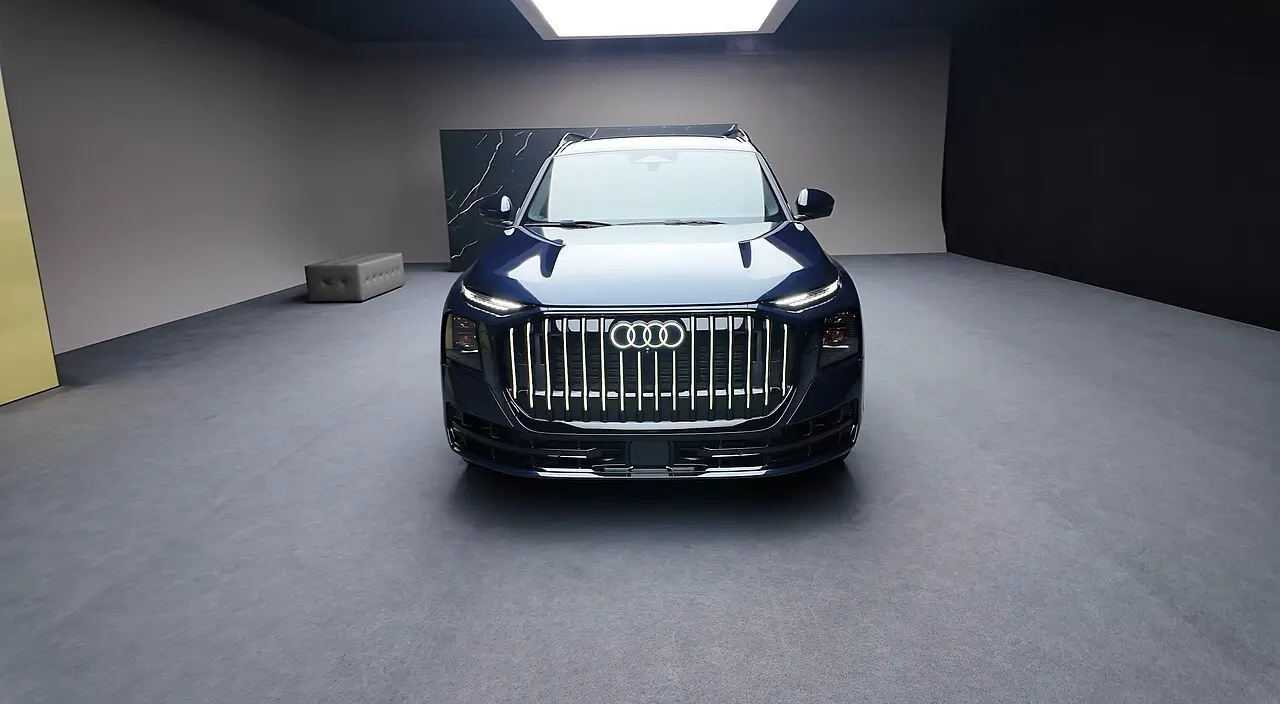
What kind of car is the Audi Q9?
Audi describes the Q9 as its first full-size flagship SUV. Its large, high-riding format is aimed at drivers seeking a spacious family vehicle, and Audi has said the model targets North America.
Engines and power
EU registration entries include diesel and petrol versions. The listed diesel is a 3.0-litre engine producing 220 kW (299 PS) in 2025. Petrol entries show a 2.9-litre engine rated at 320 kW (435 PS) in both 2024 and 2025.
EU registrations
The Audi Q9 recorded 111 EU registrations across 2024 and 2025. The largest single entry was the 3.0-litre diesel with 220 kW (299 PS), with 37 registrations in 2025. The 2.9-litre petrol with 320 kW (435 PS) recorded 20 registrations in 2025 and 18 in 2024.
Where is the Audi Q9 sold?
The Q9 appears in EU registration figures, and Audi has described it as a full-size flagship SUV aimed particularly at North America. It sits at the top of Audi’s SUV range, extending the company’s passenger-car engineering identity into a large family vehicle.
Questions and answers
What type of vehicle is the Audi Q9?
Audi describes it as a full-size flagship SUV.
Which Q9 engines appear in EU registration figures?
The entries include a 3.0-litre diesel rated at 220 kW (299 PS) and a 2.9-litre petrol rated at 320 kW (435 PS).
How many EU registrations did the Audi Q9 record?
It recorded 111 registrations across 2024 and 2025.