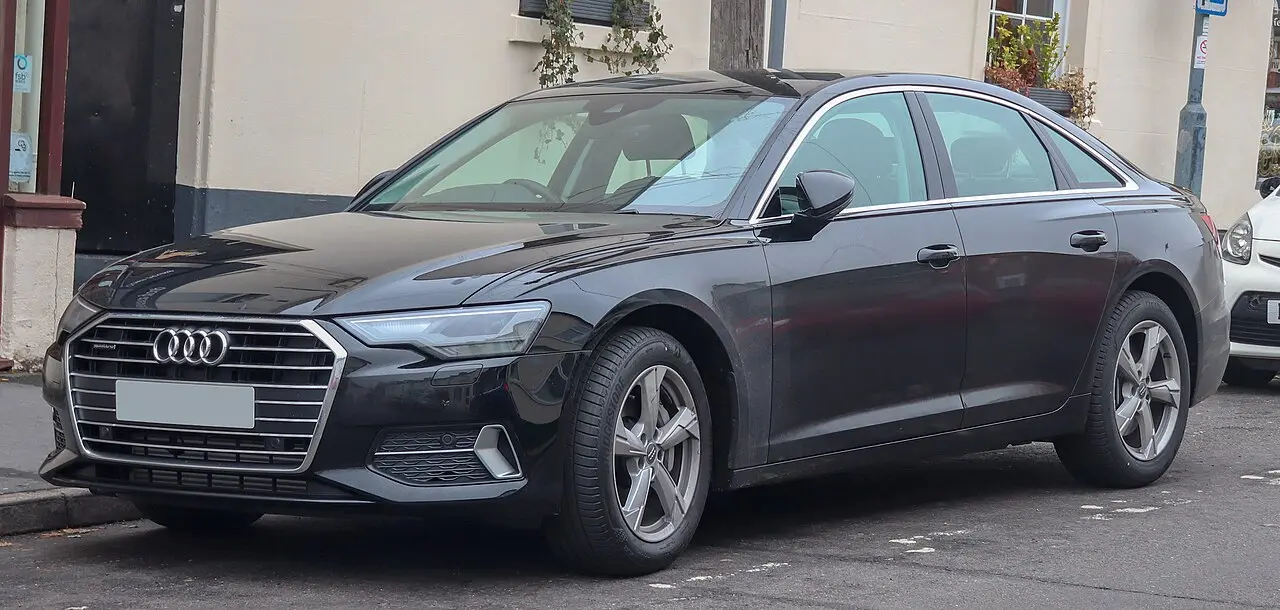
The official data lists 1241 versions of the Audi A6 (1995–2027), in the European Union, the United Kingdom, France, the United States, and Canada. Each market publishes its own figures, measured on its own test procedure.
At a glance
Years in the data
1995–2027
Markets
European Union, United Kingdom, France, United States, Canada
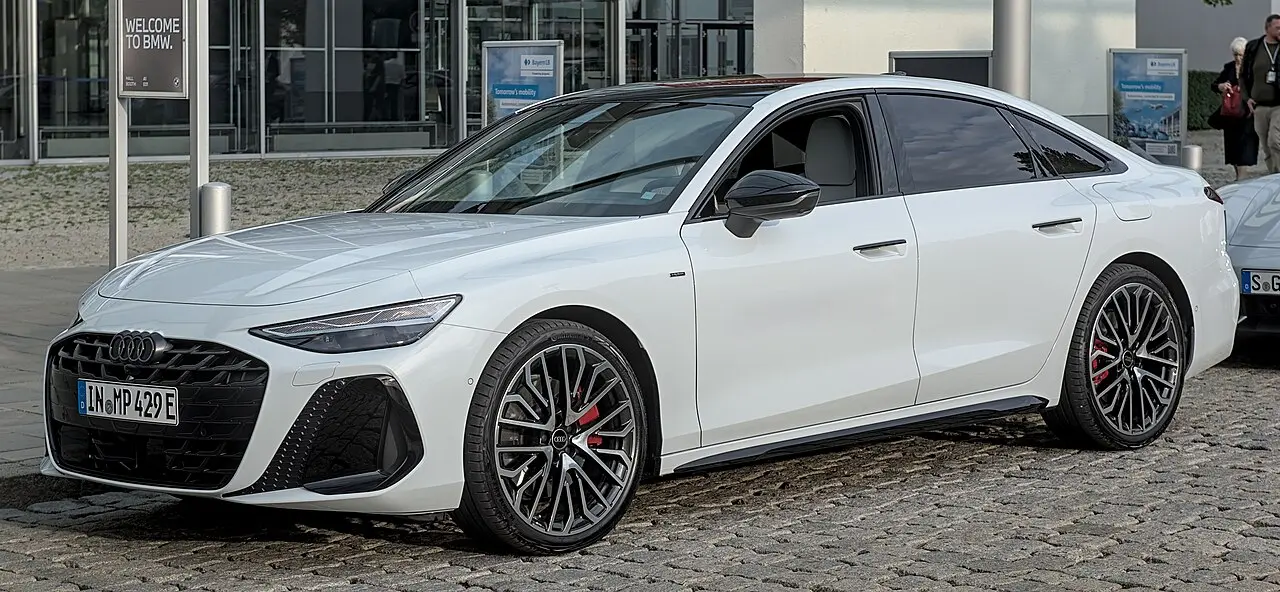
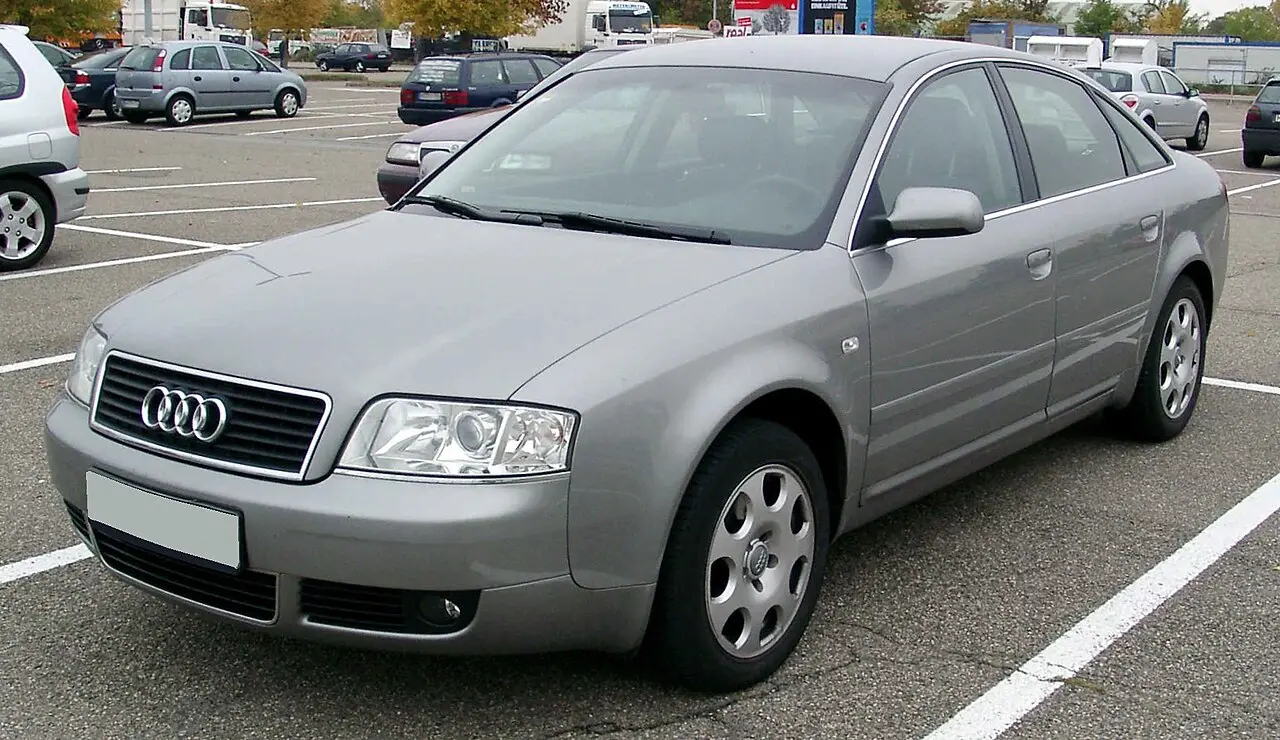
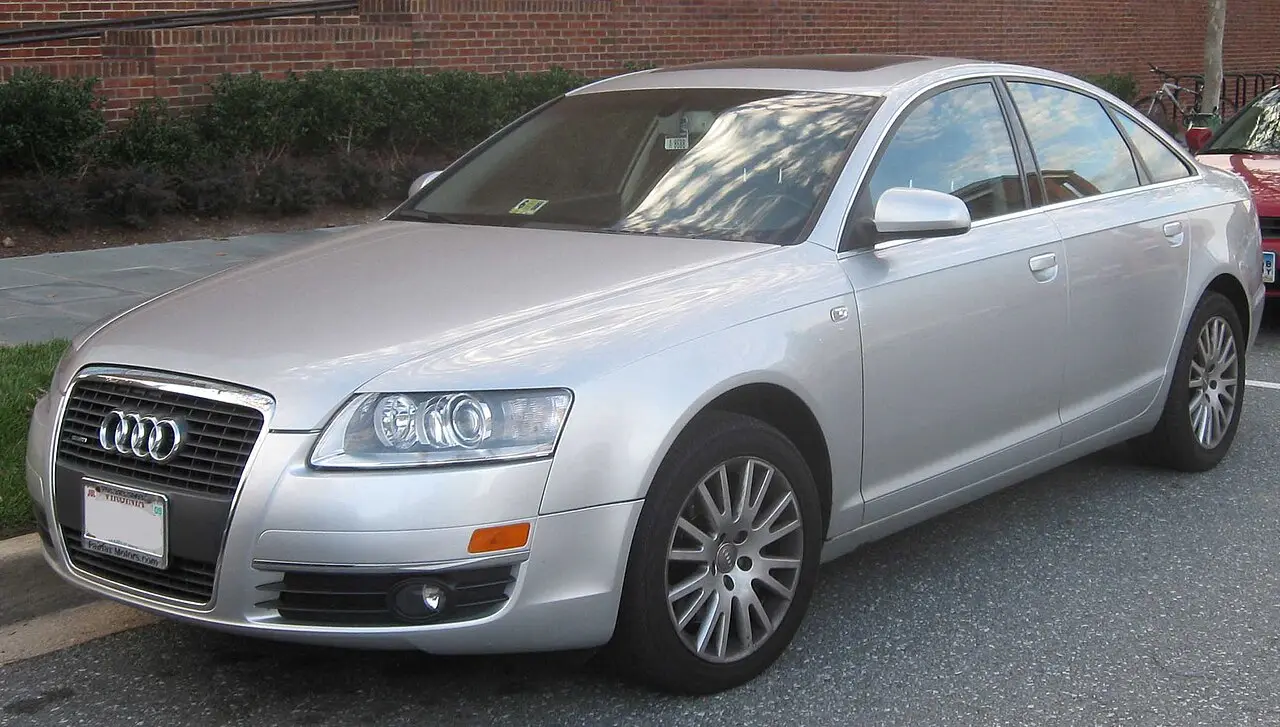
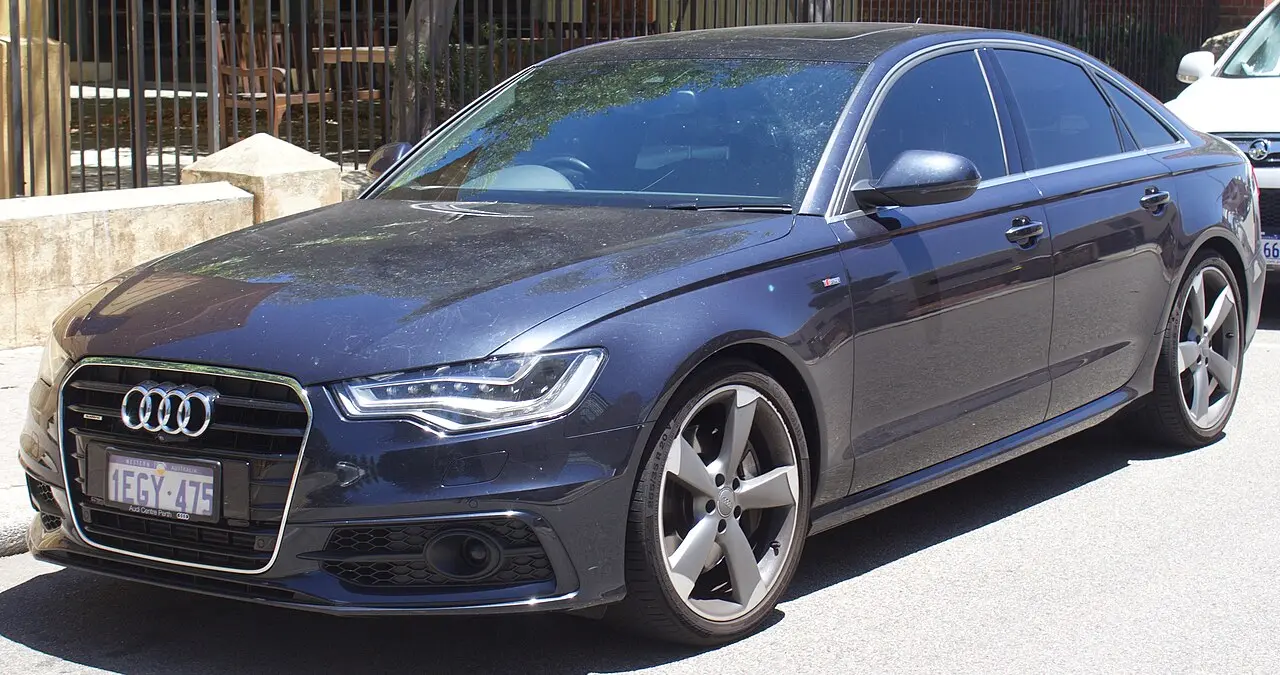
The A6 is Audi’s larger mid-size executive car, offered as a saloon and an Avant estate. The saloon has a traditional business-car shape; the estate provides more room for luggage. The model sits above the A4 in Audi’s range.
The generations listed here are the C5 (1998–2004), C6 (2004–2011), C7 (2011–2018), C8 (2018–2025) and C9 (2025–today). Across those generations, the A6 has kept its place as a spacious executive car while its powertrains and equipment have evolved. EU figures include electric and plug-in hybrid versions as well as petrol, diesel and hybrid models.
Engines and power
The A6 range varies widely by market and generation. EU figures cover engines from 1.8 to 4.0 litres, with power from 100 kW (136 PS) to 445 kW (605 PS). In the UK, the range spans 1.8 to 4.2 litres and 96 kW (130 PS) to 331 kW (450 PS); US engine sizes range from 2.0 to 5.2 litres. EU powertrains include petrol, diesel, hybrid, plug-in hybrid and electric versions. North American figures also include E85 flex-fuel versions.
How economical is the Audi A6?
For petrol, diesel and hybrid versions, the lowest listed EU consumption is 5 L/100 km on WLTP. The lowest EU plug-in hybrid figure is 1.3 L/100 km, a weighted result that assumes some driving is electric. In the UK, the lowest listed conventional result is 4.2 L/100 km on NEDC; the plug-in hybrid low is 6.6 L/100 km on WLTP.
In the USA, the best combined EPA rating is 30 MPG, with a listed low of 7.8 L/100 km. Canada’s lowest listed figure is also 7.8 L/100 km, on its 5-cycle test. Europe uses WLTP or NEDC, the USA uses EPA testing, and Canada uses its 5-cycle procedure, so the results are not direct comparisons. EU registration figures cover the A6 from 2010 to 2025.
Where is the Audi A6 listed?
Figures cover the EU, UK, France, USA and Canada. Available generations, engines and powertrains vary between those markets, so check the local rating for the particular A6.
Questions and answers
What body styles are available in the A6 line?
The A6 is offered as a saloon and an Avant estate.
How many A6 generations are listed?
Five: C5, C6, C7, C8 and C9, with generation years running from 1998 to today.
What is the highest listed A6 power output?
The EU range reaches 445 kW (605 PS).
What is the A6’s lowest listed plug-in hybrid consumption?
The EU figure is 1.3 L/100 km on WLTP, using a weighted calculation that assumes some electric driving.
Model codes: C9 · Sold in: European Union, United Kingdom, United States, Canada, and France · References: mobile.de, audi.pl
European Union 32 versions
New cars registered in the EU (plus Norway and Iceland), from the European Environment Agency. Figures on the NEDC procedure until 2020 and on WLTP from 2021; versions are grouped by engine and power, with their number of registrations.
Years and version
Engine
Power
Fuel
Consumption (combined)
CO₂
Electric range
EU registrations
2025
Electric motor
270 kW (367 PS)
Electric
15.9 kWh/100 km WLTP
0 g/km
677 km
9,824
2025
2.0 L
150 kW (204 PS)
Hybrid
5.6 L/100 km WLTP
146 g/km
–
9,432
2025
Electric motor
210 kW (286 PS)
Electric
15.1 kWh/100 km WLTP
0 g/km
575 km
8,722
2025
Electric motor
315 kW (428 PS)
Electric
16.5 kWh/100 km WLTP
0 g/km
644 km
5,652
2025
2.0 L
185 kW (252 PS)
Plug-in hybrid
2.6 L/100 km WLTP16.0 kWh/100 km WLTP
59 g/km
96 km
4,115
2025
2.0 L
195 kW (265 PS)
Plug-in hybrid
1.5 L/100 km WLTP20.7 kWh/100 km WLTP
34 g/km
63 km
3,721
2025
4.0 L
463 kW (630 PS)
Hybrid
12.4 L/100 km WLTP
282 g/km
–
3,154
2025
2.0 L
195 kW (265 PS)
Hybrid
7.8 L/100 km WLTP
177 g/km
–
2,498
2025
Electric motor
370 kW (503 PS)
Electric
16.9 kWh/100 km WLTP
0 g/km
626 km
2,285
2025
3.0 L
180 kW (245 PS)
Hybrid
6.8 L/100 km WLTP
177 g/km
–
2,161
2025
3.0 L
210 kW (286 PS)
Hybrid
6.8 L/100 km WLTP
179 g/km
–
2,068
2025
3.0 L
270 kW (367 PS)
Hybrid
7.5 L/100 km WLTP
171 g/km
–
1,573
2025
2.0 L
150 kW (204 PS)
Petrol
7.4 L/100 km WLTP
167 g/km
–
1,113
2025
Electric motor
138 kW (188 PS)
Electric
16.6 kWh/100 km WLTP
0 g/km
642 km
943
2025
2.0 L
150 kW (204 PS)
Diesel
5.2 L/100 km WLTP
136 g/km
–
916
2025
4.0 L
441 kW (600 PS)
Hybrid
12.6 L/100 km WLTP
287 g/km
–
626
2025
2.0 L
120 kW (163 PS)
Hybrid
5.6 L/100 km WLTP
146 g/km
–
412
2025
3.0 L
250 kW (340 PS)
Hybrid
9.0 L/100 km WLTP
203 g/km
–
264
2025
Electric motor
100 kW (136 PS)
Electric
14.9 kWh/100 km WLTP
0 g/km
577 km
236
2025
Electric motor
140 kW (190 PS)
Electric
18.9 kWh/100 km WLTP
0 g/km
514 km
198
2025
Electric motor
120 kW (163 PS)
Electric
15.5 kWh/100 km WLTP
0 g/km
689 km
111
2025
3.0 L
250 kW (340 PS)
Petrol
–
290 g/km
–
80
2025
2.0 L
150 kW (204 PS)
Hybrid
7.6 L/100 km WLTP
173 g/km
–
65
2025
4.0 L
463 kW (630 PS)
Petrol
–
294 g/km
–
61
2025
3.0 L
250 kW (340 PS)
Plug-in hybrid
8.3 L/100 km WLTP
191 g/km
–
55
2025
2.0 L
150 kW (204 PS)
Plug-in hybrid
5.6 L/100 km WLTP
146 g/km
–
44
2025
3.0 L
220 kW (299 PS)
Diesel
–
271 g/km
–
42
2025
2.9 L
375 kW (510 PS)
Plug-in hybrid
–
158 g/km
–
39
2025
3.0 L
270 kW (367 PS)
Plug-in hybrid
7.5 L/100 km WLTP
159 g/km
–
34
2025
4.0 L
463 kW (630 PS)
Plug-in hybrid
12.4 L/100 km WLTP
281 g/km
–
26
2025
2.0 L
200 kW (272 PS)
Petrol
–
201 g/km
–
22
2025
3.0 L
270 kW (367 PS)
Petrol
–
181 g/km
–
15
United Kingdom 43 versions
New cars on sale in the UK, from the Vehicle Certification Agency. NEDC figures until 2018 and WLTP figures after; years are the editions a version appeared in.
Years and version
Engine
Power
Fuel
Gearbox
Consumption (combined)
CO₂
Electric range
2025–2026A6 Avant e-tron
Electric motor
210 kW (286 PS)
Electric
–
16.3 kWh/100 km WLTP
0 g/km
530 km
2025–2026e-tron 210 00 kW
Electric motor
210 kW (286 PS)
Electric
–
13.9 kWh/100 km WLTP
0 g/km
616 km
2025–2026e-tron 210 00 kW
Electric motor
210 kW (286 PS)
Electric
–
15.3 kWh/100 km WLTP
0 g/km
567 km
2025–2026e-tron performance 270 00 kW
Electric motor
270 kW (367 PS)
Electric
–
16.6 kWh/100 km WLTP
0 g/km
645 km
2025–2026e-tron performance 270 00 kW
Electric motor
270 kW (367 PS)
Electric
–
14.3 kWh/100 km WLTP
0 g/km
743 km
2025–2026e-tron performance 270 00 kW
Electric motor
270 kW (367 PS)
Electric
–
15.7 kWh/100 km WLTP
0 g/km
683 km
2025–2026e-tron quattro 315 00 kW
Electric motor
315 kW (428 PS)
Electric
–
17.1 kWh/100 km WLTP
0 g/km
621 km
2025–2026e-tron quattro 315 00 kW
Electric motor
315 kW (428 PS)
Electric
–
16.2 kWh/100 km WLTP
0 g/km
657 km
2025–2026e-tron quattro 315 00 kW
Electric motor
315 kW (428 PS)
Electric
–
16.3 kWh/100 km WLTP
0 g/km
655 km
2025–2026S6 Avant e-tron
Electric motor
370 kW (503 PS)
Electric
–
16.3 kWh/100 km WLTP
0 g/km
652 km
2025–2026S6 Avant e-tron
Electric motor
370 kW (503 PS)
Electric
–
16.6 kWh/100 km WLTP
0 g/km
641 km
2025–2026S6 e-tron
Electric motor
370 kW (503 PS)
Electric
–
17.0 kWh/100 km WLTP
0 g/km
624 km
2025–2026S6 e-tron
Electric motor
370 kW (503 PS)
Electric
–
17.4 kWh/100 km WLTP
0 g/km
610 km
2025–202640 TDI quattro 204PS
2.0 L
150 kW (204 PS)
Hybrid
7-speed automatic
5.6 L/100 km WLTP
148 g/km
–
2025–202640 TDI quattro 204PS
2.0 L
150 kW (204 PS)
Hybrid
7-speed automatic
6.0 L/100 km WLTP
158 g/km
–
2025–2026TDI quattro 204PS (C9)
2.0 L
150 kW (204 PS)
Hybrid
7-speed automatic
5.1 L/100 km WLTP
133 g/km
–
2025–2026TDI quattro 204PS (C9)
2.0 L
150 kW (204 PS)
Hybrid
7-speed automatic
5.6 L/100 km WLTP
146 g/km
–
2025–202640 TFSI 204PS S Tronic
2.0 L
150 kW (204 PS)
Petrol
7-speed automatic
7.5 L/100 km WLTP
171 g/km
–
2025–202640 TFSI 204PS S Tronic
2.0 L
150 kW (204 PS)
Petrol
7-speed automatic
8.1 L/100 km WLTP
184 g/km
–
2025–2026TFSI 204PS (C9)
2.0 L
150 kW (204 PS)
Petrol
7-speed automatic
7.1 L/100 km WLTP
162 g/km
–
2025–2026TFSI 204PS (C9)
2.0 L
150 kW (204 PS)
Petrol
7-speed automatic
7.7 L/100 km WLTP
174 g/km
–
2025–202640 TFSI 204PS
2.0 L
150 kW (204 PS)
Hybrid
7-speed automatic
7.3 L/100 km WLTP
165 g/km
–
2025–202640 TFSI 204PS
2.0 L
150 kW (204 PS)
Hybrid
7-speed automatic
7.8 L/100 km WLTP
177 g/km
–
2025–2026TFSI 204PS (C9)
2.0 L
150 kW (204 PS)
Petrol
7-speed automatic
7.0 L/100 km WLTP
159 g/km
–
2025–2026TFSI 204PS (C9)
2.0 L
150 kW (204 PS)
Petrol
7-speed automatic
7.4 L/100 km WLTP
169 g/km
–
2025–202645 TFSI quattro 265PS
2.0 L
195 kW (265 PS)
Hybrid
7-speed automatic
7.8 L/100 km WLTP
178 g/km
–
2025–202645 TFSI quattro 265PS
2.0 L
195 kW (265 PS)
Hybrid
7-speed automatic
8.3 L/100 km WLTP
189 g/km
–
2025–202645 TFSI quattro 265PS
2.0 L
195 kW (265 PS)
Hybrid
7-speed automatic
7.6 L/100 km WLTP
173 g/km
–
2025–202645 TFSI quattro 265PS
2.0 L
195 kW (265 PS)
Hybrid
7-speed automatic
8.0 L/100 km WLTP
182 g/km
–
2025–202650 TFSI e quattro 299PS S Tronic
2.0 L
220 kW (299 PS)
Plug-in hybrid
7-speed automatic
29.2 kWh/100 km WLTP
–
49 km
2025–2026e-hybrid quattro 299PS (C9)
2.0 L
220 kW (299 PS)
Plug-in hybrid
7-speed automatic
6.8 L/100 km WLTP15.3 kWh/100 km WLTP
–
102 km
2025–202650 TFSI e quattro 299PS
2.0 L
220 kW (299 PS)
Plug-in hybrid
7-speed automatic
19.4 kWh/100 km WLTP
–
68 km
2025–202650 TFSI e quattro 299PS
2.0 L
220 kW (299 PS)
Plug-in hybrid
7-speed automatic
7.5 L/100 km WLTP19.4 kWh/100 km WLTP
–
68 km
2025–2026e-hybrid quattro 299PS (C9)
2.0 L
220 kW (299 PS)
Plug-in hybrid
7-speed automatic
6.6 L/100 km WLTP15.1 kWh/100 km WLTP
–
104 km
2025–2026e-hybrid quattro 299PS (C9)
2.0 L
220 kW (299 PS)
Plug-in hybrid
7-speed automatic
15.6 kWh/100 km WLTP
–
99 km
2025–2026TDI quattro 204PS (C9)
2.0 L
150 kW (204 PS)
Hybrid
7-speed automatic
5.2 L/100 km WLTP
137 g/km
–
2025–2026TDI quattro 204PS (C9)
2.0 L
150 kW (204 PS)
Hybrid
7-speed automatic
5.7 L/100 km WLTP
150 g/km
–
2025–202640 TDI quattro 204PS
2.0 L
150 kW (204 PS)
Hybrid
7-speed automatic
5.8 L/100 km WLTP
152 g/km
–
2025–202640 TDI quattro 204PS
2.0 L
150 kW (204 PS)
Hybrid
7-speed automatic
6.3 L/100 km WLTP
164 g/km
–
2025–2026S6 TDI 344PS
3.0 L
253 kW (344 PS)
Hybrid
8-speed automatic
7.1 L/100 km WLTP
185 g/km
–
2025–2026S6 TDI 344PS
3.0 L
253 kW (344 PS)
Hybrid
8-speed automatic
7.3 L/100 km WLTP
190 g/km
–
2025–2026quattro 630PS
4.0 L
463 kW (630 PS)
Hybrid
8-speed automatic
12.4 L/100 km WLTP
278 g/km
–
2025–2026quattro 630PS
4.0 L
463 kW (630 PS)
Hybrid
8-speed automatic
12.3 L/100 km WLTP
287 g/km
–
United States 13 versions
Model years sold in the USA, from the EPA and the Department of Energy (fueleconomy.gov). MPG on the EPA test; litres per 100 km = 235.215 ÷ MPG.
Years and version
Engine
Fuel
Gearbox
Drive
Consumption (combined)
CO₂
Electric range
2027
Electric motor
Electric
Automatic
Rear-wheel drive
111 MPGe EPA
0 g/km
560 km
2027
Electric motor
Electric
Automatic
All-wheel drive
105 MPGe EPA
0 g/km
526 km
2027
Electric motor
Electric
Automatic
All-wheel drive
117 MPGe EPA
0 g/km
579 km
2027
Electric motor
Electric
Automatic
Rear-wheel drive
127 MPGe EPA
0 g/km
636 km
2027
Electric motor
Electric
Automatic
All-wheel drive
103 MPGe EPA
0 g/km
525 km
2027
Electric motor
Electric
Automatic
All-wheel drive
100 MPGe EPA
0 g/km
501 km
2026SIDI; Mild Hybrid
3.0 L
Hybrid
7-speed automated manual
All-wheel drive
24 MPG (9.8 L/100 km) EPA
227 g/km
–
2026SIDI
3.0 L
Petrol
7-speed automated manual
All-wheel drive
23 MPG (10.2 L/100 km) EPA
240 g/km
–
2026SIDI; Mild Hybrid
4.0 L
Hybrid
8-speed automatic
All-wheel drive
16 MPG (14.7 L/100 km) EPA
339 g/km
–
2025SIDI; Mild Hybrid
2.0 L
Hybrid
7-speed automated manual
All-wheel drive
26 MPG (9.0 L/100 km) EPA
211 g/km
–
2025SIDI; Mild Hybrid
2.9 L
Hybrid
8-speed automatic
All-wheel drive
22 MPG (10.7 L/100 km) EPA
254 g/km
–
2025SIDI; Mild Hybrid
3.0 L
Hybrid
7-speed automated manual
All-wheel drive
25 MPG (9.4 L/100 km) EPA
221 g/km
–
2025SIDI; Mild Hybrid
4.0 L
Hybrid
8-speed automatic
All-wheel drive
17 MPG (13.8 L/100 km) EPA
334 g/km
–
Canada 11 versions
Model years sold in Canada, from Natural Resources Canada fuel consumption ratings (5-cycle test).
Years and version
Engine
Power
Fuel
Gearbox
Consumption (combined)
CO₂
Electric range
2026Mid-size
3.0 L
–
Petrol
7-speed automated manual
10.2 L/100 km 5-cycle
241 g/km
–
2026Station wagon: Mid-size
3.0 L
–
Petrol
7-speed automated manual
10.0 L/100 km 5-cycle
234 g/km
–
2026Station wagon: Mid-size
4.0 L
–
Petrol
8-speed automatic
14.4 L/100 km 5-cycle
339 g/km
–
2025Full-size
Electric motor
315 kW (428 PS)
Electric
Automatic
19.7 kWh/100 km 5-cycle
0 g/km
536 km
2025Full-size
Electric motor
315 kW (428 PS)
Electric
Automatic
17.4 kWh/100 km 5-cycle
0 g/km
607 km
2025Full-size
Electric motor
370 kW (503 PS)
Electric
Automatic
20.0 kWh/100 km 5-cycle
0 g/km
521 km
2025Full-size
Electric motor
370 kW (503 PS)
Electric
Automatic
21.6 kWh/100 km 5-cycle
0 g/km
486 km
2025Mid-size
2.0 L
–
Petrol
7-speed automated manual
8.9 L/100 km 5-cycle
211 g/km
–
2025Mid-size
2.9 L
–
Petrol
8-speed automatic
10.8 L/100 km 5-cycle
254 g/km
–
2025Mid-size · Station wagon: Mid-size
3.0 L
–
Petrol
7-speed automated manual
9.6 L/100 km 5-cycle
226 g/km
–
2025Station wagon: Mid-size
4.0 L
–
Petrol
8-speed automatic
14.3 L/100 km 5-cycle
336 g/km
–
Versions outside these generations
United States 7 versions
Model years sold in the USA, from the EPA and the Department of Energy (fueleconomy.gov). MPG on the EPA test; litres per 100 km = 235.215 ÷ MPG.
Years and version
Engine
Fuel
Gearbox
Drive
Consumption (combined)
CO₂
1996–1998(FFS), CLKUP · CLKUP
2.8 L
Petrol
4-speed automatic
Four- or all-wheel drive
19 MPG (12.4 L/100 km) EPA
291 g/km
1996–1997(FFS), CLKUP
2.8 L
Petrol
4-speed automatic
Front-wheel drive
19 MPG (12.4 L/100 km) EPA
291 g/km
1995(FFS,TRBO)
2.2 L
Petrol
5-speed manual
Four- or all-wheel drive
18 MPG (13.1 L/100 km) EPA
307 g/km
1995(FFS), CLKUP
2.8 L
Petrol
4-speed automatic
Front-wheel drive
19 MPG (12.4 L/100 km) EPA
291 g/km
1995(FFS)
2.8 L
Petrol
5-speed manual
Front-wheel drive
19 MPG (12.4 L/100 km) EPA
291 g/km
1995(FFS), CLKUP
2.8 L
Petrol
4-speed automatic
Four- or all-wheel drive
18 MPG (13.1 L/100 km) EPA
307 g/km
1995(FFS)
2.8 L
Petrol
5-speed manual
Four- or all-wheel drive
18 MPG (13.1 L/100 km) EPA
307 g/km
Canada 8 versions
Model years sold in Canada, from Natural Resources Canada fuel consumption ratings (5-cycle test).
Years and version
Engine
Fuel
Gearbox
Consumption (combined)
CO₂
1995–1997Compact
2.2 L
Petrol
5-speed manual
13.1 L/100 km 5-cycle
301 g/km
1997Compact · Station wagon: Small
2.8 L
Petrol
4-speed automatic
12.7 L/100 km 5-cycle
292 g/km
1996Compact
2.8 L
Petrol
4-speed automatic
12.2 L/100 km 5-cycle
281 g/km
1996Compact · Station wagon: Small
2.8 L
Petrol
4-speed automatic
12.7 L/100 km 5-cycle
292 g/km
1996Station wagon: Small
2.8 L
Petrol
4-speed automatic
12.3 L/100 km 5-cycle
283 g/km
1995Compact
2.8 L
Petrol
4-speed automatic
12.7 L/100 km 5-cycle
292 g/km
1995Compact · Station wagon: Small
2.8 L
Petrol
4-speed automatic
13.0 L/100 km 5-cycle
299 g/km
1995Station wagon: Small
2.8 L
Petrol
4-speed automatic
12.7 L/100 km 5-cycle
292 g/km
Official figures are measured on standard test procedures and differ between markets. Your consumption depends on how, where and in what conditions you drive.