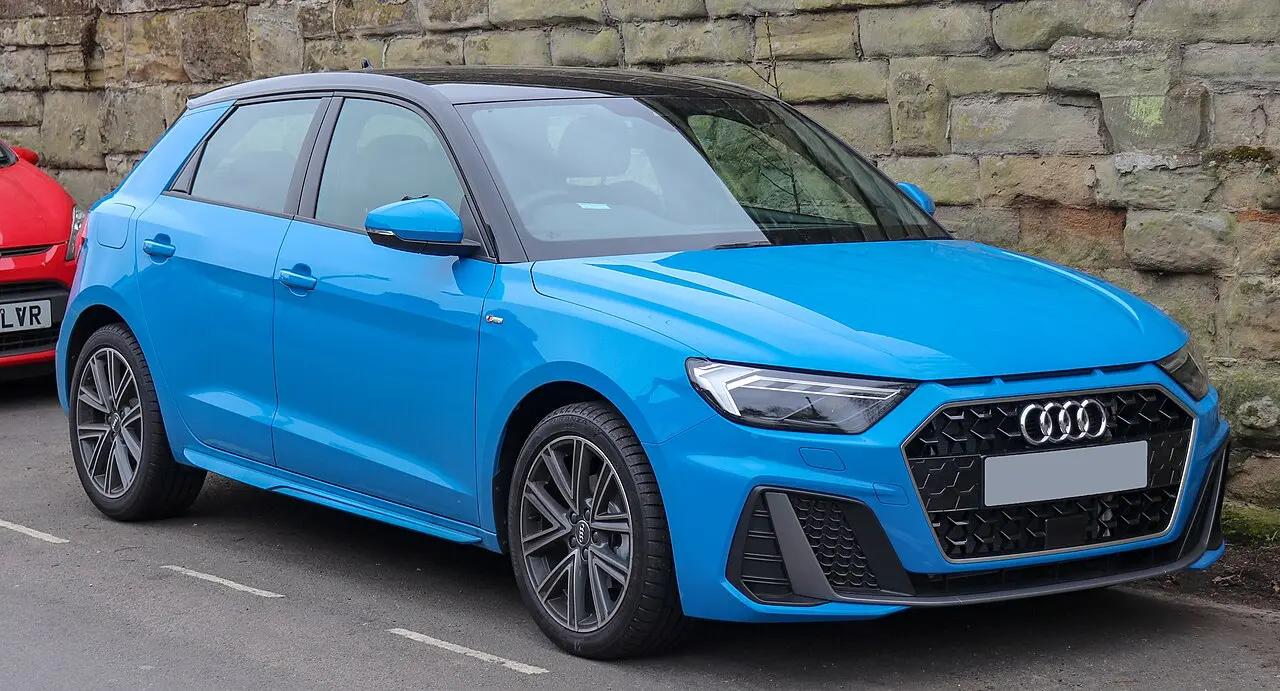
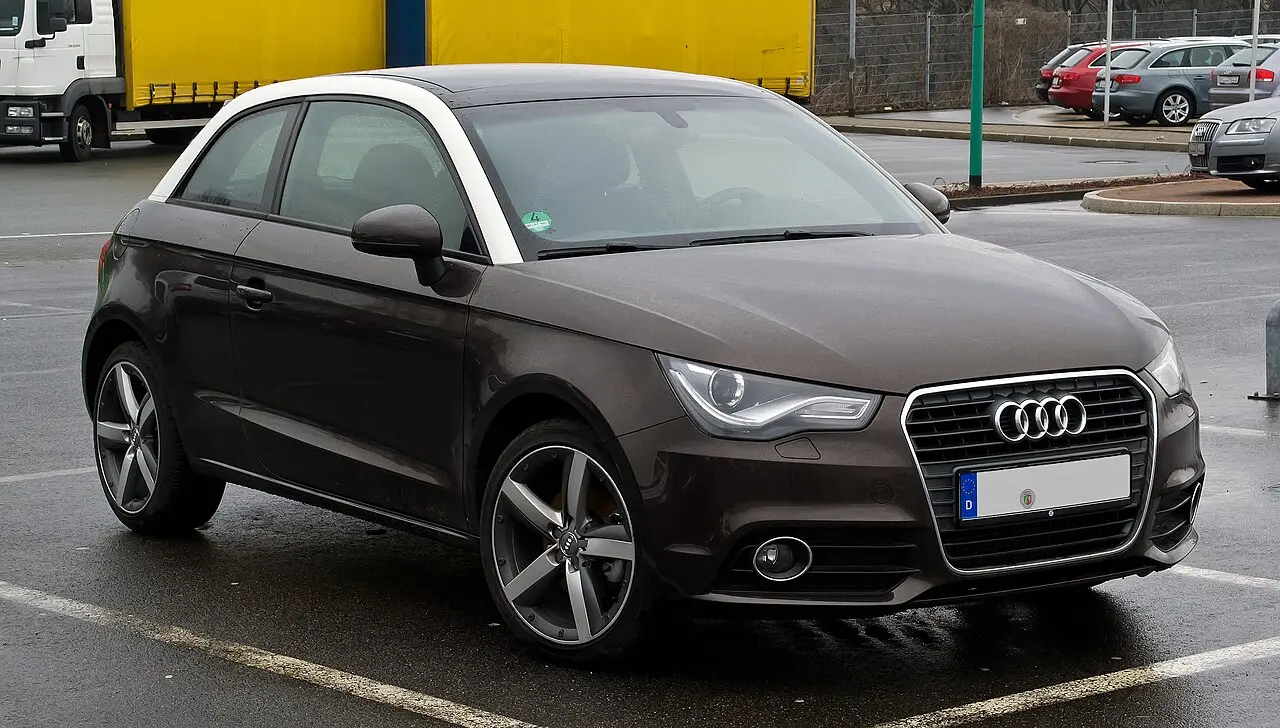
The official data lists 344 versions of the Audi A1 (2010–2026), in the European Union, the United Kingdom, and France. Each market publishes its own figures, measured on its own test procedure.
At a glance
Years in the data
2010–2026
Markets
European Union, United Kingdom, France
Engines
1.0 L to 2.0 L
Power
63 kW (86 PS) to 170 kW (231 PS)
Fuels
Diesel, Petrol
Lowest consumption (France)
3.4 L/100 km (NEDC)
Lowest consumption (United Kingdom)
3.5 L/100 km (NEDC)
Lowest consumption (European Union)
5.4 L/100 km (WLTP)
New registrations in the EU
1,942,439
What is the Audi A1?
The Audi A1 is a small hatchback for city streets and everyday journeys. It brought Audi into the premium small-car class, below the A3 in the range. Its compact shape makes it easy to place in town, while the cabin and design give it a more distinctive feel than a basic runabout. Audi introduced the A1 in 2010 as a new model line.
Generations and engines
The first-generation A1, known as 8X, ran from 2010 to 2018. The GB generation followed from 2019 to 2026. In the EU, the engine range spans 1.0 to 2.0 litres, with petrol, diesel and other fuel types. Power ranges from 60 kW (82 PS) to 170 kW (231 PS). UK figures cover 1.0 to 2.0-litre engines and 63 kW (86 PS) to 188 kW (256 PS). French figures list power from 63 kW (86 PS) to 170 kW (231 PS).
How economical is the Audi A1?
The lowest listed EU consumption is 5.4 L/100 km on the WLTP test. The lowest UK figure is 3.5 L/100 km under NEDC; France lists 3.4 L/100 km, also under NEDC. WLTP and NEDC are European test procedures, and their results are not directly comparable. The figures include petrol, diesel and hybrid-labelled versions where applicable.
Where was the Audi A1 sold?
In official EU registration figures, the A1 appears from 2010 to 2025, with 1,942,439 registrations over that period. UK figures span 2012 to 2026, while French figures cover 2012 to 2015. The range runs from small-engined everyday versions to higher-powered models.
Questions and answers
When did the Audi A1 first appear?
Audi introduced the A1 in 2010 as its entry into the premium small-car class.
What are the Audi A1 generation names?
The generations are 8X (2010–2018) and GB (2019–2026).
What is the lowest listed A1 fuel consumption?
The lowest listed figure is 3.4 L/100 km in France under the NEDC test. The EU WLTP low is 5.4 L/100 km.
Was the Audi A1 sold with diesel engines?
Yes. Diesel versions appear in EU, UK and French market figures.
Model codes: GB · Sold in: European Union, United Kingdom, and France · References: en.wikipedia.org
European Union 40 versions
New cars registered in the EU (plus Norway and Iceland), from the European Environment Agency. Figures on the NEDC procedure until 2020 and on WLTP from 2021; versions are grouped by engine and power, with their number of registrations.
Years and version
Engine
Power
Fuel
Consumption (combined)
CO₂
EU registrations
2025
1.0 L
85 kW (116 PS)
Petrol
5.7 L/100 km WLTP
131 g/km
27,581
2025
1.0 L
70 kW (95 PS)
Petrol
5.5 L/100 km WLTP
126 g/km
9,605
2025
1.5 L
110 kW (150 PS)
Petrol
5.8 L/100 km WLTP
131 g/km
4,732
2025
2.0 L
152 kW (207 PS)
Petrol
6.5 L/100 km WLTP
147 g/km
1,648
2025
1.0 L
81 kW (110 PS)
Petrol
5.9 L/100 km WLTP
135 g/km
26
2024
1.0 L
85 kW (116 PS)
Petrol
5.7 L/100 km WLTP
131 g/km
15,975
2024
1.0 L
70 kW (95 PS)
Petrol
5.6 L/100 km WLTP
127 g/km
12,886
2024
1.0 L
81 kW (110 PS)
Petrol
5.9 L/100 km WLTP
134 g/km
7,400
2024
1.5 L
110 kW (150 PS)
Petrol
5.7 L/100 km WLTP
132 g/km
4,408
2024
2.0 L
152 kW (207 PS)
Petrol
6.6 L/100 km WLTP
150 g/km
372
2023
1.0 L
81 kW (110 PS)
Petrol
5.8 L/100 km WLTP
133 g/km
24,552
2023
1.0 L
70 kW (95 PS)
Petrol
5.7 L/100 km WLTP
130 g/km
17,167
2023
1.5 L
110 kW (150 PS)
Petrol
6.1 L/100 km WLTP
137 g/km
4,528
2023
2.0 L
152 kW (207 PS)
Petrol
6.7 L/100 km WLTP
152 g/km
2,368
2023
1.0 L
85 kW (116 PS)
Petrol
–
–
34
2021–2022
1.0 L
70 kW (95 PS)
Petrol
5.4 L/100 km WLTP
130 g/km
45,794
2022
1.0 L
81 kW (110 PS)
Petrol
5.4 L/100 km WLTP
132 g/km
16,088
2022
1.5 L
110 kW (150 PS)
Petrol
6.0 L/100 km WLTP
142 g/km
3,968
2021–2022
2.0 L
152 kW (207 PS)
Petrol
6.6 L/100 km WLTP
152 g/km
2,348
2022
1.5 L
206 kW (280 PS)
Petrol
–
141 g/km
10
2021
1.0 L
81 kW (110 PS)
Petrol
5.5 L/100 km WLTP
132 g/km
40,976
2021
1.5 L
110 kW (150 PS)
Petrol
6.0 L/100 km WLTP
143 g/km
9,404
2021
1.0 L
85 kW (116 PS)
Petrol
5.7 L/100 km WLTP
140 g/km
738
2021
2.0 L
147 kW (200 PS)
Petrol
7.1 L/100 km WLTP
160 g/km
188
2020
1.0 L
85 kW (116 PS)
Petrol
–
113 g/km
55,000
2020
1.0 L
70 kW (95 PS)
Petrol
–
108 g/km
31,979
2020
1.5 L
110 kW (150 PS)
Petrol
–
118 g/km
14,779
2020
1.0 L
81 kW (110 PS)
Petrol
–
111 g/km
7,264
2020
2.0 L
147 kW (200 PS)
Petrol
–
137 g/km
4,283
2020
2.0 L
152 kW (207 PS)
Petrol
–
198 g/km
30
2019
1.0 L
85 kW (116 PS)
Petrol
24.5 kWh/100 km NEDC
111 g/km
97,332
2019
1.0 L
70 kW (95 PS)
Petrol
24.5 kWh/100 km NEDC
106 g/km
24,146
2019
1.5 L
110 kW (150 PS)
Petrol
24.3 kWh/100 km NEDC
117 g/km
18,070
2019
2.0 L
147 kW (200 PS)
Petrol
24.2 kWh/100 km NEDC
137 g/km
12,148
2019
1.0 L
60 kW (82 PS)
Petrol
–
97 g/km
48
2019
1.4 L
66 kW (90 PS)
Diesel
–
102 g/km
46
2019
1.4 L
92 kW (125 PS)
Petrol
–
118 g/km
40
2019
1.0 L
81 kW (110 PS)
Petrol
–
159 g/km
36
2019
1.6 L
85 kW (116 PS)
Diesel
–
100 g/km
36
2019
2.0 L
170 kW (231 PS)
Petrol
–
168 g/km
10
United Kingdom 10 versions
New cars on sale in the UK, from the Vehicle Certification Agency. NEDC figures until 2018 and WLTP figures after; years are the editions a version appeared in.
Years and version
Engine
Power
Fuel
Gearbox
Consumption (combined)
CO₂
2025–202625 TFSI 95 PS 5-speed
1.0 L
70 kW (95 PS)
Petrol
5-speed manual
5.4 L/100 km WLTP
123 g/km
2025–202625 TFSI 95 PS 5-speed
1.0 L
70 kW (95 PS)
Petrol
5-speed manual
5.6 L/100 km WLTP
127 g/km
2025–202625 TFSI 95 PS S tronic
1.0 L
70 kW (95 PS)
Petrol
7-speed automatic
5.6 L/100 km WLTP
127 g/km
2025–202625 TFSI 95 PS S tronic
1.0 L
70 kW (95 PS)
Petrol
7-speed automatic
5.8 L/100 km WLTP
131 g/km
2025–202630 TFSI 116 PS 6-speed
1.0 L
85 kW (116 PS)
Petrol
6-speed manual
5.4 L/100 km WLTP
122 g/km
2025–202630 TFSI 116 PS 6-speed
1.0 L
85 kW (116 PS)
Petrol
6-speed manual
5.6 L/100 km WLTP
127 g/km
2025–202630 TFSI 116 PS S tronic
1.0 L
85 kW (116 PS)
Petrol
7-speed automatic
5.6 L/100 km WLTP
127 g/km
2025–202630 TFSI 116 PS S tronic
1.0 L
85 kW (116 PS)
Petrol
7-speed automatic
5.8 L/100 km WLTP
131 g/km
2025–202635 TFSI 150 PS S tronic
1.5 L
110 kW (150 PS)
Petrol
7-speed automatic
5.7 L/100 km WLTP
128 g/km
2025–202635 TFSI 150 PS S tronic
1.5 L
110 kW (150 PS)
Petrol
7-speed automatic
5.8 L/100 km WLTP
130 g/km
Official figures are measured on standard test procedures and differ between markets. Your consumption depends on how, where and in what conditions you drive.