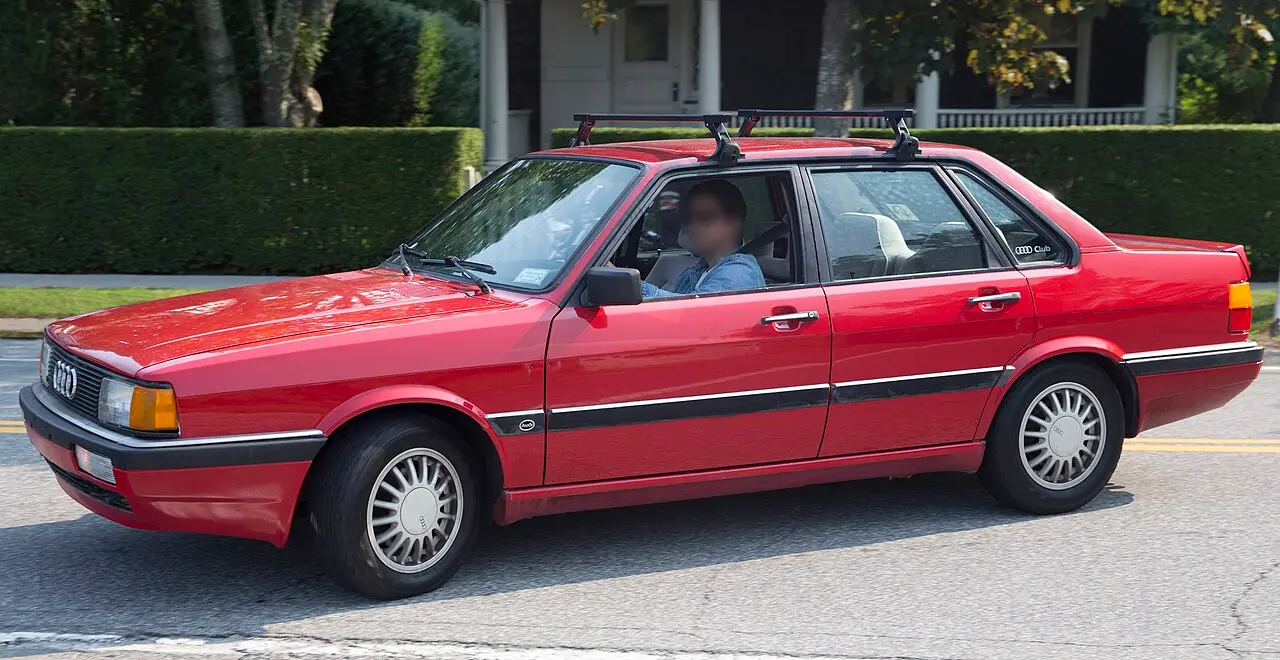
Audi

Audi 4000

Audi 4000
Photo: Mr.choppers / Wikimedia Commons · CC BY-SA 3.0

The official data lists 9 versions of the Audi 4000 (1984–1987), in the United States. Each market publishes its own figures, measured on its own test procedure.

At a glance

Years in the data
1984–1987
Markets
United States
Engines
1.8 L to 2.2 L
Fuels
Petrol
Lowest consumption (United States)
9.8 L/100 km (EPA)

What kind of car is the Audi 4000?

The Audi 4000 was the US name for a compact saloon related to the Audi 80. It sat below larger Audi models and brought the marque’s restrained styling and engineering focus to a smaller car.

Generation and engines

The US-market Audi 4000 covered here belongs to the B2 generation, also identified as Typ 81/85, and was sold from 1984 to 1987. The B2 Audi 80 family included quattro versions, bringing Audi’s all-wheel-drive system to this smaller saloon.

US EPA figures cover petrol engines from 1.8 to 2.2 litres across nine versions. The best combined rating is 24 MPG.

How economical is the Audi 4000?

The best combined US EPA rating is 24 MPG, equivalent to 9.8 L/100 km. EPA ratings use a different procedure from European WLTP and NEDC tests, so comparisons across markets need that context.

Where was the Audi 4000 sold?

The 4000 name was used in the United States for this B2-generation car, sold from 1984 through 1987. Its related model in other markets was the Audi 80. The quattro versions reflected Audi’s effort to bring all-wheel drive to more of its range.

Questions and answers

What is the Audi 4000 called in other markets?

It is related to the Audi 80; the US-market B2 version was called the 4000.

What years was the B2 Audi 4000 sold in the US?

The US B2 Audi 4000 was sold from 1984 to 1987.

What fuel economy did the Audi 4000 achieve?

Its best combined EPA rating is 24 MPG, or 9.8 L/100 km.

4000 B2 (1984–1987)

Audi 4000 B2
Photo: Mr.choppers / Wikimedia Commons · CC BY-SA 3.0

Model codes: B2, Typ 81/85 · Sold in: United States · References: audiworld.com, en.wikipedia.org

United States 9 versions

Model years sold in the USA, from the EPA and the Department of Energy (fueleconomy.gov). MPG on the EPA test; litres per 100 km = 235.215 ÷ MPG.

Years and versionEngineFuelGearboxDriveConsumption (combined)CO₂
1986–1987(FFS)1.8 LPetrol3-speed automaticFront-wheel drive22 MPG (10.7 L/100 km) EPA251 g/km
1986–1987(FFS), SIL1.8 LPetrol5-speed manualFront-wheel drive24 MPG (9.8 L/100 km) EPA230 g/km
1987(FFS), SIL2.2 LPetrol5-speed manualFour- or all-wheel drive17 MPG (13.8 L/100 km) EPA325 g/km
1985–1986(FFS) CA model, SIL · (FFS), SIL2.2 LPetrol5-speed manualFour- or all-wheel drive18 MPG (13.1 L/100 km) EPA307 g/km
1985(FFS)1.8 LPetrol3-speed automaticFront-wheel drive23 MPG (10.2 L/100 km) EPA240 g/km
1985(FFS), SIL1.8 LPetrol5-speed manualFront-wheel drive24 MPG (9.8 L/100 km) EPA230 g/km
1984(FFS) · (FFS) CA model1.8 LPetrol3-speed automatic–21 MPG (11.2 L/100 km) EPA263 g/km
1984(FFS) · (FFS) CA model1.8 LPetrol5-speed manual–24 MPG (9.8 L/100 km) EPA230 g/km
1984(FFS) · (FFS) CA model2.2 LPetrol5-speed manual–18 MPG (13.1 L/100 km) EPA307 g/km

Official figures are measured on standard test procedures and differ between markets. Your consumption depends on how, where and in what conditions you drive.