Volkswagen

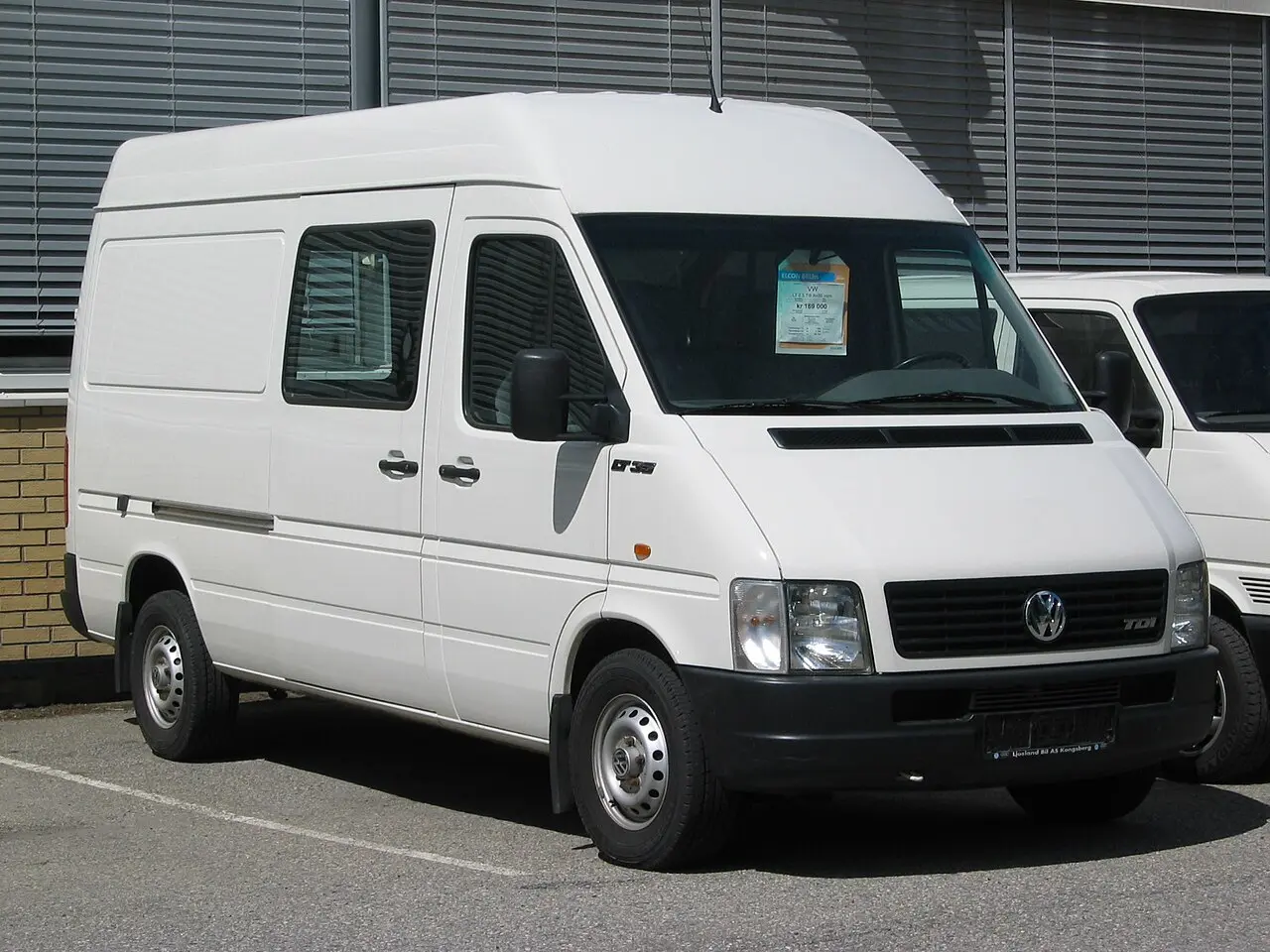
Volkswagen LT

Volkswagen LT
Photo: Harald Hansen / Wikimedia Commons · Public domain

The official data lists 28 versions of the Volkswagen LT (2002–2007), in the United Kingdom. Each market publishes its own figures, measured on its own test procedure.

At a glance

Years in the data
2002–2007
Markets
United Kingdom
Engines
2.5 L to 2.8 L
Power
61 kW (83 PS) to 116 kW (158 PS)
Fuels
Diesel
Lowest consumption (United Kingdom)
9.0 L/100 km (NEDC)

What is the Volkswagen LT?

The Volkswagen LT was a light commercial van for carrying goods, passengers or specialist equipment. Its second generation, Typ 2D, arrived in 1996 and ran through 2006. Developed with Daimler-Benz, it shared its basic design with the Mercedes-Benz Sprinter.

The LT was part of Volkswagen’s commercial vehicle range, built to handle work that called for a larger van. Different body styles and lengths made it adaptable to a range of uses.

Engines and power

The UK VCA figures cover diesel versions with engines from 2.5 to 2.8 litres. Listed power ranges from 61 kW (83 PS) to 116 kW (158 PS).

Fuel consumption and where it was sold

The lowest listed UK consumption is 9 L/100 km on the NEDC test. NEDC was the European procedure used for the period represented by these figures; it differs from the later WLTP procedure and from the EPA test in the United States or Canada’s 5-cycle test.

UK VCA figures cover 2002 to 2007 and include 28 versions. The second generation ran from 1996 to 2006.

Questions and answers

What was the Volkswagen LT?

It was a light commercial van available in different body styles for work and passenger transport.

When was the second-generation LT sold?

The Typ 2D second generation ran from 1996 to 2006.

Which engines and power outputs are listed for the UK?

The UK versions were diesel, with 2.5- to 2.8-litre engines producing 61 kW (83 PS) to 116 kW (158 PS).

What is the lowest listed UK fuel consumption?

It is 9 L/100 km on the NEDC test.

LT second generation (1996–2006)

Model codes: Typ 2D · Sold in: European Union and United Kingdom · References: en.wikipedia.org

United Kingdom 28 versions

New cars on sale in the UK, from the Vehicle Certification Agency. NEDC figures until 2018 and WLTP figures after; years are the editions a version appeared in.

Years and versionEnginePowerFuelGearboxConsumption (combined)CO₂
2006–200783 PS TDI 2.5 Axle Ratio 4.3752.5 L61 kW (83 PS)Diesel5-speed manual9.7 L/100 km NEDC262 g/km
2006–200783 PS TDI 2.5 Axle Ratio 4.111 · 83 PS TDI 2.5 Axle Ratio 4.3752.5 L61 kW (83 PS)Diesel5-speed manual9.5 L/100 km NEDC257 g/km
2006–200795 PS TDI 2.5 Axle Ratio 3.455 Option2.5 L70 kW (95 PS)Diesel5-speed manual9.0 L/100 km NEDC243 g/km
2006–200795 PS TDI 2.5 Axle Ratio 3.7272.5 L70 kW (95 PS)Diesel5-speed manual9.3 L/100 km NEDC251 g/km
2006–200795 PS TDI 2.5 Axle Ratio 4.111 Option · 95 PS TDI 2.5 Axle Ratio 4.375 Option2.5 L70 kW (95 PS)Diesel5-speed manual9.7 L/100 km NEDC262 g/km
2006–200795 PS TDI 2.5 Axle Ratio 4.1112.5 L70 kW (95 PS)Diesel5-speed manual9.4 L/100 km NEDC254 g/km
2006–2007109 PS TDI 2.5 Axle Ratio 3.455 · 109 PS TDI 2.5 Axle Ratio 3.727 Option2.5 L80 kW (109 PS)Diesel5-speed manual9.0 L/100 km NEDC243 g/km
2006–2007109 PS TDI 2.5 Axle Ratio 3.727 Option2.5 L80 kW (109 PS)Diesel5-speed manual9.3 L/100 km NEDC251 g/km
2006–2007109 PS TDI 2.5 Axle Ratio 4.375 Option2.5 L80 kW (109 PS)Diesel5-speed manual9.7 L/100 km NEDC262 g/km
2006–2007109 PS TDI 2.5 Axle Ratio 4.1112.5 L80 kW (109 PS)Diesel5-speed manual9.4 L/100 km NEDC254 g/km
2006–2007158 PS TDI 2.8 Axle Ratio 3.7272.8 L116 kW (158 PS)Diesel5-speed manual10.2 L/100 km NEDC275 g/km
20042.5 (83 PS) Axle Ratio 4.3752.5 L61 kW (83 PS)Diesel5-speed manual9.7 L/100 km NEDC262 g/km
20042.5 (95 PS) Axle Ratio 4.3752.5 L70 kW (95 PS)Diesel5-speed manual9.0 L/100 km NEDC243 g/km
20042.5 (95 PS) Axle Ratio 4.4552.5 L70 kW (95 PS)Diesel5-speed manual9.3 L/100 km NEDC251 g/km
20042.5 (95 PS) Axle Ratio 4.111 · 2.5 (95 PS) Axle Ratio 4.3752.5 L70 kW (95 PS)Diesel5-speed manual9.7 L/100 km NEDC262 g/km
20042.5 (95 PS) Axle Ratio 4.1112.5 L70 kW (95 PS)Diesel5-speed manual9.4 L/100 km NEDC254 g/km
20042.5 (109 PS) Axle Ratio 3.455 · 2.5 (109 PS) Axle Ratio 3.7272.5 L80 kW (109 PS)Diesel5-speed manual9.0 L/100 km NEDC243 g/km
20042.5 (109 PS) Axle Ratio 3.7272.5 L80 kW (109 PS)Diesel5-speed manual9.3 L/100 km NEDC251 g/km
20042.5 (109 PS) Axle Ratio 4.3752.5 L80 kW (109 PS)Diesel5-speed manual9.7 L/100 km NEDC262 g/km
20042.5 (109 PS) Axle Ratio 4.1112.5 L80 kW (109 PS)Diesel5-speed manual9.4 L/100 km NEDC254 g/km
20042.8 (158 PS) TDI Axle Ratio 3.7272.8 L116 kW (158 PS)Diesel5-speed manual10.2 L/100 km NEDC246 g/km
20042.8 (158 PS) TDI Axle Ratio 3.2732.8 L116 kW (158 PS)Diesel5-speed manual9.1 L/100 km NEDC246 g/km
2002–20032.5 (83 bhp)2.5 L62 kW (84 PS)Diesel5-speed manual9.5 L/100 km NEDC257 g/km
2002–20032.5 (95 bhp) Axle Ratio 4.1112.5 L71 kW (96 PS)Diesel5-speed manual9.4 L/100 km NEDC254 g/km
2002–20032.5 (95 bhp) Axle Ratio 4.3752.5 L71 kW (96 PS)Diesel5-speed manual9.7 L/100 km NEDC262 g/km
2002–20032.5 (109 bhp) Axle Ratio 3.7272.5 L81 kW (111 PS)Diesel5-speed manual9.0 L/100 km NEDC243 g/km
2002–20032.5 (109 bhp) Axle Ratio 4.1112.5 L81 kW (111 PS)Diesel5-speed manual9.4 L/100 km NEDC254 g/km
2002–20032.5 (109 bhp) Axle Ratio 4.3752.5 L81 kW (111 PS)Diesel5-speed manual9.7 L/100 km NEDC262 g/km

Official figures are measured on standard test procedures and differ between markets. Your consumption depends on how, where and in what conditions you drive.