Volkswagen

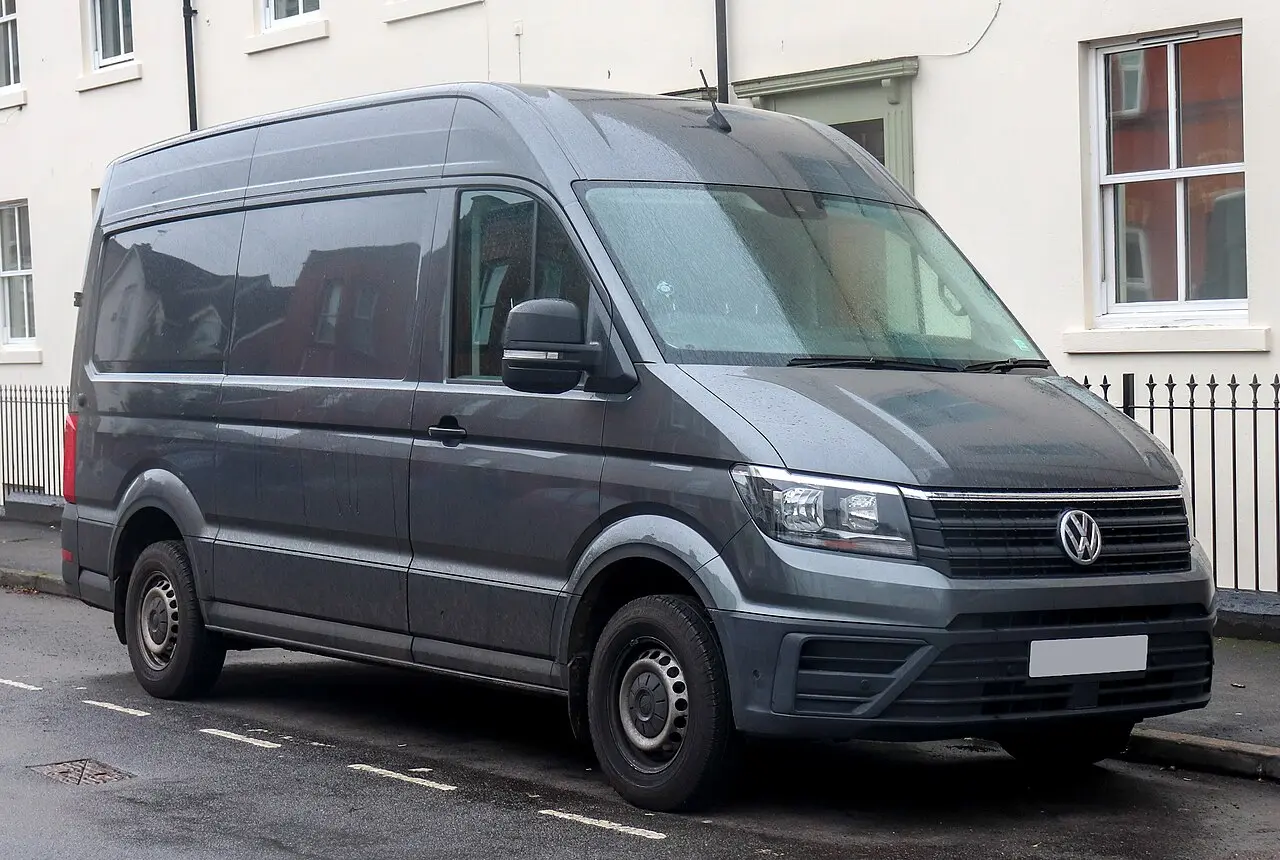
Volkswagen Crafter

Volkswagen Crafter
Photo: Vauxford / Wikimedia Commons · CC BY-SA 4.0

The official data lists 383 versions of the Volkswagen Crafter (2008–2025), in the European Union, the United Kingdom, and France. Each market publishes its own figures, measured on its own test procedure.

At a glance

Years in the data
2008–2025
Markets
European Union, United Kingdom, France
Engines
1.5 L to 2.5 L
Power
79 kW (108 PS) to 130 kW (177 PS)
Fuels
Diesel, Electric, Petrol
Lowest consumption (France)
6.3 L/100 km (NEDC)
Lowest consumption (European Union)
7.5 L/100 km (WLTP)
Lowest consumption (United Kingdom)
9.5 L/100 km (NEDC)
New registrations in the EU
23,956

What is the Volkswagen Crafter?

The Crafter is Volkswagen Commercial Vehicles’ large van, designed for carrying people or goods and adaptable to a range of working needs. It sits at the larger end of the brand’s commercial-vehicle range, alongside models such as the Transporter.

The first generation arrived in 2006. The second generation brought a new Volkswagen-developed design and is built at the company’s dedicated Crafter plant in Września, Poland.

Volkswagen Crafter generations

Generation I ran from 2006 to 2016, with factory codes 2E and 2F. Generation II began in 2017 and is listed as continuing today, with codes SY and SZ. The change brought a new design and a production site built for the Crafter in Września, Poland.

Engines, power and official economy

EU registration figures cover 2010–2025 and list engines from 1.0 L to 2.5 L, power from 75 kW (102 PS) to 130 kW (177 PS), and diesel, electric, petrol and other fuel classifications. The lowest listed EU consumption is 7.5 L/100 km on the WLTP test. UK and French figures list diesel versions.

UK figures cover 2008–2010 and list 2.5 L diesel engines producing 65 kW (88 PS) to 120 kW (163 PS); the lowest listed figure is 9.5 L/100 km on NEDC. French figures cover 2012–2015 and list diesel power from 80 kW (109 PS) to 120 kW (163 PS), with a lowest consumption of 6.3 L/100 km on NEDC. WLTP and NEDC are different European test procedures, so figures from each test should be read in that context.

Where was the Crafter sold?

Official figures cover the Crafter in the European Union, the United Kingdom and France. EU registration figures span 2010–2025, UK figures cover 2008–2010 and French figures cover 2012–2015. Its configurable van body suits a variety of commercial roles.

Questions and answers

How many Crafter generations are listed?

Two: Generation I (2006–2016) and Generation II (2017–today).

Is the Crafter available as an electric vehicle?

Electric appears among the fuel classifications in EU registration figures.

What is the lowest listed Crafter fuel consumption?

The French figures list 6.3 L/100 km on NEDC. The EU figure is 7.5 L/100 km on WLTP.

Which Crafter engine powers are listed in EU figures?

The EU range runs from 75 kW (102 PS) to 130 kW (177 PS).
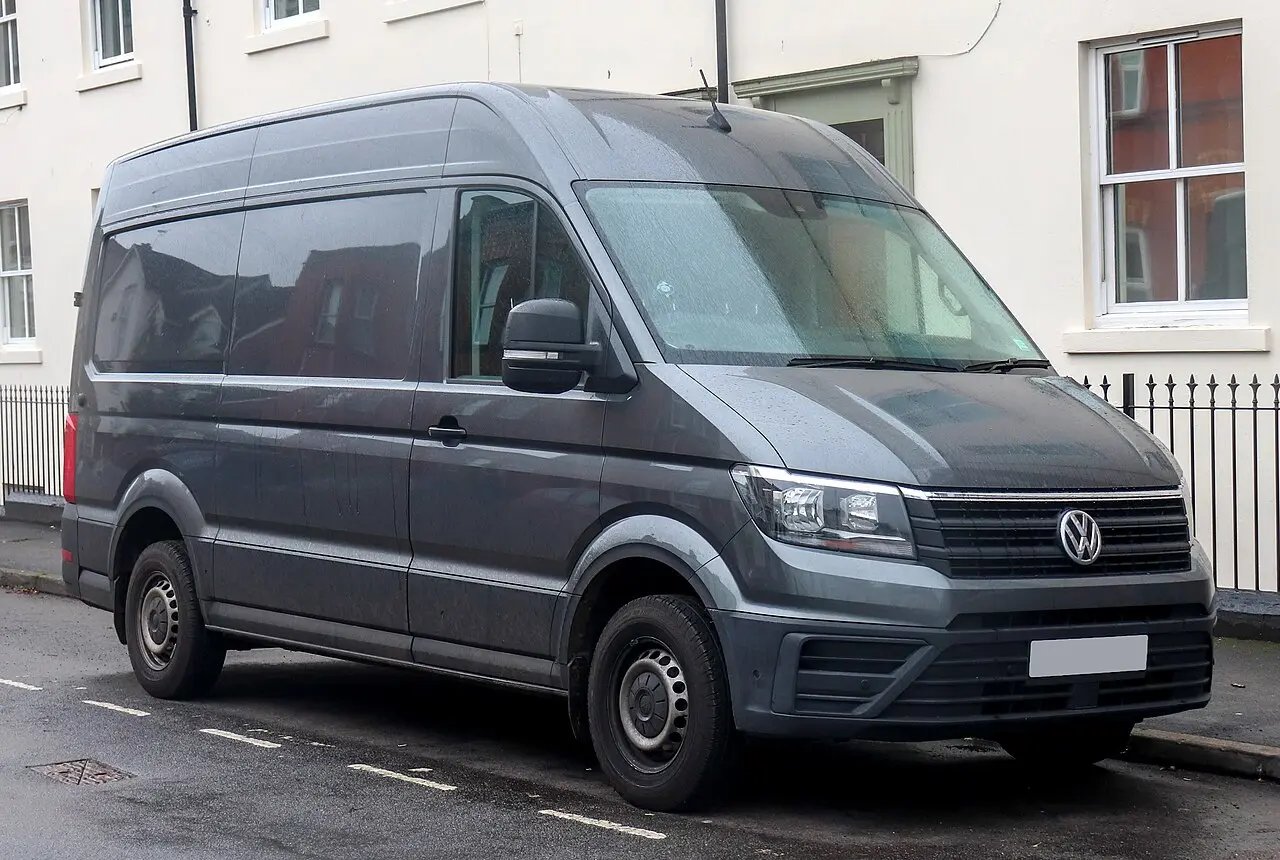
Crafter I (2006–2016)

Volkswagen Crafter I
Photo: Vauxford / Wikimedia Commons · CC BY-SA 4.0

Model codes: 2E, 2F · References: volkswagen-newsroom.com, adac.de

Show all 354 versions

Crafter II (since 2017)

Volkswagen Crafter II
Photo: Vauxford / Wikimedia Commons · CC BY-SA 4.0

Model codes: SY, SZ · References: adac.de, autobild.de

European Union 29 versions

New cars registered in the EU (plus Norway and Iceland), from the European Environment Agency. Figures on the NEDC procedure until 2020 and on WLTP from 2021; versions are grouped by engine and power, with their number of registrations.

Years and versionEnginePowerFuelConsumption (combined)CO₂Electric rangeEU registrations
20252.0 L130 kW (177 PS)Diesel9.9 L/100 km WLTP260 g/km–149
20252.0 L103 kW (140 PS)Diesel9.0 L/100 km WLTP237 g/km–58
20242.0 L130 kW (177 PS)Diesel9.3 L/100 km WLTP247 g/km–101
20242.0 L103 kW (140 PS)Diesel8.6 L/100 km WLTP239 g/km–31
20232.0 L130 kW (177 PS)Diesel9.2 L/100 km WLTP241 g/km–101
20232.0 L103 kW (140 PS)Diesel9.0 L/100 km WLTP236 g/km–16
2021–20222.0 L75 kW (102 PS)Diesel7.5 L/100 km WLTP250 g/km–80
20222.0 L130 kW (177 PS)Diesel8.7 L/100 km WLTP280 g/km–62
20222.0 L103 kW (140 PS)Diesel9.3 L/100 km WLTP243 g/km–17
20212.0 L130 kW (177 PS)Diesel10.9 L/100 km WLTP291 g/km–129
20212.0 L103 kW (140 PS)Diesel7.6 L/100 km WLTP259 g/km–44
20202.0 L130 kW (177 PS)Diesel–224 g/km–293
2020Electric motor100 kW (136 PS)Electric26.0 kWh/100 km NEDC0 g/km323 km258
20202.0 L103 kW (140 PS)Diesel–205 g/km–60
20191.5 L–Petrol–113 g/km–1,636
20191.0 L–Petrol–109 g/km–470
20192.0 L103 kW (140 PS)Diesel–207 g/km–356
2019Electric motor100 kW (136 PS)Electric26.0 kWh/100 km NEDC0 g/km–188
20192.0 L130 kW (177 PS)Diesel–235 g/km–146
20192.0 L75 kW (102 PS)Diesel–199 g/km–88
2019––Diesel–––28
20182.0 L103 kW (140 PS)Diesel–194 g/km–171
20182.0 L130 kW (177 PS)Diesel–211 g/km–90
20181.5 L–Petrol–122 g/km–88
20172.0 L84 kW (114 PS)Diesel–210 g/km–676
20172.0 L120 kW (163 PS)Diesel–196 g/km–420
20172.0 L155 kW (211 PS)Diesel–201 g/km–34
20172.0 L103 kW (140 PS)Diesel–213 g/km–20
20172.0 L195 kW (265 PS)Diesel–198 g/km–12

Official figures are measured on standard test procedures and differ between markets. Your consumption depends on how, where and in what conditions you drive.