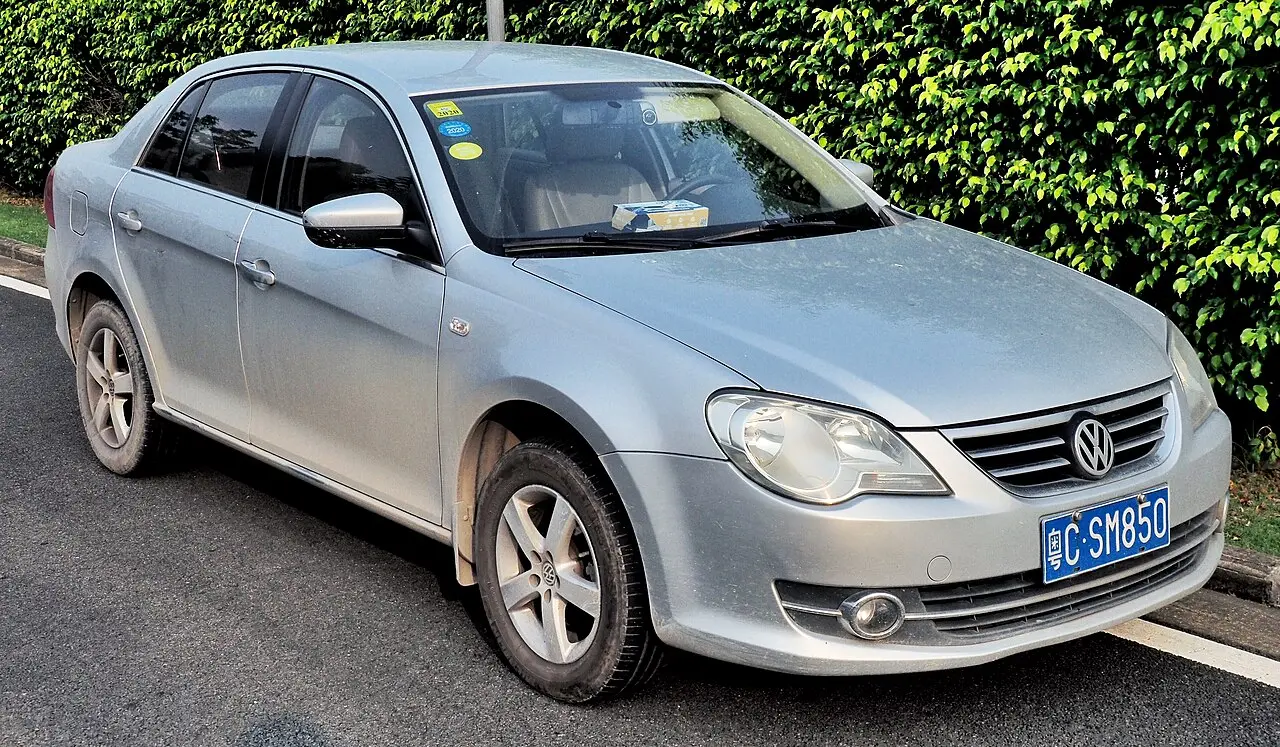
What is the Volkswagen Bora?
In Europe, the Bora was a compact four-door saloon related to the Golf IV. Its notchback shape and separate boot gave it a distinct look from the Golf hatchback. Volkswagen introduced it in 1998 as the successor to the Vento, and production of the European saloon ended in 2005. In the United States, the related car was marketed as the Jetta.
Volkswagen also used the Bora name for models in other markets, including China. The name therefore covers different regional lineups and periods, rather than one continuous European model.
Generations, engines and power
The European Bora is listed as Generation IV (2010–2010), with codes 1J5 and 1JM. Volkswagen describes the original European model as a Golf IV-based saloon. UK VCA figures cover 2000–2006, with petrol and diesel engines from 1.6 L to 2.8 L and power from 67 kW (91 PS) to 152 kW (207 PS).
European Union registration figures span 2010–2021 and include petrol, diesel and electric entries. The listed electric version produces 100 kW (136 PS).
How economical is the Volkswagen Bora?
The lowest listed UK fuel consumption is 5.2 L/100 km on the NEDC test. European Union registration figures total 256 across 2010–2021; the leading entry is a 2.0 L diesel registered in 2010. NEDC is an older European test procedure, so its results are not directly comparable with newer WLTP figures.
Where was it sold?
The Bora was sold in Europe and the UK, while the related Jetta name was used in the United States. Volkswagen also retained the Bora name for compact saloons in markets including China.
Questions and answers
Was the European Bora related to the Golf?
Yes. The original European Bora was based on the Golf IV but had a distinct four-door saloon body.
What is the lowest listed UK fuel consumption?
The lowest listed figure is 5.2 L/100 km on the NEDC test.
Were there electric Bora versions?
Yes. An electric Bora entry is listed at 100 kW (136 PS).