Vauxhall

Vauxhall Viva

Vauxhall Viva
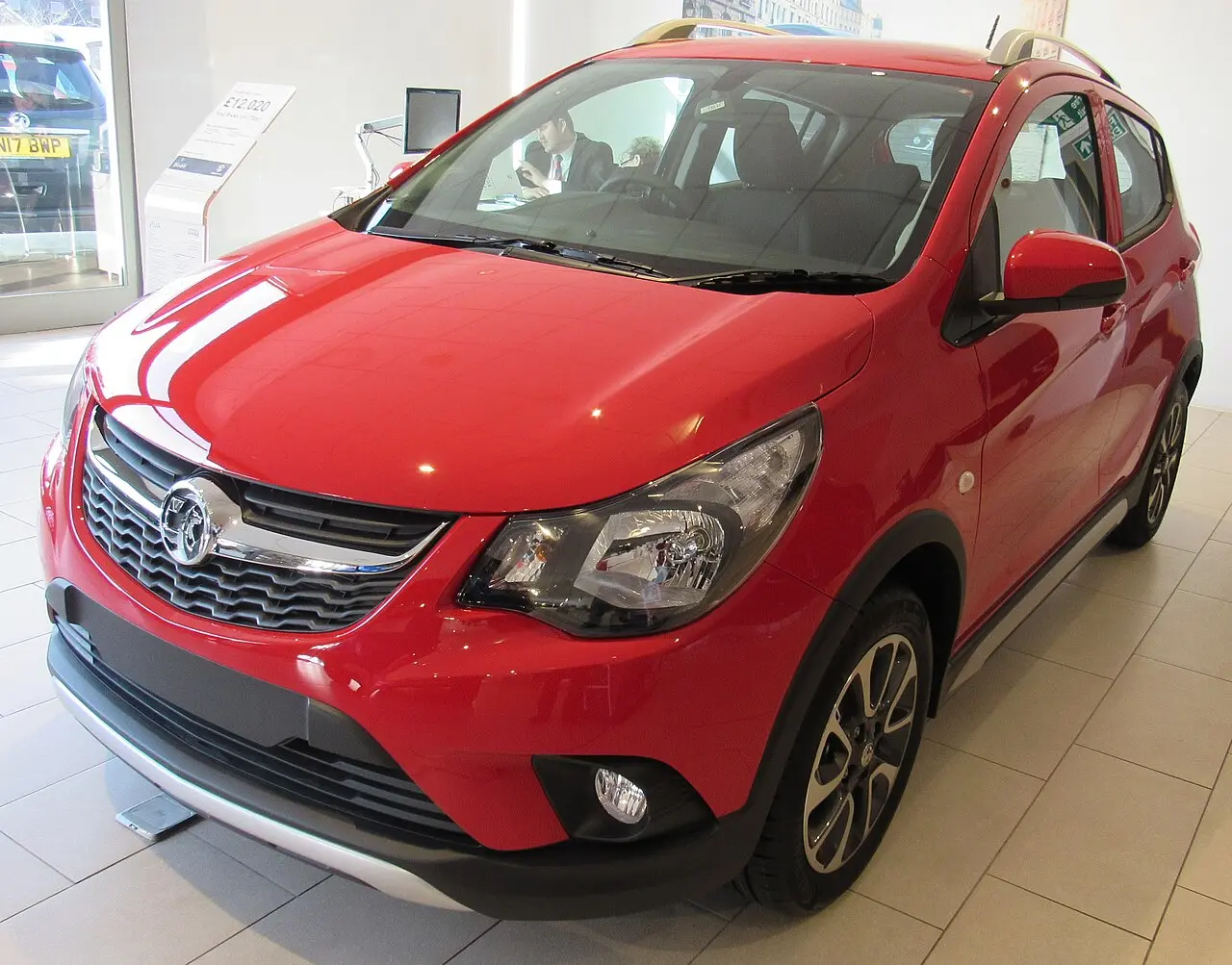
Photo: Vauxford / Wikimedia Commons · CC BY-SA 4.0

The official data lists 14 versions of the Vauxhall Viva (2015–2019), in the European Union and the United Kingdom. Each market publishes its own figures, measured on its own test procedure.

At a glance

Years in the data
2015–2019
Markets
European Union, United Kingdom
Engines
1.0 L
Power
54 kW (73 PS) to 55 kW (75 PS)
Fuels
Petrol
Lowest consumption (United Kingdom)
4.3 L/100 km (NEDC)
New registrations in the EU
76,398

What is the Vauxhall Viva?

The Viva is a small five-door city car that returned to Vauxhall’s range in 2015. In other European markets, the same model was known as the Opel Karl.

Vauxhall is a British car brand and part of Stellantis. The Viva revived a familiar name for a compact car with petrol power and a straightforward place in the range.

Generation and engine

The Viva generation ran from 2015 to 2019 and used a 1.0-litre petrol engine. UK VCA figures for 2015–2018 show outputs from 54 kW (73 PS) to 55 kW (75 PS).

With one engine size and fuel type, the Viva kept its powertrain range simple. Its five-door body brought everyday practicality to a small city car.

Fuel consumption

The Viva appears in EU registration figures from 2015 to 2019, with five versions. UK VCA figures for 2015–2018 give a lowest stated consumption of 4.3 L/100 km on the NEDC test. This is a test result for particular versions, rather than a figure for every driving situation.

European consumption figures may use WLTP or the earlier NEDC procedure. The UK figure here uses NEDC, so comparisons are most useful when they use the same test procedure.

Where was the Viva sold?

The Viva appears in EU registration figures from 2015 to 2019, with 76,398 registrations. The 1.0-litre petrol model had its highest listed annual registrations in 2016, at 28,544, followed by 19,842 in 2017 and 10,866 in 2015.

Questions and answers

What kind of car is the Vauxhall Viva?

It is a small five-door city car.

What engine did the Viva use?

It used a 1.0-litre petrol engine.

What is the lowest stated UK fuel consumption?

The lowest UK VCA figure listed for 2015–2018 is 4.3 L/100 km on the NEDC test.

When did the Viva generation run?

The Viva generation ran from 2015 to 2019.

Viva Viva (2015–2019)

Vauxhall Viva Viva
Photo: Vauxford / Wikimedia Commons · CC BY-SA 4.0

Sold in: United Kingdom · References: en.wikipedia.org, vauxhall.co.uk

United Kingdom 9 versions

New cars on sale in the UK, from the Vehicle Certification Agency. NEDC figures until 2018 and WLTP figures after; years are the editions a version appeared in.

Years and versionEnginePowerFuelGearboxConsumption (combined)CO₂
20181.0 SE 73PS · 1.0 SE A/C 73PS · 1.0 SE A/C NAV 73PS and 1 more trim1.0 L54 kW (73 PS)Petrol5-speed manual5.2 L/100 km NEDC117 g/km
20181.0 Rocks 73PS1.0 L54 kW (73 PS)Petrol5-speed manual5.2 L/100 km NEDC118 g/km
20181.0 73PS SE A/C Nav · 1.0 73PS SL · 1.0 73PS SE A/C and 1 more trim1.0 L54 kW (73 PS)Petrol5-speed manual5.1 L/100 km NEDC117 g/km
20181.0 73PS Rocks1.0 L54 kW (73 PS)Petrol5-speed manual5.1 L/100 km NEDC118 g/km
20181.0 SE 75PS · 1.0 SE A/C 75PS · 1.0 SE A/C NAV 75PS and 1 more trim1.0 L55 kW (75 PS)Petrol5-speed manual4.6 L/100 km NEDC104 g/km
20181.0 Rocks 75PS1.0 L55 kW (75 PS)Petrol5-speed manual4.7 L/100 km NEDC106 g/km
20181.0 SL Easytronic 75PS1.0 L55 kW (75 PS)Petrol5-speed automatic4.5 L/100 km NEDC103 g/km
2015–20171.0i 75PS SE with 14'', 15'' and 16'' wheels · 1.0i 75PS SL with 14'', 15'' and 16'' wheels1.0 L55 kW (75 PS)Petrol5-speed manual4.5 L/100 km NEDC104 g/km
2015–20171.0i 75PS SE with Eco Tyre 14'', 15'' and 16'' wheels1.0 L55 kW (75 PS)Petrol5-speed manual4.3 L/100 km NEDC99 g/km

Versions outside these generations

European Union 5 versions

New cars registered in the EU (plus Norway and Iceland), from the European Environment Agency. Figures on the NEDC procedure until 2020 and on WLTP from 2021; versions are grouped by engine and power, with their number of registrations.

Years and versionEngineFuelCO₂EU registrations
20191.0 LPetrol117 g/km7,300
20181.0 LPetrol109 g/km9,846
20171.0 LPetrol104 g/km19,842
20161.0 LPetrol104 g/km28,544
20151.0 LPetrol103 g/km10,866

Official figures are measured on standard test procedures and differ between markets. Your consumption depends on how, where and in what conditions you drive.