Vauxhall

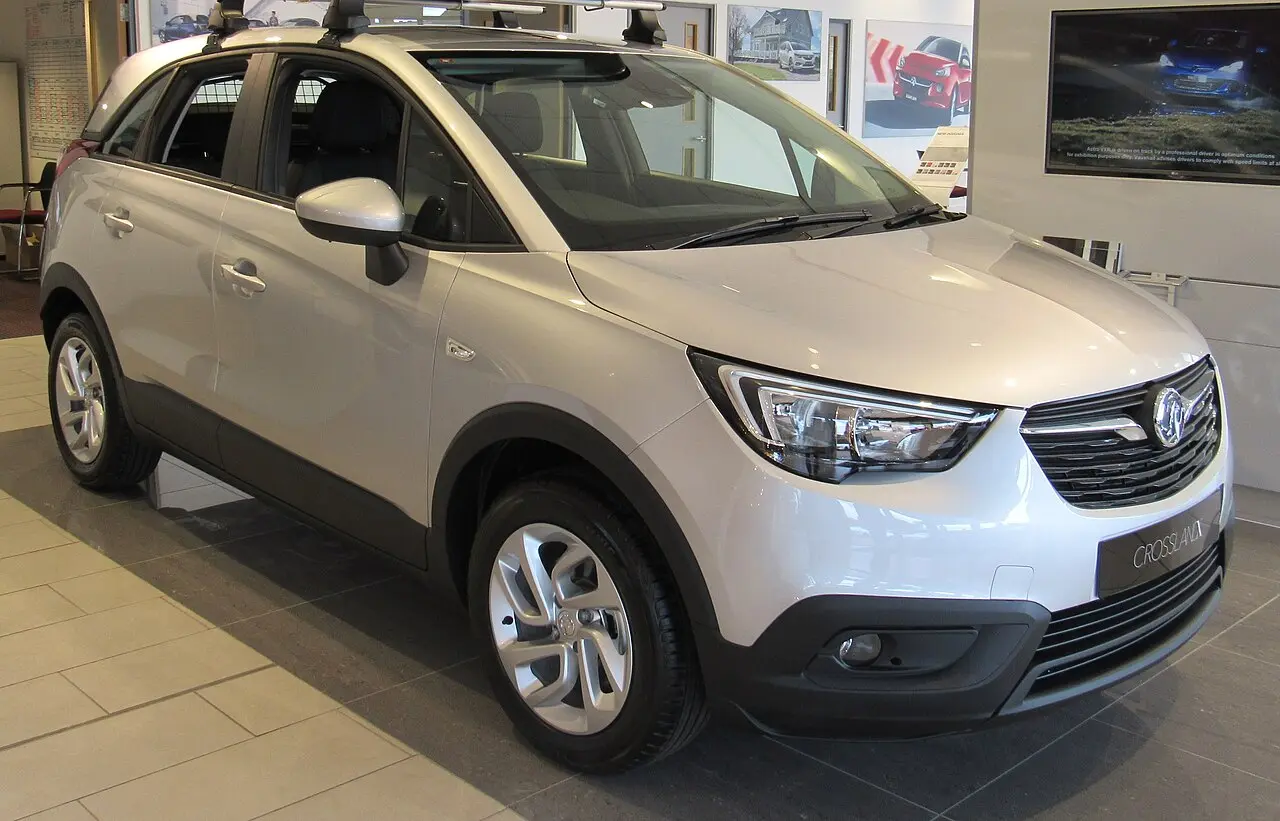
Vauxhall Crossland X

Vauxhall Crossland X
Photo: Vauxford / Wikimedia Commons · CC BY-SA 4.0

The official data lists 25 versions of the Vauxhall Crossland X (2017–2020), in the European Union and the United Kingdom. Each market publishes its own figures, measured on its own test procedure.

At a glance

Years in the data
2017–2020
Markets
European Union, United Kingdom
Engines
1.2 L to 1.6 L
Power
60 kW (81 PS) to 96 kW (130 PS)
Fuels
Petrol, Diesel
Lowest consumption (United Kingdom)
3.6 L/100 km (NEDC)
New registrations in the EU
101,554

What is the Vauxhall Crossland X?

The Crossland X is a small crossover that joined Vauxhall’s range in 2017. Its raised stance and compact shape make it a practical fit for town driving and everyday family journeys.

Vauxhall is a British car brand and part of Stellantis. The Crossland X was among the new crossovers Opel and Vauxhall introduced as they expanded their ranges in 2017.

Generations and engines

The Crossland X had one generation, identified as P17, which ran from 2017 to 2024. It was offered with petrol and diesel engines, ranging from 1.2 to 1.6 litres.

In UK VCA figures for 2018, listed outputs ran from 60 kW (81 PS) to 96 kW (130 PS). The model paired its compact crossover shape with a choice of two fuel types.

Fuel consumption

In EU registration figures, the Crossland X appears from 2017 to 2020, with 11 versions. UK VCA figures for 2018 give a lowest stated consumption of 3.6 L/100 km on the NEDC test. This is a result for particular versions and test conditions.

European consumption figures may use WLTP or the earlier NEDC procedure. The UK figure here uses NEDC, so comparisons are most useful when they use the same test procedure.

Where was the Crossland X sold?

The Crossland X appears in EU registration figures from 2017 to 2020, with 101,554 registrations. The 1.2-litre petrol version led the listed annual figures in 2018, 2019 and 2020, with 17,170, 30,684 and 35,450 registrations respectively.

Questions and answers

What type of car is the Crossland X?

It is a small crossover from Vauxhall.

What engines were available?

The range included 1.2- to 1.6-litre petrol and diesel engines.

What is the lowest stated UK consumption?

The lowest UK VCA figure listed for 2018 is 3.6 L/100 km on the NEDC test.

How many generations did it have?

It had one generation, identified as P17, which ran from 2017 to 2024.

Crossland X first generation (2017–2024)

Vauxhall Crossland X first generation
Photo: Vauxford / Wikimedia Commons · CC BY-SA 4.0

Model codes: P17 · Sold in: European Union and United Kingdom · References: en.wikipedia.org, autoexpress.co.uk

European Union 11 versions

New cars registered in the EU (plus Norway and Iceland), from the European Environment Agency. Figures on the NEDC procedure until 2020 and on WLTP from 2021; versions are grouped by engine and power, with their number of registrations.

Years and versionEngineFuelCO₂EU registrations
20201.2 LPetrol109 g/km35,450
20201.5 LDiesel105 g/km1,836
20191.2 LPetrol114 g/km30,684
20191.5 LDiesel106 g/km2,206
20191.6 LDiesel94 g/km60
20181.2 LPetrol117 g/km17,170
20181.6 LDiesel97 g/km4,960
20181.2 LPetrol116 g/km3,434
20181.5 LDiesel105 g/km594
20171.2 LPetrol114 g/km4,252
20171.6 LDiesel95 g/km908

United Kingdom 14 versions

New cars on sale in the UK, from the Vehicle Certification Agency. NEDC figures until 2018 and WLTP figures after; years are the editions a version appeared in.

Years and versionEnginePowerFuelGearboxConsumption (combined)CO₂
20181.2l Elite 81PS · 1.2l Elite Nav 81PS · 1.2l SE 81PS and 2 more trims1.2 L60 kW (81 PS)Petrol5-speed manual5.2 L/100 km NEDC116 g/km
20181.2I SE Nav 81PS · 1.2I Elite Nav 81PS · 1.2I Elite 81PS and 1 more trim1.2 L60 kW (81 PS)Petrol5-speed manual5.1 L/100 km NEDC117 g/km
20181.2i 82PS Elite with 16'' & 17'' wheels1.2 L60 kW (82 PS)Petrol5-speed manual5.2 L/100 km NEDC116 g/km
20181.2i 110PS SE NAV Stop/Start EcoTEC with 15'' & 16' wheels · 1.2i 110PS SE Stop/Start EcoTEC with 15'' wheels · 1.2l SE 110PS Stop/Start Ecotec and 2 more trims1.2 L81 kW (110 PS)Petrol5-speed manual4.8 L/100 km NEDC109 g/km
20181.2i 110PS Tech Line Stop/Start with 16'' and 17'' wheels · 1.2l Elite 110PS Stop/Start Automatic · 1.2l Elite Nav 110PS Stop/Start Automatic and 4 more trims1.2 L81 kW (110 PS)Petrol6-speed automatic5.4 L/100 km NEDC123 g/km
20181.2i 110PS Elite Stop/Start EcoTec with 16'' & 17'' wheels · 1.2l Elite 110PS Stop/Start Ecotec · 1.2l Elite Nav 110PS Stop/Start Ecotec and 1 more trim1.2 L81 kW (110 PS)Petrol5-speed manual4.9 L/100 km NEDC111 g/km
20181.2I Elite Nav 110PS Stop/Start Ecotec · 1.2I Tech Line Nav 110PS Stop/Start Ecotec · 1.2I SE 110PS Stop/Start Ecotec and 2 more trims1.2 L81 kW (110 PS)Petrol6-speed manual4.8 L/100 km NEDC109 g/km
20181.2i 130PS Elite Stop/Start with 17'' wheels · 1.2l Elite 130PS Stop/Start · 1.2l Elite Nav 130PS Stop/Start and 2 more trims1.2 L96 kW (130 PS)Petrol6-speed manual5.1 L/100 km NEDC116 g/km
20181.2I Tech Line Nav 130PS Stop/Start1.2 L96 kW (130 PS)Petrol6-speed manual5.2 L/100 km NEDC117 g/km
20181.5 SE Nav 102PS Turbo D Stop/Start · 1.5 Tech Line Nav 102PS Turbo D Stop/Start Ecotec1.5 L75 kW (102 PS)Diesel6-speed manual4.0 L/100 km NEDC105 g/km
20181.6 CDTi 99PS Tech-Line NAV Turbo D Stop/Start EcoTec with 15'' & 16'' wheels · 1.6 CDTi SE Nav 99PS Turbo D Ecotec Stop/Start · 1.6 CDTi SE 99PS Turbo D Ecotec Stop/Start and 1 more trim1.6 L73 kW (99 PS)Diesel5-speed manual3.6 L/100 km NEDC93 g/km
20181.6 CDTi 99PS SE Turbo D Stop/Start EcoTec with 16'' & 17'' wheels · 1.6 CDTi Elite 99PS Turbo D Ecotec Stop/Start · 1.6 CDTi Elite Nav 99PS Turbo D Ecotec Stop/Start1.6 L73 kW (99 PS)Diesel5-speed manual3.7 L/100 km NEDC95 g/km
20181.6 CDTi 110PS SE NAV EcoTec Stop/Start with 15'' & 16'' wheels1.6 L81 kW (110 PS)Diesel5-speed manual3.6 L/100 km NEDC93 g/km
20181.6 CDTi 120PS Elite EcoTec Stop/Start with 16'' and 17'' wheels · 1.6 CDTi Elite 120PS Turbo D Stop/Start · 1.6 CDTi Elite Nav 120PS Turbo D Stop/Start and 2 more trims1.6 L88 kW (120 PS)Diesel6-speed manual4.0 L/100 km NEDC105 g/km

Official figures are measured on standard test procedures and differ between markets. Your consumption depends on how, where and in what conditions you drive.