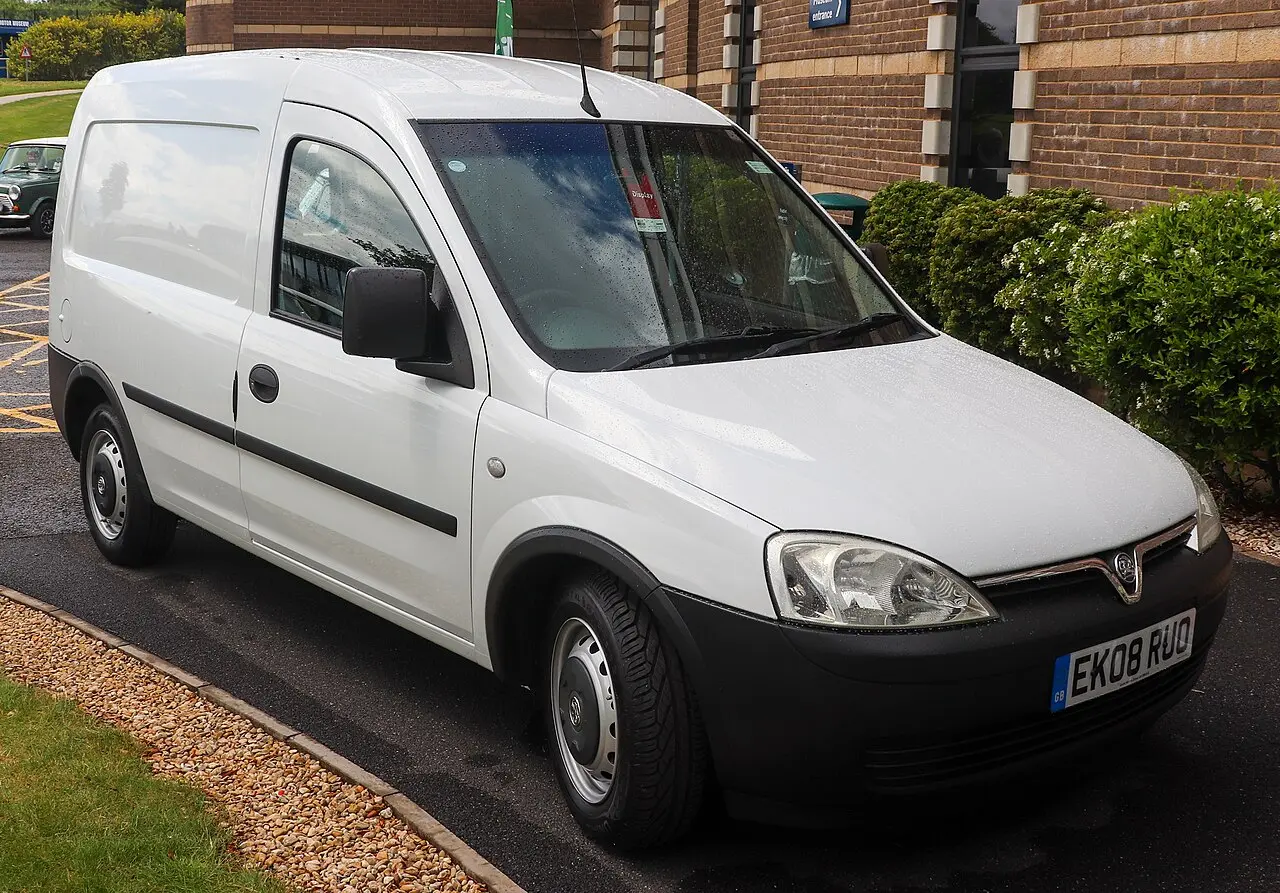
What is the Vauxhall Combo?
The Combo is Vauxhall’s compact van, with a high roof and a practical layout for carrying goods. Passenger versions give it a people-carrier role, too. It sits among the smaller vans in Vauxhall’s range and suits work that calls for a roomy, flexible vehicle.
The Combo C was related to the Corsa C. Its successor, Combo D, expanded the range with different body styles and lengths, serving both work and passenger needs.
Combo generations
Combo C ran from 2001 to 2011, followed by Combo D from 2011 to 2018. Across those generations, the Combo developed from a Corsa-related compact van into a broader range of practical van and passenger-car layouts.
Engines and fuel consumption
The EU registration range from 2010 to 2017 included petrol and diesel engines from 1.2 L to 1.4 L. UK VCA figures for 2006 to 2010 cover petrol and diesel engines from 1.0 L to 1.7 L. The lowest listed UK consumption is 5 L/100 km on the NEDC test, across the specified versions.
A total of 1,356 Combos were registered in the EU over the listed period. The most common entries were 1.2 L diesels: 506 registrations in 2010, 280 in 2011 and 254 in 2012. European NEDC and WLTP tests use different procedures, so consumption figures from different test cycles are not directly comparable.
Where was the Combo sold?
In the UK, the Combo was sold as a Vauxhall; in other European markets, the closely related model carried Opel badges.
Questions and answers
What kind of vehicle is the Vauxhall Combo?
It is a compact high-roof van, with versions for carrying goods and passengers.
Which Combo generations are covered?
Combo C ran from 2001 to 2011, followed by Combo D from 2011 to 2018.
What was the lowest listed UK fuel consumption?
The lowest listed UK VCA figure is 5 L/100 km on the NEDC test.
Were petrol and diesel Combos available?
Yes. Both the EU and UK ranges included petrol and diesel versions.