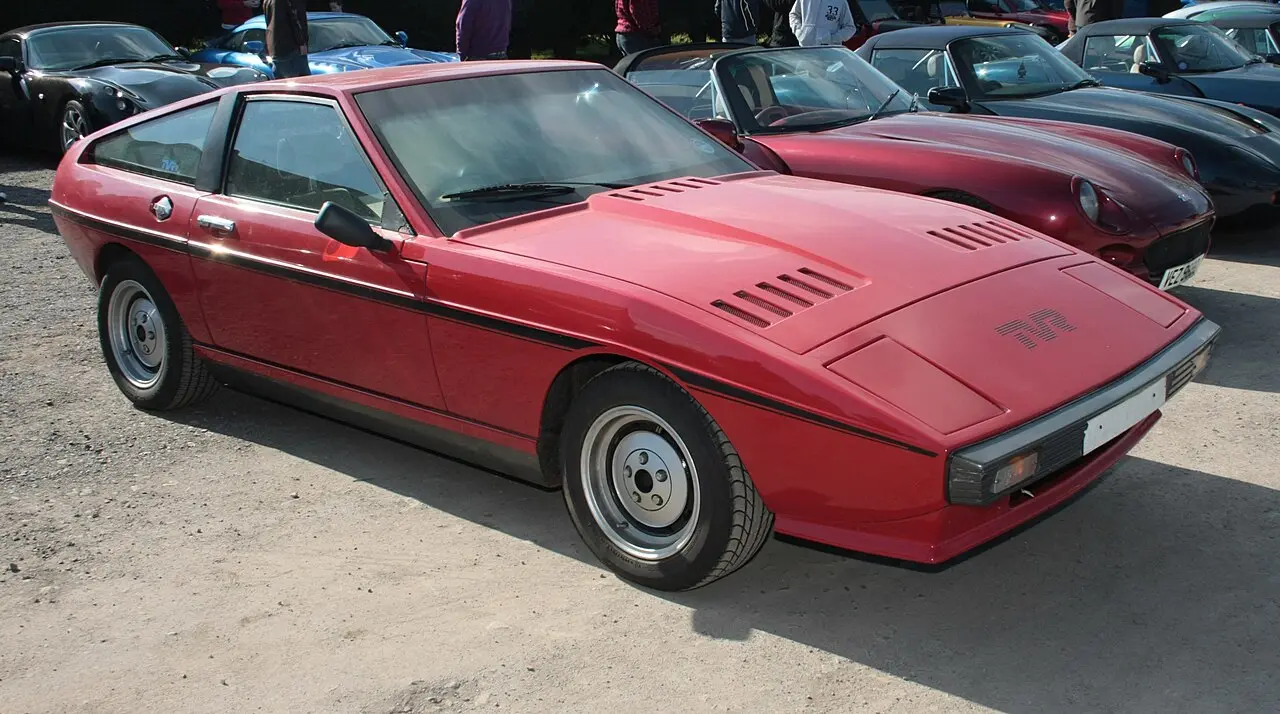
What is the TVR 280i?
The TVR 280i is a British sports car from TVR’s wedge-shaped Tasmin family. Its sharp, angular styling marked a break from the rounded look of the company’s earlier cars. The Tasmin helped set the direction for TVR’s 1980s range, with the 280i becoming its six-cylinder model.
Engines and power
In the United States, the 280i came with a 2.8 L petrol engine. It was listed there in two versions for 1985–1986.
How economical is the TVR 280i?
The 280i is rated at 18 MPG combined in the United States under the EPA test procedure. The listed equivalent is 13.1 L/100 km. EPA testing differs from European WLTP and NEDC procedures and Canada’s 5-cycle test, so ratings from those markets are not directly comparable.
Where was the TVR 280i sold?
In official US EPA listings, the 280i appears for the 1985–1986 model years, with petrol versions.
Questions and answers
What engine did the TVR 280i have?
The US-market model had a 2.8 L petrol engine.
How much fuel does the TVR 280i use?
Its US EPA combined rating is 18 MPG, also listed as 13.1 L/100 km.
When was the TVR 280i sold in the United States?
It is listed for the 1985–1986 model years.
How many US versions are listed?
Two versions are listed.