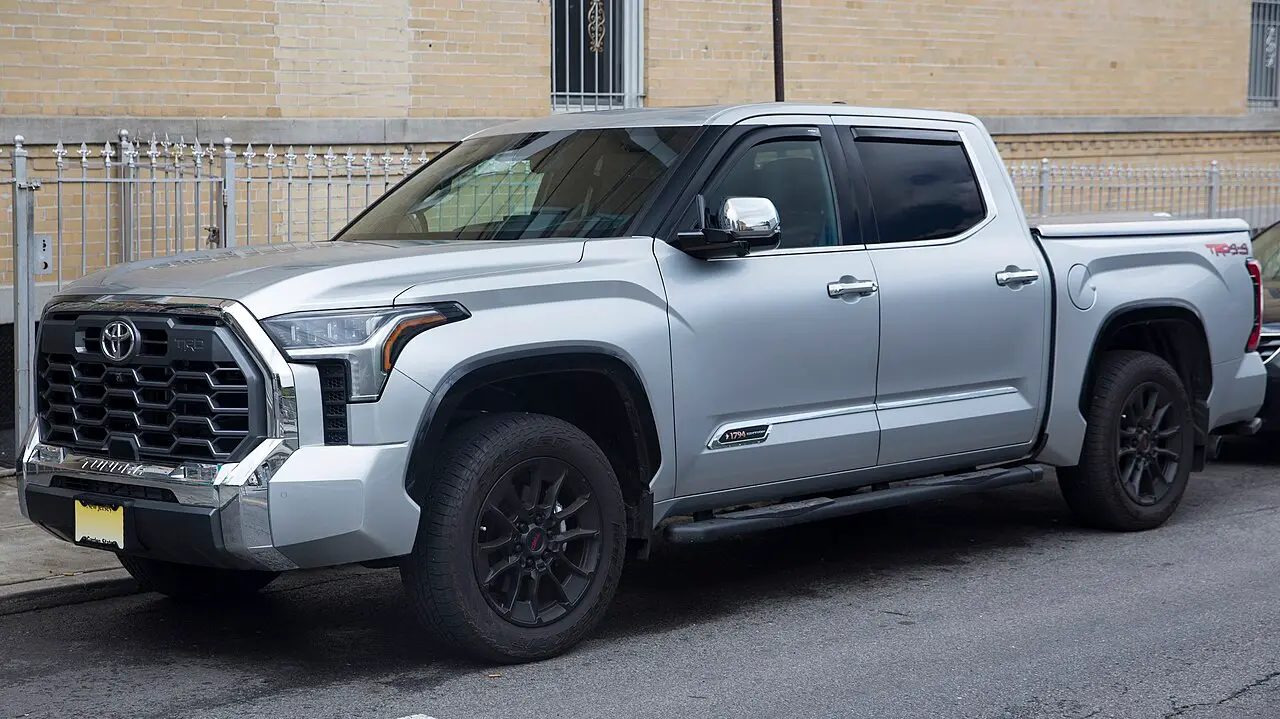
Toyota

Toyota Tundra

Toyota Tundra
Photo: Mr.choppers / Wikimedia Commons · CC BY-SA 3.0

The official data lists 153 versions of the Toyota Tundra (2000–2026), in the United States and Canada. Each market publishes its own figures, measured on its own test procedure.

At a glance

Years in the data
2000–2026
Markets
United States, Canada
Engines
3.4 L to 5.7 L
Fuels
Hybrid, Petrol, Flex fuel (E85)
Lowest consumption (United States)
10.7 L/100 km (EPA)
Lowest consumption (Canada)
11.7 L/100 km (5-cycle)

What is the Toyota Tundra?

The Tundra is Toyota’s full-size pickup, with an open cargo bed and a range of powertrains that have changed over the years. It has been part of Toyota’s North American truck line since 2000, alongside the smaller Tacoma.

Tundra generations

The first generation ran from 2000 to 2006, followed by a larger second generation from 2007 to 2021. The third generation arrived in 2022 with a new approach to power: Toyota replaced the previous V8 options with twin-turbo V6 engines, including the i-FORCE MAX hybrid system, which pairs an electric motor with the turbocharged engine.

Engines and power

Across the United States and Canada, engine sizes range from 3.4 L to 5.7 L. The Tundra has been offered with petrol engines, while US versions also include hybrid and flex-fuel E85 options. The choices vary by year and market.

How economical is the Toyota Tundra?

The lowest listed combined consumption in the United States is 10.7 L/100 km, and the best EPA result is 22 MPG combined. Canada’s lowest listed figure is 11.7 L/100 km on the 5-cycle test. These results use different procedures, so they are not directly comparable; consumption also varies by engine and version.

Where is the Toyota Tundra sold?

The Tundra is listed in the United States and Canada from 2000 to 2026. Its full-size pickup design and engine range reflect its place in Toyota’s North American truck line.

Questions and answers

When did the Toyota Tundra first go on sale?

The first generation ran from 2000 to 2006 in the United States and Canada.

What engines does the Tundra use?

Engine sizes range from 3.4 L to 5.7 L. US versions include petrol, hybrid and flex-fuel E85 options; Canadian versions are listed with petrol.

What is the Tundra’s lowest listed fuel consumption?

The lowest listed result is 10.7 L/100 km under the US EPA procedure. Canada’s lowest listed result is 11.7 L/100 km on the 5-cycle test.
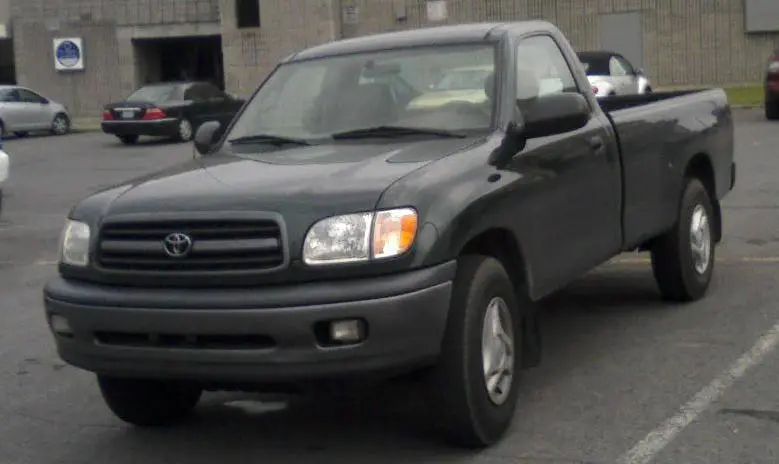
Tundra First generation (2000–2006)

Toyota Tundra First generation
Photo: Bull-Doser / Wikimedia Commons · Public domain

Model codes: XK30, XK40 · Sold in: United States and Canada · References: en.wikipedia.org, motortrend.com

Show all 37 versions

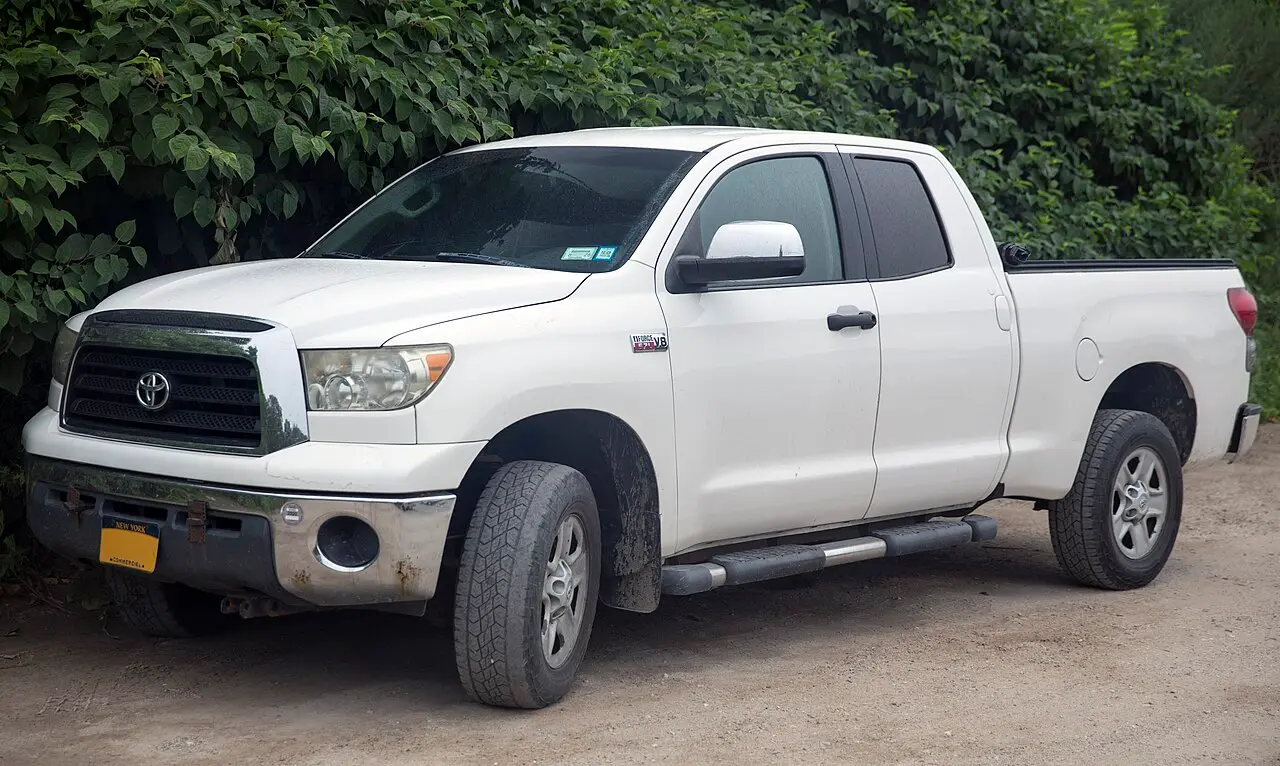
Tundra Second generation (2007–2021)

Toyota Tundra Second generation
Photo: Mr.choppers / Wikimedia Commons · CC BY-SA 4.0

Model codes: XK50 · Sold in: United States and Canada · References: en.wikipedia.org, motortrend.com

Show all 89 versions

Tundra Third generation (since 2022)

Toyota Tundra Third generation
Photo: Mr.choppers / Wikimedia Commons · CC BY-SA 3.0

Model codes: XK70 · Sold in: United States and Canada · References: en.wikipedia.org

United States 18 versions

Model years sold in the USA, from the EPA and the Department of Energy (fueleconomy.gov). MPG on the EPA test; litres per 100 km = 235.215 ÷ MPG.

Years and versionEngineFuelGearboxDriveConsumption (combined)CO₂
2022–2026SIDI & PFI; Hybrid3.4 LHybrid10-speed automaticPart-time four-wheel drive19 MPG (12.4 L/100 km) EPA286 g/km
2024–2026SIDI & PFI; Hybrid3.4 LHybrid10-speed automaticPart-time four-wheel drive20 MPG (11.8 L/100 km) EPA273 g/km
2025–2026SIDI & PFI3.4 LPetrol10-speed automaticRear-wheel drive20 MPG (11.8 L/100 km) EPA280 g/km
2025–2026SIDI & PFI3.4 LPetrol10-speed automaticPart-time four-wheel drive19 MPG (12.4 L/100 km) EPA291 g/km
2026SIDI & PFI; 3-mode · SIDI & PFI3.4 LPetrol10-speed automaticRear-wheel drive20 MPG (11.8 L/100 km) EPA276 g/km
2026SIDI & PFI; Hybrid3.4 LHybrid10-speed automaticRear-wheel drive22 MPG (10.7 L/100 km) EPA253 g/km
2026SIDI & PFI; 3-mode · SIDI & PFI3.4 LPetrol10-speed automaticPart-time four-wheel drive19 MPG (12.4 L/100 km) EPA287 g/km
2022–2025SIDI & PFI; 3-mode (Sport/Normal/Eco) · 3-mode (Spt/Normal/Eco) · 3-mode (Sport/Normal/Eco)3.4 LPetrol10-speed automaticPart-time four-wheel drive19 MPG (12.4 L/100 km) EPA286 g/km
2023–2025SIDI & PFI; Hybrid3.4 LHybrid10-speed automaticRear-wheel drive22 MPG (10.7 L/100 km) EPA254 g/km
2024–20253-mode (Sport/Normal/Eco) · SIDI & PFI; 3-mode; TRD · SIDI & PFI; 3-mode (Sport/Normal/Eco)3.4 LPetrol10-speed automaticRear-wheel drive20 MPG (11.8 L/100 km) EPA275 g/km
2022–2024SIDI & PFI3.4 LPetrol10-speed automaticPart-time four-wheel drive19 MPG (12.4 L/100 km) EPA285 g/km
2024SIDI & PFI · SIDI & PFI; TRD3.4 LPetrol10-speed automaticRear-wheel drive20 MPG (11.8 L/100 km) EPA279 g/km
2022–2023SIDI & PFI3.4 LPetrol10-speed automaticRear-wheel drive20 MPG (11.8 L/100 km) EPA274 g/km
20233-mode (Spt/Normal/Eco)3.4 LPetrol10-speed automaticRear-wheel drive20 MPG (11.8 L/100 km) EPA274 g/km
2023SIDI & PFI; Hybrid3.4 LHybrid10-speed automaticPart-time four-wheel drive20 MPG (11.8 L/100 km) EPA272 g/km
2022SIDI & PFI; 3-mode (Sport/Normal/Eco)3.4 LPetrol10-speed automaticRear-wheel drive20 MPG (11.8 L/100 km) EPA273 g/km
2022SIDI & PFI; Hybrid3.4 LHybrid10-speed automaticRear-wheel drive22 MPG (10.7 L/100 km) EPA255 g/km
2022SIDI & PFI; Hybrid3.4 LHybrid10-speed automaticPart-time four-wheel drive20 MPG (11.8 L/100 km) EPA274 g/km

Canada 9 versions

Model years sold in Canada, from Natural Resources Canada fuel consumption ratings (5-cycle test).

Years and versionEngineFuelGearboxConsumption (combined)CO₂
2022–2026Pickup truck: Standard3.4 LPetrol10-speed automatic11.7 L/100 km 5-cycle274 g/km
2022–2026Pickup truck: Standard3.4 LPetrol10-speed automatic12.3 L/100 km 5-cycle287 g/km
2026Pickup truck: Standard3.4 LPetrol10-speed automatic12.0 L/100 km 5-cycle282 g/km
2026Pickup truck: Standard3.4 LPetrol10-speed automatic12.4 L/100 km 5-cycle292 g/km
2026Pickup truck: Standard3.4 LPetrol10-speed automatic12.2 L/100 km 5-cycle287 g/km
2022–2025Pickup truck: Standard3.4 LPetrol10-speed automatic12.4 L/100 km 5-cycle291 g/km
2022–2025Pickup truck: Standard3.4 LPetrol10-speed automatic12.2 L/100 km 5-cycle286 g/km
2024–2025Pickup truck: Standard3.4 LPetrol10-speed automatic12.0 L/100 km 5-cycle283 g/km
2022–2023Pickup truck: Standard3.4 LPetrol10-speed automatic11.8 L/100 km 5-cycle277 g/km

Official figures are measured on standard test procedures and differ between markets. Your consumption depends on how, where and in what conditions you drive.