Toyota

Toyota Tacoma

Toyota Tacoma
Photo: Alexander-93 / Wikimedia Commons · CC BY-SA 4.0

The official data lists 252 versions of the Toyota Tacoma (1995–2026), in the United States and Canada. Each market publishes its own figures, measured on its own test procedure.

At a glance

Years in the data
1995–2026
Markets
United States, Canada
Engines
2.4 L to 4.0 L
Fuels
Petrol, Hybrid
Lowest consumption (United States)
9.8 L/100 km (EPA)
Lowest consumption (Canada)
10.0 L/100 km (5-cycle)

What is the Toyota Tacoma?

The Tacoma is Toyota’s midsize pickup for North America, with an open load bed and a cabin suited to everyday use. It became Toyota’s dedicated pickup nameplate for the US and Canada in the mid-1990s, and remains part of the maker’s North American range.

The Tacoma has passed through four generations. Its latest generation began in 2024 with a full redesign, including a new frame, body and powertrain options.

Tacoma generations

The first generation ran from 1995 to 2004. The second followed from 2005 to 2015, then the third from 2016 to 2023. The fourth generation began in 2024. Across these generations, the Tacoma has remained a midsize pickup with a focus on the North American market.

Engines and fuel consumption

US EPA listings cover petrol and hybrid Tacomas, with engine sizes from 2.4 to 4.0 litres. The lowest listed fuel consumption is 9.8 L/100 km, or 24 MPG combined on the EPA measure. Canadian NRCan listings cover petrol engines in the same 2.4-to-4.0-litre range, with a lowest figure of 10 L/100 km on the 5-cycle test. Test procedures differ: the EPA rates US vehicles, while NRCan uses Canada’s 5-cycle test.

Where was the Tacoma sold?

US EPA listings span 1995 to 2026 and include 133 versions. Canadian NRCan listings span 1996 to 2026 and include 119 versions.

Questions and answers

Is the Tacoma sold in Europe?

The Tacoma is a North American model.

What engine sizes are listed for the Tacoma?

US and Canadian listings span 2.4 to 4.0 litres.

What is the lowest listed Tacoma consumption?

The lowest US EPA figure is 9.8 L/100 km; Canada’s lowest NRCan 5-cycle figure is 10 L/100 km.
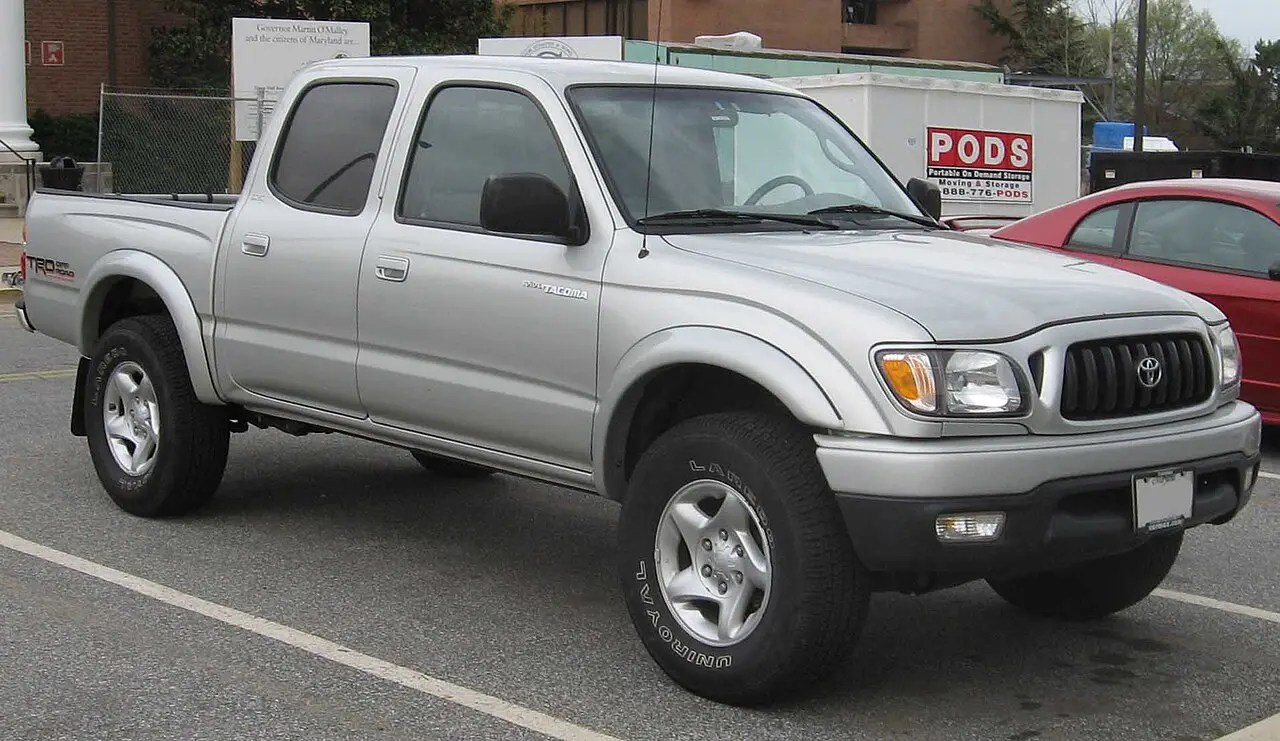
Tacoma First generation (1995–2004)

Toyota Tacoma First generation
Photo: IFCAR / Wikimedia Commons · Public domain

Model codes: N140, N150, N160, N170, N190 · Sold in: United States and Canada · References: en.wikipedia.org

Show all 100 versions

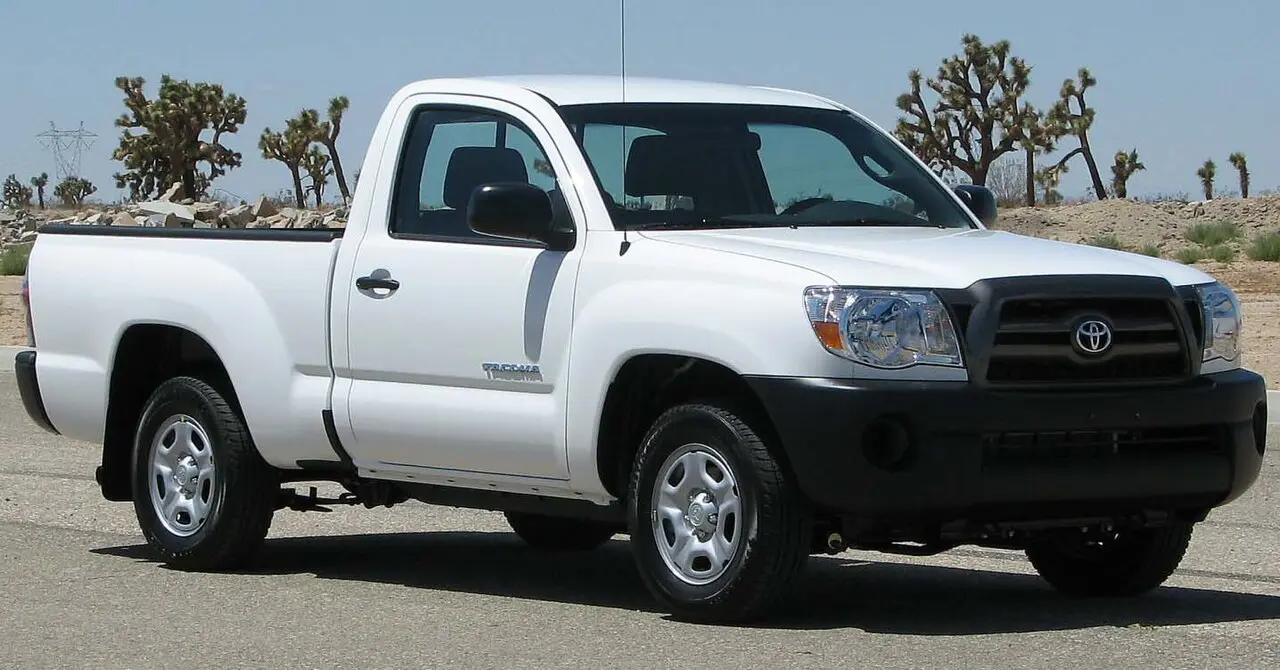
Tacoma Second generation (2005–2015)

Toyota Tacoma Second generation
Photo: U.S. National Highway Traffic Safety Administration / Wikimedia Commons · Public domain

Model codes: N220, N240, N250, N260, N270 · Sold in: United States and Canada · References: en.wikipedia.org

Show all 95 versions

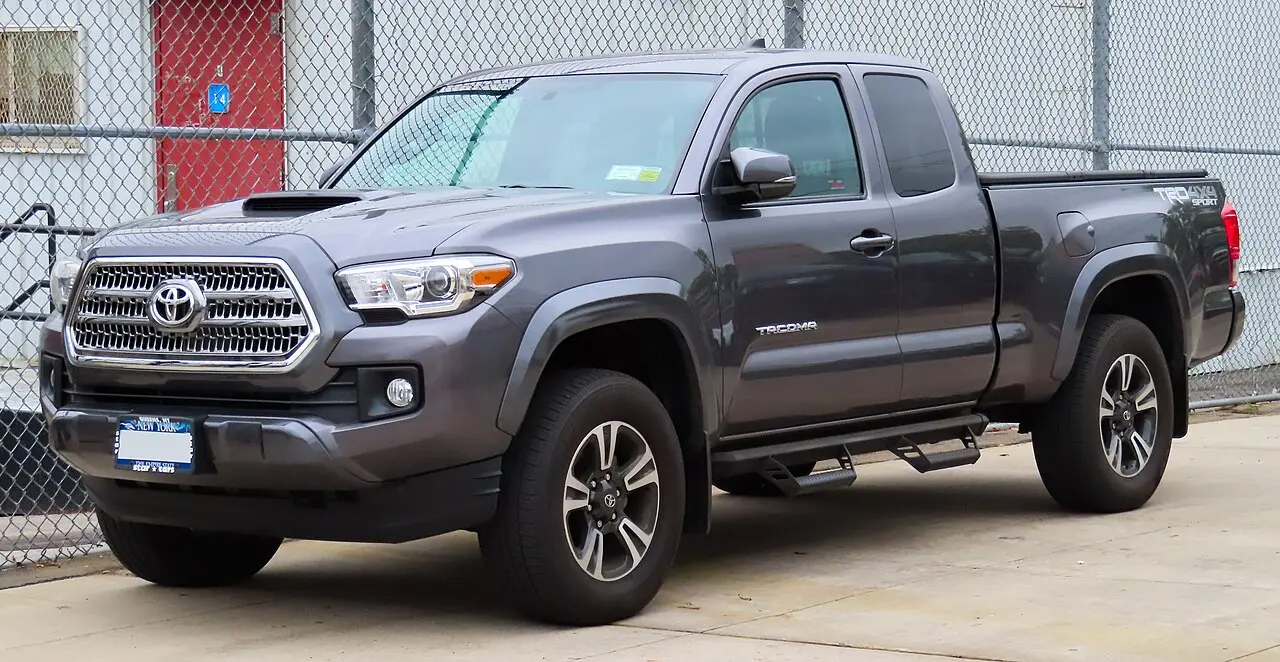
Tacoma Third generation (2016–2023)

Toyota Tacoma Third generation
Photo: Kevauto / Wikimedia Commons · CC BY-SA 4.0

Model codes: N300 · Sold in: United States and Canada · References: en.wikipedia.org

Show all 35 versions

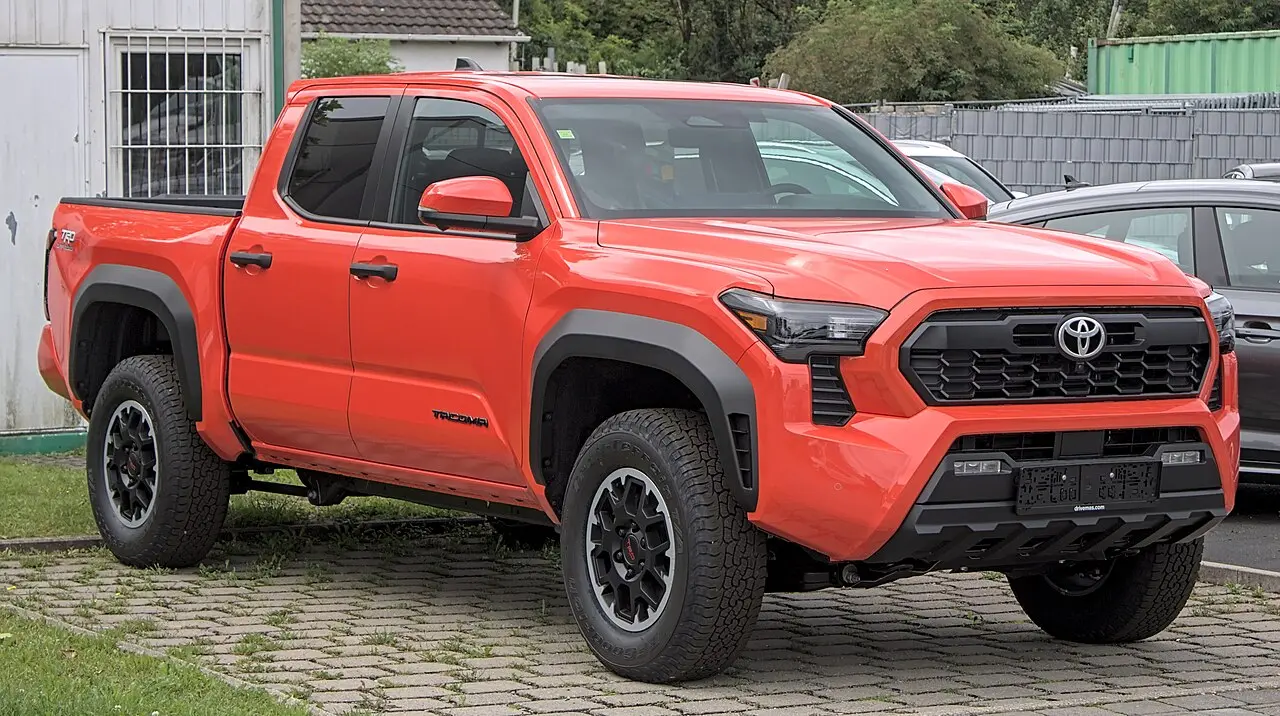
Tacoma Fourth generation (since 2024)

Toyota Tacoma Fourth generation
Photo: Alexander-93 / Wikimedia Commons · CC BY-SA 4.0

Model codes: N400 · Sold in: United States and Canada · References: en.wikipedia.org

United States 14 versions

Model years sold in the USA, from the EPA and the Department of Energy (fueleconomy.gov). MPG on the EPA test; litres per 100 km = 235.215 ÷ MPG.

Years and versionEngineFuelGearboxDriveConsumption (combined)CO₂
2024–2026SIDI & PFI; with Stop-Start · SIDI & PFI; 2-mode(Power/Normal) TM, w/SS2.4 LPetrol8-speed automaticRear-wheel drive23 MPG (10.2 L/100 km) EPA244 g/km
2024–2026SIDI & PFI2.4 LPetrol8-speed automaticRear-wheel drive23 MPG (10.2 L/100 km) EPA245 g/km
2024–2026SIDI & PFI2.4 LPetrol6-speed manualPart-time four-wheel drive20 MPG (11.8 L/100 km) EPA281 g/km
2024–20263-mode Trans (Spt/Normal/Eco) · 3-mode(Sport/Normal/Eco) · SIDI & PFI; 3-mode (Sport/Normal/Eco) TM2.4 LPetrol8-speed automaticPart-time four-wheel drive21 MPG (11.2 L/100 km) EPA269 g/km
2024–20263-mode Trans (Spt/Normal/Eco) · 3-mode(Sport/Normal/Eco), with Stop-Start · SIDI & PFI; 3-mode (Sport/Normal/Eco) w/SS2.4 LPetrol8-speed automaticPart-time four-wheel drive21 MPG (11.2 L/100 km) EPA261 g/km
2024–2026SIDI & PFI · SIDI & PFI; 2-mode (Power/Normal) TM2.4 LPetrol8-speed automaticPart-time four-wheel drive21 MPG (11.2 L/100 km) EPA263 g/km
2025–2026SIDI & PFI; Hybrid; Part-time 4WD · SIDI & PFI; Hybrid2.4 LHybrid8-speed automaticPart-time four-wheel drive23 MPG (10.2 L/100 km) EPA240 g/km
2026SIDI & PFI; 3-mode(Sport/Normal/Eco), w/SS2.4 LPetrol8-speed automaticRear-wheel drive22 MPG (10.7 L/100 km) EPA250 g/km
2026SIDI & PFI; Hybrid2.4 LHybrid8-speed automaticFour-wheel drive23 MPG (10.2 L/100 km) EPA236 g/km
20253-mode(Sport/Normal/Eco); with Stop-Start2.4 LPetrol8-speed automaticRear-wheel drive22 MPG (10.7 L/100 km) EPA251 g/km
2025SIDI & PFI; Hybrid2.4 LHybrid8-speed automaticFour-wheel drive23 MPG (10.2 L/100 km) EPA236 g/km
20243-mode Trans (Spt/Normal/Eco)2.4 LPetrol8-speed automaticRear-wheel drive22 MPG (10.7 L/100 km) EPA252 g/km
2024SIDI & PFI; Hybrid; with Full-time 4WD2.4 LHybrid8-speed automaticFour-wheel drive24 MPG (9.8 L/100 km) EPA235 g/km
2024SIDI & PFI; Hybrid2.4 LHybrid8-speed automaticPart-time four-wheel drive23 MPG (10.2 L/100 km) EPA241 g/km

Canada 8 versions

Model years sold in Canada, from Natural Resources Canada fuel consumption ratings (5-cycle test).

Years and versionEngineFuelGearboxConsumption (combined)CO₂
2024–2026Pickup truck: Small2.4 LPetrol8-speed automatic11.2 L/100 km 5-cycle264 g/km
2024–2026Pickup truck: Small2.4 LPetrol8-speed automatic11.4 L/100 km 5-cycle269 g/km
2024–2026Pickup truck: Small2.4 LPetrol6-speed manual11.9 L/100 km 5-cycle279 g/km
2025–2026Pickup truck: Standard2.4 LPetrol8-speed automatic10.1 L/100 km 5-cycle236 g/km
2026Pickup truck: Standard2.4 LPetrol8-speed automatic10.3 L/100 km 5-cycle240 g/km
2025Pickup truck: Standard2.4 LPetrol8-speed automatic10.3 L/100 km 5-cycle239 g/km
2024Pickup truck: Standard2.4 LPetrol8-speed automatic10.3 L/100 km 5-cycle241 g/km
2024Pickup truck: Standard2.4 LPetrol8-speed automatic10.0 L/100 km 5-cycle235 g/km

Official figures are measured on standard test procedures and differ between markets. Your consumption depends on how, where and in what conditions you drive.