The official data lists 72 versions of the Toyota Supra (1984–2026), in the European Union, the United Kingdom, the United States, and Canada. Each market publishes its own figures, measured on its own test procedure.
At a glance
Years in the data
1984–2026
Markets
European Union, United Kingdom, United States, Canada
Engines
2.0 L to 3.0 L
Power
190 kW (258 PS) to 340 kW (462 PS)
Fuels
Petrol
Lowest consumption (European Union)
7.1 L/100 km (WLTP)
Lowest consumption (United Kingdom)
7.1 L/100 km (WLTP)
Lowest consumption (United States)
8.4 L/100 km (EPA)
New registrations in the EU
6,504
What is the Toyota Supra?
The Supra is Toyota’s sports coupe, a name that began on a larger version of the Celica before becoming a distinct model. It is part of a long Toyota sports-car tradition, and its successive generations have kept the focus on a low-slung coupe shape and petrol power.
Supra generations
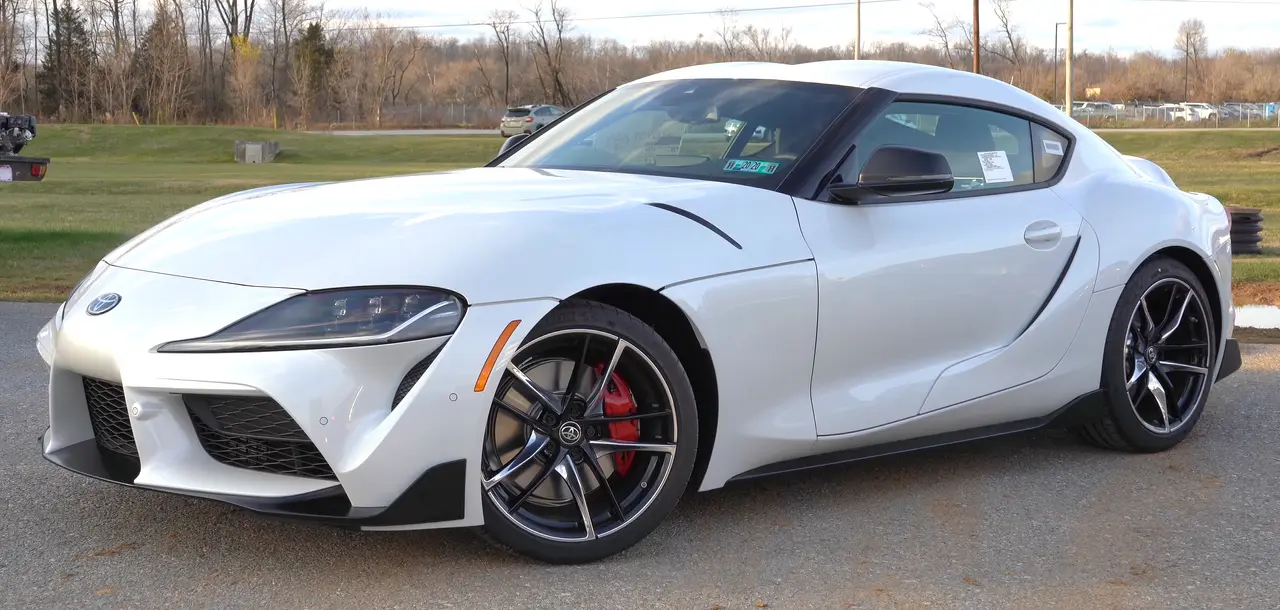
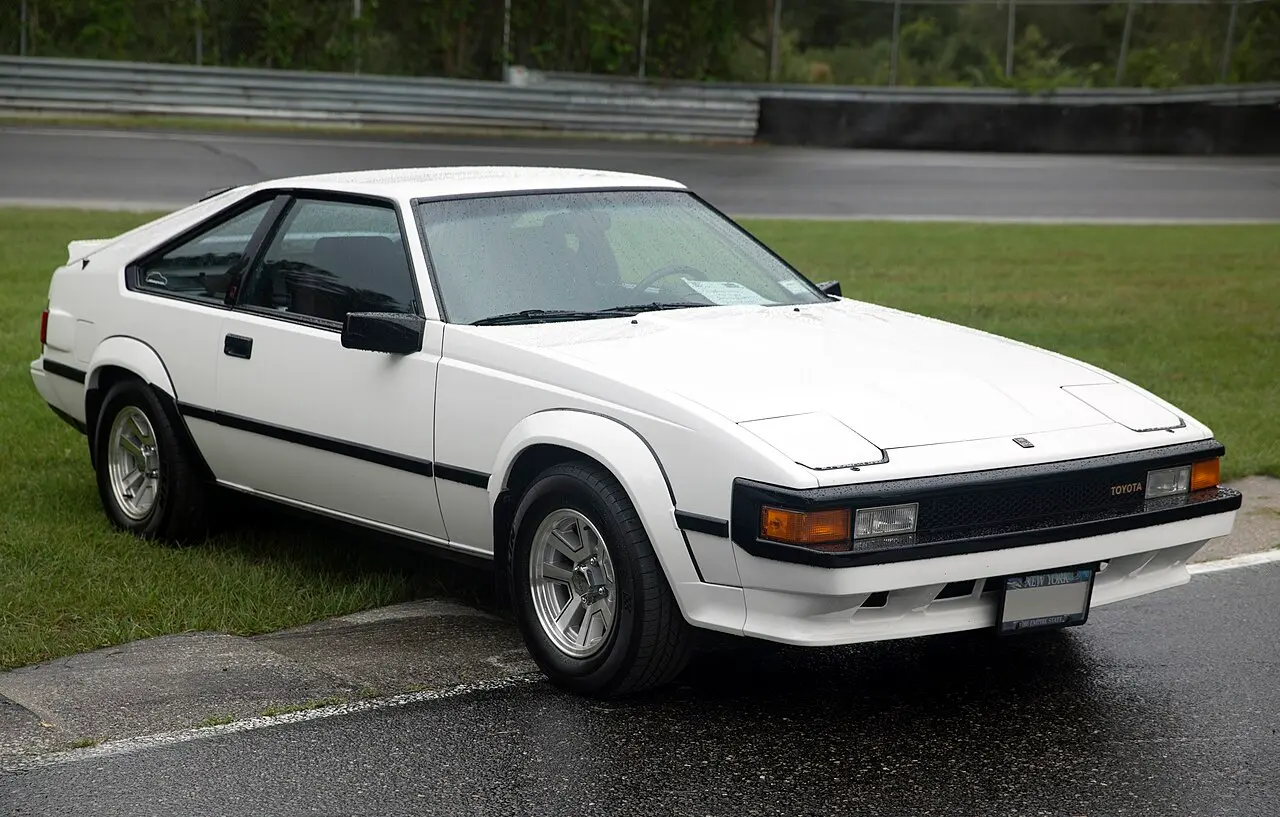
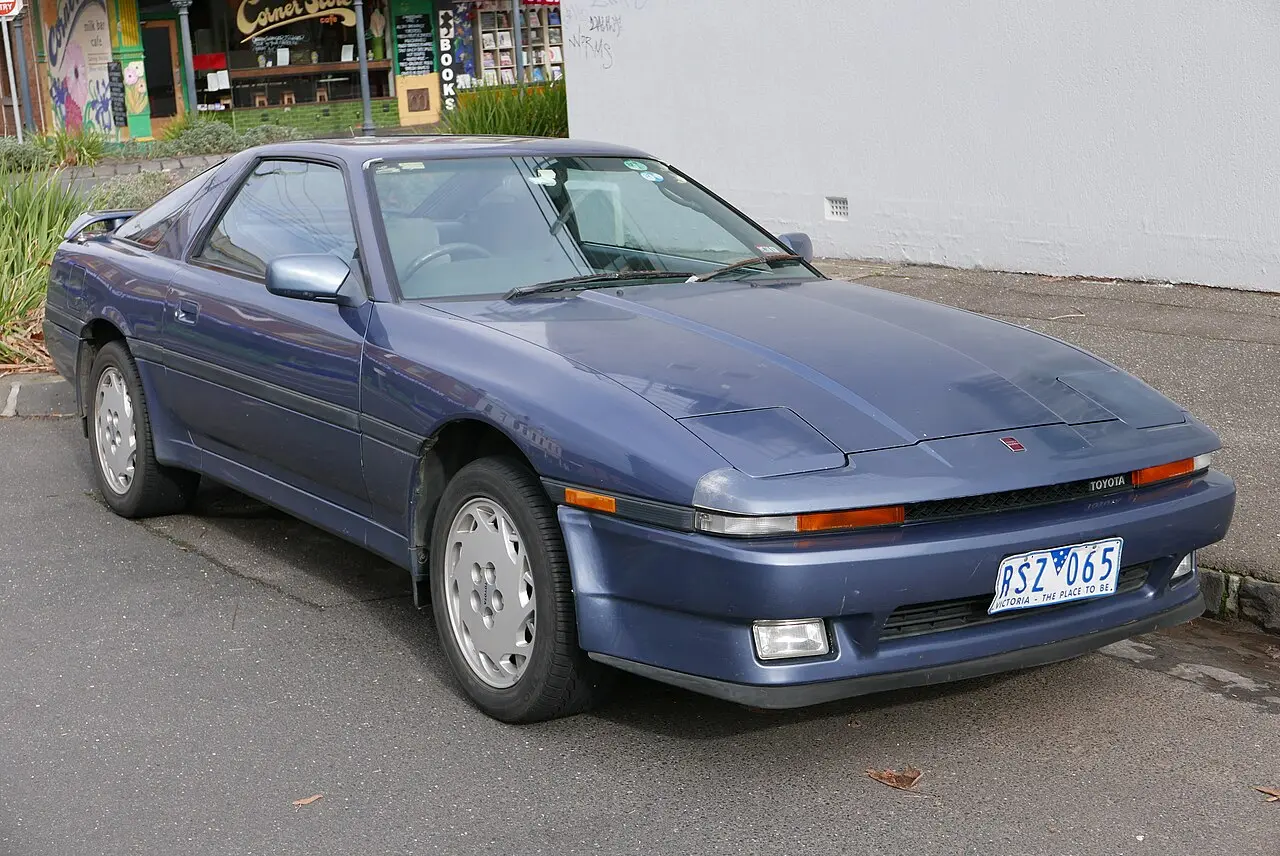
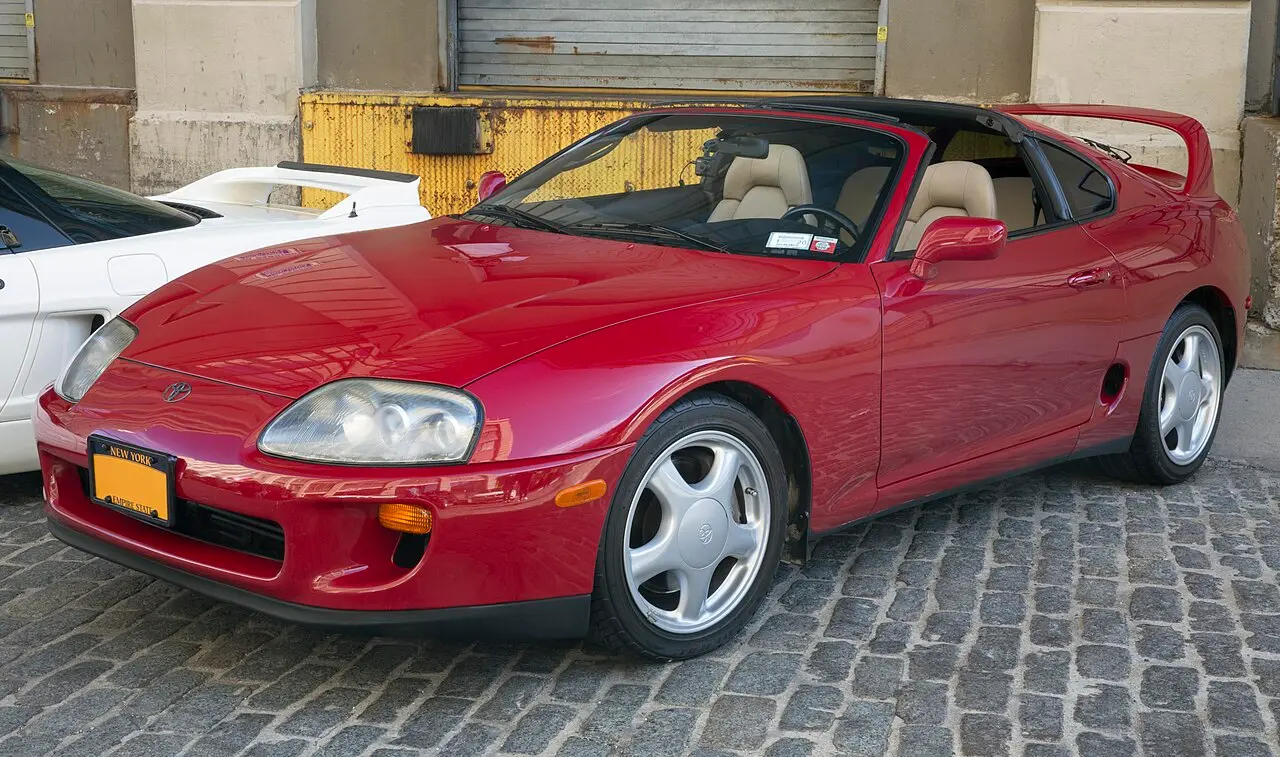
The A60, A70 and A80 generations carried the Supra name through the 1980s and 1990s. The A70 became a distinct model, with a turbocharged version joining the range. After a break, Toyota brought the name back with the A90, whose design draws on earlier Supras.
Engines and power
The modern European and UK ranges use petrol engines from 2.0 L to 3.0 L. Listed power runs from 190 kW (258 PS) to 250 kW (340 PS) in EU registration figures, and reaches 340 kW (462 PS) in the UK. The United States and Canada also list petrol versions from 2.0 L to 3.0 L. Engine and power choices vary by market and year.
How economical is the Toyota Supra?
The lowest listed consumption in the EU and UK is 7.1 L/100 km on the WLTP test. The best combined EPA result is 28 MPG in the United States; the listed equivalent consumption is 8.4 L/100 km. Canada’s lowest listed figure is also 8.4 L/100 km, on the 5-cycle test. WLTP, EPA and 5-cycle procedures differ, so results across markets are not direct comparisons.
Where is the Toyota Supra sold?
The Supra is listed in the European Union, the United Kingdom, the United States and Canada. EU registrations total 6,504 from 2017 to 2025. The most registered EU versions were the 3.0 L petrol rated at 250 kW (340 PS), followed by the 2.0 L petrol rated at 190 kW (258 PS).
Questions and answers
What are the Supra generations?
The generations covered here are A60, A70, A80 and A90.
What engine sizes are available in the modern Supra?
The listed petrol engines range from 2.0 L to 3.0 L.
What is the Supra’s lowest listed consumption in Europe?
The lowest listed EU and UK figure is 7.1 L/100 km on the WLTP test.
Where is the Supra sold?
It is listed in the European Union, the United Kingdom, the United States and Canada.
New cars registered in the EU (plus Norway and Iceland), from the European Environment Agency. Figures on the NEDC procedure until 2020 and on WLTP from 2021; versions are grouped by engine and power, with their number of registrations.
Years and version
Engine
Power
Fuel
Consumption (combined)
CO₂
EU registrations
2024–2025
2.0 L
190 kW (258 PS)
Petrol
7.1 L/100 km WLTP
161 g/km
175
2025
3.0 L
250 kW (340 PS)
Petrol
8.6 L/100 km WLTP
194 g/km
103
2025
3.0 L
324 kW (441 PS)
Petrol
9.0 L/100 km WLTP
205 g/km
26
2024
3.0 L
250 kW (340 PS)
Petrol
8.4 L/100 km WLTP
190 g/km
297
2023
3.0 L
250 kW (340 PS)
Petrol
8.3 L/100 km WLTP
188 g/km
478
2023
2.0 L
190 kW (258 PS)
Petrol
7.1 L/100 km WLTP
161 g/km
152
2022
3.0 L
250 kW (340 PS)
Petrol
8.3 L/100 km WLTP
188 g/km
343
2022
2.0 L
190 kW (258 PS)
Petrol
7.1 L/100 km WLTP
165 g/km
177
2021
2.0 L
190 kW (258 PS)
Petrol
7.3 L/100 km WLTP
169 g/km
868
2021
3.0 L
250 kW (340 PS)
Petrol
8.1 L/100 km WLTP
186 g/km
501
2021
2.0 L
145 kW (197 PS)
Petrol
–
163 g/km
12
2020
3.0 L
250 kW (340 PS)
Petrol
–
170 g/km
1,351
2020
2.0 L
190 kW (258 PS)
Petrol
–
143 g/km
414
United Kingdom 13 versions
New cars on sale in the UK, from the Vehicle Certification Agency. NEDC figures until 2018 and WLTP figures after; years are the editions a version appeared in.
Years and version
Engine
Power
Fuel
Gearbox
Consumption (combined)
CO₂
20242.0 A Pro
2.0 L
254 kW (345 PS)
Petrol
8-speed automatic
7.1 L/100 km WLTP
161 g/km
20242.0L Pro
2.0 L
258 kW (351 PS)
Petrol
6-speed automatic
7.3 L/100 km WLTP
167 g/km
20243.0 A Pro · GR Supra 3.0 Pro Special Edition
3.0 L
335 kW (455 PS)
Petrol
8-speed automatic
8.1 L/100 km WLTP
183 g/km
20243.0 M · 3.0 M Pro
3.0 L
335 kW (455 PS)
Petrol
6-speed manual
8.8 L/100 km WLTP
198 g/km
20243.0L · 3.0L Pro
3.0 L
340 kW (462 PS)
Petrol
6-speed automatic
8.1 L/100 km WLTP
185 g/km
2022–20232.0 A Pro
2.0 L
190 kW (258 PS)
Petrol
8-speed automatic
7.1 L/100 km WLTP
161 g/km
2022–20232.0L Pro
2.0 L
190 kW (258 PS)
Petrol
6-speed automatic
7.3 L/100 km WLTP
167 g/km
2022–20233.0 A Pro · GR Supra 3.0 Pro Special Edition
3.0 L
250 kW (340 PS)
Petrol
8-speed automatic
8.1 L/100 km WLTP
183 g/km
2022–20233.0 M · 3.0 M Pro
3.0 L
250 kW (340 PS)
Petrol
6-speed manual
8.8 L/100 km WLTP
198 g/km
2022–20233.0L · 3.0L Pro
3.0 L
254 kW (345 PS)
Petrol
6-speed automatic
8.1 L/100 km WLTP
185 g/km
20212
2.0 L
190 kW (258 PS)
Petrol
Automatic
7.3 L/100 km WLTP
167 g/km
20213.0L · 3.0L Pro
3.0 L
254 kW (345 PS)
Petrol
6-speed automatic
8.2 L/100 km WLTP
188 g/km
20203.0L · 3.0L Pro
3.0 L
250 kW (340 PS)
Petrol
6-speed automatic
8.2 L/100 km WLTP
188 g/km
United States 9 versions
Model years sold in the USA, from the EPA and the Department of Energy (fueleconomy.gov). MPG on the EPA test; litres per 100 km = 235.215 ÷ MPG.
Years and version
Engine
Fuel
Gearbox
Drive
Consumption (combined)
CO₂
2023–2026SIDI
2.0 L
Petrol
8-speed automatic
Rear-wheel drive
27 MPG (8.7 L/100 km) EPA
200 g/km
2026SIDI
3.0 L
Petrol
8-speed automatic
Rear-wheel drive
25 MPG (9.4 L/100 km) EPA
217 g/km
2026SIDI
3.0 L
Petrol
6-speed manual
Rear-wheel drive
21 MPG (11.2 L/100 km) EPA
254 g/km
2023–2025SIDI
3.0 L
Petrol
8-speed automatic
Rear-wheel drive
26 MPG (9.0 L/100 km) EPA
213 g/km
2023–2025SIDI
3.0 L
Petrol
6-speed manual
Rear-wheel drive
21 MPG (11.2 L/100 km) EPA
255 g/km
2022SIDI
2.0 L
Petrol
8-speed automatic
Rear-wheel drive
28 MPG (8.4 L/100 km) EPA
197 g/km
2021–2022SIDI
3.0 L
Petrol
8-speed automatic
Rear-wheel drive
25 MPG (9.4 L/100 km) EPA
218 g/km
2021SIDI
2.0 L
Petrol
8-speed automatic
Rear-wheel drive
28 MPG (8.4 L/100 km) EPA
199 g/km
2020SIDI
3.0 L
Petrol
8-speed automatic
Rear-wheel drive
26 MPG (9.0 L/100 km) EPA
208 g/km
Canada 9 versions
Model years sold in Canada, from Natural Resources Canada fuel consumption ratings (5-cycle test).
Years and version
Engine
Fuel
Gearbox
Consumption (combined)
CO₂
2026Two-seater
3.0 L
Petrol
8-speed automatic
9.4 L/100 km 5-cycle
217 g/km
2026Two-seater
3.0 L
Petrol
6-speed manual
11.0 L/100 km 5-cycle
253 g/km
2023–2025Two-seater
3.0 L
Petrol
8-speed automatic
9.1 L/100 km 5-cycle
212 g/km
2023–2025Two-seater
3.0 L
Petrol
6-speed manual
10.9 L/100 km 5-cycle
255 g/km
2023–2024Two-seater
2.0 L
Petrol
8-speed automatic
8.6 L/100 km 5-cycle
200 g/km
2022Two-seater
2.0 L
Petrol
8-speed automatic
8.4 L/100 km 5-cycle
195 g/km
2021–2022Two-seater
3.0 L
Petrol
8-speed automatic
9.4 L/100 km 5-cycle
218 g/km
2021Two-seater
2.0 L
Petrol
8-speed automatic
8.4 L/100 km 5-cycle
197 g/km
2020Two-seater
3.0 L
Petrol
8-speed automatic
8.9 L/100 km 5-cycle
208 g/km
Versions outside these generations
European Union 2 versions
New cars registered in the EU (plus Norway and Iceland), from the European Environment Agency. Figures on the NEDC procedure until 2020 and on WLTP from 2021; versions are grouped by engine and power, with their number of registrations.
Years and version
Engine
Power
Fuel
CO₂
EU registrations
2019
3.0 L
250 kW (340 PS)
Petrol
170 g/km
1,585
2017
1.5 L
–
Petrol
112 g/km
22
United Kingdom 1 version
New cars on sale in the UK, from the Vehicle Certification Agency. NEDC figures until 2018 and WLTP figures after; years are the editions a version appeared in.
Years and version
Engine
Fuel
Gearbox
Consumption (combined)
20193.0l 2 door coupé
3.0 L
Petrol
8-speed automatic
8.2 L/100 km WLTP
Official figures are measured on standard test procedures and differ between markets. Your consumption depends on how, where and in what conditions you drive.