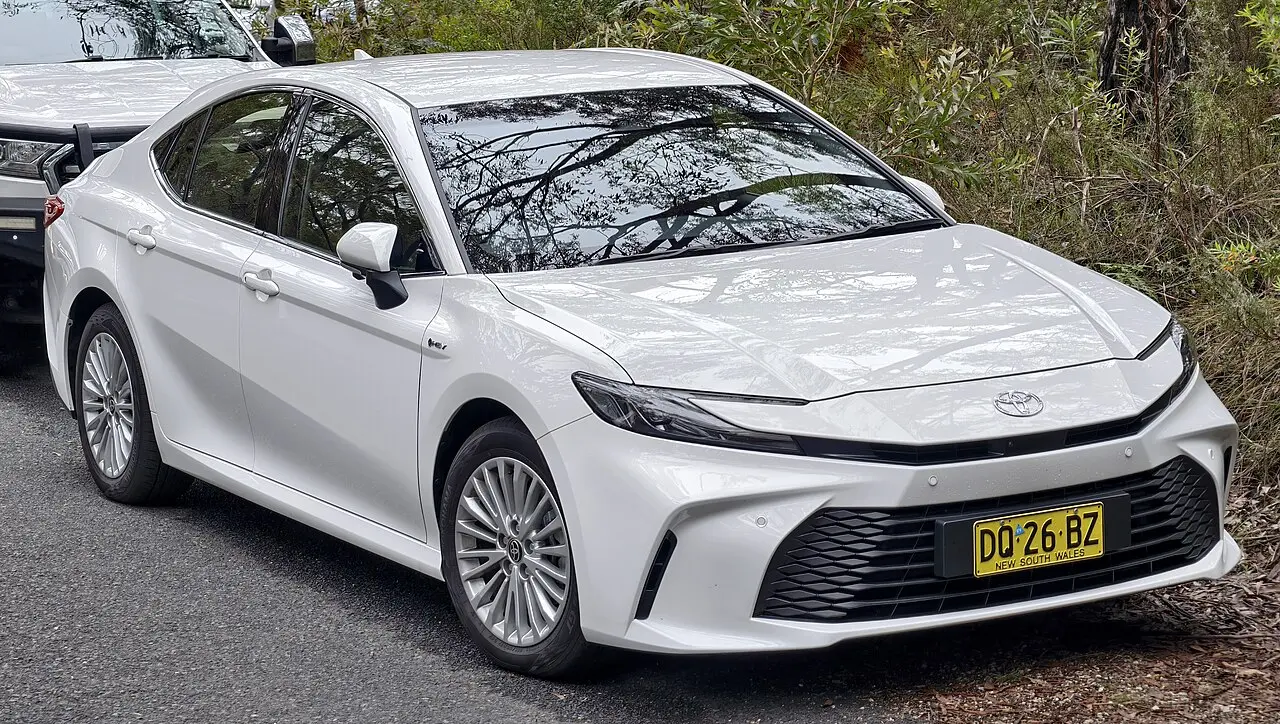
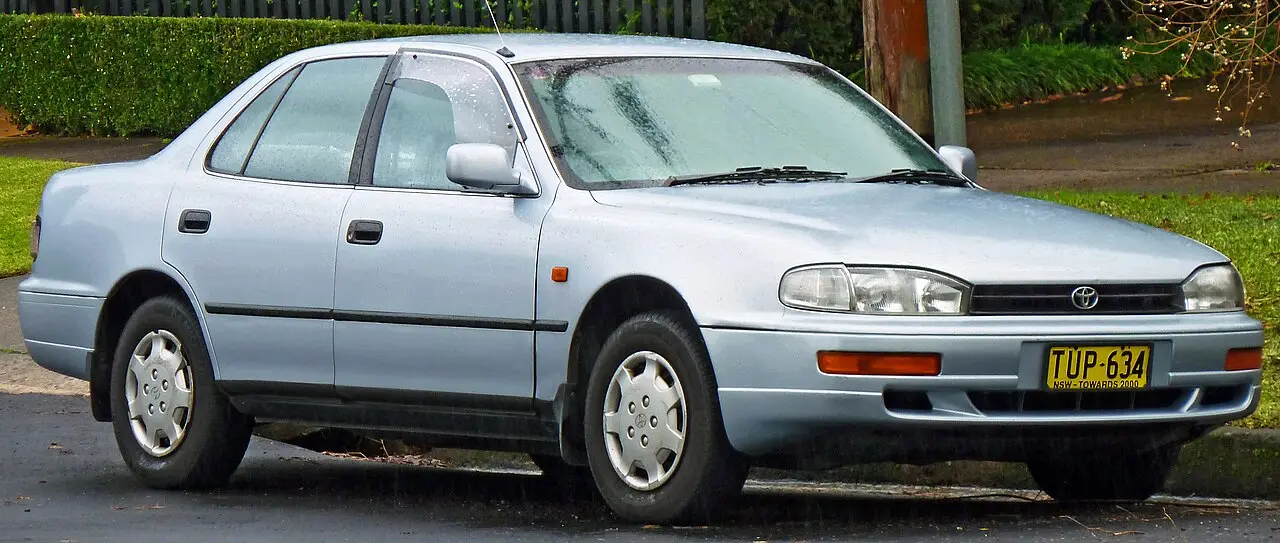
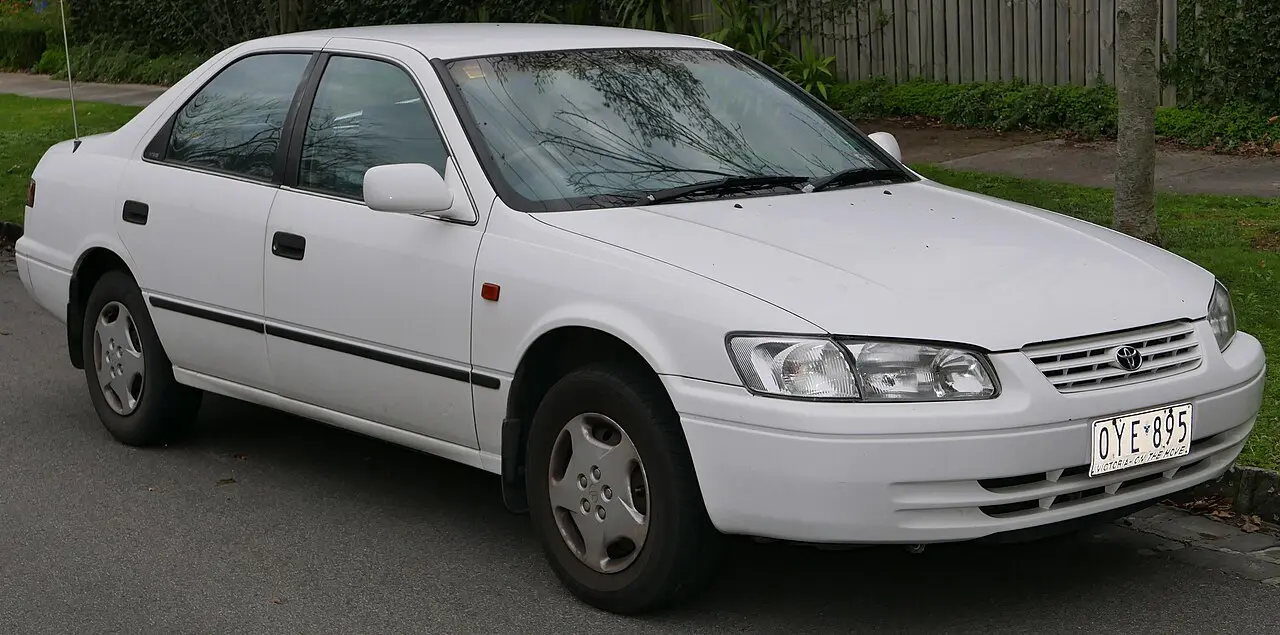
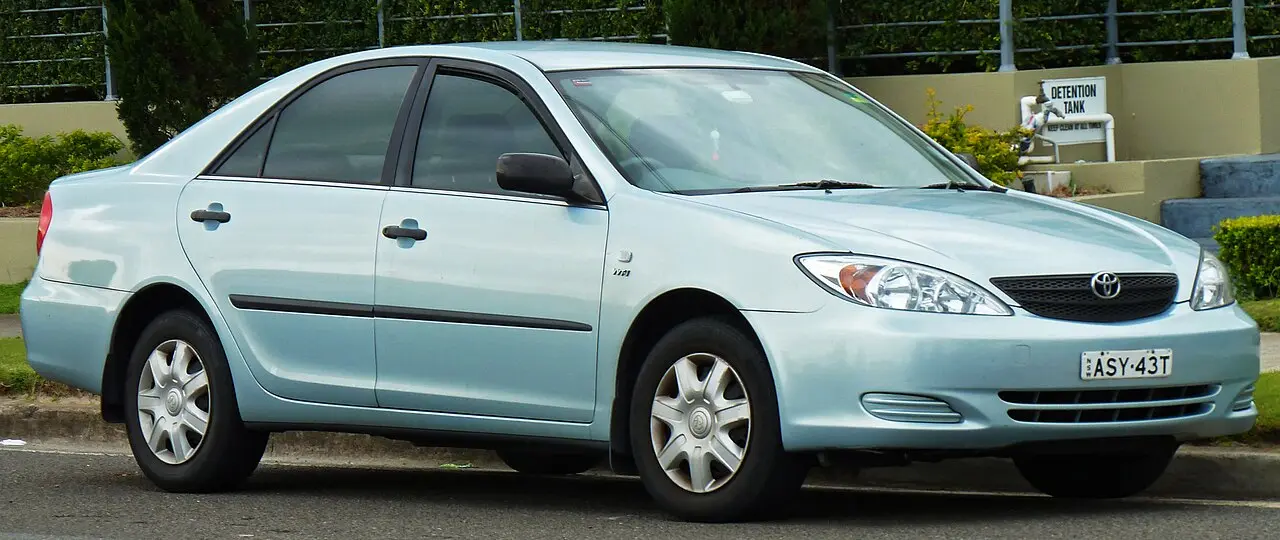
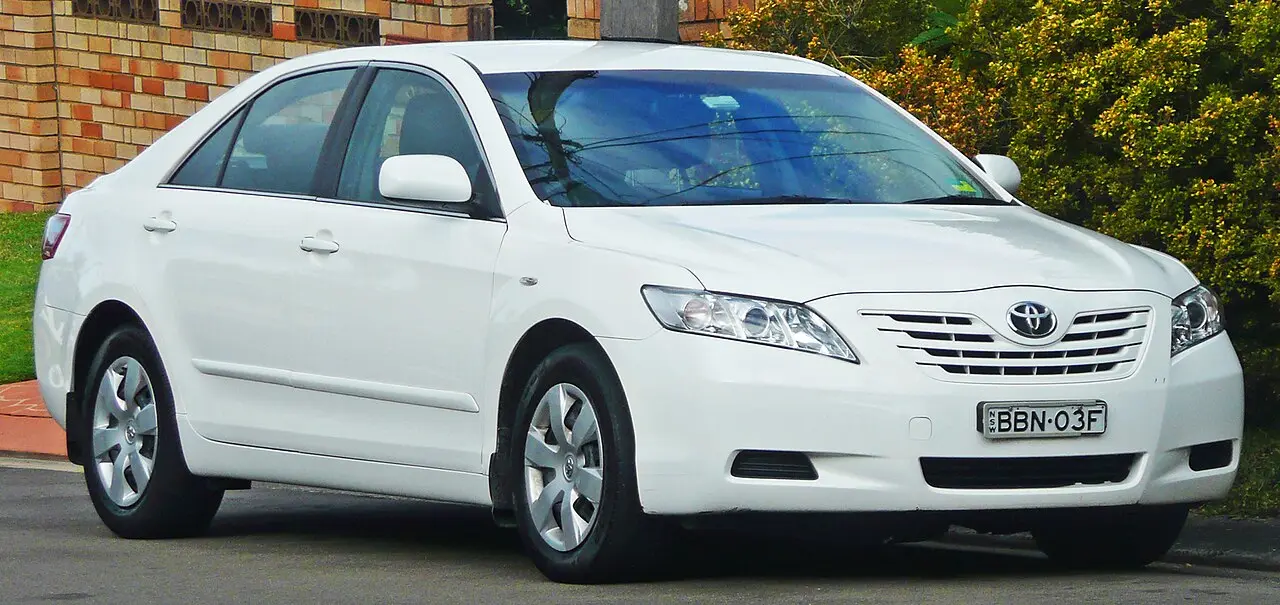
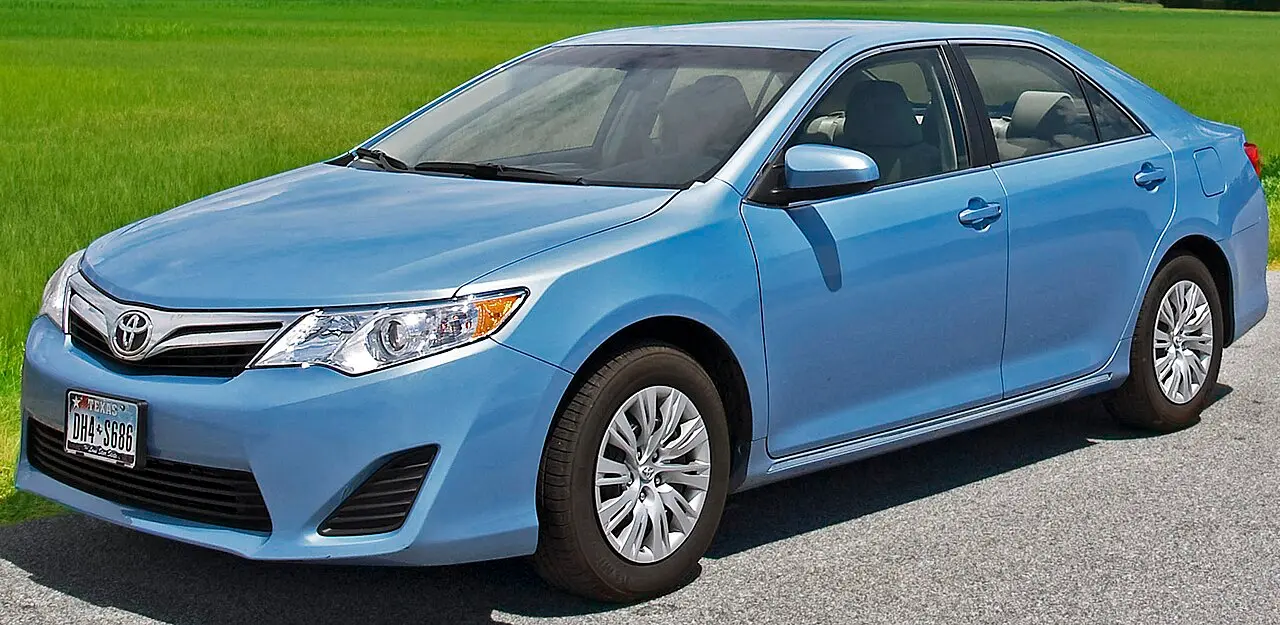
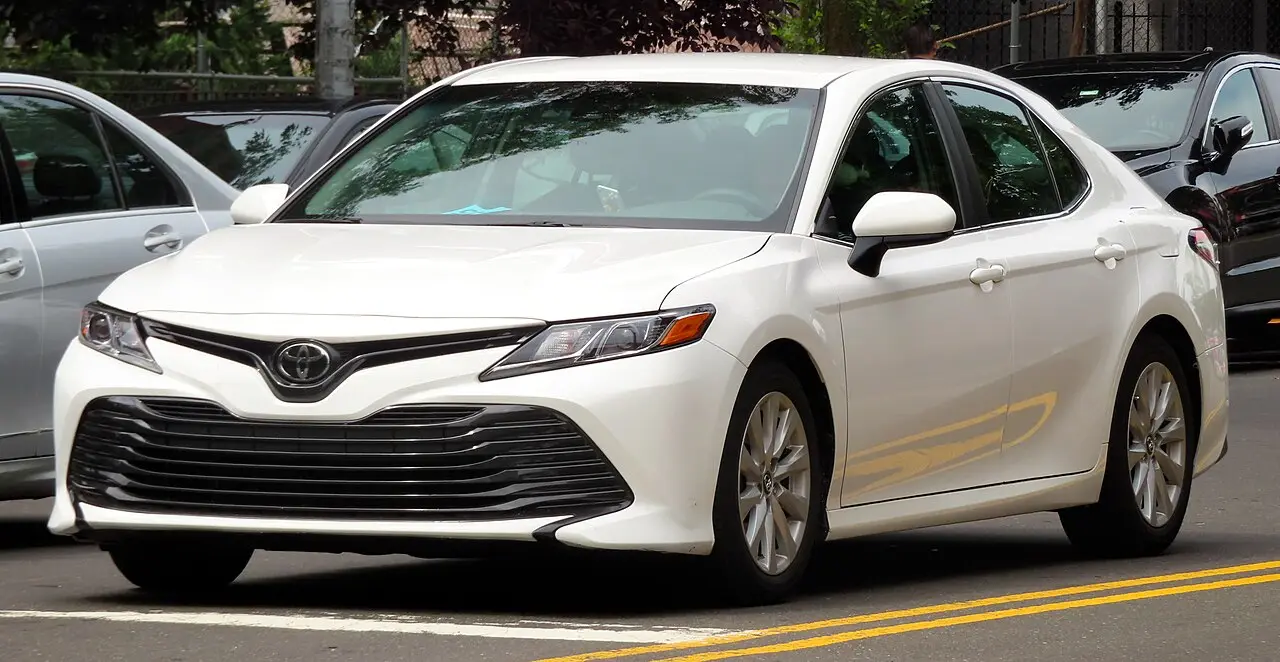
The official data lists 234 versions of the Toyota Camry (1984–2026), in the European Union, the United Kingdom, France, the United States, and Canada. Each market publishes its own figures, measured on its own test procedure.
At a glance
Years in the data
1984–2026
Markets
European Union, United Kingdom, France, United States, Canada
The Camry is a mid-size four-door car, called a sedan in North America and a saloon in the UK. It has long been a central model in Toyota’s passenger-car range. The Camry name first appeared on a four-door Celica-based saloon in 1980; the Camry became a standalone model in 1982.
Camry generations
The generation timeline in the markets covered here runs from XV10 (1992–1996) and XV20 (1997–2001) through XV30 (2002–2006), XV40 (2007–2011), XV50 (2012–2017), XV70 (2018–2024) and XV80 (2025–today). Through those generations, the Camry kept its four-door saloon role while its powertrain range evolved. Hybrid versions became part of later European and North American line-ups.
Engines and power
EU Camry versions use a 2.5-litre engine and include hybrid, plug-in hybrid and petrol powertrains. Listed EU outputs range from 131 kW (178 PS) to 137 kW (186 PS). UK figures cover 2.2- to 3.0-litre engines, with a listed output of 131 kW (178 PS). North American figures span more engine sizes and types, including petrol and hybrid models.
Fuel consumption and markets
The lowest listed EU consumption is 4.9 L/100 km on WLTP. The plug-in hybrid’s weighted WLTP figure is 4.3 L/100 km, assuming some driving is electric. UK and French figures each list 5.3 L/100 km on WLTP. In the USA, the lowest listed figure is 4.5 L/100 km under EPA testing, with a best combined rating of 52 MPG. Canada’s lowest listed result is 4.9 L/100 km under NRCan’s 5-cycle procedure. WLTP in Europe, EPA testing in the USA and Canada’s 5-cycle test use different procedures, so results are not directly equivalent. The Camry appears in official figures for the EU, UK, France, USA and Canada.
Questions and answers
Is the Toyota Camry a sedan or a saloon?
It is a four-door mid-size car. “Sedan” is common in North America, while “saloon” is often used in the UK.
Which Camry generation is the newest in this timeline?
The XV80, listed from 2025 to today.
What is the lowest listed Camry fuel consumption?
The USA entry lists 4.5 L/100 km under EPA testing. European and Canadian figures use different procedures, so the results are not directly comparable.
Were hybrid Camrys available?
Yes. Hybrid versions appear in EU, UK, French and US figures, and EU figures also include a plug-in hybrid.
Model codes: XV80 · Sold in: United States, Canada, European Union, and France · References: en.wikipedia.org
European Union 4 versions
New cars registered in the EU (plus Norway and Iceland), from the European Environment Agency. Figures on the NEDC procedure until 2020 and on WLTP from 2021; versions are grouped by engine and power, with their number of registrations.
Years and version
Engine
Power
Fuel
Consumption (combined)
CO₂
EU registrations
2025
2.5 L
137 kW (186 PS)
Hybrid
4.9 L/100 km WLTP
110 g/km
3,685
2025
2.5 L
131 kW (178 PS)
Hybrid
5.3 L/100 km WLTP
121 g/km
664
2025
2.5 L
137 kW (186 PS)
Plug-in hybrid
4.9 L/100 km WLTP
110 g/km
335
2025
2.5 L
131 kW (178 PS)
Petrol
–
120 g/km
60
France 1 version
New cars on sale in France, from ADEME Car Labelling. NEDC figures until 2015, WLTP figures in the current catalogue.
Years and version
Engine
Power
Fuel
Gearbox
Consumption (combined)
CO₂
2026Camry 2.5L Hybrid Dynamic Force (218ch) Berline Design. Lounge · Camry 2.5L Hybrid Dynamic Force (218ch) Berline Dynamic. Dynamic Business
2.5 L
131 kW (178 PS)
Hybrid
Continuously variable (CVT)
5.3 L/100 km WLTP
119 g/km
United States 10 versions
Model years sold in the USA, from the EPA and the Department of Energy (fueleconomy.gov). MPG on the EPA test; litres per 100 km = 235.215 ÷ MPG.
Years and version
Engine
Fuel
Gearbox
Drive
Consumption (combined)
CO₂
2026SIDI & PFI; Hybrid
2.5 L
Hybrid
Continuously variable (CVT)
All-wheel drive
46 MPG (5.1 L/100 km) EPA
119 g/km
2026SIDI & PFI; Hybrid
2.5 L
Hybrid
Continuously variable (CVT)
All-wheel drive
43 MPG (5.5 L/100 km) EPA
127 g/km
2026SIDI & PFI; Hybrid
2.5 L
Hybrid
Continuously variable (CVT)
Front-wheel drive
51 MPG (4.6 L/100 km) EPA
107 g/km
2026SIDI & PFI; Hybrid
2.5 L
Hybrid
Continuously variable (CVT)
Front-wheel drive
46 MPG (5.1 L/100 km) EPA
119 g/km
2026SIDI & PFI; Hybrid
2.5 L
Hybrid
Continuously variable (CVT)
All-wheel drive
50 MPG (4.7 L/100 km) EPA
111 g/km
2025SIDI & PFI; Hybrid
2.5 L
Hybrid
Continuously variable (CVT)
All-wheel drive
46 MPG (5.1 L/100 km) EPA
117 g/km
2025SIDI & PFI; Hybrid
2.5 L
Hybrid
Continuously variable (CVT)
All-wheel drive
44 MPG (5.3 L/100 km) EPA
124 g/km
2025SIDI & PFI; Hybrid
2.5 L
Hybrid
Continuously variable (CVT)
Front-wheel drive
51 MPG (4.6 L/100 km) EPA
107 g/km
2025SIDI & PFI; Hybrid
2.5 L
Hybrid
Continuously variable (CVT)
Front-wheel drive
47 MPG (5.0 L/100 km) EPA
116 g/km
2025SIDI & PFI; Hybrid
2.5 L
Hybrid
Continuously variable (CVT)
All-wheel drive
50 MPG (4.7 L/100 km) EPA
110 g/km
Canada 6 versions
Model years sold in Canada, from Natural Resources Canada fuel consumption ratings (5-cycle test).
Years and version
Engine
Fuel
Gearbox
Consumption (combined)
CO₂
2026Mid-size
2.5 L
Petrol
Continuously variable (CVT)
5.0 L/100 km 5-cycle
117 g/km
2026Mid-size
2.5 L
Petrol
Continuously variable (CVT)
5.1 L/100 km 5-cycle
120 g/km
2026Mid-size
2.5 L
Petrol
Continuously variable (CVT)
5.5 L/100 km 5-cycle
127 g/km
2025Mid-size
2.5 L
Petrol
Continuously variable (CVT)
4.9 L/100 km 5-cycle
114 g/km
2025Mid-size
2.5 L
Petrol
Continuously variable (CVT)
5.1 L/100 km 5-cycle
117 g/km
2025Mid-size
2.5 L
Petrol
Continuously variable (CVT)
5.3 L/100 km 5-cycle
124 g/km
Versions outside these generations
United Kingdom 5 versions
New cars on sale in the UK, from the Vehicle Certification Agency. NEDC figures until 2018 and WLTP figures after; years are the editions a version appeared in.
Years and version
Engine
Fuel
Gearbox
Consumption (combined)
CO₂
20012.2 Saloon Manual
2.2 L
Petrol
5-speed manual
9.0 L/100 km NEDC
216 g/km
2000–20012.2 Saloon Auto
2.2 L
Petrol
4-speed automatic
9.6 L/100 km NEDC
232 g/km
20013.0 Saloon Auto
3.0 L
Petrol
4-speed automatic
11.1 L/100 km NEDC
270 g/km
20002.2 Saloon Manual
2.2 L
Petrol
5-speed manual
8.8 L/100 km NEDC
214 g/km
20003.0 Saloon Auto
3.0 L
Petrol
4-speed automatic
11.1 L/100 km NEDC
270 g/km
United States 30 versions
Model years sold in the USA, from the EPA and the Department of Energy (fueleconomy.gov). MPG on the EPA test; litres per 100 km = 235.215 ÷ MPG.
Official figures are measured on standard test procedures and differ between markets. Your consumption depends on how, where and in what conditions you drive.