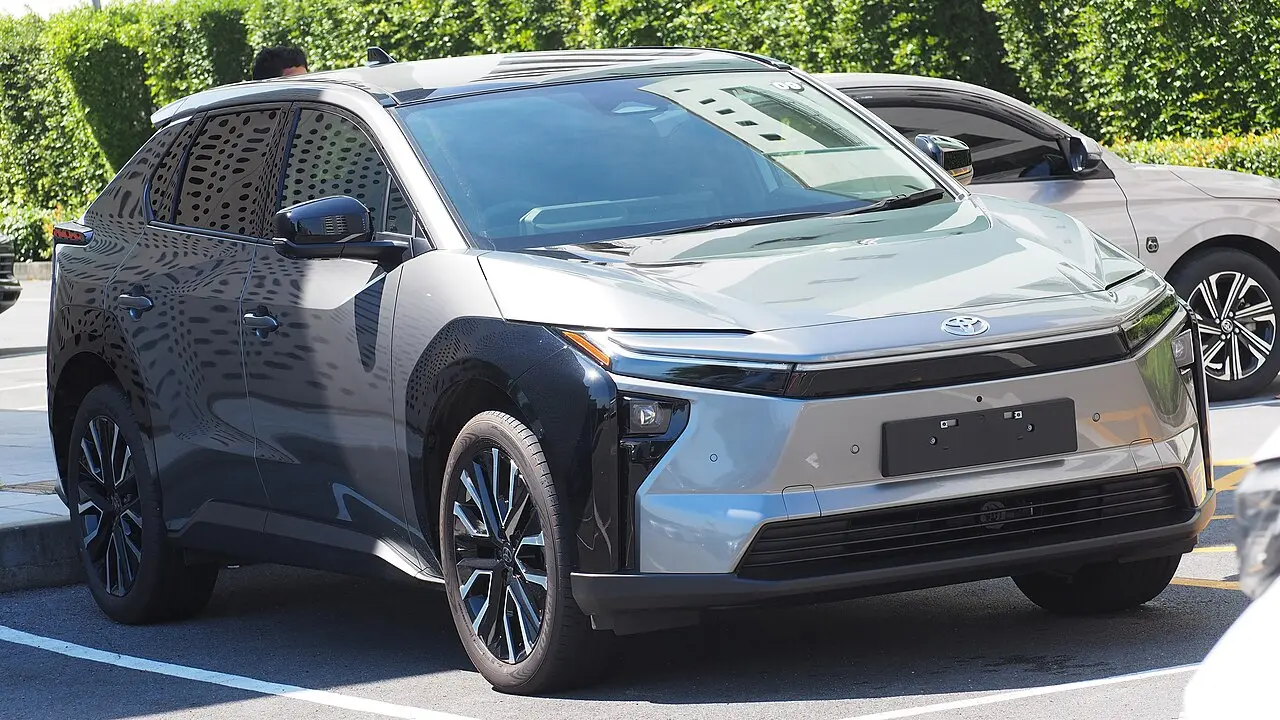
Toyota

Toyota bZ

Toyota bZ
Photo: Chanokchon / Wikimedia Commons · CC BY-SA 4.0

The official data lists 13 versions of the Toyota bZ (2026–2027), in the United States and Canada. Each market publishes its own figures, measured on its own test procedure.

At a glance

Years in the data
2026–2027
Markets
United States, Canada
Power
125 kW (170 PS) to 280 kW (381 PS)
Fuels
Electric

What is the Toyota bZ?

The Toyota bZ is a battery-electric SUV. For the 2026 model year, Toyota shortened the previous bZ4X name to bZ and updated the exterior, charging and power output. It brings an all-electric powertrain to Toyota’s SUV range.

Generation and power

The first generation, code EA10, begins in 2026 and appears in listings for the United States and Canada. All listed versions are electric. The Canadian listing gives a power range of 125 to 280 kW (170 to 381 PS).

How efficient is the Toyota bZ?

The US and Canadian listings do not provide energy-consumption or CO₂ figures for the bZ. Test procedures vary by market: Europe uses WLTP or NEDC, the United States uses the EPA procedure, and Canada uses the 5-cycle test.

Where is the Toyota bZ sold?

The first-generation bZ appears in listings for the United States and Canada from 2026. Toyota’s 2026 update brought revised exterior styling, charging changes and increased output for some versions.

Questions and answers

Is the Toyota bZ electric?

Yes. All listed versions use electric power.

When did the first generation begin?

The first generation, code EA10, begins in 2026.

What power figures are listed?

The Canadian listing gives 125 to 280 kW (170 to 381 PS).

Are official consumption and CO₂ figures listed?

The US and Canadian listings do not provide market-specific consumption or CO₂ figures.

bZ first generation (since 2026)

Model codes: EA10 · Sold in: United States and Canada · References: pressroom.toyota.com, en.wikipedia.org

United States 8 versions

Model years sold in the USA, from the EPA and the Department of Energy (fueleconomy.gov). MPG on the EPA test; litres per 100 km = 235.215 ÷ MPG.

Years and versionEngineFuelGearboxDriveConsumption (combined)CO₂Electric range
2026–2027Electric motorElectricAutomaticFront-wheel drive130 MPGe EPA0 g/km380 km
2026–2027Electric motorElectricAutomaticAll-wheel drive120 MPGe EPA0 g/km463 km
2026–2027Electric motorElectricAutomaticAll-wheel drive117 MPGe EPA0 g/km447 km
2026–2027Electric motorElectricAutomaticFront-wheel drive131 MPGe EPA0 g/km505 km
2026–2027Electric motorElectricAutomaticFront-wheel drive125 MPGe EPA0 g/km481 km
2026–2027Electric motorElectricAutomaticAll-wheel drive117 MPGe EPA0 g/km452 km
2026–2027Electric motorElectricAutomaticAll-wheel drive109 MPGe EPA0 g/km418 km
2026Electric motorElectricAutomaticFront-wheel drive123 MPGe EPA0 g/km476 km

Canada 5 versions

Model years sold in Canada, from Natural Resources Canada fuel consumption ratings (5-cycle test).

Years and versionEnginePowerFuelGearboxConsumption (combined)CO₂Electric range
2026Sport utility vehicle: SmallElectric motor125 kW (170 PS)ElectricAutomatic16.1 kWh/100 km 5-cycle0 g/km380 km
2026Sport utility vehicle: SmallElectric motor250 kW (340 PS)ElectricAutomatic17.3 kWh/100 km 5-cycle0 g/km468 km
2026Sport utility vehicle: SmallElectric motor250 kW (340 PS)ElectricAutomatic18.6 kWh/100 km 5-cycle0 g/km436 km
2026Sport utility vehicle: SmallElectric motor280 kW (381 PS)ElectricAutomatic17.9 kWh/100 km 5-cycle0 g/km452 km
2026Sport utility vehicle: SmallElectric motor280 kW (381 PS)ElectricAutomatic19.2 kWh/100 km 5-cycle0 g/km418 km

Official figures are measured on standard test procedures and differ between markets. Your consumption depends on how, where and in what conditions you drive.