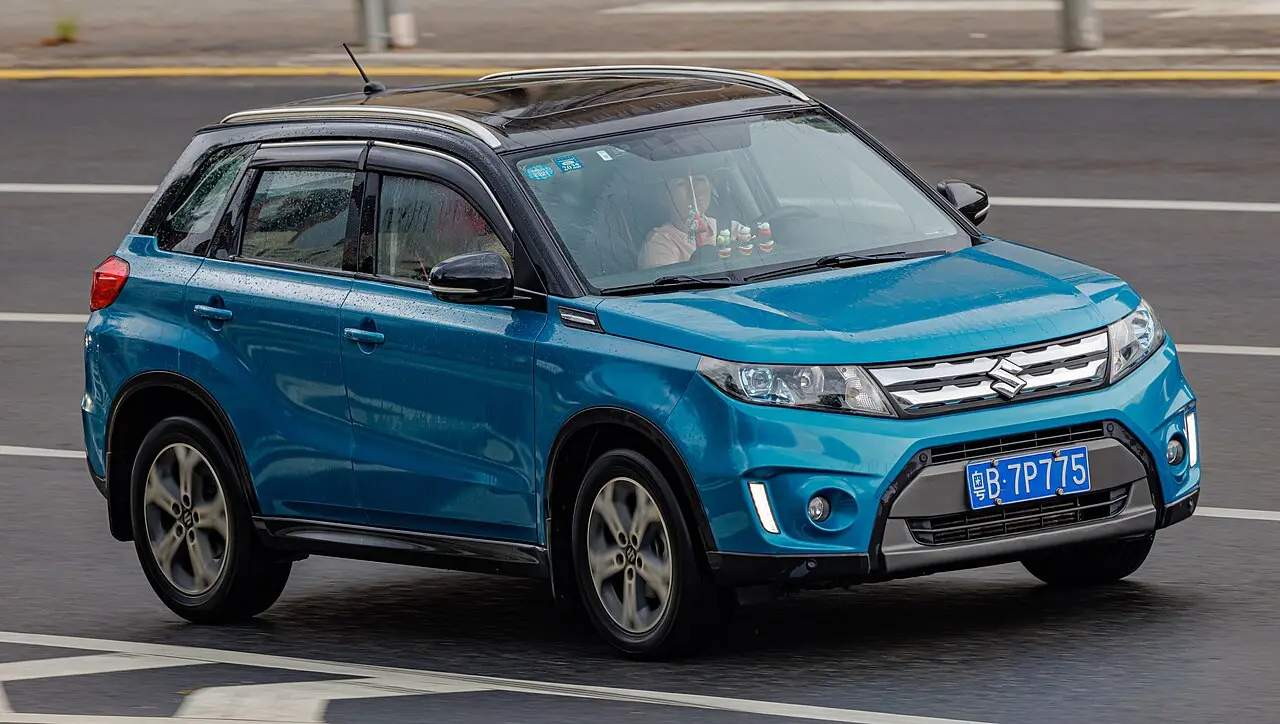
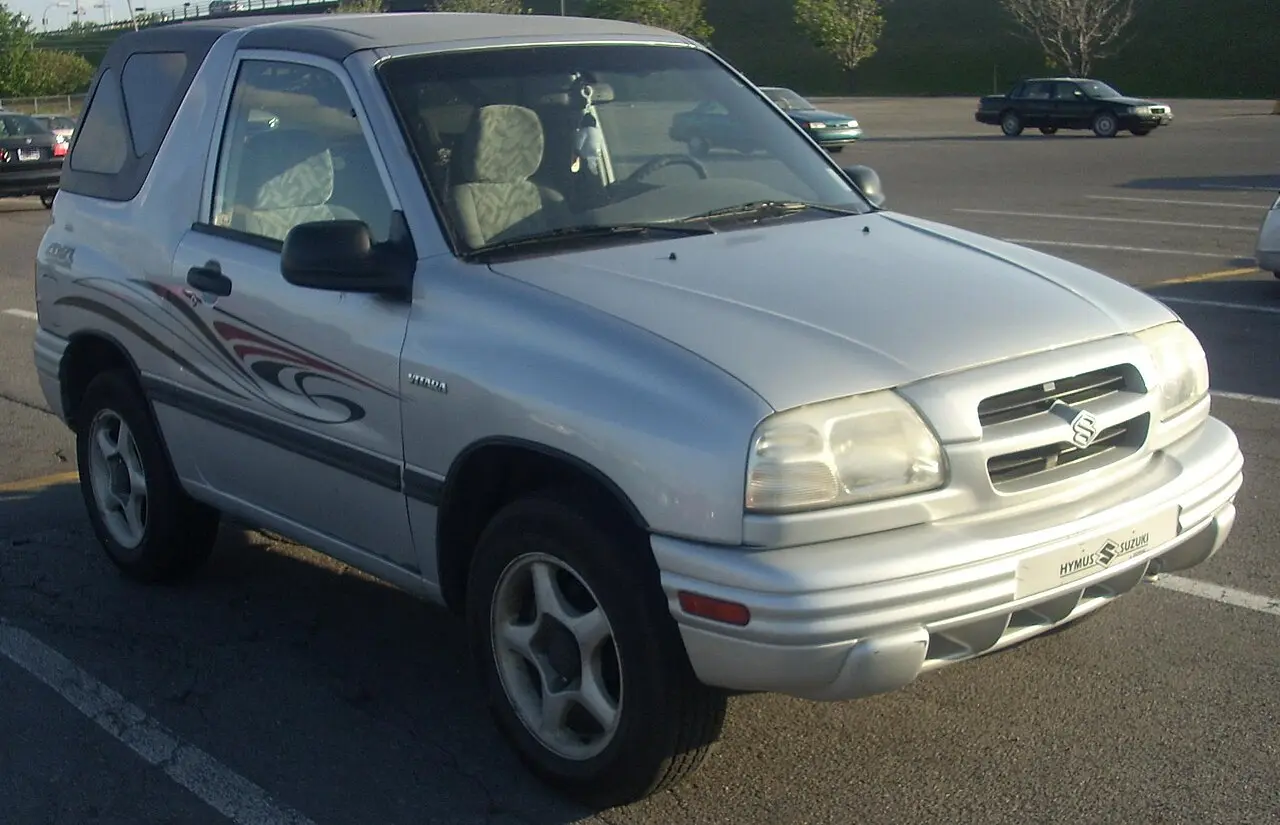
The official data lists 175 versions of the Suzuki Vitara (1999–2026), in the European Union, the United Kingdom, France, the United States, and Canada. Each market publishes its own figures, measured on its own test procedure.
At a glance
Years in the data
1999–2026
Markets
European Union, United Kingdom, France, United States, Canada
The Vitara is Suzuki’s compact SUV, with a history rooted in four-wheel-drive vehicles. Suzuki introduced it in 1988 as a compact 4x4, also known as the Escudo in Japan. The original three-door model was followed by a five-door version, broadening its appeal for everyday use. Suzuki developed the Vitara around the idea of combining off-road ability with greater comfort on the road.
Vitara generations
The early generation represented in North American and UK figures is Generation II (1999–2004 in the US and Canada; 2000–2005 in the UK). The modern European-era lineage is listed as Generation IV, from 2015 to today. After the original Vitara, Suzuki introduced the Grand Vitara, carrying the name through another chapter before the Vitara returned to Europe. The current model’s compact proportions and SUV body give it an upright driving position and a practical cabin.
Engines, power and official economy
The EU range spans 1.0 L to 1.6 L engines, with power from 75 kW (102 PS) to 132 kW (179 PS). UK listings cover the same engine-size range and power from 75 kW (102 PS) to 129 kW (175 PS). French listings show 1.4 L engines, with outputs from 88 kW (120 PS) to 95 kW (129 PS). European market listings include petrol, diesel and hybrid options, with availability varying by year and country.
The lowest stated EU consumption for petrol, diesel or hybrid versions is 5.1 L/100 km on WLTP. The plug-in hybrid figure is 5.3 L/100 km WLTP, a weighted result that assumes some driving is electric. The lowest UK and French figures are 4 L/100 km on NEDC. In the US, the best listed result is 24 MPG combined under EPA testing; Canada’s lowest is 9.9 L/100 km on the NRCan 5-cycle test. European WLTP and NEDC, the US EPA procedure and Canada’s 5-cycle test differ, so figures should be read in their respective test contexts.
Where was the Vitara sold?
The Vitara appears in figures for the EU, UK, France, the United States and Canada. The modern European listings cover 2015–2025 in the EU, 2000–2026 in the UK and 2015–2026 in France. US and Canadian listings cover 1999–2004. Suzuki introduced the Vitara in 1988 as a compact 4x4, a format that helped define the model’s identity.
Questions and answers
Is the Suzuki Vitara an SUV?
Yes. The Vitara is a compact SUV with roots as a compact 4x4.
When did the modern European Vitara generation begin?
Generation IV is listed from 2015 to today.
Does the Vitara have hybrid versions?
Yes. Hybrid versions appear in EU, UK and French listings, alongside petrol and diesel options.
What is the lowest stated Vitara fuel-consumption figure?
The lowest stated figure is 4 L/100 km on NEDC in the UK and France. Test procedures differ from the EU’s WLTP, EPA and NRCan 5-cycle tests.
New cars registered in the EU (plus Norway and Iceland), from the European Environment Agency. Figures on the NEDC procedure until 2020 and on WLTP from 2021; versions are grouped by engine and power, with their number of registrations.
Years and version
Engine
Power
Fuel
Consumption (combined)
CO₂
EU registrations
2025
1.4 L
95 kW (129 PS)
Hybrid
5.3 L/100 km WLTP
122 g/km
26,219
2025
1.4 L
81 kW (110 PS)
Hybrid
5.5 L/100 km WLTP
127 g/km
7,021
2025
1.5 L
75 kW (102 PS)
Hybrid
5.3 L/100 km WLTP
119 g/km
6,236
2025
1.4 L
80 kW (109 PS)
Petrol
5.5 L/100 km WLTP
127 g/km
3,633
2025
1.4 L
80 kW (109 PS)
Hybrid
5.6 L/100 km WLTP
128 g/km
2,478
2025
1.4 L
12 kW (16 PS)
Hybrid
5.4 L/100 km WLTP
124 g/km
2,352
2025
1.4 L
95 kW (129 PS)
Plug-in hybrid
5.3 L/100 km WLTP
122 g/km
1,234
2025
1.4 L
95 kW (129 PS)
Petrol
5.3 L/100 km WLTP
120 g/km
395
2025
1.4 L
81 kW (110 PS)
Plug-in hybrid
5.6 L/100 km WLTP
128 g/km
286
2025
1.5 L
75 kW (102 PS)
Plug-in hybrid
5.6 L/100 km WLTP
120 g/km
119
2025
1.5 L
75 kW (102 PS)
Petrol
5.1 L/100 km WLTP
116 g/km
107
2025
1.5 L
24 kW (33 PS)
Hybrid
5.2 L/100 km WLTP
117 g/km
106
2025
1.4 L
81 kW (110 PS)
Petrol
5.5 L/100 km WLTP
125 g/km
84
2025
1.4 L
10 kW (14 PS)
Hybrid
5.6 L/100 km WLTP
128 g/km
20
2024
1.4 L
95 kW (129 PS)
Hybrid
5.4 L/100 km WLTP
124 g/km
40,748
2024
1.5 L
75 kW (102 PS)
Hybrid
5.4 L/100 km WLTP
123 g/km
11,499
2024
1.4 L
12 kW (16 PS)
Hybrid
5.3 L/100 km WLTP
123 g/km
1,270
2024
1.4 L
10 kW (14 PS)
Hybrid
5.6 L/100 km WLTP
126 g/km
978
2024
1.5 L
24 kW (33 PS)
Hybrid
5.3 L/100 km WLTP
119 g/km
100
2023
1.4 L
95 kW (129 PS)
Hybrid
5.5 L/100 km WLTP
125 g/km
39,504
2023
1.5 L
75 kW (102 PS)
Hybrid
5.5 L/100 km WLTP
125 g/km
10,007
2022
1.4 L
95 kW (129 PS)
Hybrid
5.6 L/100 km WLTP
127 g/km
18,142
2022
1.5 L
75 kW (102 PS)
Hybrid
5.6 L/100 km WLTP
127 g/km
7,507
2022
1.4 L
95 kW (129 PS)
Petrol
5.4 L/100 km WLTP
126 g/km
7,425
2022
1.4 L
10 kW (14 PS)
Hybrid
5.4 L/100 km WLTP
128 g/km
859
2022
1.5 L
24 kW (33 PS)
Hybrid
–
129 g/km
446
2022
1.5 L
75 kW (102 PS)
Petrol
6.0 L/100 km WLTP
125 g/km
219
2021
1.4 L
95 kW (129 PS)
Hybrid
5.7 L/100 km WLTP0.9 kWh/100 km WLTP
131 g/km
88,396
2021
1.4 L
95 kW (129 PS)
Petrol
5.5 L/100 km WLTP
130 g/km
5,456
2021
1.4 L
10 kW (14 PS)
Petrol
5.9 L/100 km WLTP
133 g/km
4,170
2021
1.4 L
103 kW (140 PS)
Petrol
7.0 L/100 km WLTP
163 g/km
1,563
2021
1.4 L
95 kW (129 PS)
Plug-in hybrid
–
131 g/km
76
2021
1.5 L
75 kW (102 PS)
Hybrid
5.7 L/100 km WLTP
128 g/km
72
2021
1.4 L
103 kW (140 PS)
Natural gas
–
114 g/km
40
2020
1.4 L
95 kW (129 PS)
Hybrid
–
108 g/km
49,100
2020
1.4 L
103 kW (140 PS)
Petrol
–
137 g/km
24,232
2020
1.4 L
95 kW (129 PS)
Petrol
–
113 g/km
5,806
2020
1.0 L
82 kW (111 PS)
Petrol
–
126 g/km
5,797
2020
1.4 L
10 kW (14 PS)
Petrol
–
108 g/km
2,528
2020
1.4 L
103 kW (140 PS)
Natural gas
–
105 g/km
232
2020
1.0 L
82 kW (111 PS)
Natural gas
–
105 g/km
60
2020
1.4 L
103 kW (140 PS)
LPG
–
131 g/km
10
2019
1.4 L
103 kW (140 PS)
Petrol
13.9 kWh/100 km NEDC
136 g/km
98,444
2019
1.0 L
82 kW (111 PS)
Petrol
–
126 g/km
62,309
2019
1.6 L
88 kW (120 PS)
Diesel
–
109 g/km
1,028
2019
1.6 L
88 kW (120 PS)
Petrol
–
126 g/km
912
2019
1.4 L
103 kW (140 PS)
Natural gas
–
104 g/km
183
2019
1.0 L
93 kW (126 PS)
Natural gas
–
95 g/km
48
2019
1.4 L
103 kW (140 PS)
LPG
–
135 g/km
28
2019
1.0 L
103 kW (140 PS)
Petrol
–
123 g/km
20
2019
1.0 L
66 kW (90 PS)
Petrol
–
122 g/km
14
2019
1.4 L
82 kW (111 PS)
Petrol
–
132 g/km
14
2018
1.6 L
88 kW (120 PS)
Petrol
–
126 g/km
76,174
2018
1.4 L
103 kW (140 PS)
Petrol
–
132 g/km
39,416
2018
1.6 L
88 kW (120 PS)
Diesel
–
110 g/km
13,014
2018
1.0 L
82 kW (111 PS)
Petrol
–
126 g/km
8,662
2018
1.6 L
88 kW (120 PS)
Natural gas
–
109 g/km
106
2018
1.4 L
103 kW (140 PS)
Natural gas
–
101 g/km
92
2018
1.6 L
–
Petrol
–
124 g/km
44
2017
1.6 L
88 kW (120 PS)
Petrol
–
126 g/km
84,298
2017
1.4 L
103 kW (140 PS)
Petrol
–
125 g/km
26,186
2017
1.6 L
88 kW (120 PS)
Diesel
–
111 g/km
25,496
2017
1.6 L
132 kW (179 PS)
Petrol
–
126 g/km
6,382
2017
1.4 L
155 kW (211 PS)
Petrol
–
125 g/km
496
2017
1.6 L
88 kW (120 PS)
Natural gas
–
109 g/km
118
2016
1.6 L
88 kW (120 PS)
Petrol
–
125 g/km
84,704
2016
1.6 L
88 kW (120 PS)
Diesel
–
112 g/km
40,118
2016
1.4 L
103 kW (140 PS)
Petrol
–
124 g/km
20,564
2016
1.6 L
88 kW (120 PS)
LPG
–
125 g/km
2,912
2016
1.6 L
81 kW (110 PS)
Natural gas
–
108 g/km
26
2016
1.6 L
–
Petrol
–
123 g/km
18
2016
1.6 L
–
Petrol
–
116 g/km
10
2015
1.6 L
88 kW (120 PS)
Petrol
–
128 g/km
58,468
2015
1.6 L
88 kW (120 PS)
Diesel
–
110 g/km
25,256
2015
1.4 L
103 kW (140 PS)
Petrol
–
126 g/km
1,190
2015
2.4 L
124 kW (169 PS)
Petrol
–
210 g/km
80
2015
1.6 L
78 kW (106 PS)
Petrol
–
189 g/km
72
2015
2.4 L
122 kW (166 PS)
Petrol
–
213 g/km
10
United Kingdom 64 versions
New cars on sale in the UK, from the Vehicle Certification Agency. NEDC figures until 2018 and WLTP figures after; years are the editions a version appeared in.
New cars on sale in France, from ADEME Car Labelling. NEDC figures until 2015, WLTP figures in the current catalogue.
Years and version
Engine
Power
Fuel
Gearbox
Consumption (combined)
CO₂
2026VITARA 1.4 HYBRID AUTO
1.4 L
95 kW (129 PS)
Hybrid
6-speed automatic
6.2 L/100 km WLTP
141 g/km
2026VITARA 1.4 HYBRID AUTO
1.4 L
95 kW (129 PS)
Hybrid
6-speed automatic
5.7 L/100 km WLTP
129 g/km
2015VITARA 1.6 VVT 2WD
–
88 kW (120 PS)
Petrol
5-speed manual
5.3 L/100 km NEDC
123 g/km
2015VITARA 1.6 Ddis 2WD
–
88 kW (120 PS)
Diesel
6-speed manual
4.0 L/100 km NEDC
106 g/km
2015VITARA 1.6 VVT Allgrip
–
88 kW (120 PS)
Petrol
5-speed manual
5.6 L/100 km NEDC
130 g/km
2015VITARA 1.6 Ddis Allgrip
–
88 kW (120 PS)
Diesel
6-speed manual
4.2 L/100 km NEDC
111 g/km
Official figures are measured on standard test procedures and differ between markets. Your consumption depends on how, where and in what conditions you drive.