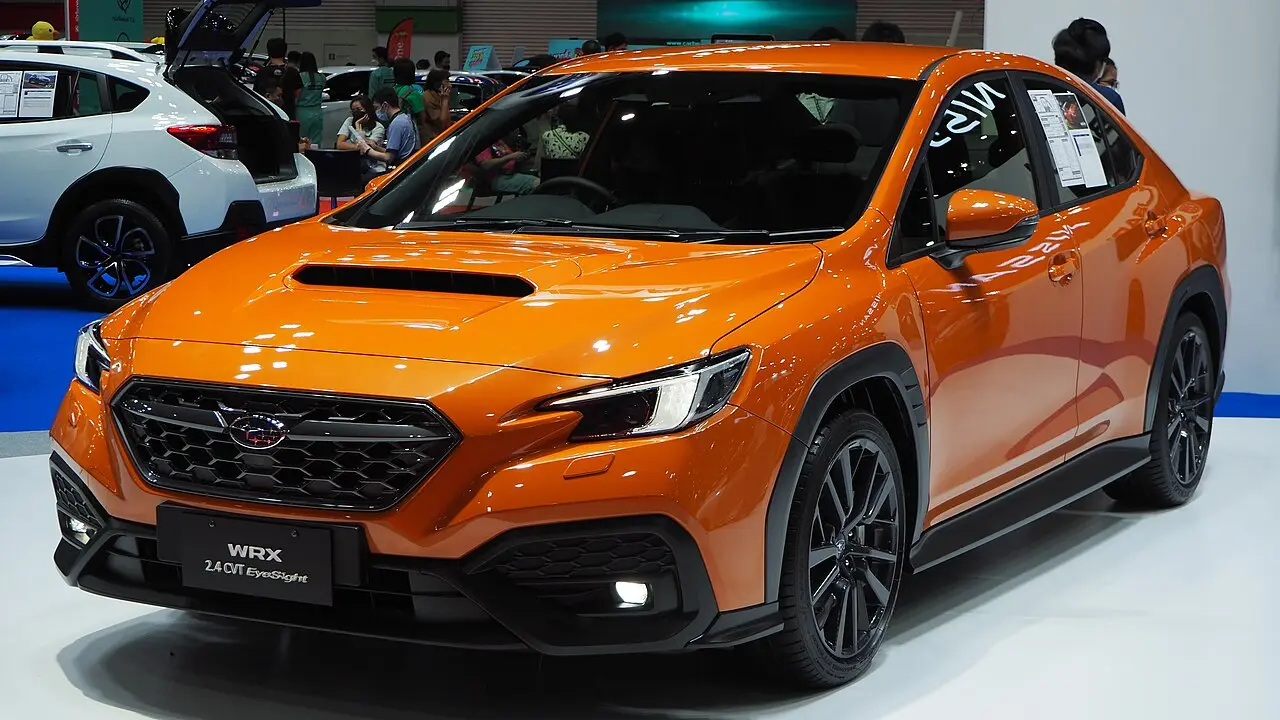
Subaru

Subaru WRX

Subaru WRX
Photo: Chanokchon / Wikimedia Commons · CC BY-SA 4.0

The official data lists 60 versions of the Subaru WRX (2010–2026), in the European Union, the United Kingdom, France, the United States, and Canada. Each market publishes its own figures, measured on its own test procedure.

At a glance

Years in the data
2010–2026
Markets
European Union, United Kingdom, France, United States, Canada
Engines
2.0 L to 2.5 L
Power
221 kW (300 PS) to 332 kW (451 PS)
Fuels
Petrol
Lowest consumption (United States)
9.8 L/100 km (EPA)
Lowest consumption (Canada)
9.8 L/100 km (5-cycle)
Lowest consumption (France)
10.4 L/100 km (NEDC)
New registrations in the EU
9,858

What is the Subaru WRX?

The Subaru WRX is a performance-focused car with roots in the Impreza range and Subaru’s rally history. Its compact sedan shape gives it everyday practicality, while turbocharged petrol power and all-wheel drive define its sporting character. Once sold as the Impreza WRX, it became a standalone model, carrying that rally-inspired identity into Subaru’s performance range.

Subaru’s World Rally Championship programme helped make the Impreza familiar to rally fans. The WRX carries that performance heritage into a road car, with each generation bringing changes in design and engineering.

WRX generations

The third-generation WRX ran from 2007 to 2014, with GE, GH, GR and GV body codes. The fourth generation, known as IV and carrying the VA code, followed from 2014 to 2021. The next generation, with the VB code, began in 2022 and continues today. Over these generations, the WRX moved from its Impreza-based identity into its own model line while retaining its performance focus.

Engines, power and fuel consumption

In EU registration figures, the WRX’s 2.5-litre petrol versions span 221 kW (300 PS) to 332 kW (451 PS). US and Canadian figures also include engines from 2.0 to 2.5 litres. The most registered EU configuration was the 2.5-litre petrol version rated at 221 kW (300 PS), which led the figures in 2014, 2015 and 2016.

Consumption figures vary by market because European NEDC tests, the US EPA procedure and Canada’s 5-cycle test use different methods. The UK and French NEDC figures reach 10.4 L/100 km. The US EPA figure reaches 9.8 L/100 km, with a best combined rating of 24 MPG; Canada’s 5-cycle figure also reaches 9.8 L/100 km.

Where was the WRX sold?

The WRX appears in EU registration figures from 2010 to 2019, UK figures from 2012 to 2018 and French figures from 2014 to 2015. US EPA figures span 2015 to 2026, while Canadian 5-cycle figures run from 2012 to 2026.

Questions and answers

What engine sizes were offered in the WRX?

EU, UK and French figures include 2.5-litre petrol versions. US and Canadian figures include engines from 2.0 to 2.5 litres.

What is the WRX’s highest listed power?

EU registration figures include WRX versions up to 332 kW (451 PS).

What is the WRX’s official fuel consumption?

The lowest listed figure is 9.8 L/100 km in the US EPA and Canadian 5-cycle figures. UK and French NEDC figures reach 10.4 L/100 km; test procedures differ by market.
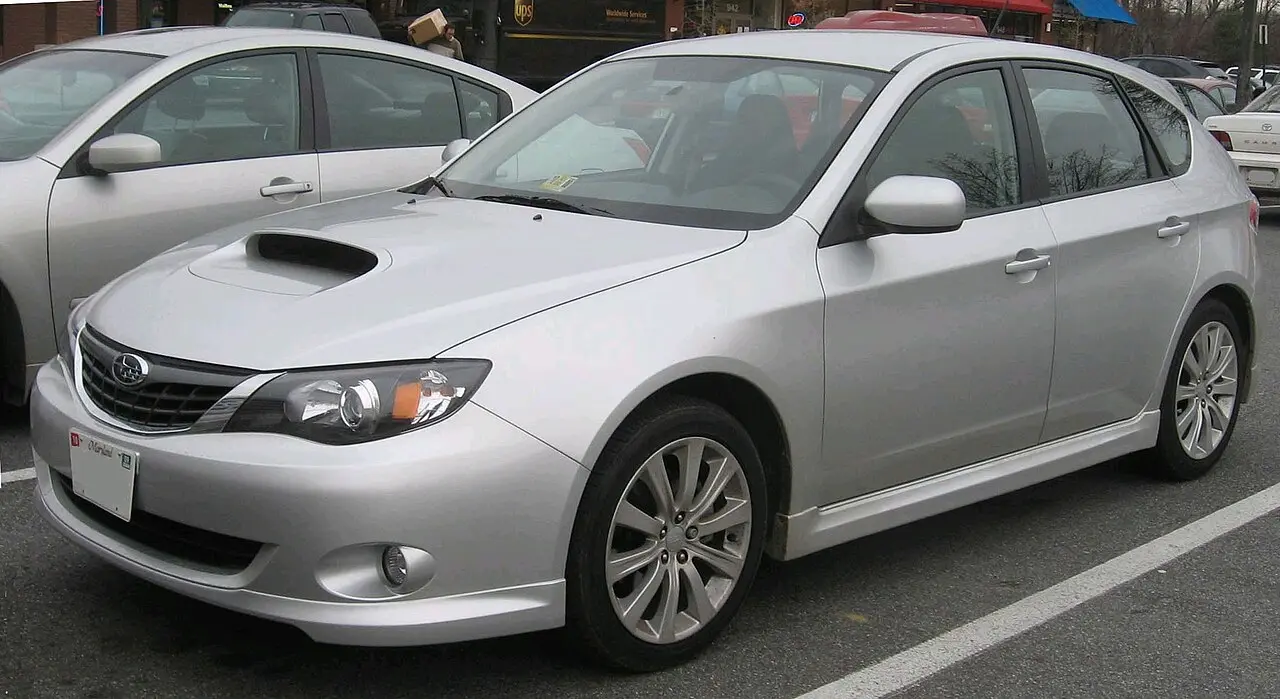
WRX third generation (2007–2014)

Subaru WRX third generation
Photo: IFCAR / Wikimedia Commons · Public domain

Model codes: GE, GH, GR, GV · Sold in: Canada, European Union, and United Kingdom · References: en.wikipedia.org, subaru.jp

Show all 8 versions

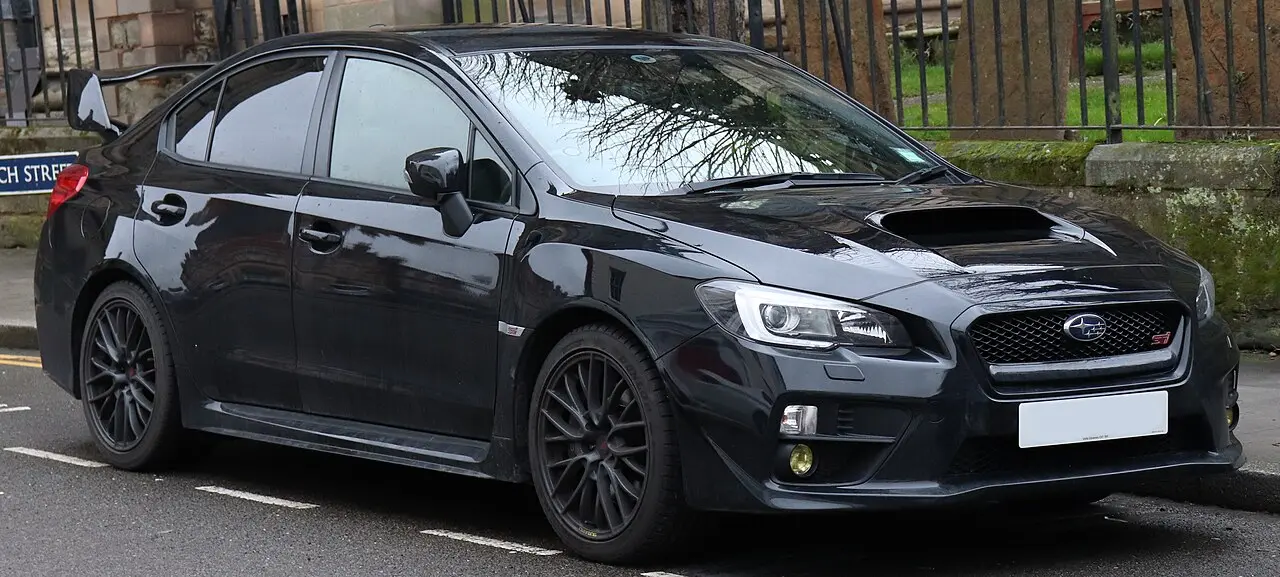
WRX IV (2014–2021)

Subaru WRX IV
Photo: Vauxford / Wikimedia Commons · CC BY-SA 4.0

Model codes: VA · References: en.wikipedia.org, subaru.jp

Show all 44 versions

WRX II (since 2022)

Subaru WRX II
Photo: Chanokchon / Wikimedia Commons · CC BY-SA 4.0

Model codes: VB · References: en.wikipedia.org, subaru.jp

United States 6 versions

Model years sold in the USA, from the EPA and the Department of Energy (fueleconomy.gov). MPG on the EPA test; litres per 100 km = 235.215 ÷ MPG.

Years and versionEngineFuelGearboxDriveConsumption (combined)CO₂
2024–2026SIDI2.4 LPetrolContinuously variable (CVT)All-wheel drive21 MPG (11.2 L/100 km) EPA262 g/km
2026SIDI2.4 LPetrol6-speed manualAll-wheel drive22 MPG (10.7 L/100 km) EPA256 g/km
2025SIDI2.4 LPetrol6-speed manualAll-wheel drive22 MPG (10.7 L/100 km) EPA257 g/km
2024SIDI2.4 LPetrol6-speed manualAll-wheel drive22 MPG (10.7 L/100 km) EPA254 g/km
2022–2023SIDI2.4 LPetrol6-speed manualAll-wheel drive22 MPG (10.7 L/100 km) EPA253 g/km
2022–2023SIDI2.4 LPetrolContinuously variable (CVT)All-wheel drive21 MPG (11.2 L/100 km) EPA260 g/km

Canada 4 versions

Model years sold in Canada, from Natural Resources Canada fuel consumption ratings (5-cycle test).

Years and versionEngineFuelGearboxConsumption (combined)CO₂
2022–2026Mid-size2.4 LPetrolContinuously variable (CVT)11.2 L/100 km 5-cycle262 g/km
2026Mid-size2.4 LPetrol6-speed manual10.9 L/100 km 5-cycle256 g/km
2025Mid-size2.4 LPetrol6-speed manual10.9 L/100 km 5-cycle255 g/km
2022–2024Mid-size2.4 LPetrol6-speed manual10.8 L/100 km 5-cycle254 g/km

Official figures are measured on standard test procedures and differ between markets. Your consumption depends on how, where and in what conditions you drive.