Subaru

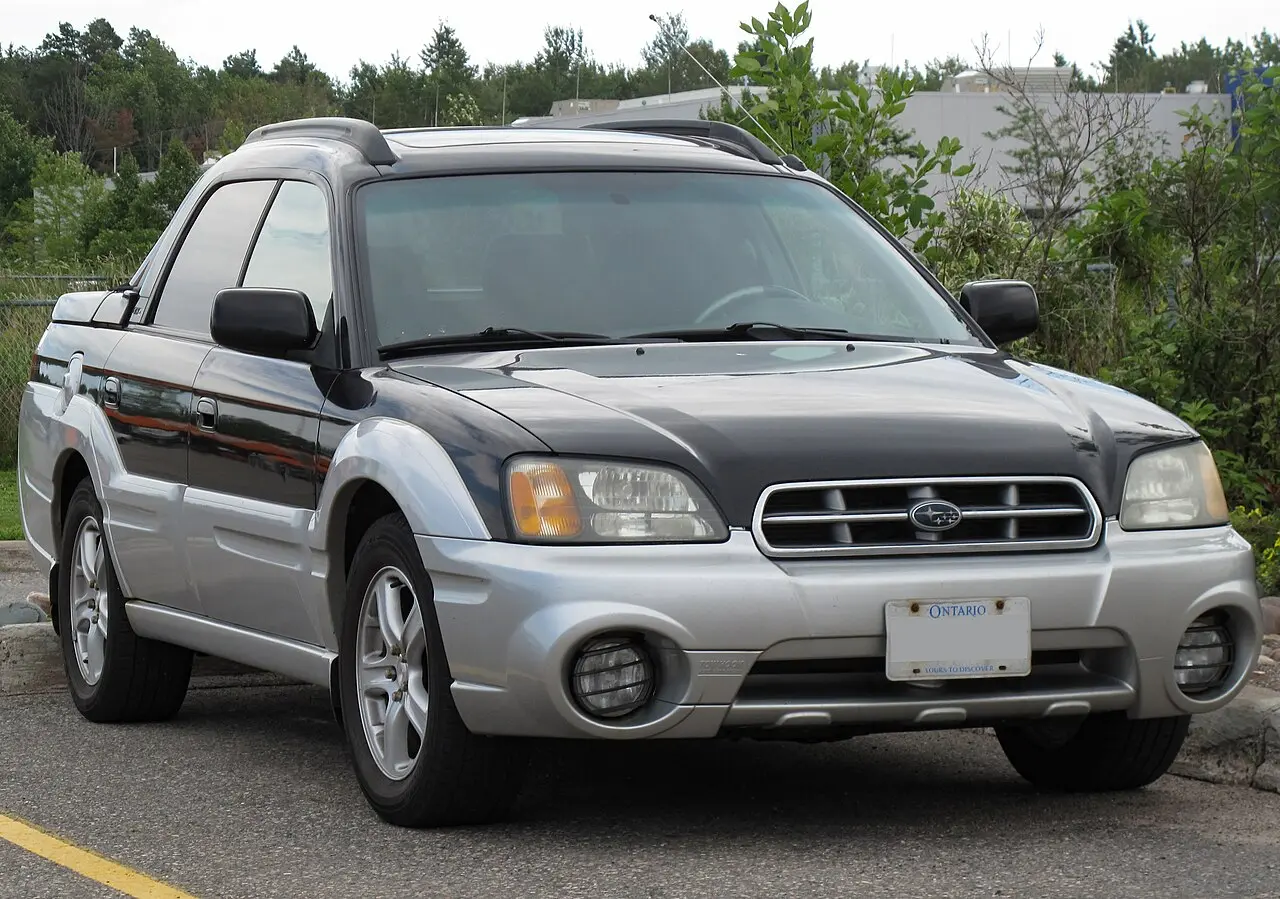
Subaru Baja

Subaru Baja
Photo: Elise240SX / Wikimedia Commons · CC BY-SA 4.0

The official data lists 13 versions of the Subaru Baja (2003–2006), in the United States and Canada. Each market publishes its own figures, measured on its own test procedure.

At a glance

Years in the data
2003–2006
Markets
United States, Canada
Engines
2.5 L
Fuels
Petrol
Lowest consumption (Canada)
10.5 L/100 km (5-cycle)
Lowest consumption (United States)
10.7 L/100 km (EPA)

What is the Subaru Baja?

The Baja was a four-door, car-based pickup that paired a passenger cabin with an open cargo bed. Based on the Outback, it sat between Subaru’s estate cars and conventional pickups. Its cabin carried passengers while the bed offered space for bulky or messy loads.

Rather than a traditional work truck, the Baja was an everyday car with some open-bed usefulness for outdoor gear, home projects or errands. Its unusual body gave it a distinctive place in Subaru’s range.

Generation and engine

The Baja had one generation, code BT, sold from 2003 to 2006. Its engine was a 2.5 L petrol unit. The Outback roots shaped its road-car proportions and passenger layout, while the shortened rear body and open bed gave it a different purpose from the wagon.

Fuel consumption

United States EPA figures for 2003–2006 give the Baja a best combined rating of 22 MPG and lowest listed consumption of 10.7 L/100 km. Canada’s figures for the same years give a lowest listed consumption of 10.5 L/100 km on the 5-cycle test. EPA and Canada’s 5-cycle procedures differ, so their results are not directly comparable.

Questions and answers

When was the Subaru Baja sold?

Its single generation was sold from 2003 to 2006.

What kind of vehicle is the Baja?

It is a four-door, car-based pickup with a passenger cabin and an open cargo bed.

What engine did the Baja use?

It used a 2.5 L petrol engine.

What is the Baja’s best combined EPA rating?

The best combined United States EPA rating was 22 MPG.

Baja first generation (2003–2006)

Subaru Baja first generation
Photo: Elise240SX / Wikimedia Commons · CC BY-SA 4.0

Model codes: BT · Sold in: United States and Canada · References: en.wikipedia.org

United States 8 versions

Model years sold in the USA, from the EPA and the Department of Energy (fueleconomy.gov). MPG on the EPA test; litres per 100 km = 235.215 ÷ MPG.

Years and versionEngineFuelGearboxDriveConsumption (combined)CO₂
2004–2006CLKUP2.5 LPetrol4-speed automaticFour- or all-wheel drive21 MPG (11.2 L/100 km) EPA263 g/km
2004–20062MODE CLKUP2.5 LPetrol4-speed automaticFour- or all-wheel drive18 MPG (13.1 L/100 km) EPA307 g/km
2005–20062.5 LPetrol5-speed manualFour- or all-wheel drive19 MPG (12.4 L/100 km) EPA291 g/km
20062.5 LPetrol5-speed manualFour- or all-wheel drive22 MPG (10.7 L/100 km) EPA251 g/km
2004–20052.5 LPetrol5-speed manualFour- or all-wheel drive21 MPG (11.2 L/100 km) EPA263 g/km
20042.5 LPetrol5-speed manualFour- or all-wheel drive18 MPG (13.1 L/100 km) EPA307 g/km
2003CLKUP2.5 LPetrol4-speed automaticFour- or all-wheel drive20 MPG (11.8 L/100 km) EPA276 g/km
20032.5 LPetrol5-speed manualFour- or all-wheel drive20 MPG (11.8 L/100 km) EPA276 g/km

Canada 5 versions

Model years sold in Canada, from Natural Resources Canada fuel consumption ratings (5-cycle test).

Years and versionEngineFuelGearboxConsumption (combined)CO₂
2005–2006Sport utility vehicle2.5 LPetrol4-speed automatic11.0 L/100 km 5-cycle253 g/km
2006Sport utility vehicle2.5 LPetrol5-speed manual10.5 L/100 km 5-cycle242 g/km
2005Sport utility vehicle2.5 LPetrol5-speed manual11.2 L/100 km 5-cycle258 g/km
2003Sport utility vehicle2.5 LPetrol4-speed automatic11.5 L/100 km 5-cycle265 g/km
2003Sport utility vehicle2.5 LPetrol5-speed manual11.9 L/100 km 5-cycle274 g/km

Official figures are measured on standard test procedures and differ between markets. Your consumption depends on how, where and in what conditions you drive.