Subaru

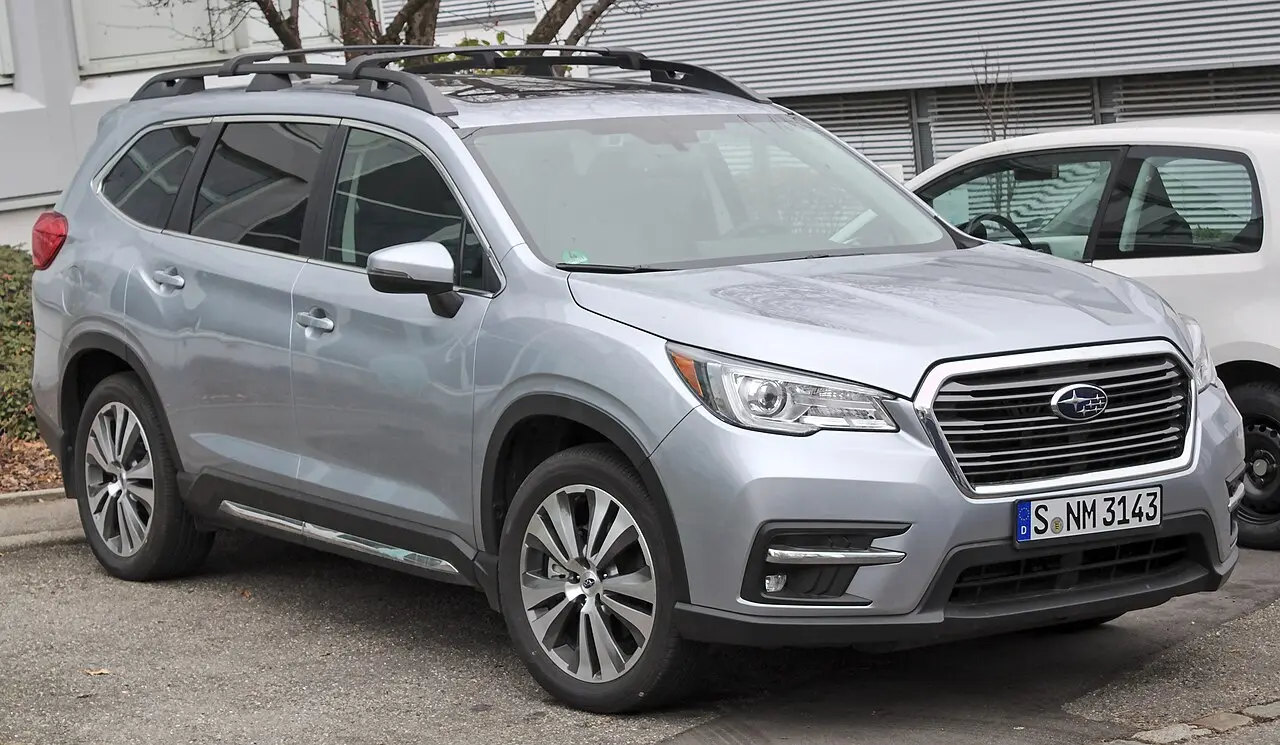
Subaru Ascent

Subaru Ascent
Photo: Alexander Migl / Wikimedia Commons · CC BY-SA 4.0

The official data lists 12 versions of the Subaru Ascent (2019–2027), in the United States and Canada. Each market publishes its own figures, measured on its own test procedure.

At a glance

Years in the data
2019–2027
Markets
United States, Canada
Engines
2.4 L
Fuels
Petrol
Lowest consumption (United States)
10.2 L/100 km (EPA)
Lowest consumption (Canada)
10.4 L/100 km (5-cycle)

What is the Subaru Ascent?

The Ascent is a three-row midsize SUV designed to carry passengers and everyday gear. It is Subaru’s largest SUV, with seating for seven or eight depending on configuration. It sits above the brand’s smaller SUVs, bringing Subaru’s all-wheel-drive tradition to a larger family vehicle.

The first generation, code WM, began in 2019 and continues today. The Ascent is sold in the United States and Canada.

Engines and power

The Ascent has a 2.4-litre petrol engine. Subaru is known for its horizontally opposed Boxer engines and all-wheel drive, a combination that also features in this three-row SUV.

How economical is the Subaru Ascent?

In the United States, the EPA rates the Ascent at up to 23 MPG combined, with a lowest listed consumption of 10.2 L/100 km. In Canada, the lowest listed consumption is 10.4 L/100 km on the NRCan 5-cycle test. These results use different procedures and are not directly comparable; European figures use WLTP or, for older ratings, NEDC.

US model years span 2019–2027, while Canadian model years span 2019–2026.

Questions and answers

How many generations of the Ascent are there?

The Ascent’s first generation, code WM, began in 2019 and continues today.

What engine does the Ascent use?

It has a 2.4-litre petrol engine.

What is the Ascent’s best EPA fuel economy?

The best combined EPA rating is 23 MPG.

Where is the Ascent sold?

The Ascent is sold in the United States and Canada.

Ascent first generation (since 2019)

Subaru Ascent first generation
Photo: Alexander Migl / Wikimedia Commons · CC BY-SA 4.0

Model codes: WM · Sold in: United States and Canada · References: en.wikipedia.org

United States 7 versions

Model years sold in the USA, from the EPA and the Department of Energy (fueleconomy.gov). MPG on the EPA test; litres per 100 km = 235.215 ÷ MPG.

Years and versionEngineFuelGearboxDriveConsumption (combined)CO₂
2026–2027SIDI2.4 LPetrolContinuously variable (CVT)All-wheel drive22 MPG (10.7 L/100 km) EPA252 g/km
2026–2027SIDI2.4 LPetrolContinuously variable (CVT)All-wheel drive21 MPG (11.2 L/100 km) EPA262 g/km
2023–2025SIDI2.4 LPetrolContinuously variable (CVT)All-wheel drive22 MPG (10.7 L/100 km) EPA247 g/km
2023–2025SIDI2.4 LPetrolContinuously variable (CVT)All-wheel drive21 MPG (11.2 L/100 km) EPA260 g/km
2019–2022SIDI2.4 LPetrolContinuously variable (CVT)All-wheel drive22 MPG (10.7 L/100 km) EPA249 g/km
2022SIDI2.4 LPetrolContinuously variable (CVT)All-wheel drive23 MPG (10.2 L/100 km) EPA239 g/km
2019–2021SIDI2.4 LPetrolContinuously variable (CVT)All-wheel drive23 MPG (10.2 L/100 km) EPA240 g/km

Canada 5 versions

Model years sold in Canada, from Natural Resources Canada fuel consumption ratings (5-cycle test).

Years and versionEngineFuelGearboxConsumption (combined)CO₂
2026Sport utility vehicle: Standard2.4 LPetrolContinuously variable (CVT)11.0 L/100 km 5-cycle258 g/km
2025Sport utility vehicle: Standard2.4 LPetrolContinuously variable (CVT)11.0 L/100 km 5-cycle257 g/km
2023–2024Sport utility vehicle: Standard2.4 LPetrolContinuously variable (CVT)11.0 L/100 km 5-cycle256 g/km
2022Sport utility vehicle: Standard2.4 LPetrolContinuously variable (CVT)10.5 L/100 km 5-cycle245 g/km
2019–2021Sport utility vehicle: Standard2.4 LPetrolContinuously variable (CVT)10.4 L/100 km 5-cycle244 g/km

Official figures are measured on standard test procedures and differ between markets. Your consumption depends on how, where and in what conditions you drive.