smart

smart Fortwo

smart Fortwo
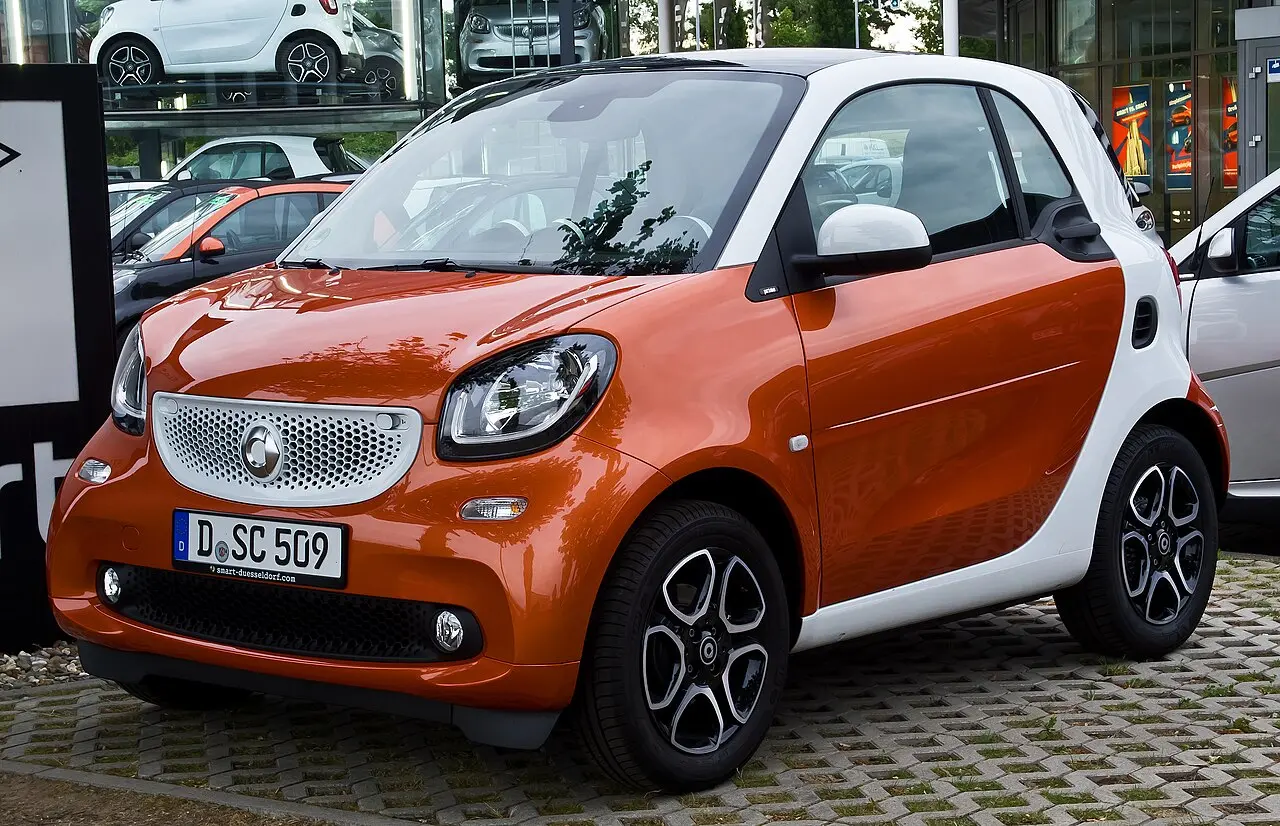
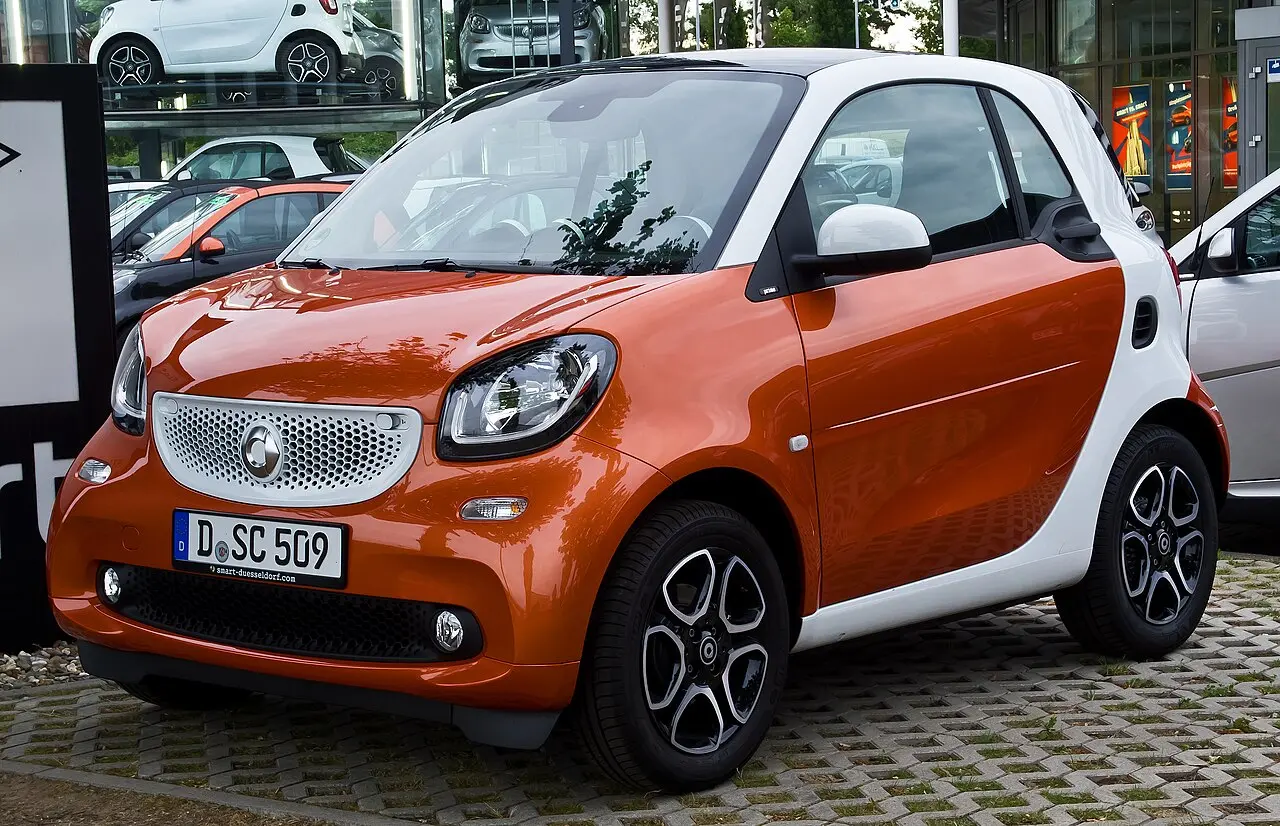
Photo: M 93 / Wikimedia Commons · CC BY-SA 3.0 de

The official data lists 302 versions of the smart Fortwo (2004–2025), in the European Union, the United Kingdom, France, the United States, and Canada. Each market publishes its own figures, measured on its own test procedure.

At a glance

Years in the data
2004–2025
Markets
European Union, United Kingdom, France, United States, Canada
Engines
0.6 L to 1.0 L
Power
30 kW (41 PS) to 80 kW (109 PS)
Fuels
Electric, Petrol, Diesel
Lowest consumption (France)
3.3 L/100 km (NEDC)
Lowest consumption (United Kingdom)
3.3 L/100 km (NEDC)
Lowest consumption (Canada)
5.2 L/100 km (5-cycle)
New registrations in the EU
1,405,278

What is the smart fortwo?

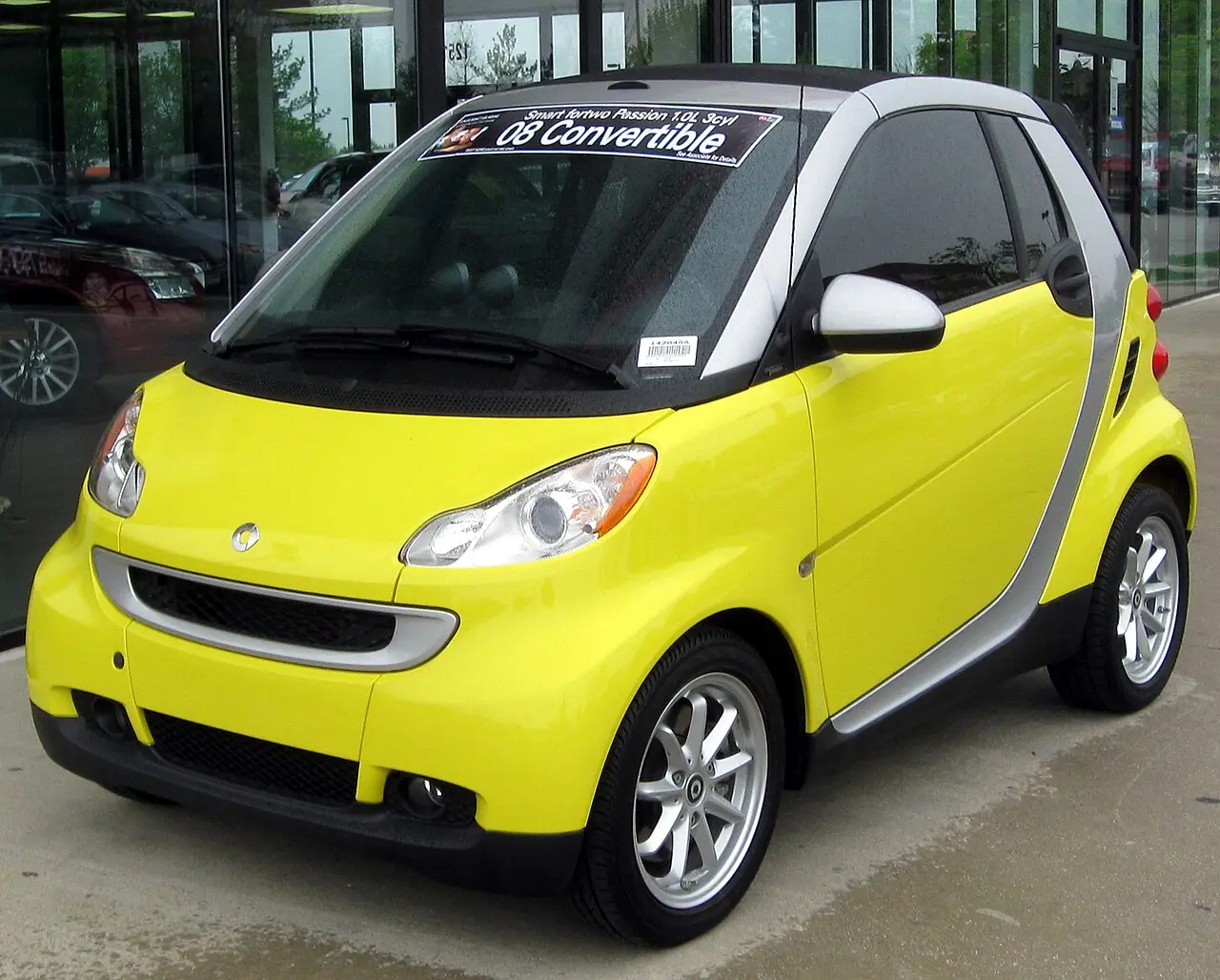
The smart fortwo is a two-seat city car with a compact footprint, designed for getting around town. It became the defining model for smart, a marque known for small cars and urban mobility. Its distinctive Tridion safety cell is often set off by contrasting body panels.

The fortwo’s generations are W450 (2004–2007), W451 (2007–2014) and C453 (2014–2024) in Europe. The C453 also appears in US figures for 2016–2019. The W451 carried the original idea forward, while the C453 was developed with Renault. Electric versions joined petrol and diesel models, giving the fortwo several ways to suit city driving.

Engines and power

EU versions from 2010–2025 span 0.8 L to 1.0 L engines and 20 kW (27 PS) to 80 kW (109 PS). UK versions from 2004–2024 cover 0.6 L to 1.0 L and 37 kW (50 PS) to 82 kW (111 PS). Canada’s 2005–2019 figures list 0.8 L to 1.0 L engines and 35 kW (48 PS) to 60 kW (82 PS). US figures cover 0.9 L to 1.0 L engines from 2008–2019. Electric versions also appear in the EU, UK, US and Canadian figures.

How economical is the smart fortwo?

The lowest listed UK and French consumption figure is 3.3 L/100 km on the NEDC test. In the US, the EPA figure is 6.5 L/100 km, with a best combined rating of 36 MPG. Canada’s lowest listed figure is 5.2 L/100 km on the 5-cycle test. These results use different procedures: Europe uses WLTP or NEDC, the USA uses EPA, and Canada uses the 5-cycle test, so the figures are not directly comparable.

Official EU registration figures span 2010–2025 and total 1,405,278. The largest listed entries are for 1.0 L petrol versions, including a 52 kW (71 PS) version.

Where was the smart fortwo sold?

The fortwo appears in official figures for the EU, UK, France, the United States and Canada. Its small-car format brought smart’s city-focused approach to markets on both sides of the Atlantic.

Questions and answers

How many generations of fortwo are listed?

Three: W450 (2004–2007), W451 (2007–2014) and C453 (2014–2024) in Europe. The C453 appears in US figures for 2016–2019.

Did the fortwo come as an electric car?

Yes. Electric versions appear in the figures for the EU, UK, US and Canada.

What is the lowest official fuel consumption listed?

The lowest listed figure is 3.3 L/100 km on the NEDC test in the UK and France. US EPA and Canadian 5-cycle figures use different procedures.

Where was the fortwo sold?

The official figures cover the EU, UK, France, the United States and Canada.
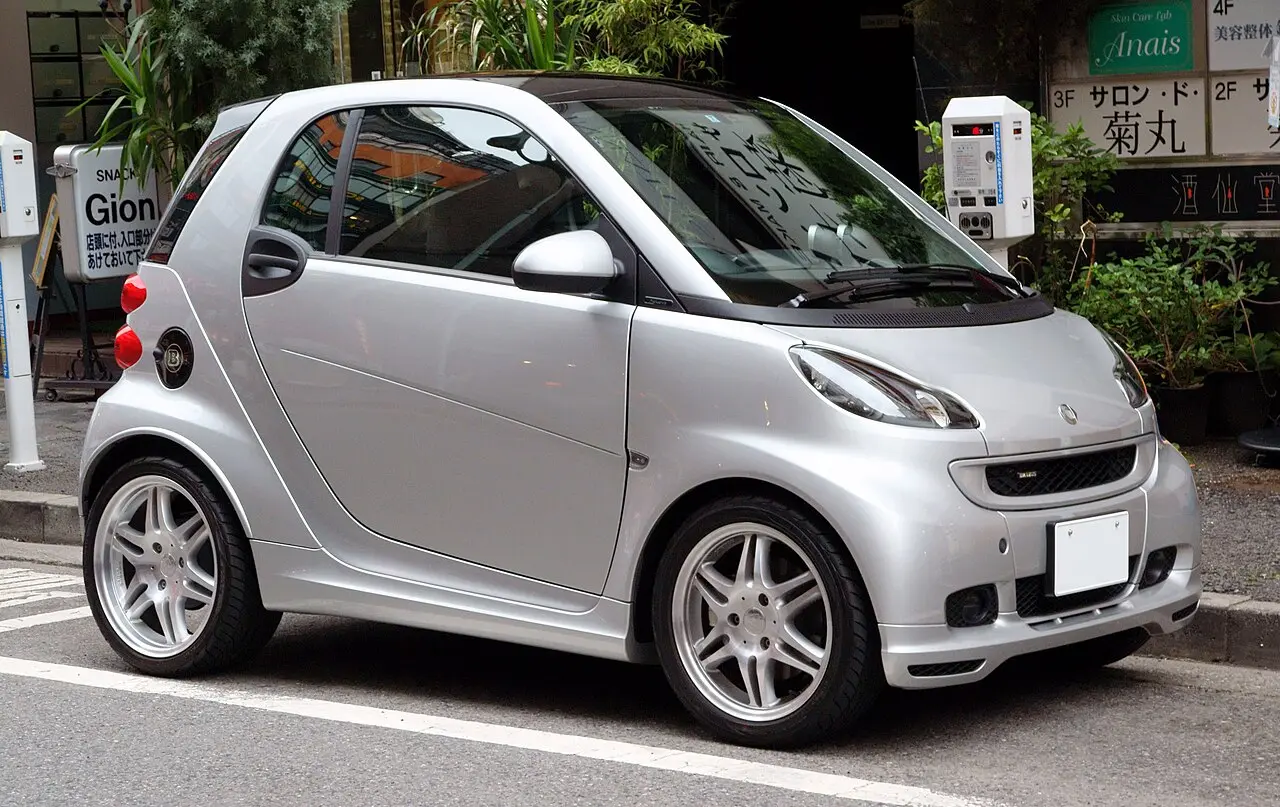
Fortwo W450 (2004–2007)

smart Fortwo W450
Photo: Hatsukari715 / Wikimedia Commons · Public domain

Model codes: W450 · Sold in: European Union, United Kingdom, France, and Canada · References: en.wikipedia.org, en.wikipedia.org

Show all 37 versions

Fortwo W451 (2007–2014)

smart Fortwo W451
Photo: IFCAR / Wikimedia Commons · Public domain

Model codes: W451 · Sold in: European Union, United Kingdom, France, Canada, and United States · References: fr.smart.com, en.wikipedia.org

Show all 144 versions

Fortwo C453 (2014–2024)

smart Fortwo C453
Photo: M 93 / Wikimedia Commons · CC BY-SA 3.0 de

Model codes: C453, A453 · Sold in: European Union, United Kingdom, and France · References: smart-emotion.de, media.smart.com

Show all 134 versions

Fortwo C453 (2016–2019)

smart Fortwo C453
Photo: M 93 / Wikimedia Commons · CC BY-SA 3.0 de

Model codes: C453, A453 · Sold in: United States · References: en.wikipedia.org, autotrader.ca

United States 8 versions

Model years sold in the USA, from the EPA and the Department of Energy (fueleconomy.gov). MPG on the EPA test; litres per 100 km = 235.215 ÷ MPG.

Years and versionEngineFuelGearboxDriveConsumption (combined)CO₂Electric range
2017–2019Electric motorElectricAutomaticRear-wheel drive108 MPGe EPA0 g/km93 km
2017–2019Electric motorElectricAutomaticRear-wheel drive102 MPGe EPA0 g/km92 km
2017SIDI0.9 LPetrol6-speed automated manualRear-wheel drive35 MPG (6.7 L/100 km) EPA156 g/km–
2017SIDI0.9 LPetrol5-speed manualRear-wheel drive34 MPG (6.9 L/100 km) EPA160 g/km–
2017SIDI0.9 LPetrol6-speed automated manualRear-wheel drive35 MPG (6.7 L/100 km) EPA154 g/km–
2017SIDI0.9 LPetrol5-speed manualRear-wheel drive34 MPG (6.9 L/100 km) EPA160 g/km–
2016SIDI0.9 LPetrol6-speed automated manualRear-wheel drive35 MPG (6.7 L/100 km) EPA153 g/km–
2016SIDI0.9 LPetrol5-speed manualRear-wheel drive34 MPG (6.9 L/100 km) EPA158 g/km–

Versions outside these generations

European Union 2 versions

New cars registered in the EU (plus Norway and Iceland), from the European Environment Agency. Figures on the NEDC procedure until 2020 and on WLTP from 2021; versions are grouped by engine and power, with their number of registrations.

Years and versionEnginePowerFuelConsumption (combined)CO₂Electric rangeEU registrations
2025Electric motor41 kW (56 PS)Electric16.6 kWh/100 km WLTP0 g/km128 km42
2025Electric motor60 kW (82 PS)Electric16.2 kWh/100 km WLTP0 g/km132 km23

United States 1 version

Model years sold in the USA, from the EPA and the Department of Energy (fueleconomy.gov). MPG on the EPA test; litres per 100 km = 235.215 ÷ MPG.

Years and versionEngineFuelGearboxDriveConsumption (combined)CO₂
20151.0 LPetrol5-speed automated manualRear-wheel drive36 MPG (6.5 L/100 km) EPA152 g/km

Canada 5 versions

Model years sold in Canada, from Natural Resources Canada fuel consumption ratings (5-cycle test).

Years and versionEnginePowerFuelGearboxConsumption (combined)CO₂Electric range
2018–2019Two-seaterElectric motor60 kW (82 PS)ElectricAutomatic20.7 kWh/100 km 5-cycle0 g/km92 km
2018–2019Two-seaterElectric motor60 kW (82 PS)ElectricAutomatic19.3 kWh/100 km 5-cycle0 g/km93 km
2017Two-seater0.9 L–Petrol6-speed automated manual6.7 L/100 km 5-cycle152 g/km–
2016Two-seater0.9 L–Petrol6-speed automated manual6.9 L/100 km 5-cycle157 g/km–
2015Two-seater1.0 L–Petrol5-speed automated manual6.5 L/100 km 5-cycle150 g/km–

Official figures are measured on standard test procedures and differ between markets. Your consumption depends on how, where and in what conditions you drive.