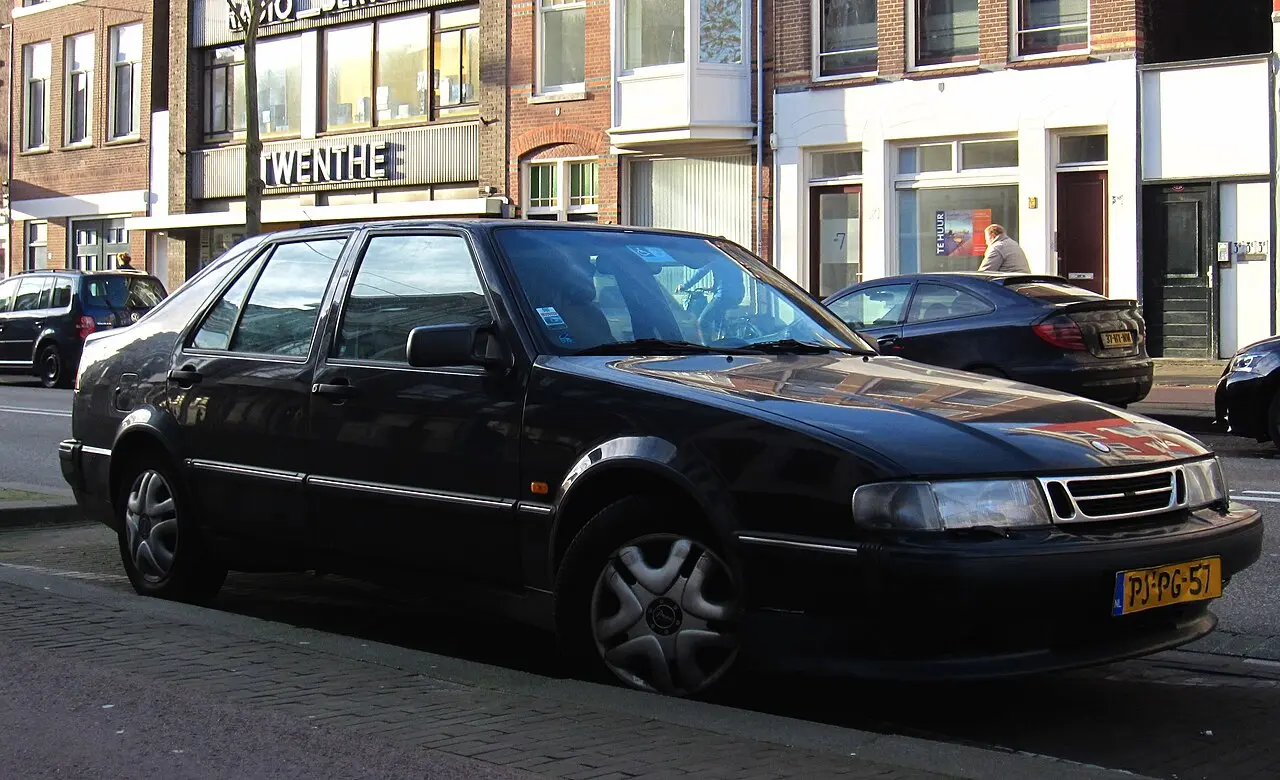
What is the Saab 9000?
The Saab 9000 was a large executive car with a roomy cabin and a practical hatchback layout. A four-door saloon joined the range later. It gave Saab a larger car above the 900, while retaining the brand’s focus on turbocharged engines and useful design.
The 9000 grew out of the Type Four project, developed with other European carmakers. Saab gave its version distinct styling and engineering, including a transverse engine layout.
Generations and engines
The 9000 had one generation, sold from 1986 to 1998. The range included both hatchback and saloon body styles, and later versions added a 3.0 L V6 alongside four-cylinder engines.
Engine sizes in the United States ranged from 2.0 L to 3.0 L; Canadian versions ranged from 2.3 L to 3.0 L. Both markets list petrol engines. Saab’s turbocharged four-cylinder engines were a hallmark of the range.
Fuel consumption and markets
US EPA figures give a lowest listed combined consumption of 10.7 L/100 km and a best rating of 22 MPG combined. Canada’s NRCan figures give a lowest listed consumption of 11.2 L/100 km on the 5-cycle test. The EPA and Canadian test procedures differ, so the figures are best read within their own markets.
The 9000 appears in US figures for 1986–1998 and Canadian figures for 1995–1998. Its spacious cabin and folding rear seat made the hatchback especially practical for passengers and luggage.
Questions and answers
How many generations of Saab 9000 were there?
One generation, sold from 1986 to 1998.
What engines were available?
US versions ranged from 2.0 L to 3.0 L, while Canadian versions ranged from 2.3 L to 3.0 L. Both markets list petrol engines.
What is its official fuel consumption?
The lowest listed US rating is 10.7 L/100 km, with a best rating of 22 MPG combined under EPA figures. Canada’s lowest listed rating is 11.2 L/100 km on the NRCan 5-cycle test.