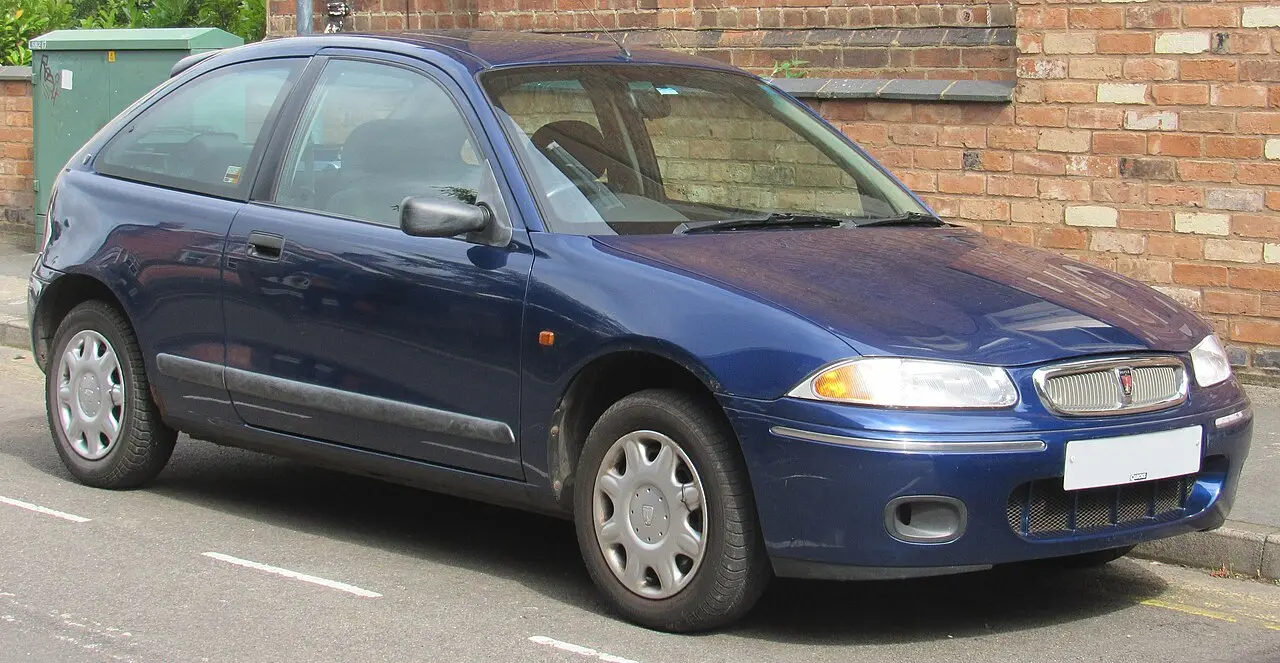
What is the Rover 200?
The Rover 200 name covered a series of compact cars whose shape changed over time. The first was a saloon; later versions brought hatchbacks and other body styles. The name sat within Rover’s compact-car range.
The first Rover 200 was developed alongside the Honda Ballade. The next generation was also created with Honda, while the later R3 hatchback was developed by Rover. In 1999, that hatchback was updated and renamed the Rover 25.
Generations and engines
The first Rover 200 (SD3) was a four-door saloon developed alongside the Honda Ballade. The second generation (R8) introduced hatchbacks and also came as a coupé and convertible. The third (R3) was a Rover-developed three-door and five-door hatchback; its update became the Rover 25.
UK engine sizes for the Rover 200 ranged from 1.1 L to 2.0 L, with petrol and diesel options. Engine choices and body styles varied across the nameplate’s generations.
How economical is the Rover 200?
UK VCA figures list 10 versions for 2000. The lowest listed consumption is 5.6 L/100 km on the NEDC test. European NEDC, US EPA and Canadian 5-cycle procedures differ, so figures from those markets are not directly comparable.
Where was the Rover 200 sold?
The Rover 200 series was part of Rover’s compact-car range. Its early generations reflected the company’s partnership with Honda, while the later R3 was developed by Rover. The updated R3 continued as the Rover 25.
Questions and answers
What body styles did the Rover 200 use?
Depending on generation, the 200 was sold as a saloon, hatchback, coupé or convertible.
How many generations did the Rover 200 have?
It had three generations: SD3, R8 and R3.
What engines are covered in the UK figures?
Petrol and diesel engines from 1.1 L to 2.0 L.
What is the lowest listed consumption?
The UK VCA figure is 5.6 L/100 km on the NEDC test.