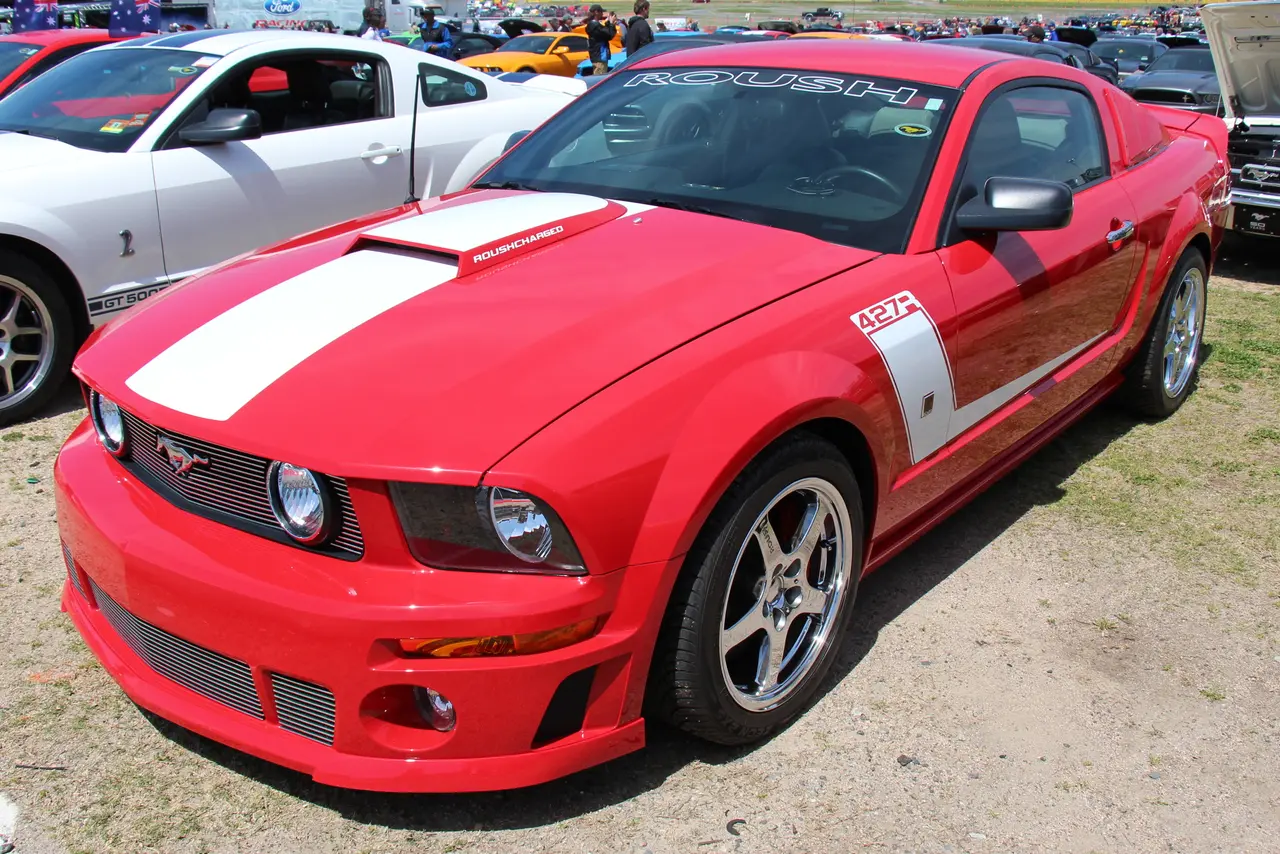
Roush

Roush Mustang

Roush Mustang
Photo: Sicnag / Wikimedia Commons · CC BY 2.0

The official data lists 23 versions of the Roush Mustang (2001–2021), in the United States. Each market publishes its own figures, measured on its own test procedure.

At a glance

Years in the data
2001–2021
Markets
United States
Engines
4.6 L to 5.0 L
Fuels
Petrol
Lowest consumption (United States)
13.1 L/100 km (EPA)

What is the Roush Mustang?

The Roush Mustang is a performance-focused version of Ford’s pony car, developed by Roush Performance. It keeps the Mustang’s coupe or convertible shape and adds Roush styling and performance parts. The company, founded by Jack Roush, has roots in engineering and motorsport, and builds performance versions of Ford models.

The Mustang sits in Ford’s range as a sporty, rear-wheel-drive coupe or convertible. Roush’s versions bring a distinct look and performance-focused character to that familiar formula.

Generations and engines

Roush Mustang versions span three generations: SN-95 (2001–2004), S197 (2005–2014) and S550 (2015–2021). The S197 brought a redesigned body with styling cues from earlier Mustangs. The S550 gave the car a more modern shape and introduced independent rear suspension across the Mustang range.

The petrol engines range from 4.6 L to 5.0 L. Roush builds on the Ford car with its own performance parts and visual details.

How economical is the Roush Mustang?

For United States models, the EPA combined rating reaches 18 MPG. The lowest listed consumption figure is 13.1 L/100 km on the EPA test. EPA ratings use a different procedure from Europe’s WLTP and NEDC tests, so figures across these markets are not directly comparable.

The official US registration figures span 23 versions from 2001 to 2021.

Where was the Roush Mustang sold?

Official EPA figures cover Roush Mustang versions in the United States from 2001 to 2021. Roush also offers Mustang performance packages and parts as part of its wider range of Ford-based performance products.

Questions and answers

What generations of Roush Mustang are covered?

SN-95 (2001–2004), S197 (2005–2014) and S550 (2015–2021).

What engines were used in these Roush Mustangs?

The petrol engines range from 4.6 L to 5.0 L.

What is the Roush Mustang’s EPA fuel economy?

The best combined rating listed is 18 MPG, and the lowest consumption figure is 13.1 L/100 km on the EPA test.

In which market are official figures available?

The United States, where EPA figures cover 23 versions from 2001 to 2021.

Mustang SN-95 (2001–2004)

Model codes: SN-95 · Sold in: United States · References: mustangattitude.com, classic.com

Show all 3 versions

Mustang S197 (2005–2014)

Model codes: S197 · Sold in: United States · References: en.wikipedia.org, fordmuscle.com

Show all 10 versions

Mustang S550 (2015–2021)

Model codes: S550 · Sold in: United States · References: en.wikipedia.org, roushperformance.com

United States 10 versions

Model years sold in the USA, from the EPA and the Department of Energy (fueleconomy.gov). MPG on the EPA test; litres per 100 km = 235.215 ÷ MPG.

Years and versionEngineFuelGearboxDriveConsumption (combined)CO₂
2021SIDI & PFI5.0 LPetrol6-speed manualRear-wheel drive14 MPG (16.8 L/100 km) EPA384 g/km
2021SIDI & PFI5.0 LPetrol10-speed automaticRear-wheel drive15 MPG (15.7 L/100 km) EPA377 g/km
2019–2020SIDI & PFI5.0 LPetrol6-speed manualRear-wheel drive15 MPG (15.7 L/100 km) EPA354 g/km
2020SIDI & PFI5.0 LPetrol10-speed automaticRear-wheel drive14 MPG (16.8 L/100 km) EPA384 g/km
2019SIDI & PFI5.0 LPetrol10-speed automaticRear-wheel drive15 MPG (15.7 L/100 km) EPA373 g/km
20175.0 LPetrol6-speed manualRear-wheel drive16 MPG (14.7 L/100 km) EPA347 g/km
20175.0 LPetrol6-speed automaticRear-wheel drive17 MPG (13.8 L/100 km) EPA330 g/km
2015–20165.0 LPetrol6-speed manualRear-wheel drive16 MPG (14.7 L/100 km) EPA352 g/km
20165.0 LPetrol6-speed automaticRear-wheel drive17 MPG (13.8 L/100 km) EPA334 g/km
20155.0 LPetrol6-speed automaticRear-wheel drive16 MPG (14.7 L/100 km) EPA344 g/km

Official figures are measured on standard test procedures and differ between markets. Your consumption depends on how, where and in what conditions you drive.