The official data lists 143 versions of the Renault Twingo (2008–2026), in the European Union, the United Kingdom, and France. Each market publishes its own figures, measured on its own test procedure.
At a glance
Years in the data
2008–2026
Markets
European Union, United Kingdom, France
Engines
0.9 L to 1.6 L
Power
31 kW (42 PS) to 98 kW (133 PS)
Fuels
Electric, Petrol, Diesel, LPG
Lowest consumption (France)
3.3 L/100 km (NEDC)
Lowest consumption (United Kingdom)
4.2 L/100 km (NEDC)
Lowest consumption (European Union)
4.6 L/100 km (WLTP)
New registrations in the EU
2,272,967
What is the Renault Twingo?
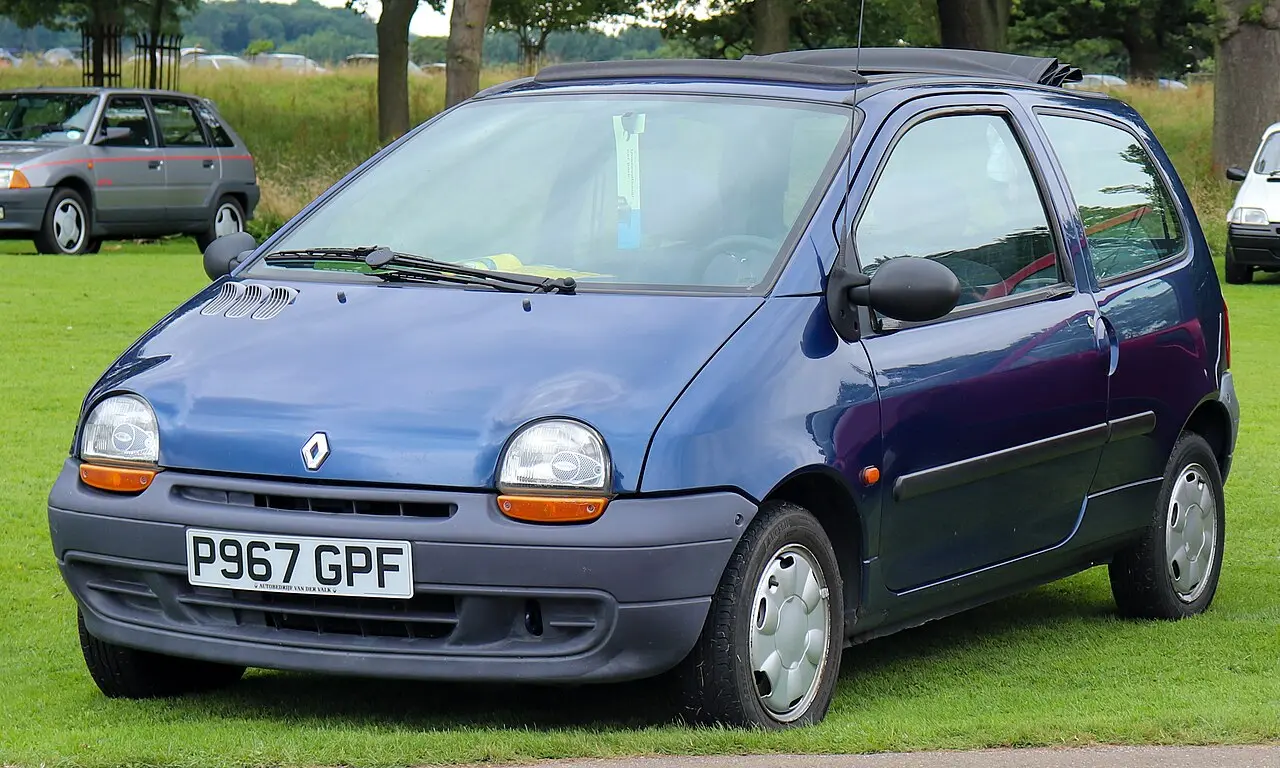
The Twingo is Renault’s small city car, designed to make everyday urban journeys easy. Its rounded, one-box shape and cleverly arranged cabin gave the original a distinctive character, with useful room in a compact body. It sits at the city-car end of Renault’s range.
That practical spirit has carried through its generations. The earliest Twingo was a simple petrol-powered city car; later versions broadened the choice, including electric models. The first generation’s playful shape and flexible interior helped make the name familiar across Europe.
Twingo generations
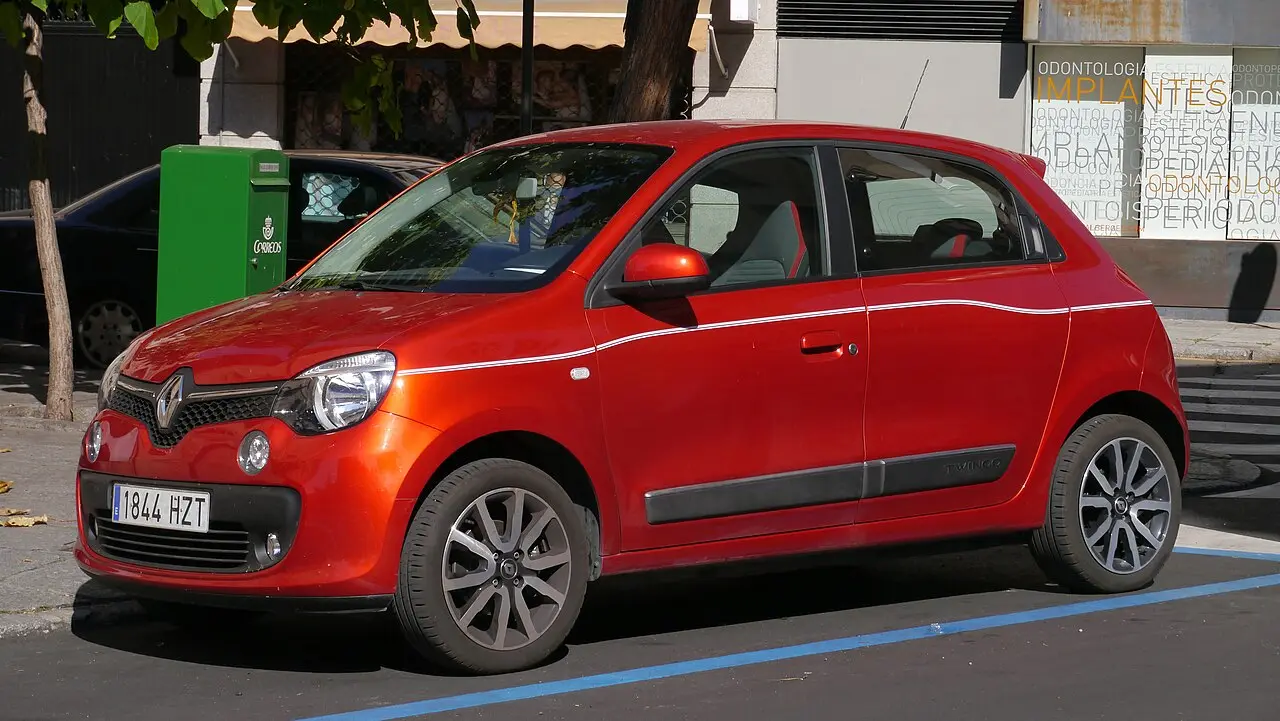
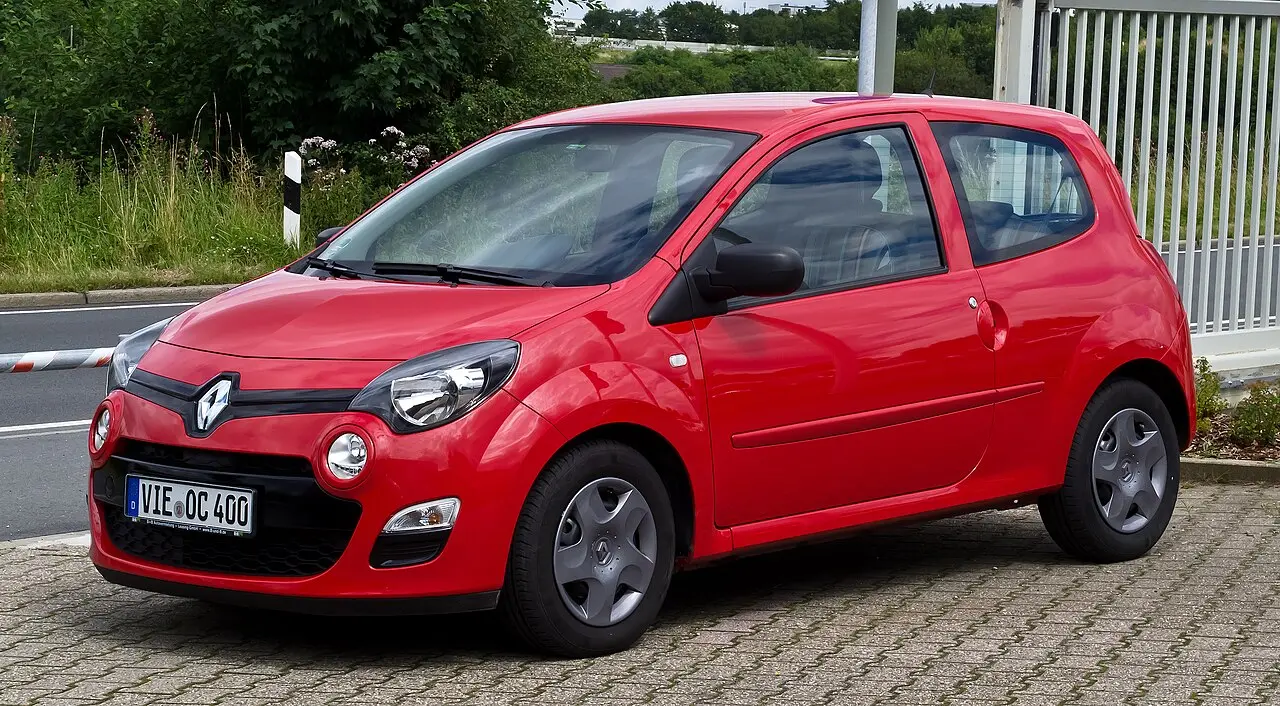
The first-generation Twingo (I, 1993–2012) introduced the name and its rounded, one-box shape. The second generation (II, 2007–2014) kept the small-car role with a more conventional hatchback profile. The third generation (III, since 2014) brought a distinctive layout and styling while remaining a compact urban car.
Engines, power and official economy
European Union registration figures cover Twingos from 2010 to 2025, with engine sizes from 0.9 to 1.6 litres and power from 31 kW (42 PS) to 98 kW (133 PS). Listed fuel types include petrol, diesel, LPG and electric. The lowest listed consumption is 4.6 L/100 km on WLTP for petrol, diesel or hybrid versions.
In the UK, VCA figures cover 2008–2022 and list petrol versions from 52 kW (71 PS) to 66 kW (90 PS), with engines from 0.9 to 1.6 litres. The lowest listed figure is 4.2 L/100 km on NEDC. French ADEME figures cover 2012–2026 and include electric, petrol and diesel cars; the lowest listed consumption is 3.3 L/100 km on NEDC. WLTP and NEDC are different European test procedures, so figures can vary between markets.
Where was the Twingo sold?
The Twingo appears in official figures for the European Union, the UK and France. EU registrations span 2010–2025, UK VCA figures span 2008–2022, and French ADEME figures span 2012–2026. In official EU registration figures, the most registered listed version was the 1.1-litre petrol Twingo in 2010.
Questions and answers
What kind of car is the Renault Twingo?
It is a small city car with a practical hatchback body, designed for everyday urban use.
What engines and power are listed for the Twingo in the EU?
EU figures span 0.9–1.6-litre engines and 31 kW (42 PS) to 98 kW (133 PS), including electric, petrol, diesel and LPG versions.
What is the lowest listed Twingo consumption?
The lowest listed EU figure is 4.6 L/100 km on WLTP; UK figures list 4.2 L/100 km on NEDC, and French figures 3.3 L/100 km on NEDC.
Model codes: C07 · Sold in: European Union, United Kingdom, and France · References: en.wikipedia.org
European Union 58 versions
New cars registered in the EU (plus Norway and Iceland), from the European Environment Agency. Figures on the NEDC procedure until 2020 and on WLTP from 2021; versions are grouped by engine and power, with their number of registrations.
Years and version
Engine
Power
Fuel
Consumption (combined)
CO₂
Electric range
EU registrations
2025
Electric motor
60 kW (82 PS)
Electric
15.0 kWh/100 km WLTP
0 g/km
193 km
201
2025
1.0 L
48 kW (65 PS)
Petrol
4.9 L/100 km WLTP
117 g/km
–
18
2024
Electric motor
60 kW (82 PS)
Electric
15.2 kWh/100 km WLTP
0 g/km
187 km
14,206
2024
1.0 L
48 kW (65 PS)
Petrol
5.2 L/100 km WLTP
117 g/km
–
10,950
2023
Electric motor
60 kW (82 PS)
Electric
15.7 kWh/100 km WLTP
0 g/km
187 km
17,654
2023
1.0 L
48 kW (65 PS)
Petrol
5.2 L/100 km WLTP
117 g/km
–
15,482
2022
Electric motor
31 kW (42 PS)
Electric
16.1 kWh/100 km WLTP
0 g/km
187 km
16,851
2022
1.0 L
48 kW (65 PS)
Petrol
5.1 L/100 km WLTP
117 g/km
–
16,082
2021–2022
Electric motor
60 kW (82 PS)
Electric
16.1 kWh/100 km WLTP
0 g/km
187 km
11,837
2021
1.0 L
48 kW (65 PS)
Petrol
5.1 L/100 km WLTP
117 g/km
–
61,584
2021
Electric motor
31 kW (42 PS)
Electric
16.1 kWh/100 km WLTP
0 g/km
187 km
48,470
2021
0.9 L
68 kW (92 PS)
Petrol
5.2 L/100 km WLTP
124 g/km
–
4,362
2021
1.0 L
54 kW (73 PS)
Petrol
4.6 L/100 km WLTP
120 g/km
–
2,534
2019–2020
1.0 L
54 kW (73 PS)
Petrol
–
99 g/km
–
101,053
2020
0.9 L
68 kW (92 PS)
Petrol
–
110 g/km
–
47,144
2020
1.0 L
48 kW (65 PS)
Petrol
–
99 g/km
–
30,900
2019–2020
0.9 L
66 kW (90 PS)
LPG
–
120 g/km
–
7,146
2020
Electric motor
60 kW (82 PS)
Electric
16.2 kWh/100 km NEDC
0 g/km
187 km
6,389
2020
Electric motor
31 kW (42 PS)
Electric
16.2 kWh/100 km NEDC
0 g/km
187 km
3,721
2020
1.0 L
52 kW (71 PS)
Petrol
–
125 g/km
–
126
2020
0.9 L
66 kW (90 PS)
Petrol
–
114 g/km
–
11
2019
0.9 L
68 kW (92 PS)
Petrol
–
109 g/km
–
51,504
2019
1.0 L
52 kW (71 PS)
Petrol
–
120 g/km
–
38,340
2019
1.0 L
48 kW (65 PS)
Petrol
–
99 g/km
–
17,278
2019
0.9 L
66 kW (90 PS)
Petrol
–
114 g/km
–
14,100
2019
0.9 L
80 kW (109 PS)
Petrol
–
130 g/km
–
1,396
2019
1.0 L
51 kW (69 PS)
Petrol
–
110 g/km
–
148
2019
1.0 L
55 kW (75 PS)
Petrol
–
134 g/km
–
12
2018
1.0 L
52 kW (71 PS)
Petrol
–
117 g/km
–
71,486
2018
1.0 L
51 kW (69 PS)
Petrol
–
110 g/km
–
51,102
2018
0.9 L
66 kW (90 PS)
Petrol
–
107 g/km
–
47,096
2018
0.9 L
80 kW (109 PS)
Petrol
–
121 g/km
–
3,891
2018
0.9 L
66 kW (90 PS)
LPG
–
125 g/km
–
2,192
2017
1.0 L
51 kW (69 PS)
Petrol
–
111 g/km
–
93,494
2017
0.9 L
66 kW (90 PS)
Petrol
–
102 g/km
–
39,489
2017
1.0 L
52 kW (71 PS)
Petrol
–
95 g/km
–
18,748
2017
0.9 L
80 kW (109 PS)
Petrol
–
116 g/km
–
4,128
2017
0.9 L
–
Other fuel
–
106 g/km
–
1,077
2017
1.0 L
77 kW (105 PS)
Petrol
–
112 g/km
–
138
2017
0.9 L
120 kW (163 PS)
Petrol
–
116 g/km
–
22
2017
0.9 L
99 kW (135 PS)
Petrol
–
100 g/km
–
14
2016
1.0 L
51 kW (69 PS)
Petrol
–
110 g/km
–
62,974
2016
1.0 L
52 kW (71 PS)
Petrol
–
99 g/km
–
55,292
2016
0.9 L
66 kW (90 PS)
Petrol
–
103 g/km
–
50,998
2016
0.9 L
80 kW (109 PS)
Petrol
–
115 g/km
–
880
2016
1.1 L
55 kW (75 PS)
Petrol
–
109 g/km
–
12
2015
1.0 L
52 kW (71 PS)
Petrol
–
99 g/km
–
139,118
2015
0.9 L
66 kW (90 PS)
Petrol
–
100 g/km
–
45,750
2015
1.0 L
51 kW (69 PS)
Petrol
–
101 g/km
–
6,478
2015
1.1 L
55 kW (75 PS)
Petrol
–
107 g/km
–
482
2015
1.5 L
55 kW (75 PS)
Diesel
–
85 g/km
–
26
2014
1.1 L
55 kW (75 PS)
Petrol
–
112 g/km
–
100,786
2014
1.0 L
52 kW (71 PS)
Petrol
–
98 g/km
–
49,394
2014
0.9 L
66 kW (90 PS)
Petrol
–
99 g/km
–
9,026
2014
1.5 L
55 kW (75 PS)
Diesel
–
86 g/km
–
3,656
2014
1.5 L
63 kW (86 PS)
Diesel
–
87 g/km
–
498
2014
1.1 L
75 kW (102 PS)
Petrol
–
136 g/km
–
64
2014
1.6 L
98 kW (133 PS)
Petrol
–
151 g/km
–
54
United Kingdom 23 versions
New cars on sale in the UK, from the Vehicle Certification Agency. NEDC figures until 2018 and WLTP figures after; years are the editions a version appeared in.
Years and version
Engine
Power
Fuel
Gearbox
Consumption (combined)
CO₂
2021–2022Iconic TCe 90 Auto EDC MY18
0.9 L
66 kW (90 PS)
Petrol
6-speed automatic
6.2 L/100 km WLTP
140 g/km
2021–2022Iconic TCe 90 Auto EDC MY18
0.9 L
66 kW (90 PS)
Petrol
6-speed automatic
6.3 L/100 km WLTP
142 g/km
2021–2022Iconic TCe 90 MY18
0.9 L
66 kW (90 PS)
Petrol
5-speed manual
5.9 L/100 km WLTP
132 g/km
2021–2022Iconic TCe 90 MY18
0.9 L
66 kW (90 PS)
Petrol
5-speed manual
5.9 L/100 km WLTP
133 g/km
2021–2022Iconic SCe 70 S&S MY18
1.0 L
52 kW (71 PS)
Petrol
5-speed manual
5.8 L/100 km WLTP
131 g/km
2021–2022Iconic SCe 70 S&S MY18 · Play SCe 70 MY18
1.0 L
52 kW (71 PS)
Petrol
5-speed manual
5.9 L/100 km WLTP
133 g/km
2017–2018Energy TCe 90 S/S · Energy TCE 90 S/S
0.9 L
–
Petrol
5-speed manual
4.3 L/100 km NEDC
99 g/km
2017–2018TCe 90 Auto · TCe 90 Auto EDC
0.9 L
–
Petrol
6-speed automatic
4.8 L/100 km NEDC
108 g/km
2017–2018TCe 110 · TCE 110
0.9 L
–
Petrol
5-speed manual
5.2 L/100 km NEDC
115 g/km
2018Iconic TCe 90 Auto EDC MY18
0.9 L
–
Petrol
6-speed automatic
5.4 L/100 km NEDC
122 g/km
2018Iconic TCe 90 MY18
0.9 L
–
Petrol
5-speed manual
4.9 L/100 km NEDC
112 g/km
2017–2018SCe 70 S/S · SEC 70 S/S
1.0 L
–
Petrol
5-speed manual
4.2 L/100 km NEDC
95 g/km
2016–2018SCE 70 · SCe 70
1.0 L
–
Petrol
5-speed manual
5.0 L/100 km NEDC
112 g/km
2018Play SCe 70 MY18
1.0 L
–
Petrol
5-speed manual
5.5 L/100 km NEDC
126 g/km
2018Iconic SCe 70 S&S MY18
1.0 L
–
Petrol
5-speed manual
4.8 L/100 km NEDC
110 g/km
2016Energy TCE 90 S/S
0.9 L
–
Petrol
5-speed manual
4.4 L/100 km NEDC
99 g/km
2016TCE 90 Energy
0.9 L
–
Petrol
6-speed automatic
4.8 L/100 km NEDC
107 g/km
2016SCE70 S/S
1.0 L
–
Petrol
5-speed manual
4.3 L/100 km NEDC
95 g/km
2015TCe 90 Stop & Start
0.9 L
–
Petrol
5-speed manual
4.3 L/100 km NEDC
99 g/km
2015SCe 70
1.0 L
–
Petrol
5-speed manual
4.5 L/100 km NEDC
105 g/km
2015SCe 70 Stop & Start
1.0 L
–
Petrol
5-speed manual
4.2 L/100 km NEDC
95 g/km
20151.2 16V 75
1.1 L
–
Petrol
5-speed manual
5.1 L/100 km NEDC
119 g/km
2015Renault Sport 133
1.6 L
–
Petrol
5-speed manual
6.5 L/100 km NEDC
150 g/km
France 9 versions
New cars on sale in France, from ADEME Car Labelling. NEDC figures until 2015, WLTP figures in the current catalogue.
Years and version
Engine
Power
Fuel
Gearbox
Consumption (combined)
CO₂
Electric range
2026TWINGO (31Kw)
Electric motor
31 kW (42 PS)
Electric
Continuously variable (CVT)
15.1 kWh/100 km WLTP
–
190 km
2026TWINGO (31Kw)
Electric motor
31 kW (42 PS)
Electric
Continuously variable (CVT)
15.1 kWh/100 km WLTP
–
190 km
2026TWINGO (31Kw)
Electric motor
31 kW (42 PS)
Electric
Continuously variable (CVT)
15.1 kWh/100 km WLTP
–
190 km
2026TWINGO (65ch)
1.0 L
48 kW (65 PS)
Petrol
5-speed manual
5.1 L/100 km WLTP
116 g/km
–
2026TWINGO (65ch)
1.0 L
48 kW (65 PS)
Petrol
5-speed manual
5.1 L/100 km WLTP
116 g/km
–
2015Twingo SCe (70ch)
–
52 kW (71 PS)
Petrol
5-speed manual
4.5 L/100 km NEDC
105 g/km
–
2015Twingo SCe (70ch) Stop & Start
–
52 kW (71 PS)
Petrol
5-speed manual
4.2 L/100 km NEDC
95 g/km
–
2015Twingo Energy TCe (90ch)
–
66 kW (90 PS)
Petrol
5-speed manual
4.3 L/100 km NEDC
99 g/km
–
2014TWINGO 1.2 LEV 16V (75ch) eco2
–
55 kW (75 PS)
Petrol
5-speed manual
4.7 L/100 km NEDC
108 g/km
–
Official figures are measured on standard test procedures and differ between markets. Your consumption depends on how, where and in what conditions you drive.